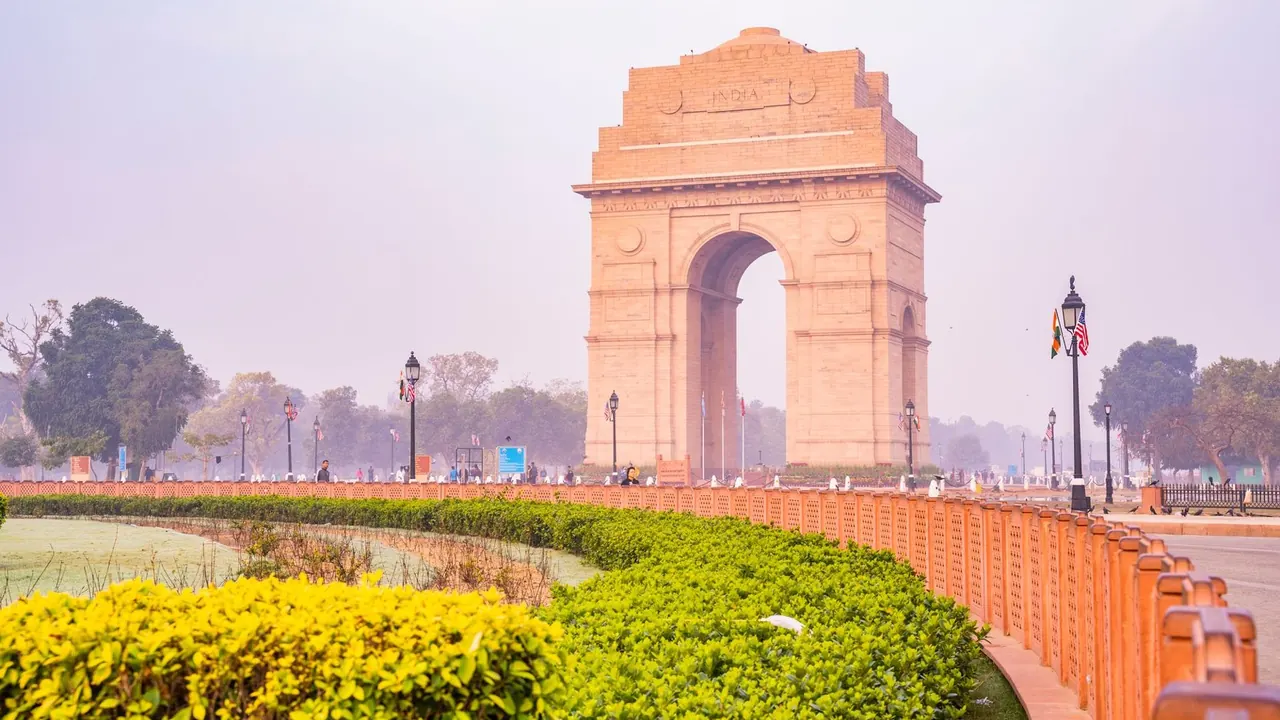
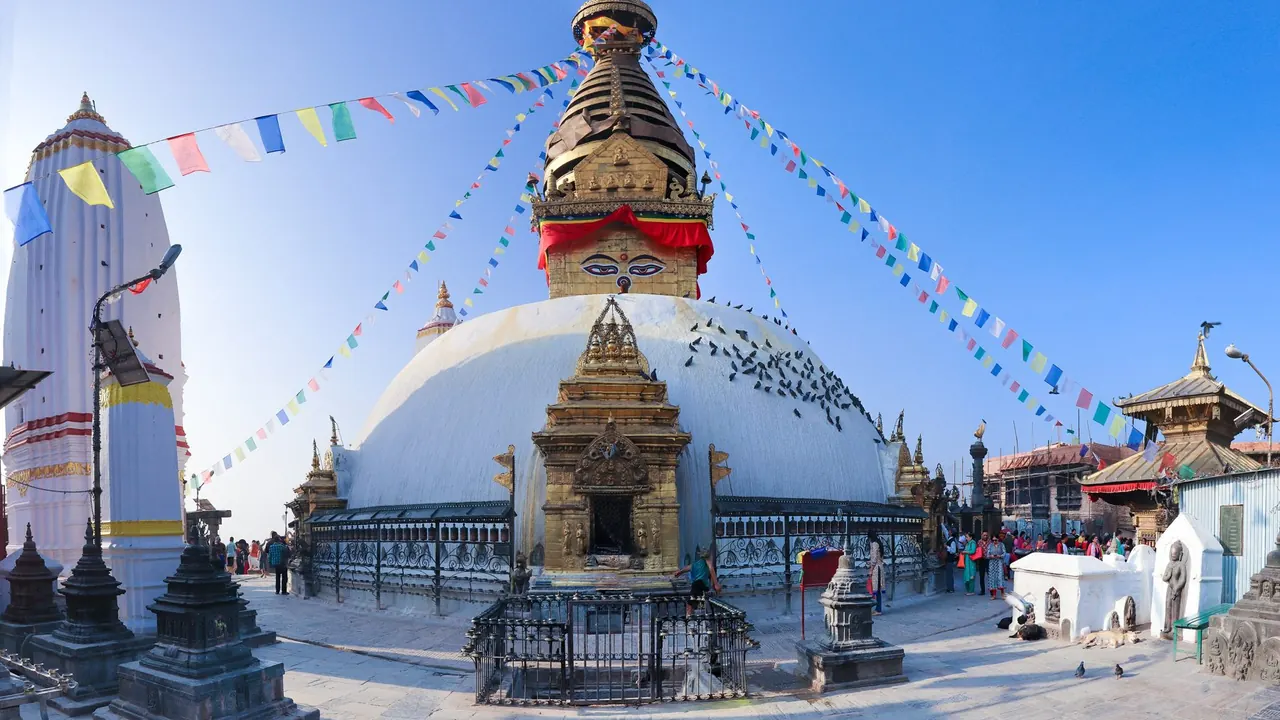
Photos: Delhi by shalender kumar, Pexels License; Kathmandu by Nabin K. Sapkota, CC BY-SA 4.0, cropped.
Delhi or Kathmandu?
Our verdict in twelve categories, each scored against the same fixed benchmark cities, and the climate month by month, so you can choose for your trip.
Choose Delhi for
- getting around
- food and drink
- live music and the arts
Delhi is the stronger choice for a trip built around the city itself. Its street food in Old Delhi and its serious restaurants, the specialist bazaars and craft emporiums, a classical music and dance season, and the train to the Taj Mahal give a first visit to India plenty to fill it. It suits travellers who like a big capital and don't mind planning their way across it by metro.
Choose Kathmandu for
- nature and the outdoors
- wellness
- prices
Choose Kathmandu if the mountains are part of the reason for going. The Himalaya rise just beyond the forested rim of the valley, ridge walks and sunrise viewpoints are an hour or so away, and the city is the starting point for treks and rafting. Its temples and stupas are part of everyday religious life, the monasteries teach meditation, and daily costs are among the lowest anywhere. It suits slower, more reflective travellers more than those after food, shopping or late nights.
Scoreboard
Twelve categories on one fixed scale from 0 to 100. The shaded stretch is the gap between the two.
Your match
Pick a travel style or drag the sliders, and both match scores follow your weighting.
Wins on getting around and food and drink with your weighting.
Wins on nature and the outdoors and wellness with your weighting.
What matters to you?
Category by category
What the scores mean for a trip.
Beaches & swimming
Neither city has any beach. Delhi lies on the northern plains, far inland, and Kathmandu sits in a high valley in a landlocked country, so in both a swim means a hotel pool.
The difference is what you do about it. In Delhi, a pool is a real relief in the scorching months before the monsoon, and travellers who want sea usually fly on to Goa or Kerala. Around Kathmandu, the cold mountain rivers are for rafting, not bathing.
Food & drink
Delhi is by far the better place to eat. The lanes around Chandni Chowk and Jama Masjid serve nihari, stuffed parathas and kebabs off the coals, butter chicken and dal makhani were invented here, and South Delhi adds regional kitchens from across India and refined tasting menus.
Kathmandu's best food is Newari, such as choila, bara and yomari with rice beer, eaten in small places around the old bazaars and in Patan. Momos and Tibetan thukpa near Boudhanath round it out, but beyond that the choice narrows to Thamel's patchy tourist menus and a handful of hotel restaurants.
Culture & sights
Both are outstanding for heritage, but the kind of heritage differs. Delhi's is imperial and monumental: the Red Fort, Humayun's Tomb and the Qutb Minar, then the ceremonial sweep of Kartavya Path and the national collections of art. The sights lie far apart, so seeing them means crossing the city on a planned route.
Kathmandu's heritage is closer together and still part of daily worship. Pilgrims circle Boudhanath, cremations take place at Pashupatinath, and the Kumari lives above Durbar Square. Patan's square and museum show Newari craft at its finest, though outside Patan the museums are small.
Nightlife
Neither is a destination for nights out, but Delhi has more to choose from. Its rooftop bars in Hauz Khas Village, the pubs under the colonnades of Connaught Place and the larger clubs and brewpubs in Gurugram cater mainly to young professionals. Each area is a taxi ride from the next.
In Kathmandu, going out effectively means Thamel, where trekkers celebrate in rooftop bars, pool halls and a few dance clubs until around midnight. It's relaxed and easy to join, but the rest of the city is quiet by evening.
Nature & outdoors
This is where Kathmandu clearly comes out ahead. Oak and rhododendron forest covers the valley rim, the Chandragiri cable car and the sunrise viewpoints at Nagarkot and Dhulikhel look out to the snow peaks, and rafting rivers and trekking routes start within a few hours.
Delhi has only gardens and scrubland: Lodhi Gardens and Sunder Nursery for morning walks, the Ridge forest and Sanjay Van. Winter birdwatching at Okhla and Sultanpur is the highlight. Heat, monsoon and smog limit time outdoors, and the mountains are a long journey north.
Day trips
Delhi has the most famous day trip in India. An express train reaches Agra in under two hours for the Taj Mahal and Agra Fort, Fatehpur Sikri can be added on a long day, and the Krishna temple towns of Mathura and Vrindavan offer something quite different.
Kathmandu has one excellent outing, to Bhaktapur's brick squares and tiered temples, with Changu Narayan on the ridge above it. After that come Kirtipur, Bungamati, Pharping and Panauti, all pleasant but all variations on Newari valley life, reached on slow roads.
Good for families
Neither city is easy with small children, but Delhi has more to entertain them. The open-air steam engines at the National Rail Museum, the zoo beside Purana Qila, the science centre and the water parks in Noida and Gurugram can fill several days, and the Akshardham water show adds an evening outing.
Kathmandu has the monkeys at Swayambhunath, prayer wheels to spin and a small zoo in Patan, and not much else for children. Its narrow lanes without pavements and its dust make it hard work with toddlers. It is better suited to older children heading on to a trek or a national park.
Getting around
Delhi is much easier to get around thanks to its metro, which is air-conditioned, signed in English, has stations near most of the main monuments and runs an express line to the airport. Distances are enormous and the roads are jammed, but autos and app taxis cover the gaps between stations.
Kathmandu has no metro or tram, and its crowded microbuses are hard for visitors to work out. The old city and Thamel are best on foot, sharing the lanes with motorbikes. Trips to Patan, Boudhanath or the airport rely on taxis or ride-hailing apps, and traffic makes them slow.
Shopping & style
Delhi has the broader and better shopping. Crafts from every state fill Dilli Haat and the fixed-price government emporiums, Old Delhi has specialist bazaars for fabric, wedding trim and spices, and Khan Market and Shahpur Jat stock Indian designers, with luxury brands in the South Delhi malls.
Kathmandu is more focused and works well for a few particular buys. These include Tibetan carpets and thangkas around Boudhanath, bronze statues made in Patan's own workshops, and pashmina and singing bowls in Thamel, though much of the Thamel stock is copies. It has no fashion or luxury shopping.
Affordability
Both are very cheap by international standards, and Kathmandu is cheaper still. Guesthouses in Thamel and Boudhanath, plates of dal bhat or momos and taxis cost very little. Most of the spending goes on trekking permits and mountain flights rather than daily life in the city.
Delhi keeps everyday costs low through street food, the metro and plenty of mid-range rooms. But its grand hotels and stylish South Delhi restaurants charge close to Western prices, which makes it easier to overspend there.
Live music & performing arts
Delhi has the far richer stage scene. In the cooler months the auditoriums around Mandi House and the cultural centres on Lodhi Road host Hindustani recitals and Kathak and Bharatanatyam, and the National School of Drama makes the city India's theatre capital. Thursday qawwali at the Nizamuddin shrine is free and unforgettable.
Kathmandu has little formal stage life. Live music mostly means cover bands in Thamel bars and cultural dinner shows. The memorable performances follow the religious calendar, such as the masked dances of Indra Jatra and evening devotional singing at the temples, along with an annual autumn jazz festival.
Wellness & relaxation
Kathmandu is the better place to slow down, though the city itself is as loud and dusty as Delhi. The monasteries above Boudhanath, Kopan in particular, teach meditation and Buddhist philosophy to visitors, and yoga, singing-bowl sessions and cheap massage are easy to find.
In Delhi, calm is mostly found inside hotel spas offering Ayurvedic treatments, in the yoga centres of South Delhi, or early in the morning in Lodhi Gardens. Traffic, noise and winter smog never really let up, which is why people seeking a proper retreat often travel on to Rishikesh.
When should you go?
Pick your month. The climate figures are measured averages, not a forecast.
Delhi in July
Kathmandu in July
Daytime high, °C
Rainfall in the month, mm
Temperature and rainfall are climate normals, averaged over the years shown. Delhi: 1991-2020 normals, New Delhi / Safdarjung (9.4 km from centre). Kathmandu: 1991-2020 normals, Kathmandu Airport (4.7 km from centre).
Both cities are at their best from October to March, when the skies are dry and days are warm without being harsh. After that they part ways. Delhi turns into a furnace in April, peaking around 40°C in May, and the monsoon follows from July to September with about 236mm in August. Kathmandu stands much higher, so even its hottest months stay near 29°C and spring remains good for walking long after Delhi has become too hot.
Kathmandu's monsoon is the heavier of the two, with around 384mm in July, and it hides the mountains behind cloud from June to September. October and November are the standout months there, sunny, dry and clear for Himalayan views. December and January are cool in both cities, though Kathmandu gets noticeably more sunshine than smoggy Delhi in midwinter.
Which traveller are you?
On an outdoors trip, Kathmandu is the clear pick. Forest trails in Shivapuri, the ridge walk from Nagarkot to Dhulikhel, Everest flights, rafting rivers and the route to Langtang are all close, while Delhi offers gardens on a flat plain and heavy smog.
For a food and nightlife trip, Delhi wins comfortably. Old Delhi's parathas, kebabs and chaat, the city's own butter chicken and South Delhi's tasting menus outclass dal bhat and momos, and Hauz Khas and Gurugram go out later than Thamel.
On a relaxing and wellness trip, Kathmandu suits better. Kopan and the other monasteries run meditation courses, low-cost massage is easy to find, and Boudhanath at dusk feels calm. Delhi's peace is mostly limited to hotel spas and early mornings in Lodhi Gardens.
Before you go
| Measure | Delhi | Kathmandu |
|---|---|---|
| Official language | Hindi, English | Nepali |
| Currency | Indian Rupee (INR) | Nepalese Rupee (NPR) |
| Sockets | CM230 V, 50 Hz | CM230 V, 50 Hz |
| Driving side | Left | Left |
| Time zone | UTC+5:30 | UTC+5:45 |
| Emergency number | 108 or 112 | Police 100, ambulance 102, fire 101 |
| Elevation | 221 m | 1,300 m |
| Main airport | Indira Gandhi International Airport (DEL)17 km from centre144 non-stop destinations | Tribhuvan International Airport (KTM)4 km from centre38 non-stop destinations |
By the numbers
| Measure | Delhi | Kathmandu |
|---|---|---|
| City population | 26,495,000 | 845,767 |
| People per km² | 18,962 | 17,121 |
| Museums within 10 km | 23 | 9 |
| UNESCO World Heritage sites within 50 km | 4 | 1 |
Where else could you go?
Every comparison below shares a destination with this one, so you can follow Delhi or Kathmandu somewhere new.