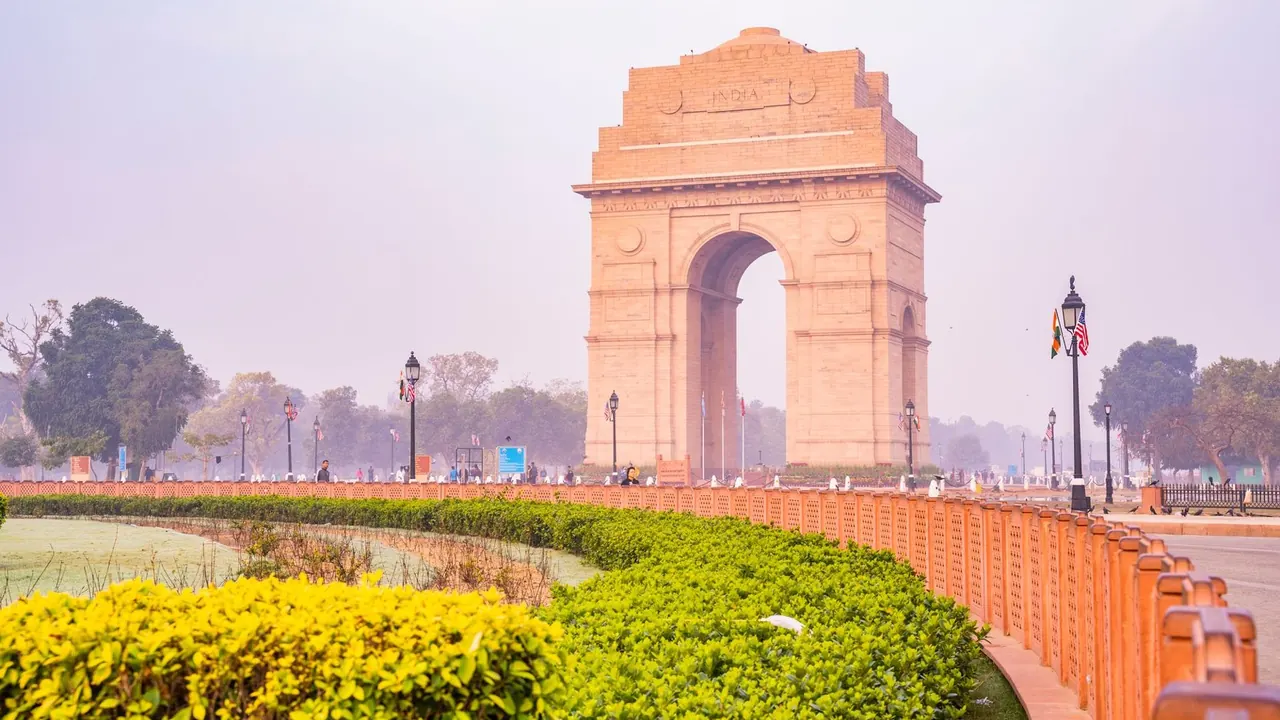
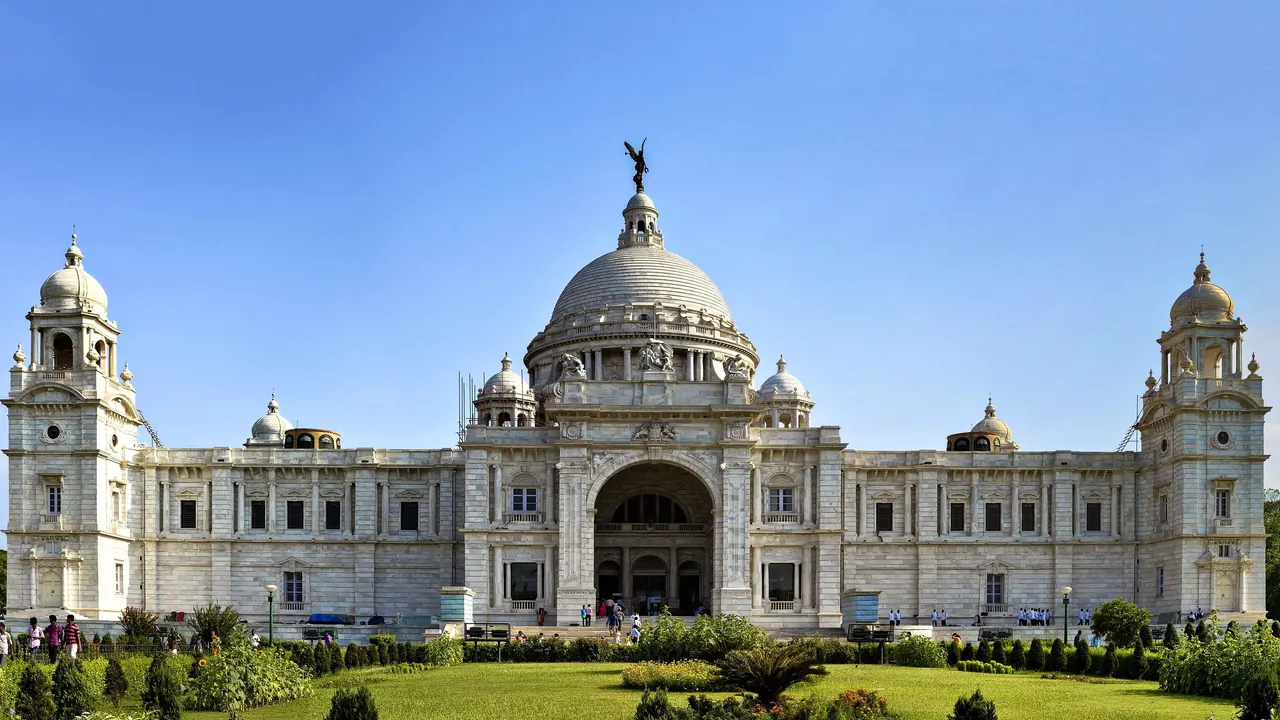
Photos: Delhi by shalender kumar, Pexels License; Kolkata by Subhrajyoti07, CC BY-SA 4.0, cropped.
Delhi or Kolkata?
Our verdict in twelve categories, each scored against the same fixed benchmark cities, and the climate month by month, so you can choose for your trip.
Choose Delhi for
- day trips
- shopping
- getting around
Delhi suits a first trip to North India, where great monuments and big flavours are the point. The Red Fort, Humayun's Tomb and the Qutb Minar are all in the city, the Taj Mahal is a day trip by express train, and the metro makes a vast city manageable. Its bazaars and design courtyards also make it the better place to shop, and it has more going on after dark.
Choose Kolkata for
- nature and the outdoors
- prices
- beaches
Kolkata is for the traveller who wants a city with a different temper, or who already knows the Mughal north. It offers Bengali river fish and old sweet shops, a weathered colonial centre around BBD Bagh and the Maidan, and a culture of long conversations over tea. It is slower to get around and has fewer easy excursions, but patient visitors get a city that feels unlike anywhere else in India, above all during Durga Puja.
Scoreboard
Twelve categories on one fixed scale from 0 to 100. The shaded stretch is the gap between the two.
Your match
Pick a travel style or drag the sliders, and both match scores follow your weighting.
Wins on day trips and shopping with your weighting.
Wins on nature and the outdoors and prices with your weighting.
What matters to you?
Category by category
What the scores mean for a trip.
Beaches & swimming
Neither city is for swimming, and in both a hotel pool is the only realistic dip. Delhi sits deep inland on the northern plains, so a beach means a flight to Goa or Kerala.
Kolkata is at least within reach of the sea. The Bay of Bengal beaches at Digha and Mandarmani are four hours or more by road, which makes them an overnight trip rather than a day out.
Food & drink
Delhi edges ahead, though the two cook so differently that they hardly compete. Delhi's food is Mughlai and Punjabi: nihari and stuffed parathas in the lanes around Jama Masjid, butter chicken and dal makhani in their home city, and a serious top end of regional kitchens and tasting menus in South Delhi.
Kolkata eats from Bengal's rivers and sweet shops: hilsa in mustard, prawn malai curry, rosogolla and mishti doi. Its history adds potato-and-egg biryani and the Indo-Chinese cooking of Tangra. Fine dining is a thinner layer here, so the best meals come from street corners and family confectioners rather than booked tables.
Culture & sights
Delhi has the deeper set of sights. Centuries of capitals have left the Red Fort, Humayun's Tomb, the Qutb Minar and the Lodi tombs, and Lutyens' imperial New Delhi and the national art collections come on top of those. They are spread far apart, though, so seeing them takes planning.
Kolkata's appeal is colonial and Bengali rather than Mughal. It has the Victoria Memorial, the imperial buildings of BBD Bagh, the Indian Museum and the eccentric Marble Palace, alongside Tagore's house at Jorasanko and the idol-makers of Kumartuli. There are fewer landmark sights, but the faded grandeur is full of atmosphere, and much of it reads better with a guide.
Nightlife
Neither is a city people visit for its nights, but Delhi offers more choice. You pick a pocket and take a taxi there: rooftop bars in Hauz Khas Village, pubs under the Connaught Place colonnades, or the bigger clubs and brewpubs of Gurugram.
In Kolkata an evening out usually means drinks and dinner on Park Street, with most places closing around midnight and bars shut on dry days. The exception is Durga Puja, when the whole city stays out touring pandals until the small hours, a street festival rather than a club night.
Nature & outdoors
Both sit on flat plains with no hills nearby, so the outdoors means parks and the odd excursion. Delhi's green spaces are drier and scattered with ruins, from Lodhi Gardens and Sunder Nursery to the Ridge forest, and in winter Okhla and Sultanpur fill with migrant waterbirds.
Kolkata's outdoors is about water: sunset boats on the Hooghly, the lakes at Rabindra Sarovar and the vast banyan in the Botanic Garden. Its big draw, the tiger country of the Sundarbans mangroves, needs two or three days by boat.
Day trips
Delhi is much the better base for excursions, mainly because of Agra. The Taj Mahal and Agra Fort are a little under two hours away by express train, Fatehpur Sikri can be added with a driver, and the Krishna pilgrim towns of Mathura and Vrindavan are closer still.
From Kolkata the obvious day out runs up the Hooghly through the old Danish, French, Dutch and Portuguese trading towns of Serampore, Chandannagar, Chinsurah and Bandel. Beyond those, Shantiniketan, Bishnupur and Murshidabad are all three hours or more away and need a night.
Good for families
Both are hard work with small children, though children are made a fuss of in both. Delhi has the National Rail Museum's steam engines, the zoo, the Akshardham water show and big water parks on the outskirts, but summer heat and winter smog are a real strain.
Kolkata answers with Science City, Alipore Zoo, Nicco Park and room to run on the Maidan. Its difficulty is humid heat for most of the year, so it suits families who already know India.
Getting around
Delhi is easier to get around, despite its size. Its large, air-conditioned metro has English signs, an airport express line and stations near most major monuments, and auto-rickshaws and app taxis fill the gaps. Distances and traffic still make every day a matter of planning.
Kolkata has India's oldest metro, but it covers less ground, so yellow taxis, autos and buses do more of the work, and every trip takes longer than expected. Its pleasures are the Hooghly ferries to Howrah and a heritage core around BBD Bagh that is walkable in the cooler months.
Shopping & style
Delhi is clearly the better place to shop because it gathers all of India in one place. Dilli Haat and the state emporiums sell crafts from every region, Old Delhi has specialist bazaars down to the Khari Baoli spice market, and Khan Market and Shahpur Jat add Indian designers, with luxury brands in the South Delhi malls.
Kolkata is narrower but excellent on its own ground: Bengal handloom saris, Baluchari silk and kantha embroidery in Gariahat. There is also the Victorian maze of New Market and the book stalls of College Street. Design and luxury shopping are limited.
Affordability
Both are very cheap by any international standard, with street food, the metro and mid-range rooms costing little, and imported alcohol the main expense in each. Kolkata feels slightly gentler at the sit-down level, with modest restaurant meals and low entry fees even for foreigners.
Delhi has a bigger upmarket tier, with grand hotels and stylish South Delhi restaurants charging closer to Western prices. That makes it easier to spend more there if you choose to.
Live music & performing arts
Both are serious classical music cities where language limits the theatre. In Delhi, the halls around Mandi House stage Hindustani recitals and Kathak through the cooler months, and the National School of Drama makes it a centre of Hindi theatre. Many visitors remember the free qawwali at the Nizamuddin shrine most.
Kolkata's theatre is Bengali group drama, staged most evenings at Academy of Fine Arts and Rabindra Sadan. Its musical highlight is the Dover Lane Music Conference each winter, with Tagore songs and Baul singers adding a local voice.
Wellness & relaxation
Delhi is the easier of the two for a traveller who needs to recharge. The spas of its large hotels are joined by Ayurveda and yoga centres scattered through South Delhi, so a treatment or a class is easy to find. For calm without booking anything, the gardens at dawn and the quiet of its gurudwaras and Sufi shrines give real breathing space, even with the traffic and the winter smog.
Kolkata offers less that is organised for rest. Outside the big hotels there are only a handful of places for Ayurvedic massage. Its calm is something you stumble on rather than plan: the ghats as the river wakes, the lawns at Belur Math, an afternoon of tea and talk. Most visitors find that a hotel pool is their best way to recover from the humid heat.
When should you go?
Pick your month. The climate figures are measured averages, not a forecast.
Delhi in July
Kolkata in July
Daytime high, °C
Rainfall in the month, mm
Temperature and rainfall are climate normals, averaged over the years shown. Delhi: 1991-2020 normals, New Delhi / Safdarjung (9.4 km from centre). Kolkata: 1991-2020 normals, Calcutta / Alipore (5.4 km from centre).
Delhi has a clear season for sightseeing, from November to March, when the days are dry and January highs of about 20°C make long walks between the monuments comfortable. April brings fierce heat, reaching around 40°C in May, and walking the streets is hard work until the monsoon. The rains run from late June into September and are heaviest in August. October turns dry again, still warm but workable.
Kolkata never really cools down, with January highs around 25°C, so its comfortable window is shorter, roughly November to February. Its monsoon is longer and far heavier than Delhi's, setting in from May and lasting into October, with July bringing about 384mm and the dullest skies of the year. In midwinter Kolkata is the milder and sunnier of the two. From April to June Delhi is the hotter city, and from June to September it is also much sunnier, because its rains are lighter.
Which traveller are you?
For a culture and arts trip, Delhi is the better base. Three UNESCO monuments, the great mosque and lanes of Old Delhi, the national collections and the Taj Mahal a train ride away give it more major sights than Kolkata's colonial streets.
On a shopping trip, Delhi wins clearly. Dilli Haat and the state emporiums bring together crafts from across India, Old Delhi's bazaars each specialise in something from spices to wedding trimmings, and the designer courtyards add style. Kolkata's strength is mainly Bengal's own textiles.
For a short city break, Delhi is easier to fit into a few days. Its metro reaches most big monuments and the airport. In Kolkata the metro covers less, traffic is slow, and the crumbling heritage sights often need a guide to make sense of them.
Before you go
| Measure | Delhi | Kolkata |
|---|---|---|
| Official language | Hindi, English | Hindi, English |
| Currency | Indian Rupee (INR) | Indian Rupee (INR) |
| Sockets | CM230 V, 50 Hz | CM230 V, 50 Hz |
| Driving side | Left | Left |
| Time zone | UTC+5:30 | UTC+5:30 |
| Emergency number | 108 or 112 | 108 or 112 |
| Elevation | 221 m | 9 m |
| Main airport | Indira Gandhi International Airport (DEL)17 km from centre144 non-stop destinations | Netaji Subhash Chandra Bose International Airport (CCU)12 km from centre64 non-stop destinations |
By the numbers
| Measure | Delhi | Kolkata |
|---|---|---|
| City population | 26,495,000 | 4,496,694 |
| People per km² | 18,962 | 21,818 |
| Museums within 10 km | 23 | 26 |
| UNESCO World Heritage sites within 50 km | 4 | 0 |
Where else could you go?
Every comparison below shares a destination with this one, so you can follow Delhi or Kolkata somewhere new.