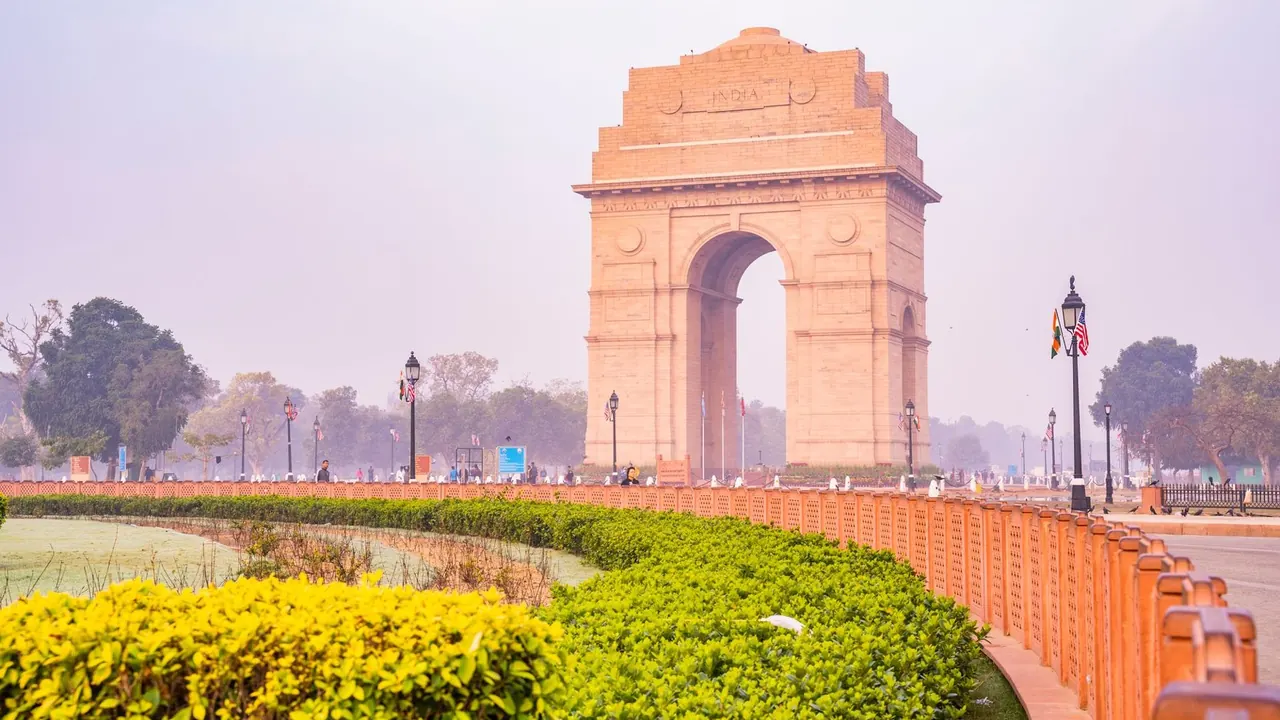
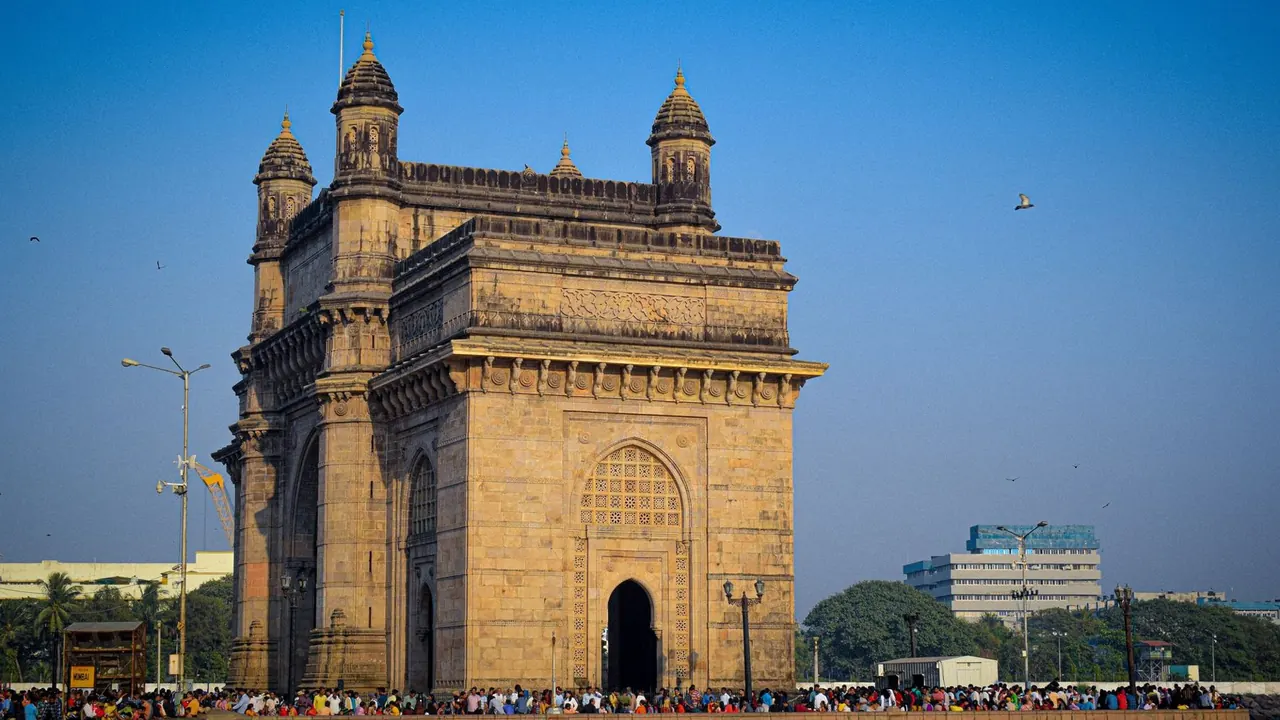
Photos: Delhi by shalender kumar, Pexels License; Mumbai by Shubam Bhasin, Pexels License.
Delhi or Mumbai?
Our verdict in twelve categories, each scored against the same fixed benchmark cities, and the climate month by month, so you can choose for your trip.
Choose Delhi for
- day trips
- prices
- getting around
Delhi suits travellers who come for history and monuments. Mughal tombs, the Red Fort, the Qutb Minar and the lanes of Old Delhi give it far more to see than Mumbai, and Agra and the Taj Mahal are an easy train ride away. The metro reaches most of the sights, the bazaars sell crafts from all over India, and rooms cost little. Go in the cooler months, and don't expect much green space or quiet.
Choose Mumbai for
- nature and the outdoors
- beaches
- nightlife
Choose Mumbai if you'd rather have a city by the sea, with Gothic and Art Deco streets, evenings on Marine Drive and Chowpatty, and a slightly better bar scene in Bandra and Lower Parel. It also has a forested national park with leopards inside its suburbs and the Western Ghats within reach for hiking. Getting around is slower and a good room costs more.
Scoreboard
Twelve categories on one fixed scale from 0 to 100. The shaded stretch is the gap between the two.
Your match
Pick a travel style or drag the sliders, and both match scores follow your weighting.
Too close to call, 2 points apart
Wins on day trips and prices with your weighting.
Wins on nature and the outdoors and beaches with your weighting.
What matters to you?
Category by category
What the scores mean for a trip.
Beaches & swimming
Neither city is a place for a swim, but Mumbai at least has the sea. Delhi is far inland on the northern plains, the Yamuna is not for bathing, and a hotel pool is the only option. Most travellers who want a beach fly on to Goa or Kerala.
Mumbai has the wide sands of Juhu and Girgaum Chowpatty, where people walk at sunset, fly kites and eat snacks, although the water is murky. For clean water you take the harbour ferry to the Alibaug coast, which takes most of a day.
Food & drink
Both are great places to eat, and the difference is in what you eat. Delhi's cooking is rich northern Mughlai and Punjabi food: parathas, nihari and kebabs in the lanes around Jama Masjid, butter chicken and dal makhani where they were invented, and chaat eaten standing at street carts.
Mumbai's food is lighter and shaped by the coast. You snack on vada pav at the stations, eat bun maska in the old Irani cafés and have pomfret or crab in coconut and kokum curry at Malvani and Konkani kitchens. Its modern dining is centred on Bandra and Lower Parel, while Delhi's is in South Delhi and the grand hotels.
Culture & sights
Delhi has much more to see. Centuries of capitals have left the Red Fort, Humayun's Tomb, the Qutb Minar, the Lodi tombs and stepwells such as Agrasen ki Baoli. On top of these come the imperial avenue from India Gate and temples still in use, from Bangla Sahib to Akshardham.
Mumbai's sights mostly come from a single period, the British port city. The Gothic railway terminus, the buildings around the Oval Maidan facing the Art Deco blocks of Marine Drive and two fine museums are well worth seeing, but you will run out of them sooner.
Nightlife
Mumbai has the somewhat better night out. Its cocktail bars and gastropubs in Bandra, Khar and the old mill compounds of Lower Parel are dressy and busy at weekends, Colaba keeps an older backpacker bar strip, and late dinners and walks along the seafront fill the evening too.
Delhi's going out is split between Hauz Khas Village rooftops, the bars of Connaught Place and the clubs of distant Gurugram. You travel between them by taxi, and women tend not to walk alone late. In both cities the bars close early for a place of that size.
Nature & outdoors
Mumbai has far more of the outdoors. Sanjay Gandhi National Park, with its leopards, deer, forest trails and the rock-cut Kanheri caves, lies inside the northern suburbs, and flamingos feed on Thane Creek in winter and spring. The Western Ghats, with Matheran, Lonavala and the hill forts, are about two hours inland and at their greenest in the monsoon.
Delhi offers gardens and birdwatching rather than wild country: morning walks in Lodhi Gardens, the scrub of the Ridge, and migrant waterbirds at Okhla and Sultanpur in winter. Heat and smog limit even these, and the mountains are many hours away.
Day trips
Delhi wins because of Agra. The Taj Mahal and Agra Fort are a little under two hours away by express train, and with a driver you can add Fatehpur Sikri. Krishna's temple towns of Mathura and Vrindavan and the fort at Neemrana are other options.
Mumbai's best outing is the boat to Elephanta Island and its great carving of Shiva, and the Buddhist caves at Karla and Bhaja or the Alibaug coast add one or two more. Ajanta, Ellora and Pune are too far to visit in a day.
Good for families
Both are hard work with children, and both are very warm towards them. Delhi has the open-air steam engines of the National Rail Museum, the zoo beside Purana Qila and the Akshardham water show, but heat and winter smog are tough on small lungs, so late winter and early spring are the time to go.
Mumbai's Nehru Science Centre, the Gateway ferries and ice cream on Chowpatty fill an afternoon, and the seafront gives children room to run. Humidity and the monsoon are the problems there, and a car with a driver plus a hotel pool make the trip much easier.
Getting around
Delhi is the easier city to move around. Its large, air-conditioned metro has English signs, an express line to the airport and stations near most of the monuments. Auto-rickshaws and app taxis cover the gaps, and cycle-rickshaws take you through Old Delhi's narrowest lanes.
Mumbai is long and thin, and travel along it is slow. The suburban trains are packed at rush hour, the metro covers only part of the city, and a short taxi ride can take an hour in traffic. Only the Fort, Kala Ghoda and Colaba area is pleasant to walk.
Shopping & style
Delhi is the better place to shop, especially for crafts. Dilli Haat and the state emporiums on Baba Kharak Singh Marg bring together textiles and woodwork from across India, Old Delhi has specialist bazaars down to the Khari Baoli spice market, and Khan Market and Shahpur Jat sell Indian designer fashion and block-print homeware.
Mumbai's highlights are more specialised: gold in Zaveri Bazaar, antiques and old film posters in Chor Bazaar, Crawford Market's Victorian hall and designer boutiques in Kala Ghoda and Bandra. The heat makes long shopping days tiring.
Affordability
Delhi is the cheaper of the two, and most of the difference is in where you sleep. Street food, the metro and auto-rickshaws cost little in both cities, but Delhi has plenty of decent guesthouses and mid-range hotels.
In Mumbai, a comfortable room in the south of the city or the better suburbs costs far more, budget beds are hard to find and taxes push up the price of drinks. In both cities, the grand hotels and smart restaurants charge close to Western prices.
Live music & performing arts
The two cities are level, but the kind of performance differs. Delhi's stage is mainly Indian classical, with Hindustani recitals and Kathak in the Mandi House auditoriums through the cooler months, Hindi theatre from the National School of Drama and free qawwali at the Nizamuddin shrine on Thursday evenings.
Mumbai has more variety under one roof. The National Centre for the Performing Arts hosts the Symphony Orchestra of India as well as jazz and dance, Prithvi Theatre stages plays in English and Hindi, and Marathi drama fills the halls of Dadar.
Wellness & relaxation
Neither is a restful city, so in both you relax in hotel spas and Ayurveda or yoga centres. Delhi's quiet moments are early mornings in Lodhi Gardens or Sunder Nursery and the hush of a gurudwara, though winter smog makes the air heavy.
Mumbai's calm comes from the sea, with dawn walks on Marine Drive or Bandra's Bandstand, or a seat by the Banganga Tank. For a real retreat, travellers leave Delhi for Rishikesh and Mumbai for Lonavala or the Konkan coast.
When should you go?
Pick your month. The climate figures are measured averages, not a forecast.
Delhi in July
Mumbai in July
Daytime high, °C
Rainfall in the month, mm
Temperature and rainfall are climate normals, averaged over the years shown. Delhi: 1991-2020 normals, New Delhi / Safdarjung (9.4 km from centre). Mumbai: 1991-2020 normals, Bombay / Santacruz (5.4 km from centre).
Delhi has real seasons. From November to March the days are dry and comfortable for walking, with January highs around 20°C, but smog often hangs over the city from late autumn into winter. From April to June it is fiercely hot, reaching 40°C in May, and the monsoon brings heavy rain from July to September. That leaves late winter and early spring, roughly February and March, as the clearest and most pleasant time for sightseeing.
Mumbai stays warm all year, never far from the low thirties, so the seasons are set by rain, not temperature. From November to May it is almost completely dry with long sunny days, and the sea stays around 27°C, warm enough for barefoot evenings on the sand, though the water by the city is not for swimming. Then the monsoon arrives, and July alone brings about 860mm with little sun. December to February is the best stretch, dry and a touch cooler, with January highs near 31°C. So Delhi's winter is cool and Mumbai's is still warm, but both cities are at their best in the same months.
Which traveller are you?
On a culture and arts trip, Delhi is the better choice. Three UNESCO monuments, Old Delhi's great mosque and bazaars, the national art collections and a train to the Taj Mahal fill a week, with classical recitals and qawwali in the evenings.
For an outdoors trip, Mumbai wins clearly. There are trails and leopards in Sanjay Gandhi National Park inside the city, flamingos on the creek mudflats in winter, and green ridges, waterfalls and hill forts in the Western Ghats.
On a trip on a tight budget, Delhi stretches the money further. A full day can be the metro out to Humayun's Tomb, parathas in Old Delhi and a free langar meal at Bangla Sahib. Mumbai's seafront evenings cost nothing, but its rooms soon eat into a small budget.
Before you go
| Measure | Delhi | Mumbai |
|---|---|---|
| Official language | Hindi, English | Hindi, English |
| Currency | Indian Rupee (INR) | Indian Rupee (INR) |
| Sockets | CM230 V, 50 Hz | CM230 V, 50 Hz |
| Driving side | Left | Left |
| Time zone | UTC+5:30 | UTC+5:30 |
| Emergency number | 108 or 112 | 108 or 112 |
| Elevation | 221 m | 14 m |
| Main airport | Indira Gandhi International Airport (DEL)17 km from centre144 non-stop destinations | Chhatrapati Shivaji Maharaj International Airport (BOM)2 km from centre122 non-stop destinations |
By the numbers
| Measure | Delhi | Mumbai |
|---|---|---|
| City population | 26,495,000 | 15,414,288 |
| People per km² | 18,962 | 25,563 |
| Museums within 10 km | 23 | 1 |
| UNESCO World Heritage sites within 50 km | 4 | 3 |
| Swim season, months above 21 °C | - | 12 months |
Where else could you go?
Every comparison below shares a destination with this one, so you can follow Delhi or Mumbai somewhere new.