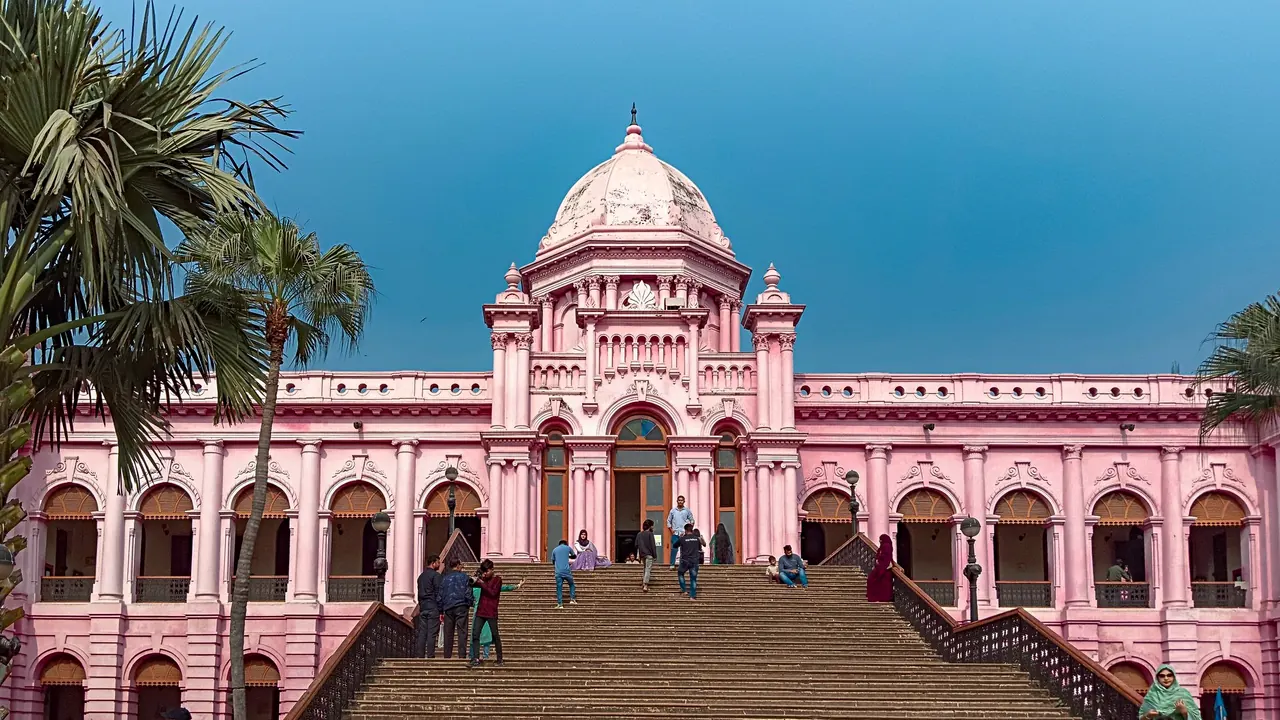
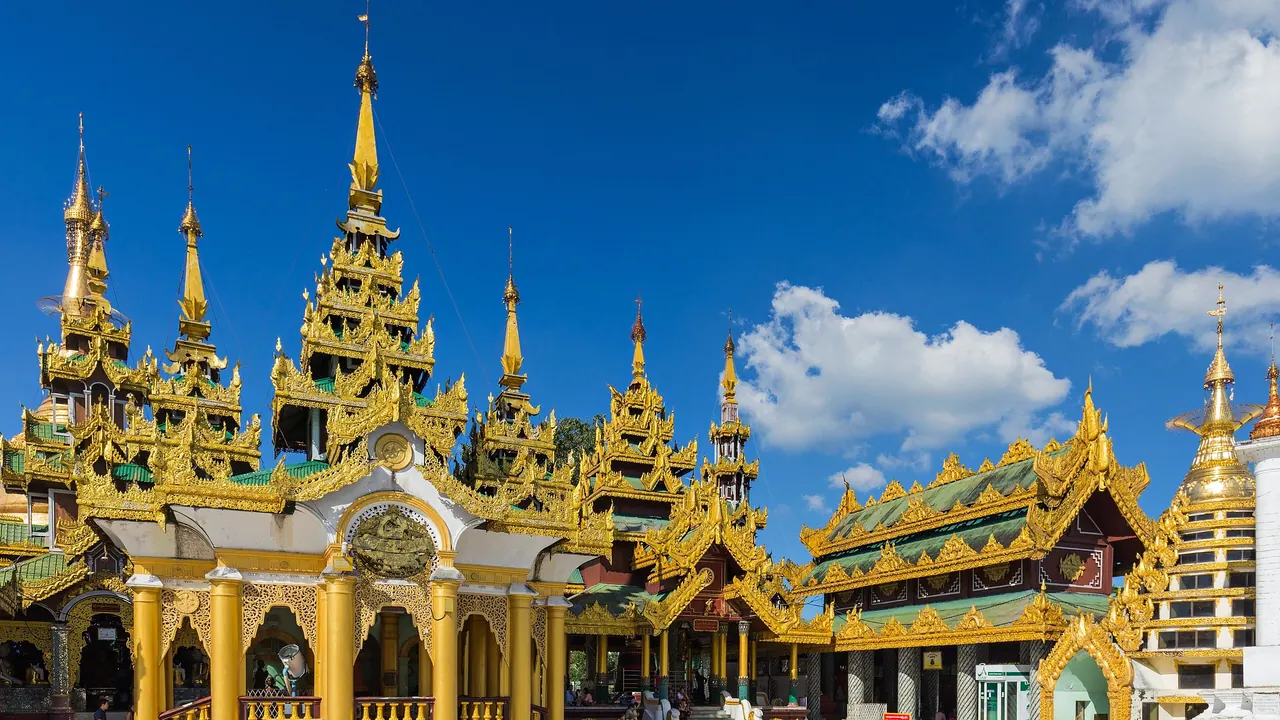
Photos: Dhaka by Riyad Hossain Hridoy, Pexels License; Yangon by Marcin Konsek, CC BY-SA 4.0, cropped.
Dhaka or Yangon?
Our verdict in twelve categories, each scored against the same fixed benchmark cities, and the climate month by month, so you can choose for your trip.
Choose Dhaka for
- live music and the arts
- prices
- shopping
Dhaka suits the traveller who comes for the food and history of Bengal and doesn't mind working to reach them. The kacchi biryani lanes of Old Dhaka, Lalbagh Fort, the pink Ahsan Manzil and Louis Kahn's Parliament House make a strong case. Day to day it is even cheaper than Yangon, and anyone curious about Bengali stage drama or baul singing will find more live performance here. In return, expect long hours in traffic, no bar life, and a car with a driver as the sensible way to get around.
Choose Yangon for
- wellness
- nightlife
- culture and sights
Yangon is the easier and more rounded choice for a first visit or a few days on the way somewhere else. The Shwedagon at dusk and a colonial downtown you can walk give it the stronger sightseeing, and Bago makes a better day out. Burmese massage and the meditation centres offer a calm that Dhaka can't. Ending the evening with a beer in Chinatown is also simple here, which it is not in Dhaka.
Scoreboard
Twelve categories on one fixed scale from 0 to 100. The shaded stretch is the gap between the two.
Your match
Pick a travel style or drag the sliders, and both match scores follow your weighting.
Wins on live music and the arts and prices with your weighting.
Wins on wellness and nightlife with your weighting.
What matters to you?
Category by category
What the scores mean for a trip.
Beaches & swimming
Neither city is a beach destination, and swimming in either means a hotel pool, because the Buriganga and the Yangon River are working rivers, not places to swim.
The real difference is how far away the coast is. From Dhaka, the long sands of Cox's Bazar can be reached by a short flight, while Yangon's beaches at Chaung Tha and Ngwe Saung are a long drive and need several nights of their own.
Food & drink
Both are cities to eat in, and they reward a curious eater equally well, but the cooking points in different directions. Dhaka's pride is the rich Mughal-descended food of Old Dhaka: kacchi biryani, tehari, bakarkhani and kebabs around Chawkbazar, with hilsa in mustard and a serious sweet-shop culture of roshogolla and mishti doi.
Yangon starts its day in the tea shops over mohinga and palata, and its own Burmese dishes, such as laphet thoke and slow-cooked curries, sit beside Indian and Chinese cooking. Drinks are the other divide. On 19th Street a meal of skewers comes with draught beer, while Dhaka's evenings run on food and sweet tea because alcohol is scarce.
Culture & sights
Yangon has the stronger sightseeing, mostly thanks to one place. The gilded Shwedagon on its hill, busy with families walking the terrace barefoot at dusk, is a sight few cities can match. Around it, the compact colonial downtown of the Secretariat, the High Court and the Strand is easy to take in over two or three days.
Dhaka has real treasures, including Lalbagh Fort, Ahsan Manzil, the Star Mosque and Kahn's remarkable Parliament House. They are spread across a hard city to cross and nothing is polished for visitors, so seeing them takes more effort for a less rounded picture.
Nightlife
Neither city is built for late nights, but Yangon at least gives you somewhere to have a drink. Its beer stations with football on the screens, the crowded tables of 19th Street and a few rooftop hotel bars make for a relaxed evening, even if the streets empty well before midnight.
In Dhaka, drinking is limited to a few hotels and private clubs in Gulshan and Banani, often for members or foreign passport holders only. A good night out there means a long dinner and a dessert shop, not a bar.
Nature & outdoors
Both sit on flat delta land with little real countryside in easy reach, so the outdoors means city parks and the water. Dhaka's best outing is a country boat on the Buriganga out to villages where paddy fields run down to the bank. Yangon's best is the Kandawgyi boardwalk with the Shwedagon rising over the water, or an evening walk round Inya Lake.
Day trips
Yangon's day trips are easier and more varied. Bago, with the Shwemawdaw Pagoda and the great reclining Shwethalyaung Buddha, can be reached by road or train, and a ferry across the river leads to the kilns and canals of the pottery town of Twante.
Dhaka's best outing is Sonargaon, with the decaying merchants' mansions of Panam Nagar and its folk art museum, plus brass workshops at Dhamrai. The problem is traffic, which can make even these short trips into long days.
Good for families
With children, Yangon is the slightly gentler choice, though both cities ask a lot of a family. In Dhaka, dry-season pollution and gridlock come on top of the heat, so families usually base themselves in Gulshan or Banani, travel by hired car and rely on the zoo in Mirpur and the play areas in the malls.
Yangon's lawns at People's Park and its lakeside promenades give children room to run, and older children who enjoy temples and markets can manage a few days. In both cities, strangers are warm and attentive towards the young.
Getting around
Yangon is the easier city to move around. Its colonial downtown is a grid you can walk despite the cluttered pavements, and keeping motorbikes out of the centre makes the streets calmer. Cheap taxis cover the rest, even if they get stuck in traffic too.
Dhaka does have the one thing Yangon lacks, an elevated metro from Uttara to Motijheel, and it is excellent when it goes your way. Away from that line, traffic is notorious and pavements are often missing, so most visitors hire a car with a driver and save cycle rickshaws for Old Dhaka.
Shopping & style
Shopping is broadly level, but the two cities sell different things. Dhaka is the place for cloth: fine handwoven jamdani, nakshi kantha embroidery and tailoring made to measure, plus vast malls such as Bashundhara City.
Yangon centres on the colonial hall of Bogyoke Aung San Market, with its lacquerware, puppets, longyi and jade, where you bargain hard and treat the gems with caution.
Affordability
Both are very cheap for visitors, and Dhaka goes a little further still. Mid-range hotels and local restaurants there cost a fraction of what they would in the West, and hiring a car and driver for the day is affordable. Only Gulshan's expat restaurants and the rare drink are expensive.
In Yangon the food, taxis and most pagodas cost little, but the comfortable hotels are expensive compared with everything else, and the Shwedagon charges foreigners for entry.
Live music & performing arts
Dhaka has more live performance for anyone willing to look for it. The Shilpakala Academy and the theatre groups of Bailey Road keep Bengali drama alive, though almost all of it is in Bangla, and Tagore songs and baul music are everywhere at Pohela Boishakh, when singers greet the dawn in Ramna Park.
Yangon's offer is mostly for visitors: marionette shows and classical dance dinners at the Karaweik on Kandawgyi Lake. Its all-night zat pwe theatre comes only with local pagoda festivals.
Wellness & relaxation
Yangon is far easier to unwind in. Burmese massage, firm and full of stretches, is cheap and found all over the city, and the Mahasi meditation centre lets foreigners join silent vipassana practice for days or weeks, which nothing in Dhaka matches.
Dhaka's options are limited to international hotel spas and a few Gulshan salons. Its calmest hours come early in a lakeside park or on a slow boat on the river.
When should you go?
Pick your month. The climate figures are measured averages, not a forecast.
Dhaka in July
Yangon in July
Daytime high, °C
Rainfall in the month, mm
Temperature and rainfall are climate normals, averaged over the years shown. Dhaka: 1945-2025, 18 years observed (sunshine 1991-2020, rainfall 1991-2020) normals, Dhaka (4.4 km from centre). Yangon: 1991-2020 normals, Yangon (3.2 km from centre).
Both cities are at their best in the dry months from November to February, but they feel quite different then. Dhaka has a real cool season, with January highs around 25°C that are pleasant for walking Old Dhaka. Yangon stays hot all year and is still in the low thirties in midwinter. From March the heat builds in both. Yangon peaks first and hardest, at about 38°C in April, which makes long pagoda walks hard going in the middle of the day.
The monsoon hits both from May to October, and Yangon gets far more of it. Its wettest months bring close to 590mm each, against about 375mm at Dhaka's peak in July, though Dhaka's rain starts a little earlier, in April. The warm Bay of Bengal water at Yangon's distant beaches is best saved for the dry season, when the coast roads are easier too. For either city, December to February is the safe choice, and Dhaka is the more comfortable of the two then.
Which traveller are you?
On a relaxing and wellness trip, Yangon is the better pick. In Dhaka, rest mostly means retreating indoors from the noise and haze. In Yangon you can build the days around quiet: a pagoda terrace at first light, a massage through the hot afternoon, perhaps a few days given to meditation.
For a trip on a tight budget, Dhaka goes a little further. Living on fuchka, corner cha and Old Dhaka biryani costs almost nothing, and there is no bar bill to tempt you. In Yangon a bed is the big expense, so a frugal traveller settles for a simple guesthouse.
For a short city break, Yangon fits better. In Dhaka a weekend can vanish in traffic between Old Dhaka and Kahn's Parliament. In Yangon, a morning walking from Sule to the Strand, the Circular Railway after lunch and dusk at the Shwedagon make one full day.
Before you go
| Measure | Dhaka | Yangon |
|---|---|---|
| Official language | Bangla | Burmese |
| Currency | Taka (BDT) | Kyat (MMK) |
| Sockets | ACGK220 V, 50 Hz | CFG230 V, 50 Hz |
| Driving side | Left | Right |
| Time zone | UTC+6 | UTC+6:30 |
| Emergency number | 999 | Police 199, ambulance 192, fire 191 |
| Elevation | 4 m | 15 m |
| Main airport | Hazrat Shahjalal International Airport (DAC)13 km from centre31 non-stop destinations | Yangon International Airport (RGN)13 km from centre29 non-stop destinations |
| Public holidays this year | 7 days | - |
By the numbers
| Measure | Dhaka | Yangon |
|---|---|---|
| Population | 16,800,000 | 6,874,000 |
| People per km² | 45,652 | 11,934 |
| Museums within 10 km | 17 | 5 |
| UNESCO World Heritage sites within 50 km | 0 | 0 |
| Swim season, months above 21 °C | - | 12 months |
Where else could you go?
Every comparison below shares a destination with this one, so you can follow Dhaka or Yangon somewhere new.