Dominican Republic
Santo Domingo
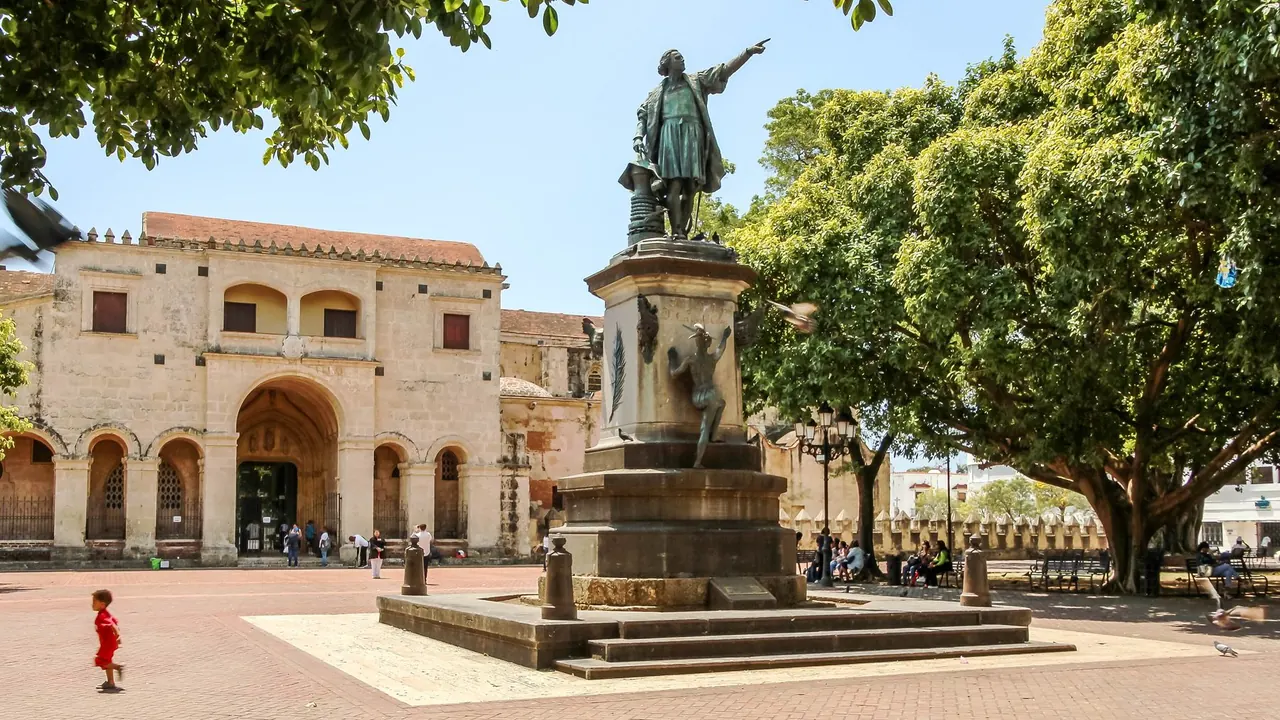
The statue of Columbus in Parque Colon before the cathedral
- Nightlife66
- Affordable cities66
- Culture & sights64
Photo: Dr. Thomas Liptak, CC BY-SA 4.0, cropped
Match
49
Every category weighted equally
- Beach & sun49
- Culture & arts50
- Food & nightlife52
- Family trip48
- Outdoors46
- Relax & unwind45
- Shopping & style49
- On a budget51
Santo Domingo in twelve categories
Our verdict on each, scored 0 to 100 against the same fixed benchmark cities, so a score means the same thing on every page.
Beaches & swimming. Scores 58 out of 100.
Food & drink. Scores 58 out of 100.
Culture & sights. Scores 64 out of 100.
Nightlife. Scores 66 out of 100.
Nature & outdoors. Scores 36 out of 100.
Day trips. Scores 44 out of 100.
Good for families. Scores 40 out of 100.
Getting around. Scores 40 out of 100.
Shopping & style. Scores 44 out of 100.
Affordability. Scores 66 out of 100.
Live music & performing arts. Scores 46 out of 100.
Wellness & relaxation. Scores 22 out of 100.
Santo Domingo category by category
Beaches & swimming
58The city meets the Caribbean along the Malecón, but the shore there is coral rock and pounding surf, and nobody swims in the city itself. For a beach day people head east. Boca Chica, about 40 minutes away, is a shallow, reef-sheltered lagoon with calm water warm enough to wade into all year and a lively, crowded weekend scene of Dominican families, food stalls and loud music. Juan Dolio, a little further, is quieter, with a longer strip of sand and more open sea.
The water stays around 26°C to 29°C through the year, so the season never really ends. Still, beaches here are an outing from a city stay rather than its point, and the finest white sand in the country lies further east.
Food & drink
58Dominican food is hearty home cooking: la bandera of rice, beans and stewed meat at lunch, sancocho on Sundays, mangú for breakfast, mofongo and fried pork chicharrón in the evening. Comedores serve it cheaply at lunchtime, while street carts sell yaniqueques, empanadas and the late-night chimi burger.
The Colonial Zone has courtyard restaurants in old stone houses, and the Piantini and Naco districts hold the city's more ambitious modern kitchens, many of them reworking Creole flavours. Drinking means ice-cold local beer at the corner colmado, aged Dominican rum and strong sweet coffee. It is satisfying and characterful, though the range narrows quickly once you have tried the classics.
Culture & sights
64Santo Domingo was the first permanent European city in the Americas, and its Ciudad Colonial, a UNESCO site, holds a set of firsts: the first cathedral, the first hospital, the first paved street in Calle Las Damas, and the Fortaleza Ozama guarding the river. The Alcázar de Colón, the coral-stone palace of Columbus's son, and the Museo de las Casas Reales tell the colonial story, and the ruins of the San Francisco monastery stand at the top of the old town.
Beyond the old quarter, the Plaza de la Cultura gathers the Museo del Hombre Dominicano and the modern art museum, and the vast Faro a Colón monument rises east of the river. The colonial core is compact and can be seen properly in two or three days.
Nightlife
66Dominicans go out to dance, and a night here often ends on a packed floor to merengue and bachata. Weekend nights start late and run well past midnight. The Colonial Zone is the easiest place for a visitor, with bars in colonial houses and crowds spilling into the plazas around Calle Hostos and the cathedral.
The more polished lounges and clubs sit in Piantini and Naco, while along the Malecón and in the neighbourhoods the colmadón, a corner shop turned open-air bar with loud speakers and plastic chairs, is the classic local night out. Getting between areas means a taxi, and outside the Colonial Zone it is wiser not to wander on foot late.
Nature & outdoors
36The city sits on a flat, hot coastal plain, so the outdoors within easy reach is modest. Los Tres Ojos, a chain of limestone caves with green lagoons, sits on the eastern side of the city, and the National Botanical Garden and the long wooded Parque Mirador Sur give shaded space to walk, run or cycle. The Malecón makes a breezy seafront promenade at sunset.
The country's real landscapes are further off: the mangroves and karst islets of Los Haitises, the pine-covered mountains around Jarabacoa and the whale waters of Samaná all need a long day or an overnight stay. Visitors keen on hiking usually move on rather than use the capital as a base.
Day trips
44Day trips run mainly east along the coast. Altos de Chavón, a hilltop village built in Mediterranean style above the Chavón river near La Romana, is about an hour and a half away, and the fishing village of Bayahibe, roughly two hours out, is the departure point for boats to Saona and Catalina islands. San Pedro de Macorís, with its baseball heritage and old sugar town architecture, is on the way.
The basilica at Higüey is a longer pull, and Santiago, the country's second city, sits at the edge of a comfortable day. The list is short, and many excursions sold in the city are beach and boat days rather than visits to other towns.
Good for families
40Dominicans are warm and easy with children, which helps more than the city's infrastructure does. There is the National Aquarium on the eastern seafront, the National Zoo, the cave lagoons of Los Tres Ojos and the old forts of the Colonial Zone, which children tend to enjoy for their cannons and walls. The shallow, reef-protected lagoon at Boca Chica is one of the gentlest places in the country for small swimmers.
Against that, the heat is constant, pavements are broken or missing, traffic is heavy and most trips need a taxi. Families often split time between a short city stay and a beach resort further along the coast.
Getting around
40The Colonial Zone is compact and pleasant to explore on foot, with most of the historic sights within a few streets of each other. Beyond it, the city is spread out and dominated by traffic. The metro is clean and simple but its lines serve commuters more than visitors, and the cable car links hillside neighbourhoods rather than sights.
The informal guaguas and shared carros públicos are cheap but confusing for newcomers, so most visitors rely on app-based taxis to cross between the old town, the Piantini district and the Malecón. Trips out of the city go by intercity coach or private car.
Shopping & style
44The local buys are distinctive: Dominican amber, often with insects caught inside, blue larimar stone found only on this island, hand-rolled cigars, aged rum and faceless clay dolls. Calle El Conde, the pedestrian spine of the Colonial Zone, is lined with jewellery and souvenir shops, and the Mercado Modelo is a crowded, hard-bargaining market for crafts.
For everyday fashion and international brands, residents go to the large air-conditioned malls in the Piantini and Naco districts. There is little in the way of independent design or luxury shopping, and much of what is sold in the old town is aimed squarely at visitors.
Affordability
66For a capital, Santo Domingo is easy on the budget. Lunch at a comedor, beer from a colmado, street food and app taxis all cost little, and plain guesthouses and mid-range hotels are reasonably priced. The museums and forts of the old town charge modest entry.
The cost rises in the smart end of the city: boutique hotels in restored colonial houses, the modern restaurants of Piantini and cocktail bars approach European prices, and imported goods are expensive. A visitor who eats locally and moves by taxi spends far less than one who sticks to the polished places.
Live music & performing arts
46This is the home of merengue and bachata, and live music turns up in bars, on plazas and at neighbourhood parties. A long-standing local ritual is the open-air Sunday evening concert of son and merengue among the ruins of the San Francisco monastery, where couples of every age dance under the walls.
The formal scene centres on the Teatro Nacional Eduardo Brito in the Plaza de la Cultura, home to the National Symphony Orchestra, along with ballet, opera productions and visiting shows, and a few small theatres stage Spanish-language plays. It is a modest season, and visitors mainly come away remembering the dancing rather than the stage.
Wellness & relaxation
22Santo Domingo has no bathing or spa tradition of its own, and it is a loud city of traffic, horns and music from every corner. Wellness here means a hotel spa or a massage, with the larger international hotels along the Malecón offering the most complete facilities.
The calmest moments come in the leafy courtyards of the colonial guesthouses, the shade of the botanical garden or an evening walk by the sea. Visitors who want to slow down properly usually leave the capital for a beach resort further along the coast.
When should you go?
Pick a month to see what it is like. The climate figures are measured averages, not a forecast.
Santo Domingo in July
Daytime high, °C
Rainfall in the month, mm
The whole year
Shaded against this city’s own year: the deepest cell is its best month for that figure and the palest its weakest.
Where the figures come from
Santo Domingo has no rain gauge within 25 km of the centre, so its rainfall comes from a gridded climate dataset read at the city rather than from a gauge further away.
Temperature and rainfall are climate normals, averaged over the years shown. Santo Domingo: 1991-2020 normals, Santo Domingo (6.4 km from centre).
Before you go
| Measure | Santo Domingo |
|---|---|
| Official language | Spanish |
| Currency | Dominican Peso (DOP) |
| Sockets | AB110 V, 60 Hz |
| Driving side | Right |
| Time zone | UTC-4 |
| Emergency number | 911 |
| Elevation | 14 m |
| Main airport | Las Américas International Airport (SDQ)28 km from centre40 non-stop destinations |
| Public holidays this year | 13 days |
By the numbers
| Measure | Santo Domingo |
|---|---|
| City population | 2,201,941 |
| People per km² | 1,691 |
| Museums within 10 km | 10 |
| UNESCO World Heritage sites within 50 km | 1 |
| Swim season, months above 21 °C | 12 months |
Compare Santo Domingo with
Every comparison with a written verdict behind it.