
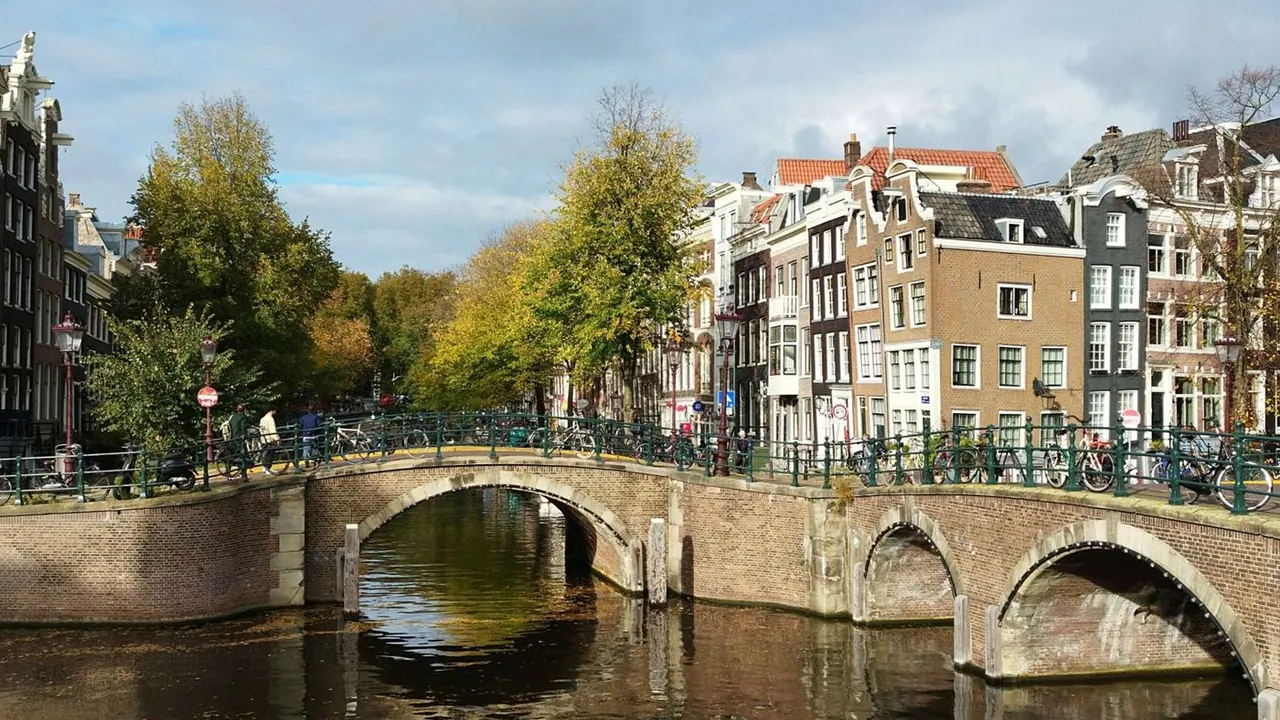
Photos: Dublin by David Kernan, CC BY 4.0, cropped; Amsterdam by Hans, Pexels License.
Dublin or Amsterdam?
Our verdict in twelve categories, each scored against the same fixed benchmark cities, and the climate month by month, so you can choose for your trip.
Choose Dublin for
- nature and the outdoors
- beaches
Choose Dublin if pubs, plays and walks matter more to you than galleries. Evenings there are about conversation over stout and traditional music sessions, the Abbey and the Gate give it real theatre, and the DART takes you to the cliff path at Howth and on towards the Wicklow hills. Amsterdam's flat polders have nothing like that. A room will cost you about as much in either city.
Choose Amsterdam for
- getting around
- culture and sights
- wellness
Amsterdam suits a sightseeing trip best, especially for anyone who comes for art. The Rijksmuseum, the Van Gogh Museum and the canal ring give it more to see than Dublin has, its clubs stay open until morning, and fast trains bring Haarlem, Delft or The Hague within easy reach for a day. It is also the easier city to bring children to, and the easier one to get around without a car.
Scoreboard
Twelve categories on one fixed scale from 0 to 100. The shaded stretch is the gap between the two.
Your match
Pick a travel style or drag the sliders, and both match scores follow your weighting.
Wins on nature and the outdoors and beaches with your weighting.
Wins on getting around and culture and sights with your weighting.
What matters to you?
Category by category
What the scores mean for a trip.
Beaches & swimming
Neither city works for a beach vacation, and both seas are cold, so what differs is how close the sand is and what people do there. Amsterdam's real beaches are at Zandvoort and Bloemendaal, half an hour away by train. Closer in there is the man-made shore at IJburg, and lakes like the Sloterplas for a hot afternoon.
Dublin has beaches on its own bay, from Dollymount Strand to Killiney, with the DART stopping close to most of them. It also has a year-round cold-water swimming habit at the Forty Foot and Seapoint that visitors can join. In both cities, most people walk on the sand rather than swim.
Food & drink
Amsterdam has the more interesting food, mostly thanks to its trading past. Indonesian rijsttafel, Surinamese roti, herring from street stalls and the Albert Cuyp market give it flavours you won't find at home, and De Pijp, the Jordaan and Oost are good areas to look for dinner. Dublin cooks very good Irish fish, lamb and farmhouse cheese well in its bistros, but the food rarely surprises.
Both cities are at their best with a drink in hand. Amsterdam has brown cafés, jenever tasting rooms and the early-evening borrel with bitterballen. Dublin has the slowly poured pint and whiskey distilleries, and visitors tend to remember its pubs more than its restaurants.
Culture & sights
Amsterdam is the clear winner for art. The Rijksmuseum, the Van Gogh Museum and the Stedelijk stand together on the Museumplein, the Anne Frank House is a visit few people forget, and the canal ring, a UNESCO site, makes the streets themselves the main sight.
Dublin's sights are smaller in scale and more literary: the Book of Kells at Trinity, the Chester Beatty Library, Kilmainham Gaol and the Georgian squares. They fill a rewarding few days, and the national museums are free, but nothing compares with Amsterdam's Dutch masters.
Nightlife
Amsterdam offers more kinds of night out, and it is far better for dancing. Several clubs have all-night licences, many in old industrial buildings or across the IJ in Noord, which gives the city a serious electronic music scene, and the Amsterdam Dance Event takes over the city every October.
In Dublin a night out means the pub, and the pubs are excellent, from old snugs with coal fires near Baggot Street to the late bars on Camden and Wexford Streets. Licensing laws mean there are few clubs and they close early, so go for talk and pints, not for dancing until dawn.
Nature & outdoors
Dublin has much more to offer outdoors. Phoenix Park has its deer, Howth has its cliff path, and the coastal walk runs from Bray Head to Greystones. The Wicklow Mountains begin just south of the suburbs, with Glendalough about an hour away, so proper walking is close by.
Amsterdam's countryside is flat and quiet, and best seen by bike through Waterland's meadows and dykes. The Amsterdamse Bos and the dunes of Zuid-Kennemerland are good for longer outings. It is pleasant country, but it has no hills or sea cliffs.
Day trips
Both cities are good bases for day trips, but Amsterdam's are easier to reach. Fast trains get to Haarlem in a quarter of an hour and to Leiden, Delft, Utrecht, The Hague and Rotterdam within the hour, so you can visit a different historic town each day without planning ahead. There are also windmills at Zaanse Schans and Kinderdijk, and the Keukenhof in spring.
Dublin's best outings are older and more rural: the passage tombs of Newgrange and Knowth in the Boyne Valley, the monastic site at Glendalough and medieval Kilkenny. They are memorable, but many are much easier with a tour or a hire car.
Good for families
Amsterdam is the easier city to bring children to. Artis zoo, the hands-on NEMO science museum, canal boat trips, pancake houses and city farms fill the days without much effort, though the fast bikes and unfenced canal edges mean holding small children's hands.
Dublin is friendly and compact, with Dublin Zoo inside Phoenix Park, the Vikings at Dublinia and a free natural history museum. The weather limits it: the beaches are for rock pools and kites, not swimming, and rainy days need an indoor plan.
Getting around
A short, direct train links Schiphol to Amsterdam's Central Station, and from there a metro line runs north to south under the city, trams cover the canal ring and the museum quarter, and free ferries cross the IJ to Noord. Many visitors also hire a bike, which is how locals travel and the most natural way to explore once you feel confident in the busy lanes.
Dublin's centre is just as small and walkable, and the DART along the bay makes Howth, Dalkey and Bray very simple to reach. Beyond the coast line and the two Luas tram routes, though, there is no metro, so the airport and the outer districts depend on buses that slow to a crawl in the rush hour.
Shopping & style
Amsterdam has more to browse. The Nine Streets and the Jordaan are full of independent boutiques and vintage shops, PC Hooftstraat has the luxury labels, and markets such as the Albert Cuyp, the Noordermarkt and the floating Bloemenmarkt give it character.
Dublin's shopping is mostly on two streets: Grafton Street, with Brown Thomas and the Powerscourt Townhouse, and Henry Street for the chains. Its strength is Irish craft, such as Aran knitwear, linen, tweed and whiskey, but it has few markets and little luxury.
Affordability
Both cities are expensive, and in both the hotel room costs the most: rooms near Amsterdam's canal ring and in central Dublin are among the priciest in Europe. Eating and drinking are costly in both too.
The ways to save differ. In Amsterdam, walking, cycling and market snacks keep daytime spending low, and staying in Haarlem or Utrecht makes rooms cheaper. In Dublin, the free national museums and gallery help most, along with lunch menus and a room near a DART or Luas stop outside the centre.
Live music & performing arts
Amsterdam is ahead, above all for classical music. The Concertgebouw is one of the world's great concert halls, the Dutch National Opera and Ballet perform beside the Amstel, the Bimhuis has jazz, and Paradiso and the Melkweg host touring bands. Most theatre, though, is in Dutch.
In Dublin it is the other way round. Theatre in English is the city's strength, with the Abbey and the Gate, and traditional music sessions fill the pubs almost every night. It has the National Concert Hall but no permanent opera house.
Wellness & relaxation
Neither city is a spa destination, but Amsterdam has more on offer. There are large day spas and saunas on the edges of the city, mixed and nude in the Northern European way, and early mornings on the quieter canals or an afternoon in the Vondelpark slow things down.
Dublin's spas are mostly in hotels. Its one real ritual is a cold sea dip at the Forty Foot or Seapoint, sometimes followed by a sauna on the seafront. For calm, walk in Phoenix Park or spend time in the villages along the bay.
When should you go?
Pick your month. The climate figures are measured averages, not a forecast.
Dublin in July
Amsterdam in July
Daytime high, °C
Rainfall in the month, mm
Where the figures come from
Amsterdam has no rain gauge within 25 km of the centre, so its rainfall comes from a gridded climate dataset read at the city rather than from a gauge further away.
Amsterdam's sunshine is measured 35 km from the centre, at De Bilt.
Temperature and rainfall are climate normals, averaged over the years shown. Dublin: 1991-2020 normals, Dublin Airport (9.3 km from centre). Amsterdam: 1991-2020 normals, Amsterdam Airport Schiphol (12 km from centre).
Both cities are at their best from May to September, and neither gets hot enough to make walking the streets a chore. Amsterdam has the warmer, sunnier summer, with highs around 22°C in July and August against about 19°C in Dublin, and noticeably more sunshine from April to August. April is Amsterdam's driest month at 45mm, which makes spring a good time to go. Rain picks up from July and stays fairly steady through the winter.
Dublin is a little milder in winter, a couple of degrees warmer than Amsterdam from December to February. Its wettest stretch is October and November. Neither sea is warm enough for easy swimming. The North Sea off Amsterdam reaches about 19°C in August, and the Irish Sea stays around 15°C even at the end of summer.
Which traveller are you?
For a culture and arts trip, Amsterdam is the better choice. The Rijksmuseum, the Van Gogh Museum and the Stedelijk stand side by side, the Concertgebouw takes care of the evenings, and short train rides reach the Mauritshuis in The Hague and Haarlem's Frans Hals Museum.
On an outdoors trip, Dublin is clearly better. The DART reaches the cliff path at Howth and the coastal walk from Bray to Greystones, Phoenix Park is huge, and Glendalough and the Wicklow Mountains are close. Around Amsterdam the flat polders suit gentle cycling more than walking.
On a family trip with young children, Amsterdam is easier. NEMO, Artis zoo, canal boats and pancake houses keep children busy, and trams link them all. Dublin is just as welcoming but has fewer attractions, and more days there need an indoor plan.
Before you go
| Measure | Dublin | Amsterdam |
|---|---|---|
| Official language | English, Irish | Dutch |
| Currency | Euro (EUR) | Euro (EUR) |
| Sockets | G230 V, 50 Hz | CF230 V, 50 Hz |
| Driving side | Left | Right |
| Time zone | UTC, UTC+1 in summer | UTC+1, UTC+2 in summer |
| Emergency number | 112 | 112 |
| Elevation | 20 m | -2 m |
| Main airport | Dublin Airport (DUB)9 km from centre200 non-stop destinations | Amsterdam Airport Schiphol (AMS)12 km from centre287 non-stop destinations |
| Public holidays this year | 11 days | 11 days |
By the numbers
| Measure | Dublin | Amsterdam |
|---|---|---|
| City population | 592,713 | 921,468 |
| People per km² | 5,154 | 4,208 |
| Museums within 10 km | 41 | 101 |
| UNESCO World Heritage sites within 50 km | 1 | 5 |
| Swim season, months above 21 °C | None | None |
Where else could you go?
Every comparison below shares a destination with this one, so you can follow Dublin or Amsterdam somewhere new.
- Haarlemvs Amsterdam
- Utrechtvs Amsterdam
- The Haguevs Amsterdam
- Rotterdamvs Amsterdam
- Kilkennyvs Dublin
- Antwerpvs Amsterdam