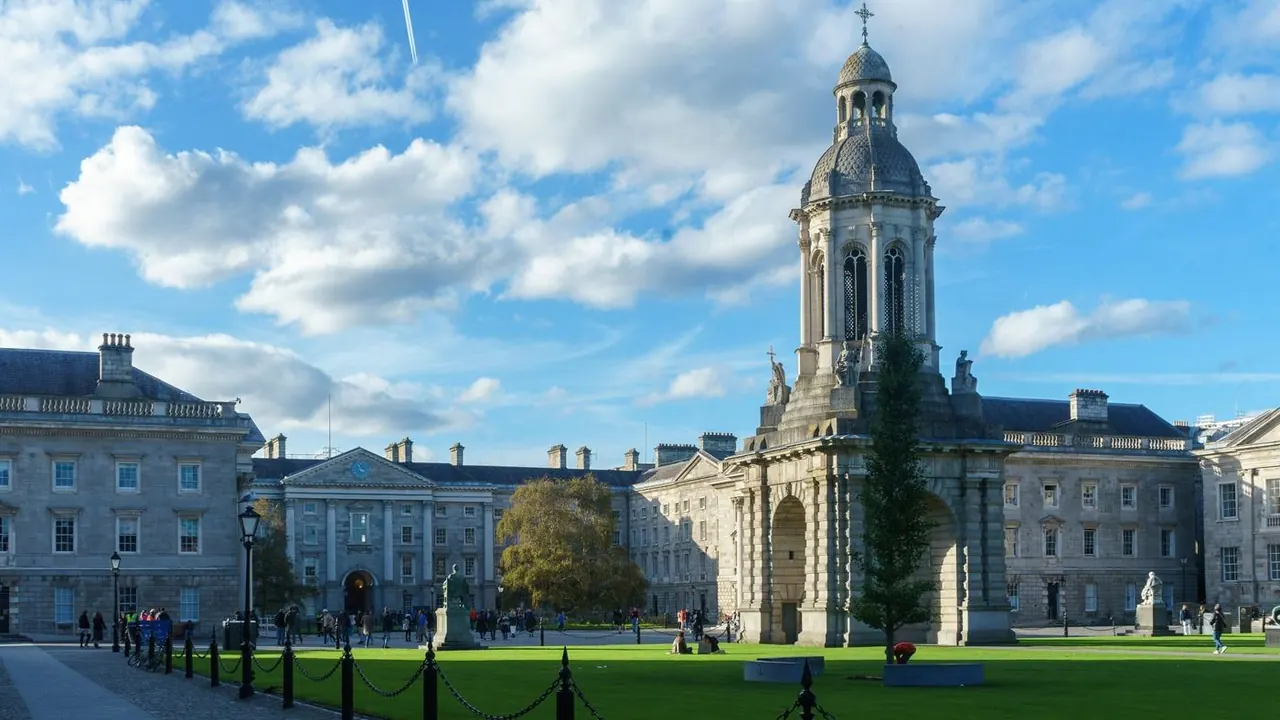
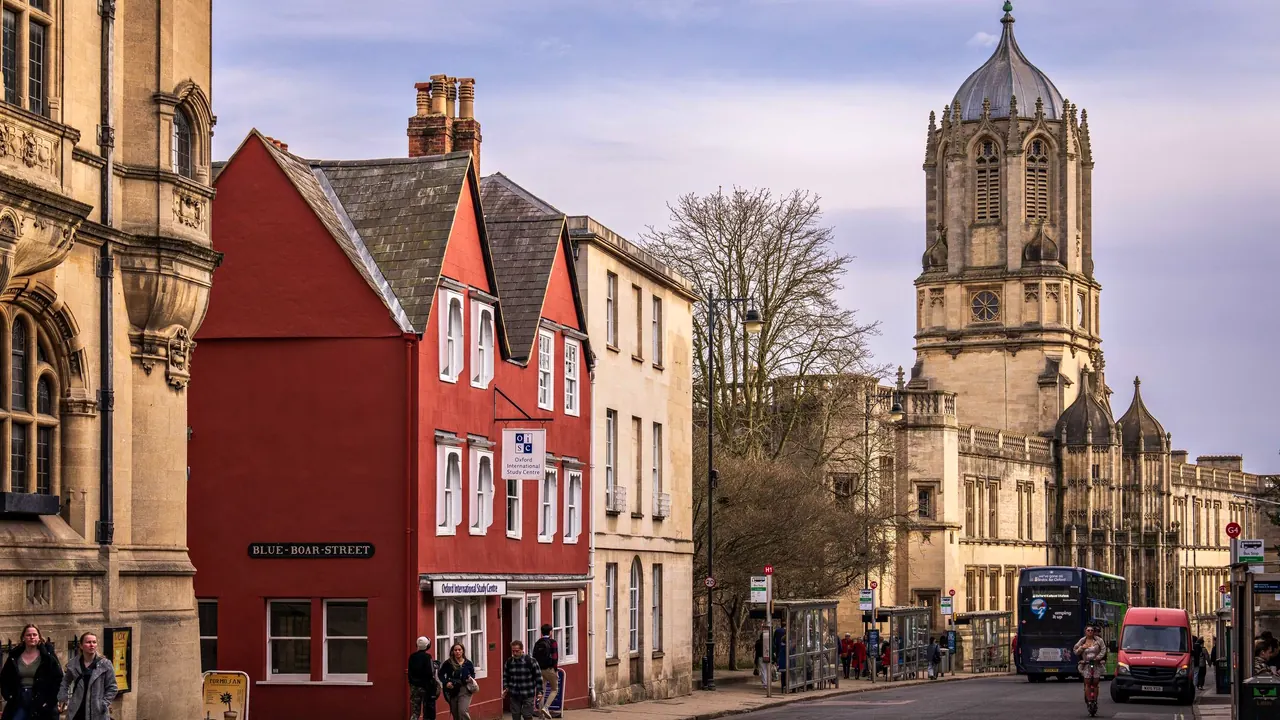
Photos: Dublin by David Kernan, CC BY 4.0, cropped; Oxford by Mark Stebnicki, Pexels License.
Dublin or Oxford?
Our verdict in twelve categories, each scored against the same fixed benchmark cities, and the climate month by month, so you can choose for your trip.
Choose Dublin for
- nightlife
- nature and the outdoors
- beaches
Dublin is the pick for travellers who want an evening as much as a morning. Its pubs, nightly traditional sessions and serious theatre give it a social life Oxford can't match, and the coast and Wicklow hills are close enough for a cliff walk or a cold sea dip between city days. Choose it for a lively long weekend with talk, music and fresh air.
Choose Oxford for
- day trips
- prices
- culture and sights
Oxford suits a quieter, more studious trip. The colleges, libraries and museums are packed into a centre you can cross on foot, Evensong in a college chapel is a rare kind of live performance, and the town makes an outstanding base for Blenheim, the Cotswolds, Bath or London. It's for days spent looking and walking, followed by an early pint by the river.
Scoreboard
Twelve categories on one fixed scale from 0 to 100. The shaded stretch is the gap between the two.
Your match
Pick a travel style or drag the sliders, and both match scores follow your weighting.
Wins on nightlife and nature and the outdoors with your weighting.
Wins on day trips and prices with your weighting.
What matters to you?
Category by category
What the scores mean for a trip.
Beaches & swimming
Dublin at least has a coastline. Sandy strands at Dollymount, Portmarnock and Killiney are a short DART ride from the centre, and the year-round dips at the Forty Foot and Seapoint are a local ritual worth trying, even in a cold sea.
Oxford is about as far inland as England gets. Swimming there means the Thames at Port Meadow, the Cherwell or the open-air pool at Hinksey, with grassy banks instead of sand. Neither city will give you warm-water beach days, but only Dublin lets you smell the sea.
Food & drink
Dublin eats better of the two. Atlantic fish, grass-fed lamb and farmhouse cheeses are cooked well in the bistros of Dublin 2 and Dublin 8, and the drinking side, with slow-poured stout and Irish whiskey distilleries, has real local character. Meals are pricey for what you get.
Oxford's strengths are humbler: a Sunday roast in a riverside pub, lunch stalls in the old Covered Market, and cheap Middle Eastern, South Asian and Caribbean food along Cowley Road. Much of the centre is chains, so plan where you eat.
Culture & sights
Oxford has the edge because the whole centre is the sight. Honey-stone college quads, the Radcliffe Camera, the Bodleian and Christ Church's hall and cathedral are almost all still in use, and the Ashmolean and the Pitt Rivers are museums of real substance.
Dublin's highlights are fewer but stand out: the Book of Kells at Trinity, the Chester Beatty's Asian and Islamic manuscripts, and Kilmainham Gaol's account of Irish independence. Its character lies in Georgian squares and literary history more than in grand buildings, which makes it a good place to wander.
Nightlife
This is where the two differ most. Dublin's pubs are a reason to visit in themselves, from coal-fire snugs off Grafton Street to the younger, later bars around Camden and George's Street, and weekends are busy. Clubbing is thin, but a long night of pints and talk is easy to find.
Oxford goes quiet. Its taverns and riverside pubs are lovely for a drink after dinner, and Cowley Road has a few late bars, but the scene follows the university terms and the centre is usually calm by midnight.
Nature & outdoors
Dublin has more dramatic scenery close at hand. You can walk the cliff path at Howth with seals below, look for deer in Phoenix Park, or head into the granite hills, bogs and glacial lakes of Wicklow, all within an hour of the city. Expect rain, but the landscapes have real variety.
Oxford's outdoors are softer: Port Meadow's grazing horses, punting on the Cherwell, flat towpath rides, and the Cotswolds and the Ridgeway for long, gentle walks. It is peaceful countryside rather than wild country.
Day trips
Oxford is the better base. Blenheim Palace is twenty minutes away, the Cotswold villages are within an hour, and London, Bath, Stratford-upon-Avon and Windsor all make easy day trips, so a week here can cover much of southern England.
Dublin has strong trips too, especially the ancient passage tombs at Newgrange and Knowth and the monastic valley of Glendalough. Kilkenny and Belfast are reachable by train, but the rural sites are much easier with a car or a tour.
Good for families
Both are calm, manageable cities for children, but they keep them busy in different ways. Dublin has more to do within the city, with the zoo inside Phoenix Park, Viking displays at Dublinia and children's museums, and children are welcome in pubs over a family lunch.
Oxford's appeal is the dinosaurs and curiosities of its two free museums, a punt on the Cherwell, and Christ Church's Harry Potter connections. Its bigger attractions, like the wildlife park and the studio tour, need a trip out.
Getting around
Oxford is the easier city to get around. You can cross the centre on foot in twenty minutes, several streets are closed to through traffic, the station is a short walk away and bikes are everywhere. A car is a nuisance, so drivers use the park-and-ride.
Dublin's centre is also flat and walkable, and the DART along the bay is a real asset. Beyond the tram and train lines you rely on buses, which are slow in traffic, and there is no rail link to the airport.
Shopping & style
There is little between them. The difference is in what you take home. Dublin is the place for things made in Ireland, such as Aran knitwear, linen, tweed and whiskey, found on Grafton Street, in the Georgian arcade of the Powerscourt Townhouse and in the design shops around Drury Street. Luxury shopping is thin beyond the department store.
Oxford's best buys are in the details: the small traders of the Covered Market, antique maps and prints, and the huge basement of Blackwell's bookshop on Broad Street. For designer labels at outlet prices, the outlet village near Bicester is about twenty minutes away.
Affordability
Both are expensive, but Dublin is harder on the wallet. Its central hotels are among the dearest in Europe and a round of drinks costs a lot, though free national museums and lunch menus help.
Oxford's rooms are also pricey and scarce, especially during graduations, but daily costs are easier: pub meals and Cowley Road cafés are reasonable and the main museums are free. College entry fees add up, though.
Live music & performing arts
Dublin has more going on in the evenings. The Abbey and the Gate give it serious theatre, the National Concert Hall hosts the national orchestra, and traditional sessions happen in pubs almost every night. Opera is the one real gap.
Oxford's highlight is quieter: Evensong sung by world-famous college choirs in candlelit chapels during term, with chamber music in the old Holywell Music Room. Its theatres mostly stage touring shows.
Wellness & relaxation
Neither city has spas or thermal baths of note, but Oxford is the easier place to slow down. Early mornings in the Botanic Garden, a walk along Addison's Walk by Magdalen's deer park or an idle afternoon on a punt all have a calm, unhurried feel.
Dublin's one wellness ritual is bracing: a cold sea dip at the Forty Foot or Seapoint, often followed by a seafront sauna. Otherwise, calm here means a long walk in Phoenix Park or a slow day in the bayside villages.
When should you go?
Pick your month. The climate figures are measured averages, not a forecast.
Dublin in July
Oxford in July
Daytime high, °C
Rainfall in the month, mm
Where the figures come from
Oxford's temperatures are measured 37 km from the centre, at Fairford Royal Air Force Base.
Oxford has no rain gauge within 25 km of the centre, so its rainfall comes from a gridded climate dataset read at the city rather than from a gauge further away.
Oxford's sunshine is measured 57 km from the centre, at Lyneham.
Temperature and rainfall are climate normals, averaged over the years shown. Dublin: 1991-2020 normals, Dublin Airport (9.3 km from centre). Oxford: 1961-1990 (sunshine 1991-2020, rainfall 1991-2020) normals, Fairford Royal Air Force Base (37 km from centre).
Neither city is ever warm enough for a beach trip. Both are at their best from May to September, when walking the streets is comfortable and the days are long. Oxford gets a little warmer in high summer, reaching about 22°C in July against Dublin's 20°C, and it is clearly sunnier from June to August. Dublin's sea peaks at only around 15°C, so swimming there means a brisk dip, not a long swim.
Winter is grey in both. Oxford is the colder of the two, with highs around 5°C in January, while Dublin's sea air keeps it milder but wetter. Rain is spread through the year in both cities, but Dublin's autumn is especially damp, with about 83mm in November. Late spring is a good choice for either, as it is drier and sunnier than autumn.
Which traveller are you?
For a food and nightlife trip, Dublin is the stronger choice. Its old pubs with snugs, late bars on Camden and Wexford Streets, stout, whiskey and Irish produce make for full evenings, while Oxford is mostly quiet by midnight and its food is dependable rather than memorable.
On an outdoors trip, Dublin wins. The DART runs to the Howth cliff path and the Bray to Greystones coastal walk, and the Wicklow Mountains and Glendalough are close by. Oxford's meadows, towpaths and the Cotswolds are lovely, but they are gentler walking country.
For a culture and arts trip, Oxford is the better fit. Its working colleges, the Bodleian, the Ashmolean and the Pitt Rivers lie a few minutes apart, and Blenheim, Stratford and London are easy day trips. Dublin's theatre is stronger, but Oxford has more to see.
Before you go
| Measure | Dublin | Oxford |
|---|---|---|
| Official language | English, Irish | English |
| Currency | Euro (EUR) | Pound Sterling (GBP) |
| Sockets | G230 V, 50 Hz | G230 V, 50 Hz |
| Driving side | Left | Left |
| Time zone | UTC, UTC+1 in summer | UTC, UTC+1 in summer |
| Emergency number | 112 | 112 or 999 |
| Elevation | 20 m | 73 m |
| Main airport | Dublin Airport (DUB)9 km from centre200 non-stop destinations | London Heathrow Airport (LHR)63 km from centre224 non-stop destinations |
| Public holidays this year | 11 days | 8 days |
By the numbers
| Measure | Dublin | Oxford |
|---|---|---|
| City population | 592,713 | 147,500 |
| People per km² | 5,154 | 3,235 |
| Museums within 10 km | 41 | 11 |
| UNESCO World Heritage sites within 50 km | 1 | 1 |
| Swim season, months above 21 °C | None | - |
Where else could you go?
Every comparison below shares a destination with this one, so you can follow Dublin or Oxford somewhere new.