Ethiopia
Addis Ababa
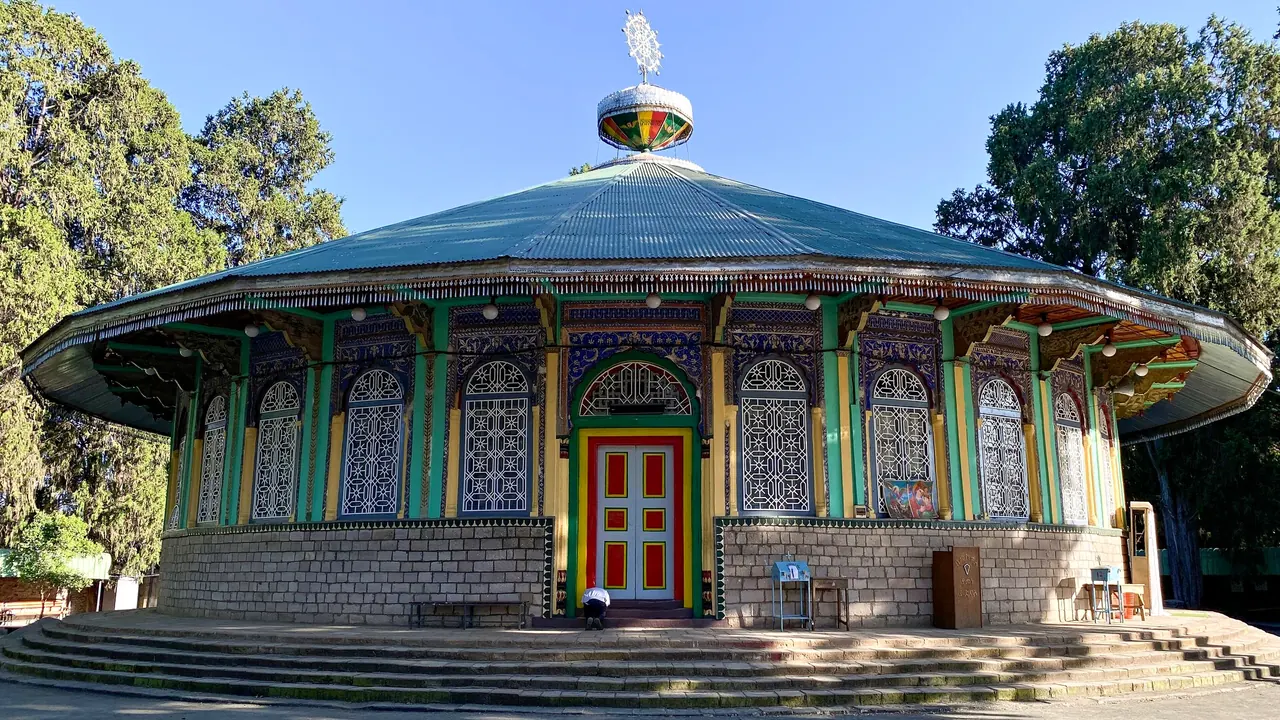
A round church at the Holy Trinity Cathedral
- Affordable cities78
- Food & drink65
- Live music & the arts55
Photo: ProtoplasmaKid, CC BY 4.0, cropped
Match
43
Every category weighted equally
- Beach & sun40
- Culture & arts47
- Food & nightlife48
- Family trip41
- Outdoors44
- Relax & unwind41
- Shopping & style45
- On a budget47
Addis Ababa in twelve categories
Our verdict on each, scored 0 to 100 against the same fixed benchmark cities, so a score means the same thing on every page.
Beaches & swimming. Scores 6 out of 100.
Food & drink. Scores 65 out of 100.
Culture & sights. Scores 50 out of 100.
Nightlife. Scores 45 out of 100.
Nature & outdoors. Scores 50 out of 100.
Day trips. Scores 42 out of 100.
Good for families. Scores 25 out of 100.
Getting around. Scores 30 out of 100.
Shopping & style. Scores 42 out of 100.
Affordability. Scores 78 out of 100.
Live music & performing arts. Scores 55 out of 100.
Wellness & relaxation. Scores 32 out of 100.
Addis Ababa category by category
Beaches & swimming
6Addis Ababa sits on a highland plateau at about 2,400m, a long way from any sea, and swimming here means a hotel pool. The crater lakes around Bishoftu, about an hour south-east, have lakeside resorts where people spend a weekend by the water, but bathing in the lakes themselves is not something a visitor plans around. Anyone who wants beach time should build it into a different leg of the trip.
Food & drink
65Eating here means injera, the spongy sourdough flatbread made from teff, spread with stews and shared from one platter by hand. Spicy doro wat, sizzling tibs, raw or lightly warmed kitfo with spiced butter, and on the many fasting days a colourful spread of lentils, chickpea shiro and greens that happens to be entirely vegan. Traditional houses serve honey wine, tej, in flasks, and local lagers are everywhere.
Coffee is the other half of the story. Ethiopia is where the plant comes from, and the coffee ceremony, with beans roasted over charcoal, incense and three rounds poured from a clay jebena, is part of daily life. Macchiato bars from the Italian period fill Piazza and Bole. Beyond Ethiopian and some Italian cooking, though, the range is narrow.
Culture & sights
50Addis Ababa was only founded in the 1880s, so its sights are museums, churches and imperial buildings rather than an old townscape. The National Museum holds the bones and casts of Lucy and other early hominid finds, and the Ethnological Museum, set in Haile Selassie's former palace on the university campus, is the best introduction to the country's many cultures. Holy Trinity Cathedral, where the emperor is buried, and the octagonal St George's Cathedral are the main churches, and the Red Terror Martyrs' Memorial Museum covers the darker years of the Derg.
In the centre of the city, Menelik II's Grand Palace compound is open to visitors as a park, with its throne rooms, banquet hall and the emperors' living quarters. Up on the Entoto hills above town stand the churches of Menelik's first capital, including the one where he was crowned. Two or three days covers it; the great historic sites of Lalibela, Gondar and Aksum are flights away.
Nightlife
45Going out centres on Bole, near the airport road, where lounges, rooftop bars and a few clubs fill up late on Friday and Saturday, and on Kazanchis and Piazza, where the bars are more local and rougher round the edges. Nights can run well past midnight at weekends, with Ethiopian pop and Afrobeats mixed in. During the week it is much quieter, and for a visitor the best evenings tend to be the ones built around music rather than the club scene.
Nature & outdoors
50The city sits high, and the eucalyptus-covered Entoto hills rise straight from its northern edge, with walking and running trails and wide views back over the sprawl. Further west, the Menagesha Suba forest has old juniper and podocarpus woodland and colobus monkeys, and the crater lakes at Bishoftu give a gentler landscape for walks and birdwatching. Towards Debre Libanos, about two hours north, the land breaks into the gorge of the Blue Nile, where gelada monkeys graze the cliff edges.
The highland climate is mild all year, with rains from June to September. Ethiopia's great wild landscapes, the Simien and Bale mountains and the Danakil, lie far beyond a day out, and getting out of the city through traffic takes time.
Day trips
42A handful of worthwhile outings lie within reach by road. The monastery of Debre Libanos, about two hours north, is one of the country's holiest sites, and close by is an old stone bridge over the gorge known locally as the Portuguese Bridge. To the south, the carved stelae field of Tiya is a UNESCO site, and the rock-hewn church of Adadi Mariam gives a small taste of the Lalibela tradition. Melka Kunture's prehistoric site is on the same road, and Bishoftu with its crater lakes makes an easy, relaxing day.
Roads are slow and most visitors hire a driver. The great historic towns of the north are far beyond a day trip and are reached by domestic flight.
Good for families
25Ethiopians are warm towards children, and families will be welcomed everywhere, but very little here is built for them. The palace park has lions and gardens, the Entoto hills offer space to run around, and hotel pools fill the gaps. Against that come heavy traffic, broken pavements, the altitude, which tires small children for the first days, and food hygiene that needs some care. It works for a short stopover with older children rather than as a family vacation in itself.
Getting around
30Addis Ababa spreads over hills with its sights far apart, and walking between them is rarely practical, with uneven pavements, steep slopes and traffic. The light rail runs on two lines across the city but misses most places a visitor wants to go. The blue-and-white minibuses that carry most residents run on routes called out by conductors and are hard to use without help. In practice visitors rely on ride-hailing apps, metered taxis or a hired driver, and should allow for slow traffic at rush hour.
Shopping & style
42The great shopping experience is Merkato, one of the largest open-air markets in Africa, a maze of districts for spices, coffee, baskets, recycled metalwork and everything else. It is fascinating and disorienting, and best explored with someone who knows it, keeping an eye on bags. For things to take home, the weavers at Shiro Meda sell handwoven white cotton shawls and scarves, and shops around Piazza and Churchill Avenue sell silver and brass Orthodox crosses, leather and religious paintings. Roasted Ethiopian coffee is the obvious buy. Beyond this there are a few small design and fashion studios in Bole and some malls, but no luxury or high street to speak of.
Affordability
78For local life, Addis Ababa is very cheap: a plate of injera, a macchiato, a minibus ride or a museum entry costs little by any international standard. The gap opens with accommodation. Comfortable hotels of international standard are few and charge accordingly, and restaurants and lounges in Bole price for diplomats and business travellers. Hiring a car and driver for day trips also adds up. A traveller happy with local guesthouses and eateries spends very little, while one who wants polished comfort pays close to what they would at home.
Live music & performing arts
55Music is where Addis Ababa comes alive at night. In the azmari bets of Kazanchis and Piazza, singers accompanied by the one-stringed masinko improvise teasing verses about the audience, often including the foreigners in the room. Ethio-jazz, the hypnotic mix of Ethiopian scales and funk that came out of the city in the 1960s and 70s, can be heard live in a handful of clubs, and cultural restaurants stage the shoulder-shaking eskista dances of different regions over dinner.
The National Theatre and Hager Fikir, one of the oldest theatres in Africa, put on plays and concerts, though mostly in Amharic. There is no opera or classical season to speak of.
Wellness & relaxation
32The city grew up around the Filwoha hot springs, and their mineral water still feeds simple private bath cubicles near the centre, used by locals more for hygiene and health than for luxury. Large hotels have spas and massage, and the lake resorts at Bishoftu, about an hour away, are where residents go to unwind for a weekend. The city itself is loud and congested, so slowing down mostly means a hotel garden, a long coffee ceremony or the quiet of the Entoto hills.
When should you go?
Pick a month to see what it is like. The climate figures are measured averages, not a forecast.
Addis Ababa in July
Daytime high, °C
Rainfall in the month, mm
The whole year
Shaded against this city’s own year: the deepest cell is its best month for that figure and the palest its weakest.
Temperature and rainfall are climate normals, averaged over the years shown. Addis Ababa: 1991-2020 normals, Addis Ababa (7.8 km from centre).
Before you go
| Measure | Addis Ababa |
|---|---|
| Official language | Amharic |
| Currency | Ethiopian Birr (ETB) |
| Sockets | CEFJL220 V, 50 Hz |
| Driving side | Right |
| Time zone | UTC+3 |
| Emergency number | 911 |
| Elevation | 2,355 m |
| Main airport | Addis Ababa Bole International Airport (ADD)8 km from centre137 non-stop destinations |
| Public holidays this year | 10 days |
By the numbers
| Measure | Addis Ababa |
|---|---|
| City population | 5,704,000 |
| People per km² | 10,824 |
| Museums within 10 km | 7 |
| UNESCO World Heritage sites within 50 km | 1 |
Compare Addis Ababa with
Every comparison with a written verdict behind it.