Finland
Turku
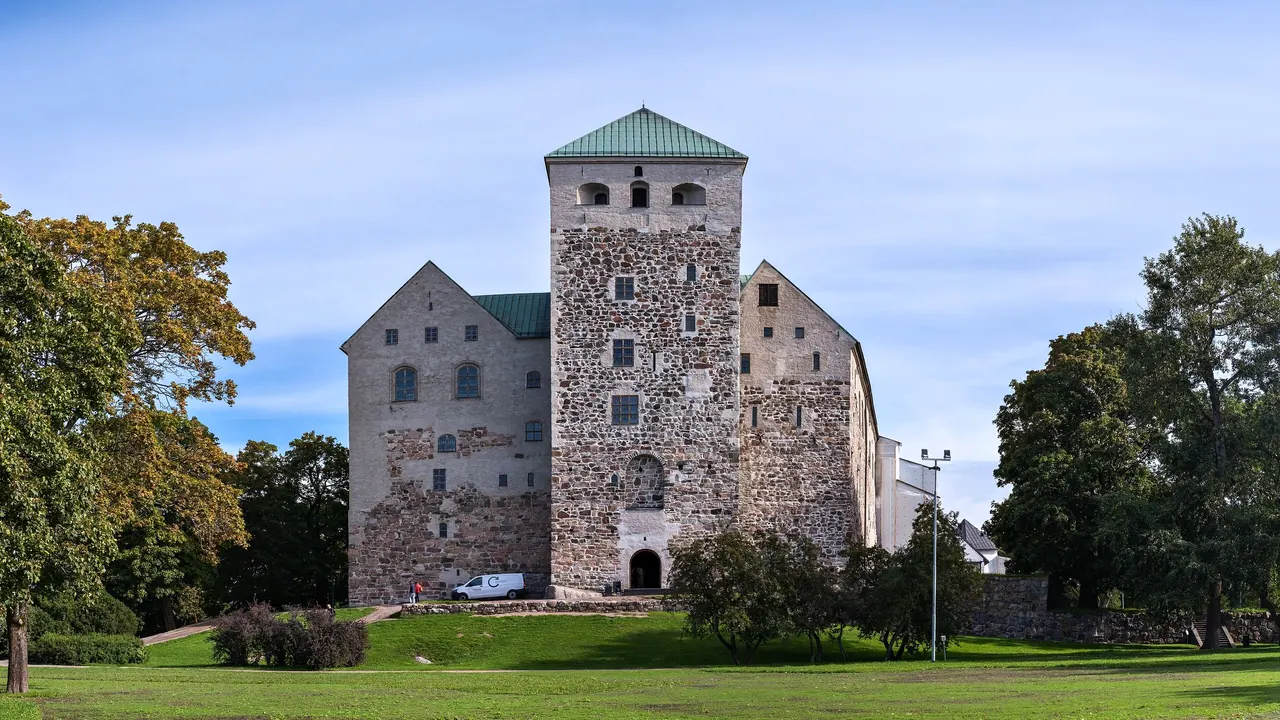
Turku Castle under a clear sky
- Families65
- Getting around64
- Nature & outdoors62
Photo: Christian David, CC BY-SA 4.0, cropped
Match
48
Every category weighted equally
- Beach & sun46
- Culture & arts48
- Food & nightlife45
- Family trip50
- Outdoors50
- Relax & unwind49
- Shopping & style47
- On a budget46
Turku in twelve categories
Our verdict on each, scored 0 to 100 against the same fixed benchmark cities, so a score means the same thing on every page.
Beaches & swimming. Scores 30 out of 100.
Food & drink. Scores 42 out of 100.
Culture & sights. Scores 48 out of 100.
Nightlife. Scores 38 out of 100.
Nature & outdoors. Scores 62 out of 100.
Day trips. Scores 52 out of 100.
Good for families. Scores 65 out of 100.
Getting around. Scores 64 out of 100.
Shopping & style. Scores 35 out of 100.
Affordability. Scores 35 out of 100.
Live music & performing arts. Scores 42 out of 100.
Wellness & relaxation. Scores 60 out of 100.
Turku category by category
Beaches & swimming
30Turku sits on the Baltic, and swimming is something for high summer. The main sandy beach is Saaronniemi at the far end of Ruissalo island, about 20 minutes by bus from the centre, with shallow water, pine woods behind it and families out on warm days. Elsewhere people swim off smooth granite rocks and small jetties in the archipelago.
The sea is brackish and cool. In a good July it reaches about 18-20°C, and the season lasts only a few weeks. Algae can cloud the water in late summer. Swimming here is a pleasant extra on a sunny day, usually paired with a sauna, and nobody builds a vacation around the beach.
Food & drink
42Eating in Turku means Finnish produce from the archipelago and the countryside around it: smoked and cured fish, Baltic herring, dark sweet archipelago bread, new potatoes and summer berries. The market hall dates from 1896, and its wooden stalls of fish, meat, cheese and pastries are the best place to start. In summer the market square sells vegetables and snacks.
The restaurants are good but limited in number. A few ambitious kitchens cook Nordic seasonal food, and the river terraces and moored boats along the Aura fill on summer evenings. There is no street food culture to speak of, the international range is narrow and eating out costs Nordic prices. It suits a relaxed lunch or dinner, but nobody comes to Turku mainly to eat.
Culture & sights
48Turku is Finland's oldest city and was its capital, and two medieval landmarks carry that history. The brick cathedral, consecrated around 1300, is the national mother church. Turku Castle at the river mouth, begun in the late thirteenth century, has furnished halls and a well-presented history museum.
The Great Fire of 1827 destroyed most of the old town. One wooden district survived and is now the Luostarinmäki handicrafts museum, with workshops in their original houses. Aboa Vetus & Ars Nova combines medieval ruins dug up underground with contemporary art. The Turku Art Museum, the Sibelius Museum, the maritime Forum Marinum and the Wäinö Aaltonen Museum complete a pleasant, low-key set of sights that takes two days.
Nightlife
38Students give Turku's nightlife its shape. On weekends the pubs, bars and a handful of clubs around the market square and along the river stay open into the small hours, and Finnish closing times are late. In summer the scene moves outdoors, onto terraces and the old boats moored on the Aura, and long light evenings keep the riverbank full.
Outside the summer and the university terms it is much quieter, and on midweek nights in winter the city is subdued. It is fine for a relaxed beer or an occasional late night, but it is too small to choose for going out.
Nature & outdoors
62The Archipelago Sea starts at the city's edge. It is a maze of thousands of granite islands, pine and birch woods, fishing villages and narrow sounds, one of the largest archipelagos in the world. The Archipelago Trail is a circular route through it, linked by bridges and small ferries, and cyclists ride it over several days. Kayaking, sailing and island-hopping by boat are the main summer pastimes, and the outer islands are part of a national park.
Closer in, Ruissalo island has old oak forest, a botanical garden and easy walking and cycling paths, and the riverbanks make a long green corridor through the city. The land is flat everywhere. Winter is dark and cold, so most outdoor activity happens between May and September.
Day trips
52The easiest trip is to Naantali, about 20 minutes by bus. It is an old wooden spa town on the water, with the president's summer residence at Kultaranta and the Moomin theme island. Further north, Old Rauma is a UNESCO-listed district of painted wooden houses and lace-making tradition, about an hour and a half by bus. Uusikaupunki is a quieter wooden coastal town.
Helsinki is about two hours by train and makes a long but workable day, and Tampere is a similar distance inland. Many villages in the archipelago, such as Nagu, Korpo and Kustavi, are best reached by car or ferry. Overall the trips are pleasant, low-key outings to small towns rather than major destinations.
Good for families
65The family highlight is just outside the city. Moomin World, on an island at Naantali about 20 minutes away, brings the Moomin stories to life with characters, houses and play areas that young children love. It opens mainly in summer. In Turku, Forum Marinum has ships to climb aboard, and Kurala Kylämäki is a living-history farm with animals and traditional crafts.
The city is safe, calm and small enough to manage with a pushchair. Playgrounds are everywhere, and Finnish public life makes children welcome as a matter of course. Ruissalo's shallow beach and woods work well on summer days. Winter is dark and cold, with much less to do, so the city is mainly a summer choice for families.
Getting around
64Central Turku is compact and flat, laid out along both banks of the Aura River. The cathedral, the market square, the market hall and most museums are a short walk apart, and the riverside paths join them pleasantly. The Föri, a small free ferry that has carried people across the river for over a century, saves a detour to the next bridge.
Beyond the centre, a single city bus network with one ticket system covers the region, including Ruissalo and Naantali, and buses also link the harbour with the train station. Cycling is easy and common in summer. A car is only useful for exploring the outer archipelago.
Shopping & style
35Most shopping happens on a few streets around the market square. There is a long-established Finnish department store, an indoor shopping centre and the usual Nordic chains. More interesting for a visitor are the summer market square, the stalls in the old market hall, and the craftwork sold at the Luostarinmäki handicrafts museum, where wool, wooden goods and traditional crafts are made in the old workshops. A few small shops around the centre sell Finnish glass, ceramics and textiles.
There are no luxury streets and only a handful of independent boutiques. The Finnish design on offer is a small selection rather than a full showcase of the big names, and the overall range is what you would expect in a regional city. Shopping fits around a stay here, but it is not a reason to come.
Affordability
35Turku has Nordic prices, though it is easier on the wallet than the capital. Hotels are moderately priced for Finland outside the big summer festival weekends. Local buses and museum tickets are reasonable, and the free river ferry and the walkable centre help keep transport costs low.
Eating out is the main expense. A weekday lunch buffet is good value, the Finnish way to eat well cheaply, but dinner and drinks, especially alcohol, are expensive by most European standards. Self-catering from the market hall and supermarkets helps on a tight budget.
Live music & performing arts
42Turku has a modest but genuine year-round programme. The Turku Philharmonic traces its roots to 1790, which makes it Finland's oldest orchestra, and it plays in the city's concert hall. The City Theatre stages plays and musicals in Finnish, and the Swedish-language theatre on the market square, built in 1839, is the oldest working theatre building in the country.
Summer brings the best of it. The long-established Turku Music Festival puts on classical concerts in the cathedral and the castle, and Ruisrock, one of Europe's oldest rock festivals, fills Ruissalo island for a weekend. Away from these, live music means small gig venues and pub stages.
Wellness & relaxation
60In Finland the sauna is part of everyday life, and Turku is a good place to take part. Public saunas sit by the water and in the city's swimming halls, and the usual routine of heat followed by a plunge in the sea or a hole cut in the winter ice is open to visitors as well as locals. Naantali, a short ride away, has a long spa tradition and a large spa hotel, and Ruissalo has another spa by the sea.
The city itself is quiet, with unhurried riverside cafés and an easy pace even in the centre. The light summer evenings and the long, dark winters each bring their own kind of calm, suited to anyone who wants a slower trip.
When should you go?
Pick a month to see what it is like. The climate figures are measured averages, not a forecast.
Turku in July
Daytime high, °C
Rainfall in the month, mm
The whole year
Shaded against this city’s own year: the deepest cell is its best month for that figure and the palest its weakest.
Temperature and rainfall are climate normals, averaged over the years shown. Turku: 1991-2020 (sunshine 1961-1990) normals, Turku (7.2 km from centre).
Before you go
| Measure | Turku |
|---|---|
| Official language | Finnish, Swedish |
| Currency | Euro (EUR) |
| Sockets | CF230 V, 50 Hz |
| Driving side | Right |
| Time zone | UTC+2, UTC+3 in summer |
| Emergency number | 112 |
| Elevation | 0 m |
| Main airport | Turku Airport (TKU)7 km from centre8 non-stop destinations |
| Public holidays this year | 15 days |
By the numbers
| Measure | Turku |
|---|---|
| City population | 209,633 |
| People per km² | 854 |
| Museums within 10 km | 27 |
| UNESCO World Heritage sites within 50 km | 0 |
| Swim season, months above 21 °C | None |
Compare Turku with
Every comparison with a written verdict behind it.