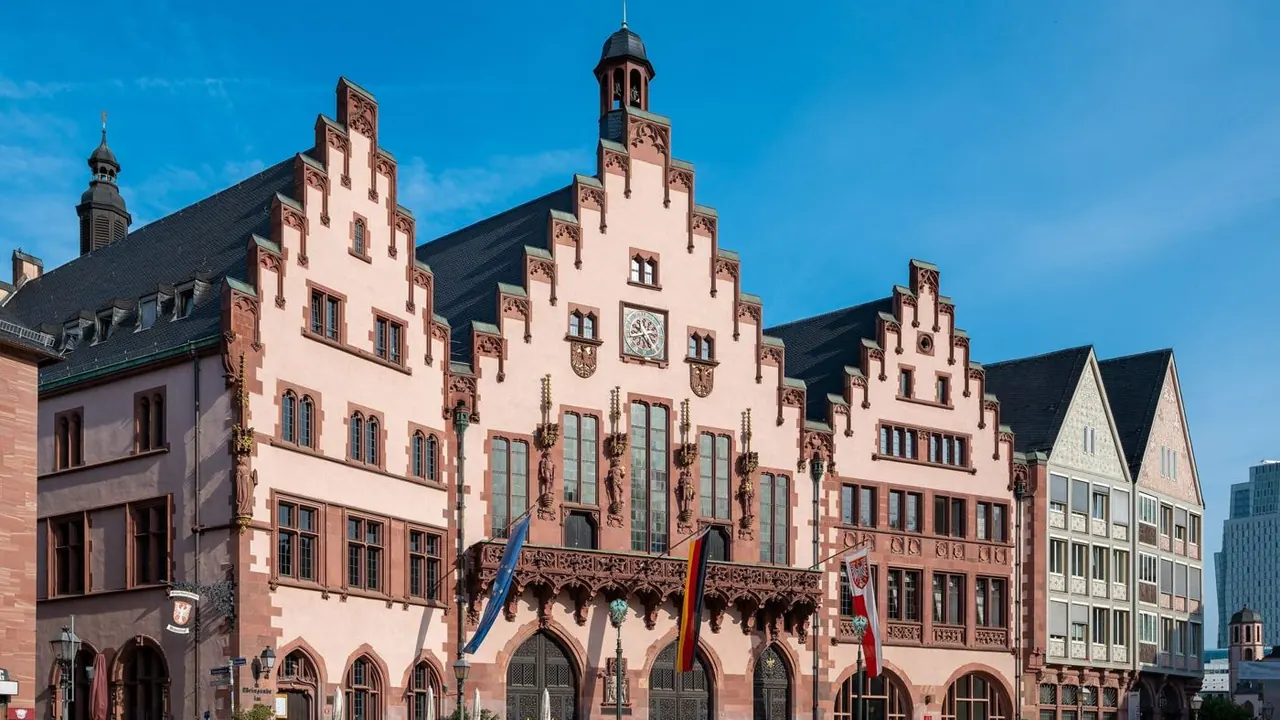
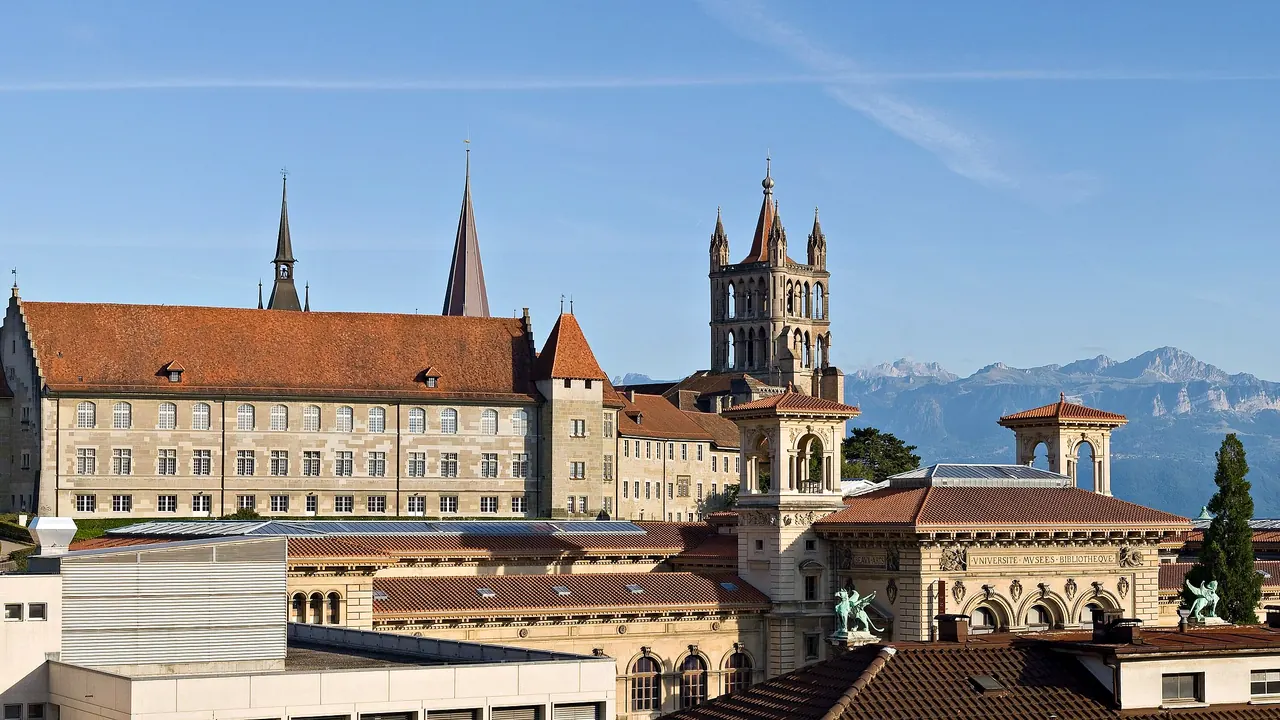
Photos: Frankfurt by Thomas Wolf, CC BY-SA 3.0 DE, cropped; Lausanne by Christian Mehlführer, CC BY-SA 3.0, cropped.
Frankfurt or Lausanne?
Our verdict in twelve categories, each scored against the same fixed benchmark cities, and the climate month by month, so you can choose for your trip.
Choose Frankfurt for
- prices
- shopping
- nightlife
Frankfurt suits a traveller who wants a city to use as a base and plenty to do in the evenings. It has the denser museum quarter, the stronger opera and concert life, a club scene with real roots in techno, and fast trains that put Heidelberg, the Rhine Gorge and Cologne within easy reach. It also costs noticeably less, especially at weekends, and that matters on a longer stay.
Choose Lausanne for
- beaches
- nature and the outdoors
- families
Lausanne is for people who come for the setting. The Alps rise across the lake, the Lavaux vineyard terraces start at the edge of town, and summer days end with a swim off a lakeside lawn. Ski slopes and hiking trails are about an hour away. You pay Swiss prices for all of this and get quieter nights in return, so it suits a trip built around walking, water and wine more than one built around the city itself.
Scoreboard
Twelve categories on one fixed scale from 0 to 100. The shaded stretch is the gap between the two.
Your match
Pick a travel style or drag the sliders, and both match scores follow your weighting.
Too close to call, level with your weighting
Wins on prices and shopping with your weighting.
Wins on beaches and nature and the outdoors with your weighting.
What matters to you?
Category by category
What the scores mean for a trip.
Beaches & swimming
Frankfurt has nowhere to swim in the middle of town. On hot days you take a train out to a pool or to a gravel-pit lake in the forest such as the Langener Waldsee, which does at least have sandy shores.
Lausanne has Lake Geneva at its door. From late June the water is warm enough to swim from the lawns and piers at Vidy, from the old lido at Bellerive or from the pebble shores towards Lutry, all with the Alps in view. It is still a summer swim rather than a beach vacation, with grass and shingle instead of sand.
Food & drink
The two are close, but you eat quite differently. Frankfurt's cooking is hearty and cheap: Grüne Soße and Handkäs mit Musik at shared tables in Sachsenhausen, the Kleinmarkthalle for a lunch of sausage and cheese, and a wide spread of Turkish and Asian kitchens around the station.
Lausanne puts its weight on wine and on cooking at the top end. Lake perch and papet vaudois come with Chasselas from the Lavaux terraces, often tasted in the growers' own village cellars, and some of Switzerland's most admired restaurants are close by. The cheap, casual meal that Frankfurt makes easy is much harder to find here.
Culture & sights
Both fill two or three days, but they suit different visitors. Frankfurt is for museum-goers: more than a dozen institutions line the Museumsufer, led by the Städel's old masters. The historic core around the Römer is a careful post-war rebuild set against Germany's only real skyline of towers.
Lausanne's old town survived. The Gothic cathedral still has a night watchman calling the hours from its tower, and the steep lanes and covered stairways around Place de la Palud are the genuine fabric. Its museums are fewer but more unusual, with the Olympic Museum at Ouchy and the Collection de l'Art Brut as the stand-outs.
Nightlife
Frankfurt has the better night out. Its techno and house clubs carry on a tradition that once shaped electronic music, the Bahnhofsviertel offers cocktail bars and late kiosks with plenty of character, and on summer nights the Main banks fill with people drinking outside.
Lausanne has a lively weekend because of its students, mostly in the clubs and terraces of the Flon warehouse valley and along the waterfront at Ouchy. The scene is smaller, drinks cost far more, and weeknights are quiet in both cities.
Nature & outdoors
This is where Lausanne pulls clearly ahead. The French Alps rise straight out of the lake opposite the city, the Lavaux terraces between Lutry and Saint-Saphorin make a walk of rare beauty, and within an hour you can ski or hike at Villars or Les Diablerets or reach the glacier at Glacier 3000.
Frankfurt's green spaces are pleasant but gentler. You can climb the beech-wooded Großer Feldberg in the Taunus, ride the flat cycle paths along the Main, or walk in the large Stadtwald. These are good for a walking or cycling day but have no high mountains and no big views.
Day trips
Both are excellent bases, and the difference lies in range. From Frankfurt the high-speed trains reach further and across more of the country, taking in Heidelberg's castle, the castle-lined Rhine Gorge, Cologne Cathedral and Würzburg's Residenz, with Mainz and Wiesbaden close by.
Lausanne's outings are packed closer together and are more varied in setting. Montreux and the Château de Chillon are a short ride along the lake, Bern and Gruyères are easy by train, and the boats crossing to Évian add a trip to France with no car needed.
Good for families
Frankfurt is the flatter, easier option with small children. One day can take in the dinosaur skeletons at the Senckenberg, the zoo in the centre and the Palmengarten glasshouses, then end with a boat ride past the towers. Pushchairs go on trams and the S-Bahn without fuss, and the Kronberg wildlife park in the Taunus makes an easy extra outing.
Lausanne gives children more to climb and explore, but it asks more of parents. At the Olympic Museum, children get to try things for themselves rather than just look. The aquarium-vivarium on the northern edge of town has creatures from rivers and lakes around the world, and the Sauvabelin woods have pedal boats and a wooden tower to climb. In summer, a steamer crossing on Lake Geneva fills an afternoon, which is a bigger day out than Frankfurt's river trips. The cost is steep streets and family meals at Swiss prices.
Getting around
Frankfurt is flat, so walking between sights takes little effort. The Römer, the cathedral, the Zeil and the Museumsufer are a few minutes apart, and the bridges lead straight across to Sachsenhausen. A single regional network covers the city, the Taunus, Wiesbaden and Mainz, although its lines and zones take some learning. Trains from the airport reach the centre in about a quarter of an hour.
Lausanne is built in steep layers from the lake up to the cathedral. The m2 metro does the climbing, rising more than 300m from Ouchy through the station and the Flon, and stairs, bridges and lifts link the levels in between. Lake boats connect the towns along the shore, and you need a car in neither city.
Shopping & style
Frankfurt has more range. There are department stores and malls along the Zeil, luxury fashion and jewellery on Goethestraße, and independent delis and design shops on Berger Straße and Schweizer Straße. The Saturday flea market on the Main adds some character.
Lausanne is narrower and is mainly about Swiss specialities. Rue de Bourg is the place for watches and chocolate, and Lavaux wine makes the best thing to take home. Beyond that there are few independent boutiques and little else that would justify a trip to shop.
Affordability
Frankfurt is not cheap, but it is far easier on the wallet. Business hotels empty out at weekends and in summer, and cider taverns and market stalls keep meals modest. The main trap is the trade-fair weeks, when rooms become scarce and costly.
In Lausanne the whole trip is expensive: rooms, wine, taxis and even an ordinary lunch. Visitors who manage best live off supermarket picnics, enjoy the free lakeside promenades and keep restaurant meals for a treat.
Live music & performing arts
Frankfurt has the deeper season. Its opera company is one of the most admired in Germany, the rebuilt Alte Oper holds the radio symphony orchestra, and jazz cellars keep a post-war tradition going. Little happens in summer, though.
Lausanne is smaller but has its own strength in dance. It is home to the Béjart Ballet and the Prix de Lausanne, and the Théâtre de Vidy stages contemporary work by the lake. In July, when Frankfurt's stages are quiet, the Montreux Jazz Festival is a short train ride away.
Wellness & relaxation
In Frankfurt, relaxing usually means leaving town for one of the historic spa towns nearby. Wiesbaden has the Art Nouveau Kaiser-Friedrich-Therme, Bad Homburg has thermal baths and a spa park at the foot of the Taunus, and Bad Nauheim still keeps up the old custom of taking the waters. In the city itself, the Palmengarten is the quietest place to spend an afternoon.
Lausanne's calm comes from the lake and the vines: unhurried walks along the promenades at Ouchy and Vidy, quiet lanes through the Lavaux terraces, and the spas of the grand lakeside hotels. For hot springs, Yverdon-les-Bains is under half an hour by train. Lavey-les-Bains, up the Rhône valley, has the hottest springs in Switzerland.
When should you go?
Pick your month. The climate figures are measured averages, not a forecast.
Frankfurt in July
Lausanne in July
Daytime high, °C
Rainfall in the month, mm
Where the figures come from
Lausanne's temperatures are measured 40 km from the centre, at Payerne.
Lausanne has no rain gauge within 25 km of the centre, so its rainfall comes from a gridded climate dataset read at the city rather than from a gauge further away.
Temperature and rainfall are climate normals, averaged over the years shown. Frankfurt: 1991-2020 normals, Frankfurt Westend (2 km from centre). Lausanne: 1991-2020 (sunshine 1961-1990) normals, Payerne (39.7 km from centre).
Frankfurt and Lausanne run at almost the same temperatures through the year. Each reaches about 26°C in July, and June to early September is the time for long days outdoors and, in Lausanne, for swimming in the lake. Spring and autumn are comfortable for walking the streets in either city. Winters are cold and grey in both, with Lausanne slightly colder at highs of around 4°C in December and January.
Rain is what really separates them. Frankfurt is fairly dry all year, and April is its driest month at about 38mm, with March close behind but cooler. Lausanne gets far more rain, often close to double, every month of the year. It peaks at around 115mm in July, often in short summer storms. Frankfurt is also the sunnier of the two for most of the year, especially in spring, though Lausanne gets a little more sun from August to December. For a dry city break, go to Frankfurt in April. For lake and mountain days, go to Lausanne between June and September and pack a rain jacket.
Which traveller are you?
For an outdoors trip, Lausanne wins easily. Lavaux vineyard walks start right outside town, sailing and paddleboarding on the lake run from spring to autumn, and the Vaud Alps and Jura ridges are an hour away. Frankfurt's Taunus is pleasant but much gentler.
On a trip on a tight budget, Frankfurt is the realistic choice. Cider taverns, Turkish grills and Bahnhofsviertel eateries keep meals cheap, and weekend hotel rates drop. In Lausanne even a simple lunch adds up, and picnics become a necessity rather than a choice.
For a food and nightlife trip, Frankfurt gives you more evening. You get long tables in Sachsenhausen apple-wine taverns, cheap eating from around the world, and then techno clubs or bars along Berger Straße. Lausanne's Flon is lively at weekends, but the scene is small and costly.
Before you go
| Measure | Frankfurt | Lausanne |
|---|---|---|
| Official language | German | French, German, Italian, Romansh |
| Currency | Euro (EUR) | Swiss Franc (CHF) |
| Sockets | CF230 V, 50 Hz | CJ230 V, 50 Hz |
| Driving side | Right | Right |
| Time zone | UTC+1, UTC+2 in summer | UTC+1, UTC+2 in summer |
| Emergency number | 112 | 112 |
| Elevation | 101 m | 495 m |
| Main airport | Frankfurt Main Airport (FRA)13 km from centre281 non-stop destinations | Geneva International Airport (GVA)52 km from centre150 non-stop destinations |
| Public holidays this year | 10 days | 9 days |
By the numbers
| Measure | Frankfurt | Lausanne |
|---|---|---|
| City population | 760,656 | 144,873 |
| People per km² | 3,063 | 3,499 |
| Museums within 10 km | 53 | 31 |
| UNESCO World Heritage sites within 50 km | 4 | 3 |
Where else could you go?
Every comparison below shares a destination with this one, so you can follow Frankfurt or Lausanne somewhere new.
- Genevavs Lausanne
- Chamonixvs Lausanne
- Bernvs Lausanne
- Heidelbergvs Frankfurt
- Annecyvs Lausanne
- Interlakenvs Lausanne