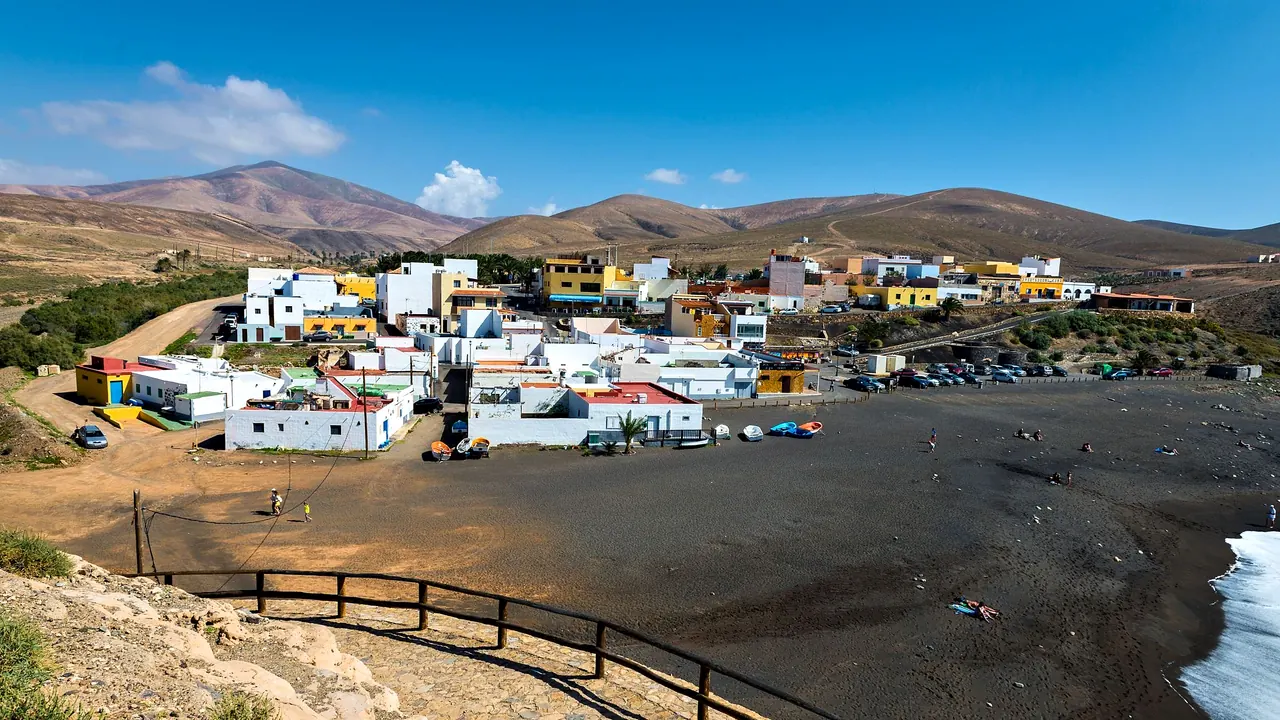
Photos: Fuerteventura by Magic K, Pexels License.
Fuerteventura or La Gomera?
Our verdict in twelve categories, each scored against the same fixed benchmark cities, and the climate month by month, so you can choose for your trip.
Choose Fuerteventura for
- beaches
- families
- nightlife
Fuerteventura is the island for a beach vacation. It has long pale sands at Corralejo and on the Jandía peninsula, shallow lagoons that suit small children, steady wind for kitesurfers and quick, easy roads between resorts. Corralejo's harbour also gives you somewhere to go in the evening, and Lanzarote is a short ferry ride away.
Choose La Gomera for
- nature and the outdoors
- culture and sights
La Gomera is for walkers. The cloud-wrapped laurel forest of Garajonay and the terraced ravines below it make it one of the Atlantic's great hiking islands, and Valle Gran Rey adds dolphin trips and quiet sunsets. Its beaches are dark coves and pebbles, its roads are slow and its evenings end early, so it suits travellers who want to spend the day on foot and the night in peace.
Scoreboard
Twelve categories on one fixed scale from 0 to 100. The shaded stretch is the gap between the two.
Your match
Pick a travel style or drag the sliders, and both match scores follow your weighting.
Wins on beaches and families with your weighting.
Wins on nature and the outdoors and culture and sights with your weighting.
What matters to you?
Category by category
What the scores mean for a trip.
Beaches & swimming
Fuerteventura is a sand island and La Gomera is not. Corralejo's dunes in the north end in long white beaches, the Jandía peninsula in the south has the island's longest pale sands, and on the west coast El Cotillo has small reef-sheltered lagoons for calmer swimming. The wind is the catch, so swimmers do best on the east and south-facing shores.
On La Gomera you give up those sands for narrow coves of dark sand or grey pebbles at the mouths of the ravines, and when the Atlantic swell runs, many are for sunbathing rather than swimming. Valle Gran Rey gives the most choice, with calm water at La Playa and the Charco del Conde rock pool, and the island's man-made seawater pools are often the safer place to get in. The sea is about as warm as around Fuerteventura, so the difference between the two is on the shore, not in the water.
Food & drink
Both islands eat the same Canarian basics, wrinkled potatoes with mojo and grilled fish, and neither has any fine dining. Fuerteventura's speciality is queso majorero, its protected goat cheese. You eat best in fishing villages such as Ajuy or by Corralejo's old harbour, because the large resorts mostly serve international menus.
La Gomera's own dishes have more character. There is almogrote spread on bread, dark palm honey and watercress stew, and the island makes white wine in small hill wineries, while Fuerteventura's wine mostly comes from neighbouring islands. The range is narrower, though, and most meals are home cooking in family-run village places.
Culture & sights
Neither island is a sightseeing trip, but La Gomera has the stronger story to tell. San Sebastián is where Columbus took on supplies in 1492. The Torre del Conde stands by the harbour, and tradition says his crew prayed in the Iglesia de la Asunción. The whistled language Silbo Gomero is still taught in the island's schools.
Fuerteventura's heritage is rural and scattered. There is the old Norman-founded capital of Betancuria, the Casa de los Coroneles in La Oliva, the windmills and the sacred mountain of Tindaya. On either island a day or two covers everything.
Nightlife
Fuerteventura offers a modest night out in Corralejo. Pubs, cocktail bars and a few late music bars along the main street and old harbour fill with surfers and visitors. It is not a clubbing island, but you can find a drink after dinner.
La Gomera has very little nightlife beyond a few seafront bars in Valle Gran Rey, where the sunset, sometimes with drums, is the main event of the evening. For anything late you would have to take the ferry to Tenerife.
Nature & outdoors
La Gomera is the greener and more dramatic island. Garajonay's laurel forest, often in cloud, covers the high plateau, and ravines terraced with old fields and palms fall to the sea on every side. A dense network of marked trails, including a path around the whole island, makes it superb walking country. Boats from Valle Gran Rey visit the basalt cliffs of Los Órganos and often meet pilot whales and dolphins.
Fuerteventura is bare desert by comparison. It has lava fields, crater walks such as Calderón Hondo and the Corralejo dunes, with little shade for summer hiking. Its strength is wind and waves: windsurfers and kitesurfers come for Sotavento and Flag Beach, and surfers for the reef breaks around El Cotillo and Lajares.
Day trips
Fuerteventura has the better day out, because Lanzarote is about half an hour from Corralejo by ferry. From there you can reach Teguise and the volcanic vineyards of La Geria. On the island itself, a drive links Betancuria, the windmill villages around Tefía and Ajuy.
From La Gomera, the island's own villages, such as Agulo and Hermigua, make pleasant but small outings. Tenerife is under an hour by sea, but reaching La Laguna or Garachico adds a long drive at each end, and El Hierro works better as an overnight trip.
Good for families
Fuerteventura is built for a family beach vacation. There are shallow lagoons at Sotavento, El Cotillo and Corralejo, resort hotels with pools and kids' clubs, water parks, a zoo near La Lajita with camel rides, and a glass-bottom boat to Lobos. Wind and the west-coast currents are the things to plan around.
La Gomera suits older children who enjoy walking and boats, with dolphin trips and easy forest paths. Younger ones have less to do. There is no water park or zoo, the beaches are pebbly or open to the surf, and the winding roads are hard on anyone prone to car sickness. Playa de Santiago is the easiest base.
Getting around
Fuerteventura is the simpler island to get to and to drive. It has its own airport and quiet, good roads, and the drive from Corralejo to Morro Jable takes about two hours from end to end. Only Cofete and parts of the west coast need dirt tracks.
La Gomera usually means a flight to Tenerife and then a ferry. Its roads climb over the central plateau and twist down into each ravine, so short distances are slow: San Sebastián to Valle Gran Rey takes about an hour. On both islands the buses run too rarely for touring, and most visitors hire a car.
Shopping & style
Neither island is for shopping, though Fuerteventura has a little more. Corralejo has surf and beachwear shops, Lajares holds a weekly craft market and there is a mall near Puerto del Rosario. Majorero cheese and aloe vera products are the things to take home.
La Gomera's best buys are things to eat: palm honey, almogrote and goat's cheese. The one craft to look for is the pottery of El Cercado, still shaped by hand without a wheel.
Affordability
Both islands are moderately priced, and the difference is in where the money goes. Fuerteventura's apartments, village fish restaurants and drinks are good value, but the winter high season and the big all-inclusive resorts in the south push costs up.
On La Gomera, rural houses and apartments cost less than on the busier islands, and prices stay much the same all year. The ferry from Tenerife adds to the bill, and on either island a hire car is an extra cost to plan for.
Live music & performing arts
Neither island is a place for an evening of theatre or concerts. Fuerteventura has occasional concerts at the Puerto del Rosario auditorium, timple players at village fiestas and cover bands in resort bars.
On La Gomera, music is part of the fiestas. The baile del tambor is danced to drums and chácaras, and the festival of the Virgin of Guadalupe brings processions. Demonstrations of the whistled language staged for visitors are the nearest thing to a show.
Wellness & relaxation
Both islands offer calm rather than treatments, and on each the spas are in hotels. Fuerteventura has more of them, in the larger resorts of Caleta de Fuste, Corralejo and Jandía, often with seawater pools. Around Lajares and El Cotillo, yoga is often paired with surfing.
La Gomera is the quieter of the two. Yoga, meditation and retreat houses sit among the terraced slopes of Valle Gran Rey, and watching the sun set over the Atlantic is the daily ritual.
When should you go?
Pick your month. The climate figures are measured averages, not a forecast.
Fuerteventura in July
La Gomera in July
Daytime high, °C
Rainfall in the month, mm
Where the figures come from
Fuerteventura's temperatures are measured 31 km from the centre, at Fuerteventura / Aeropuerto.
Fuerteventura has no rain gauge within 25 km of the centre, so its rainfall comes from a gridded climate dataset read at the destination rather than from a gauge further away.
La Gomera's temperatures are measured 54 km from the centre, at Tenerife Sur.
La Gomera has no rain gauge within 25 km of the centre, so its rainfall comes from a gridded climate dataset read at the destination rather than from a gauge further away.
Temperature and rainfall are climate normals, averaged over the years shown. Fuerteventura: 1991-2020 normals, Fuerteventura / Aeropuerto (31.1 km from centre). La Gomera: 1991-2020 normals, Tenerife Sur (53.5 km from centre).
Both islands are mild enough for walking all year. Daytime highs run from about 21°C in winter to 28°C in high summer, so neither is ever too cold to sit outside or too hot to explore. The Atlantic is coolest in late winter and warmest in September and October. You can swim all year on either island, but the water is most comfortable from summer into autumn.
The real difference is rain. Around Fuerteventura's resorts it barely rains from April to October, and late spring and summer are very sunny, which makes it the drier and more reliable choice for winter sun. La Gomera's coast gets noticeably more rain from October to February, peaking at about 56mm in December, and that moisture keeps Garajonay green. Spring is the best time for walking there, once the rain eases and before summer heat makes the ravine paths hard work.
Which traveller are you?
On a beach and sun trip, Fuerteventura is the clear pick. Corralejo's dunes run into long white beaches and Jandía has miles of pale sand around a tidal lagoon. La Gomera has dark-sand coves and pebbles, where swell often keeps you on the shore.
For an outdoors trip, La Gomera wins if you travel on foot. Marked trails cross Garajonay's laurel forest and drop through ravines to Valle Gran Rey, and boats go out to meet whales and dolphins. Fuerteventura's outdoor strength is on the water: kitesurfing at Sotavento and surfing near El Cotillo.
On a family trip with young children, Fuerteventura is far easier. Shallow lagoons, resorts built around pools and kids' clubs, a zoo near La Lajita and water parks fill the days. La Gomera has rock pools and dolphin boats but nothing built for children, and its roads twist.
Before you go
| Measure | Fuerteventura | La Gomera |
|---|---|---|
| Official language | Spanish | Spanish |
| Currency | Euro (EUR) | Euro (EUR) |
| Sockets | CF230 V, 50 Hz | CF230 V, 50 Hz |
| Driving side | Right | Right |
| Time zone | UTC, UTC+1 in summer | UTC, UTC+1 in summer |
| Emergency number | 112 | 112 |
| Main airport | Fuerteventura Airport (FUE)70 non-stop destinations | Tenerife Sur Airport (TFS)111 non-stop destinations |
| Public holidays this year | 12 days | 12 days |
By the numbers
| Measure | Fuerteventura | La Gomera |
|---|---|---|
| Population | 127,043 | 22,436 |
| People per km² | 78 | 61 |
| Swim season, months above 21 °C | 5 months | 7 months |
Where else could you go?
Every comparison below shares a destination with this one, so you can follow Fuerteventura or La Gomera somewhere new.
- Lanzarotevs Fuerteventura
- Tenerifevs La Gomera
- La Palmavs La Gomera
- Gran Canariavs La Gomera
- Gran Canariavs Fuerteventura
- Tenerifevs Fuerteventura