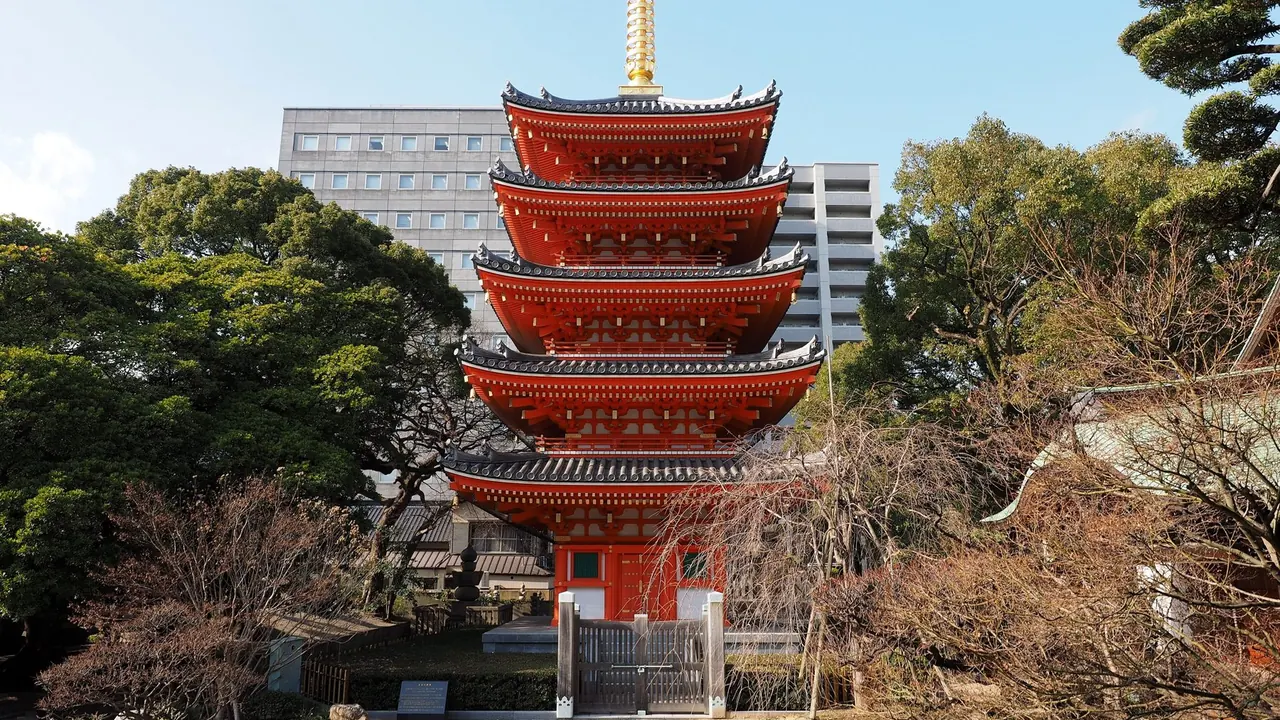
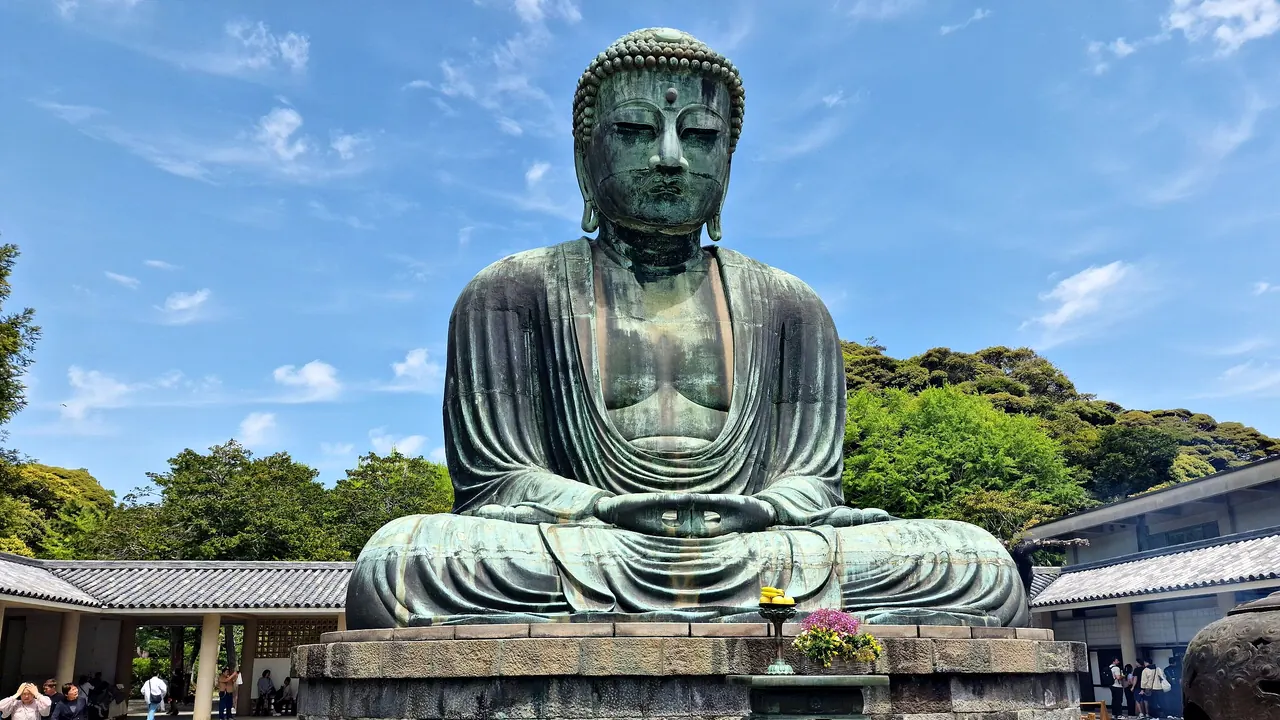
Photos: Fukuoka by Nick-D, CC BY-SA 4.0, cropped; Kamakura by Anagoria, CC BY-SA 4.0, cropped.
Fukuoka or Kamakura?
Our verdict in twelve categories, each scored against the same fixed benchmark cities, and the climate month by month, so you can choose for your trip.
Choose Fukuoka for
- nightlife
- food and drink
- shopping
Fukuoka is the choice for travellers who plan their days around meals and their evenings around bars. It is a real city, with tonkotsu ramen counters, riverside yatai stalls, late bar-hopping in Tenjin and Daimyo, and Kyushu's best shopping. It is also cheaper and easier with children, and it makes a strong rail base for the south-west of Japan. Its own sights are pleasant rather than memorable.
Choose Kamakura for
- culture and sights
- beaches
- nature and the outdoors
Kamakura suits a slower, more historical trip. The seat of Japan's first warrior government still has its Great Buddha, its major Zen temples and forested ridge trails that run between them, with a beach at the bottom of the town and Tokyo an hour away. The trade-off is quiet evenings, a short list of places to eat and rooms that cost more than the town's size would suggest.
Scoreboard
Twelve categories on one fixed scale from 0 to 100. The shaded stretch is the gap between the two.
Your match
Pick a travel style or drag the sliders, and both match scores follow your weighting.
Wins on nightlife and food and drink with your weighting.
Wins on culture and sights and beaches with your weighting.
What matters to you?
Category by category
What the scores mean for a trip.
Beaches & swimming
In Kamakura the beach is part of the town. Yuigahama and Zaimokuza are a short walk from the station, the Enoden line runs on to Koshigoe and Katase, and Zushi and Hayama offer calmer water. The sand is dark and volcanic, and outside summer the shore belongs to surfers and walkers.
Fukuoka's beach in town is the man-made strand at Momochi under the tower, which is fine for an evening paddle and little more. Its better beaches are on the Itoshima peninsula, under an hour away, where the sand is whiter and the water clearer than anything on Sagami Bay. They take a day trip, though, where Kamakura's beach can fit into a morning.
Food & drink
Fukuoka is the clear choice for anyone who travels to eat. It is the home of tonkotsu ramen, and the yatai along the river in Nakasu are Japan's nearest thing to street food. On top of that come mentaiko, motsunabe, mizutaki and raw Genkai Sea squid, so you can eat seriously for a week, from noodle counters to sushi.
Kamakura's food is narrower and mostly eaten in the daytime. Whitebait over rice by the beach, shojin ryori near the Zen temples and snacks along Komachi-dori are all good. For an evening of izakaya or a proper sushi dinner, though, most visitors go to Yokohama.
Culture & sights
Kamakura has the deeper history. As Japan's capital of warrior rule from 1192, it left the bronze Great Buddha at Kotoku-in, the Minamoto shrine of Tsurugaoka Hachimangu and Engaku-ji and Kencho-ji, two of the country's leading Zen temples. Smaller places such as Hase-dera and the bamboo at Hokoku-ji fill the rest of a stay.
Fukuoka was largely rebuilt and has less to show. The Hakata temple cluster around Shofukuji and Tochoji, the castle walls above Ohori Park and the ancient gold seal in the City Museum are rewarding but low-key, and much of the region's major heritage, such as Dazaifu, lies outside the city.
Nightlife
Fukuoka is a city that goes out. Nakasu's neon and riverside stalls start the evening, and the standing bars, whisky and craft beer bars of Tenjin, Daimyo and Oyafuko-dori keep it going late, although there are few clubs.
Kamakura has a handful of izakaya and small bars near the station and the beach, and they close early. A real night out there means the train to Yokohama or Tokyo.
Nature & outdoors
Kamakura has the edge because its landscape starts at the temple gates. Ridge trails such as the Daibutsu and Tenen routes pass through forest and cave tombs above the bay, there is surfing and paddling along the shore, and Mount Fuji appears across the water on clear days.
Fukuoka's outdoors are more spread out. Inside the city there are Ohori Park, the sandbar parks of Uminonakamichi and the flower slopes of Nokonoshima. Further out are Itoshima's capes and rice terraces and day hikes in the Sefuri hills, so getting into the country takes a little more effort.
Day trips
Both make excellent bases, but they lead to different kinds of day out. From Fukuoka the shinkansen brings whole cities within reach: Kumamoto's castle, Hiroshima and Miyajima, and Nagasaki's layered port history, with Dazaifu and the canals of Yanagawa much closer.
Kamakura's trips centre on one great metropolis and its surroundings. Tokyo and Yokohama are easy days, Enoshima is a short ride on the Enoden, and Hakone adds hot springs and Lake Ashi. The quieter Miura Peninsula, with Misaki's fishing port, rounds out the list.
Good for families
Fukuoka is the easier of the two with children. It is flat and compact, nursing rooms are found everywhere, the airport is on the subway, and Marine World, the city zoo, the Anpanman museum and the science museum fill days in any weather. Summer heat is the main thing to plan around.
Kamakura has charm for children, from climbing inside the Great Buddha to the rattling Enoden, the Enoshima caves and the aquarium at Katase. But its temple stairs, hill paths unsuited to strollers, packed weekend lanes and small hotel rooms make the logistics harder work.
Getting around
Fukuoka runs more smoothly. Three subway lines connect the airport, Hakata and Tenjin within minutes, the central districts are linked by short flat walks along the river, and Hakata Station is the rail hub for the whole of Kyushu.
Kamakura is small enough to cover on foot, with JR trains and the Enoden filling the gaps. Its problems are crowding and steps: weekend traffic slows the buses, the Enoden fills to standing in high season, and many temples sit up flights of stairs.
Shopping & style
Fukuoka is the place to shop. Tenjin's department stores sit above a long underground arcade, Daimyo and Imaizumi have independent and vintage boutiques, and Canal City and the station complex carry the major brands. Hakata-ori silk and Arita porcelain make good souvenirs.
Kamakura offers browsing rather than shopping. Komachi-dori and Wakamiya-oji sell sweets, tenugui, knives and carved Kamakura-bori lacquerware, and for anything bigger the shops of Tokyo are a train ride away.
Affordability
Fukuoka goes further on a modest budget. Business hotels near Hakata and Tenjin are good value, ramen and set lunches cost little, and the temples and parks are mostly free.
Kamakura's day-to-day costs are fair, with small temple fees and cheap soba lunches. The expense is in accommodation: there are few hotels, and Tokyo weekenders keep demand high, so many visitors stay in Yokohama or Fujisawa and come in for the day.
Live music & performing arts
Fukuoka has a regular stage, with touring kabuki and musicals at Hakataza, the Kyushu Symphony Orchestra at Acros and jazz in the Tenjin live houses. The dawn float races of the Yamakasa in July are its great spectacle.
Kamakura's performances are mostly tied to the shrine calendar, such as dance at the spring festival and yabusame archery in autumn. Otherwise there are only occasional Noh evenings.
Wellness & relaxation
Hot water is what separates them. Fukuoka has neighbourhood sento and large hot-spring complexes on its edge, with outdoor pools, saunas and massage, and Futsukaichi Onsen, one of Kyushu's oldest spa towns, is half an hour south near Dazaifu. Beppu and Yufuin take a long day. Between baths, Ohori Park and the temple gardens of old Hakata suit a city that moves at an easy pace for its size.
Kamakura has no hot springs at all, so a proper soak means the train to Hakone. It offers stillness instead, with public zazen at Engaku-ji and Kencho-ji and the moss gardens and tea pavilions around Jomyo-ji and Zuisen-ji. That calm belongs to early mornings and weekdays, before the crowds arrive.
When should you go?
Pick your month. The climate figures are measured averages, not a forecast.
Fukuoka in July
Kamakura in July
Daytime high, °C
Rainfall in the month, mm
Where the figures come from
Kamakura's sunshine is measured 45 km from the centre, at Tokyo.
Temperature and rainfall are climate normals, averaged over the years shown. Fukuoka: 1991-2020 normals, Fukuoka (1.9 km from centre). Kamakura: 1991-2020 normals, Yokosuka Fwf (11.6 km from centre).
Fukuoka is at its best in April and May and again in October and November, when the days are mild and dry enough to walk the streets all day. Summer is hard going: the rainy season peaks in July at around 301mm, and August reaches 32°C with heavy humidity. The upside is the sea, which is at its warmest in August at about 27°C, so July and August are the beach months. Winters are cool and grey, with too little sun for long days outdoors.
Kamakura shares the spring window, but its good autumn weather comes later. September and October are its wettest months, with typhoon-season downpours peaking at around 211mm in October, so November is the safer choice for temple walks. Its summer is a little milder than Fukuoka's, and Sagami Bay warms to about 26°C, which is warm enough for swimming in July and August. Winter is the surprise: clear, sunny days that suit the ridge trails and often bring Mount Fuji into view across the bay.
Which traveller are you?
On a food and nightlife trip, Fukuoka is the clear pick. Ramen and offal hotpot come at counters and stalls, izakaya fill every block and the bars of Daimyo stay open late, while Kamakura's whitebait and temple cuisine are lunches in a town that goes quiet after dark.
For a culture and arts trip, Kamakura has the stronger heritage. It has the open-air Great Buddha, Tsurugaoka Hachimangu and the great Zen temples of Kita-Kamakura. Fukuoka's temple quarter in Hakata is worth a morning, but it does not match the depth of the warrior capital.
On a shopping trip, Fukuoka wins easily. Tenjin's department stores and underground arcade, Daimyo's independent fashion and Hakata crafts cover a lot of ground. Kamakura offers an afternoon of lacquerware and sweets on Komachi-dori, and its serious shopping means a train to Tokyo.
Before you go
| Measure | Fukuoka | Kamakura |
|---|---|---|
| Official language | Japanese | Japanese |
| Currency | Yen (JPY) | Yen (JPY) |
| Sockets | AB100 V, 50 and 60 Hz depending on the region | AB100 V, 50 and 60 Hz depending on the region |
| Driving side | Left | Left |
| Time zone | UTC+9 | UTC+9 |
| Emergency number | Police 110, fire 119 | Police 110, fire 119 |
| Elevation | 8 m | 17 m |
| Main airport | Fukuoka Airport (FUK)5 km from centre46 non-stop destinations | Tokyo Haneda International Airport (HND)34 km from centre98 non-stop destinations |
| Public holidays this year | 16 days | 16 days |
By the numbers
| Measure | Fukuoka | Kamakura |
|---|---|---|
| City population | 1,603,043 | 172,929 |
| People per km² | 4,715 | 4,356 |
| Museums within 10 km | 23 | 18 |
| UNESCO World Heritage sites within 50 km | 2 | 1 |
| Swim season, months above 21 °C | 4 months | 5 months |
Where else could you go?
Every comparison below shares a destination with this one, so you can follow Fukuoka or Kamakura somewhere new.
- Yokohamavs Kamakura
- Hakonevs Kamakura
- Tokyovs Kamakura
- Nagasakivs Fukuoka
- Nikkovs Kamakura
- Hiroshimavs Fukuoka