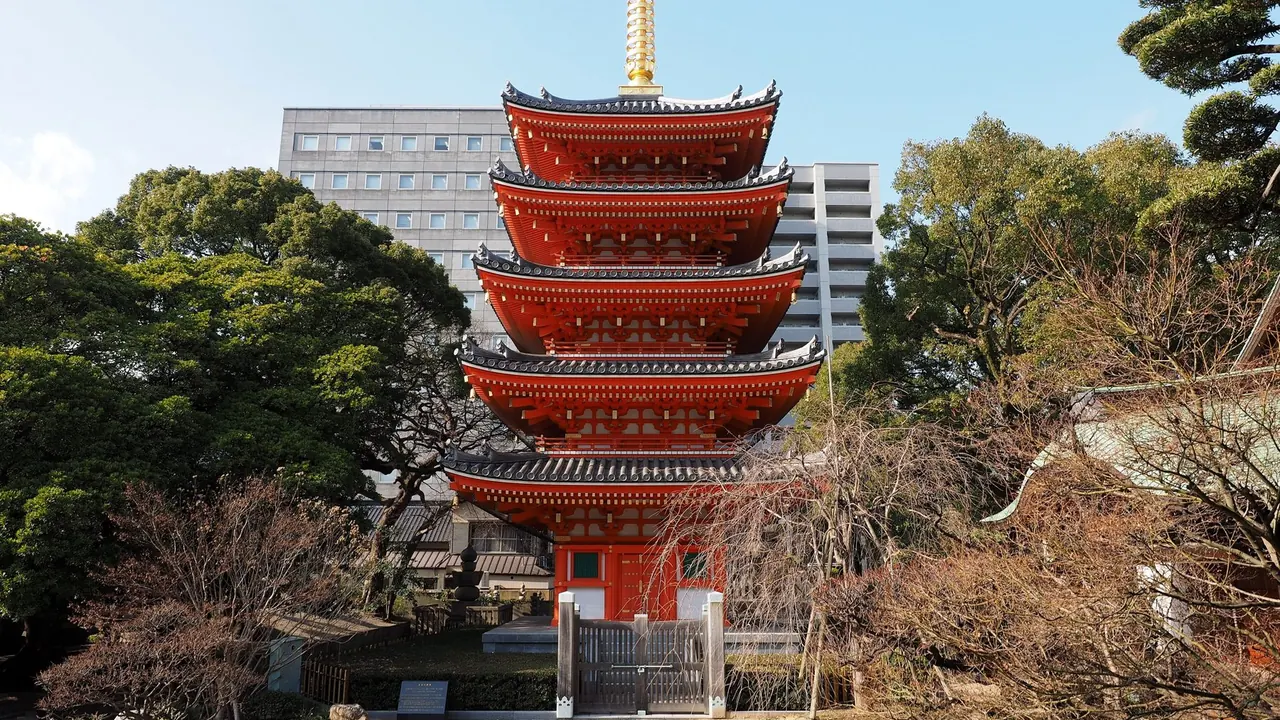
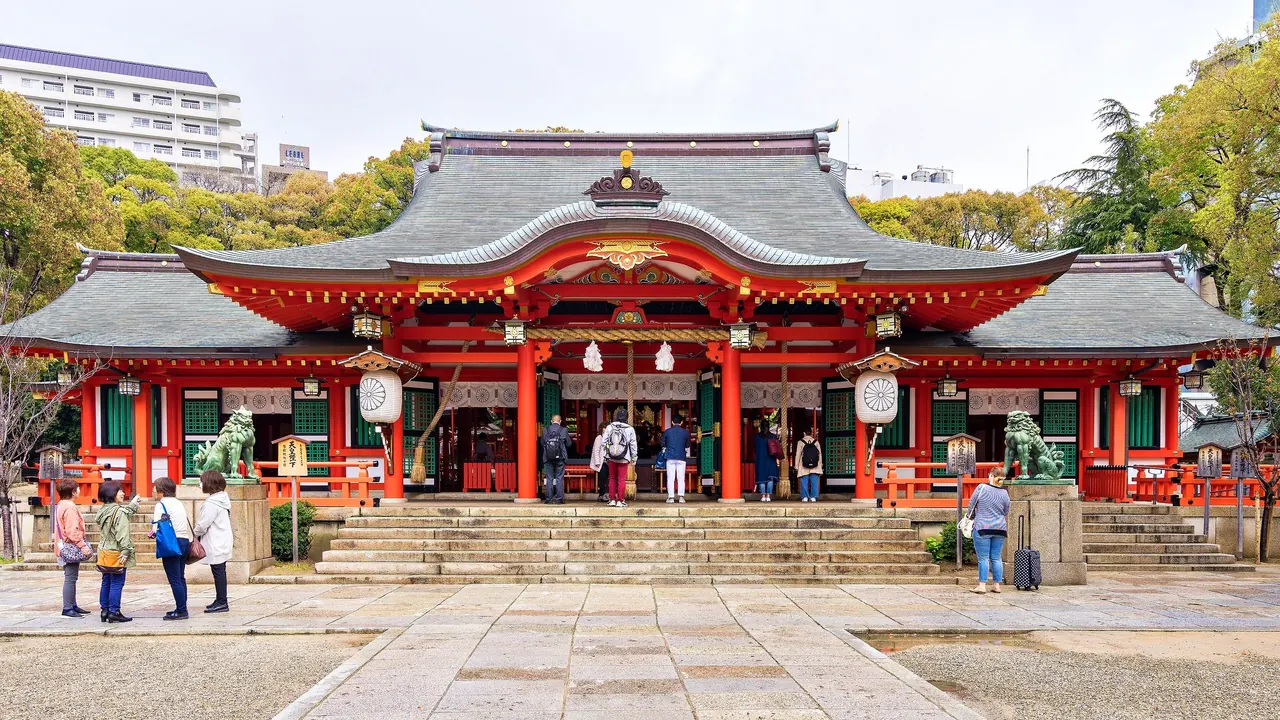
Photos: Fukuoka by Nick-D, CC BY-SA 4.0, cropped; Kobe by Wei-Te Wong, CC BY-SA 2.0, cropped.
Fukuoka or Kobe?
Our verdict in twelve categories, each scored against the same fixed benchmark cities, and the climate month by month, so you can choose for your trip.
Choose Fukuoka for
- nightlife
- beaches
- food and drink
Fukuoka suits travellers who plan their days around eating and their evenings around bars: tonkotsu ramen at a riverside yatai, then a slow crawl through the backstreets of Daimyo and Tenjin. It is also better for a summer beach day, with Itoshima's white sand close by, and makes a natural first base for Kyushu, with Dazaifu, Kumamoto and Nagasaki all within reach by train.
Choose Kobe for
- wellness
- nature and the outdoors
- live music and the arts
Choose Kobe for a quieter stay with mountains behind you and the hot springs of Arima inside the city limits. Walkers can start up the Rokko range almost from the station, jazz lovers have the city's own clubs, and anyone who wants to see Himeji, Osaka, Kyoto and Nara without changing hotels will find few better-placed bases in Japan.
Scoreboard
Twelve categories on one fixed scale from 0 to 100. The shaded stretch is the gap between the two.
Your match
Pick a travel style or drag the sliders, and both match scores follow your weighting.
Too close to call, level with your weighting
Wins on nightlife and beaches with your weighting.
Wins on wellness and nature and the outdoors with your weighting.
What matters to you?
Category by category
What the scores mean for a trip.
Beaches & swimming
Neither city is a beach destination, but Fukuoka has the better swimming. Momochi is fine for an evening paddle in town, the clear water and white sand of the Itoshima peninsula are under an hour west, and Shikanoshima and Nokonoshima offer quieter days.
Kobe's waterfront is mostly working port, so a swim means taking the train to Suma, a busy family beach about fifteen minutes out. For clearer water you need a bus or a car to Awaji Island. In both cities the season is July and August, and jellyfish arrive late in summer.
Food & drink
Fukuoka is the stronger eating city, and much of its food is eaten on the street. There are tonkotsu ramen counters in Hakata and Nagahama, yatai stalls along the river in Nakasu, and local dishes such as mentaiko, motsunabe and mizutaki, plus very fresh fish from the Genkai Sea. You could eat for days without repeating a dish.
Kobe's food comes out of its port history. Kobe beef cooked on a teppanyaki counter is the famous meal, but the city's character shows more in the bakeries, cake shops and old coffee houses of Motomachi and Kitano, the sake breweries of Nada and the steamed buns of Nankinmachi. Kobe is the better city for sake and pastry. Fukuoka is better for a long night of grazing from one counter to the next.
Culture & sights
Neither is a heritage city, and each fills about two days of sightseeing, but they tell different stories. Fukuoka's sights are older and Japanese: Shofukuji and the great wooden Buddha of Tochoji in the Hakata temple quarter, the castle walls above Ohori Park, and the ancient Chinese gold seal in the City Museum.
Kobe's sights are about the port's opening to the West and its recovery from disaster. You can visit the Western merchants' houses of Kitano, see the broken quay kept at Meriken Park and learn about the 1995 earthquake at the institute that explains it. Art lovers also have the prefectural museum in Tadao Ando's building on the bay.
Nightlife
Fukuoka is the better place for a night out. Nakasu, the neon island between two rivers, and its riverside yatai make an easy start. After that, the backstreets of Daimyo and Tenjin are full of standing bars, craft beer bars and whisky bars, with a few clubs and the student strip of Oyafuko-dori for later.
Kobe's evenings are smaller and quieter: izakaya and cocktail counters in the lanes above Sannomiya, then a drink with a view of the harbour at Harborland. For anything louder, locals take the train to Osaka.
Nature & outdoors
Kobe has real mountains on its doorstep. Trails start near Shin-Kobe and climb past the Nunobiki waterfalls, and ropeways go up Maya and Rokko for night views over the bay. Serious walkers can do the long Rokko ridge traverse or the rocky Suma Alps without leaving the city.
Fukuoka's outdoors is gentler and closer to the sea: the loop around Ohori Park, cycling paths on the Uminonakamichi sandbar, the flower slopes of Nokonoshima and the rice terraces of Itoshima. Mount Homan and the Sefuri range offer hikes further out. In both cities, spring and autumn are the seasons for walking.
Day trips
Both cities are strong bases, but Kobe can reach an exceptional range of places in a day. Himeji Castle is under an hour west, Osaka is twenty minutes away, Kyoto and Nara are easy days out, and the shinkansen brings Kurashiki and Hiroshima within reach.
Fukuoka opens up Kyushu instead. Dazaifu is half an hour away, Kumamoto's castle and Nagasaki's harbour are a fast train ride, and there are also the canals of Yanagawa and the porcelain villages of Arita. Fukuoka is the better choice for exploring Kyushu, but from Kobe you can reach more of Japan's best-known sights in a single day.
Good for families
Both cities are safe, clean and easy with children, so the difference lies in the outings. Fukuoka has Marine World and its seaside park on Uminonakamichi, the Anpanman museum for toddlers and the short ferry to Nokonoshima.
Kobe offers cable cars up Rokko to a farm at the top and an aquarium right beside Suma beach. Universal Studios Japan is also within an hour, which gives Kobe the theme-park day that Fukuoka lacks.
Getting around
Both are among the easiest cities in Japan to get around, but in different ways. Fukuoka's great advantage is an airport on the subway, a few minutes from Hakata. Its centre is flat, and Hakata, Nakasu, Tenjin and Daimyo are a short walk apart, though the buses take some working out.
Kobe is a long, thin strip served by several parallel rail lines that all take one IC card. Its main areas, from Chinatown to the harbour, are walkable, and only Kitano involves a climb.
Shopping & style
Fukuoka has the bigger shopping scene. Tenjin's department stores and long underground arcade, the independent fashion and vintage shops of Daimyo and Imaizumi and the Canal City mall give it real range. Hakata-ori silk, Hakata dolls and Arita porcelain make good souvenirs.
Shopping in Kobe is more of a stroll through stylish streets: covered arcades in Sannomiya and Motomachi, the old Daimaru store and boutiques in the former foreign settlement, and small shops along Tor Road. Pearls and leather shoes from Nagata are the local specialities, but serious shoppers usually add a day in Osaka.
Affordability
Costs are much the same. Both are among the gentler Japanese cities on the budget, with compact business hotels, cheap ramen and set lunches, and inexpensive local transport.
Where they differ is the splurges. In Fukuoka the bill climbs with sushi, kaiseki and nights in Nakasu, and rooms get scarce in festival weeks. In Kobe the big costs are the Kobe beef dinner, a night in an Arima ryokan and the cable cars, though its hotels rarely fill up.
Live music & performing arts
Kobe has the stronger music scene. It calls itself the birthplace of Japanese jazz, with small clubs and resident trios around Sannomiya and Kitano and a jazz festival in Kitano each autumn. The Takarazuka Revue performs in its home town nearby, and the Hyogo Performing Arts Center has a full classical programme.
Fukuoka has touring kabuki and musicals at Hakataza and the Kyushu Symphony Orchestra at Acros. Its most memorable performances, though, happen in the streets: the dawn float races of the Yamakasa in July and the Dontaku parade in May.
Wellness & relaxation
Kobe is the clear choice for rest, because Arima Onsen, one of Japan's oldest hot-spring towns, lies within the city about half an hour from the centre. Its iron-red kinsen and clear ginsen waters are worth an afternoon or a night in a ryokan.
Fukuoka has neighbourhood sento, bath complexes on the edge of town and Futsukaichi Onsen near Dazaifu. The famous spa towns of Beppu and Yufuin take a long day to reach. It makes up some ground with its easy pace and the quiet of Ohori Park.
When should you go?
Pick your month. The climate figures are measured averages, not a forecast.
Fukuoka in July
Kobe in July
Daytime high, °C
Rainfall in the month, mm
Where the figures come from
Kobe's sunshine is measured 29 km from the centre, at Osaka.
Temperature and rainfall are climate normals, averaged over the years shown. Fukuoka: 1991-2020 normals, Fukuoka (1.9 km from centre). Kobe: 1971-2000 (sunshine 1991-2020, rainfall 1991-2020) normals, Kobe (1.3 km from centre).
Both cities follow the same pattern through the year. April, May, October and November are the comfortable months for walking the streets and the hills. July and August reach about 32°C with heavy humidity, which makes sightseeing hard work. The rainy season hits Fukuoka harder: July brings around 301mm of rain there, against 226mm in Kobe.
For swimming, both seas warm to about 27°C by August, so July and August are the only real beach months in either city. Winter is where they differ most. Kobe is drier and sunnier from December to February, with only 33mm of rain in January, so it makes the better cool-season city break. Fukuoka is a degree or so milder in winter but noticeably greyer.
Which traveller are you?
For a food and nightlife trip, Fukuoka is the clear pick. Its ramen counters, riverside yatai and very fresh Genkai Sea fish give it the deeper table, and the bars of Daimyo and Tenjin keep evenings going. Kobe's quieter scene sends its late-night crowd to Osaka.
On a relaxing and wellness trip, Kobe wins easily. Arima Onsen lies within the city, close enough for an afternoon soak or a night in a ryokan. Fukuoka's great spa towns of Beppu and Yufuin are a long day away, and its own baths are more everyday.
For an outdoors trip, Kobe is the better base. The Rokko range starts at the edge of town, with waterfall trails, a long ridge traverse and ropeways to the summits. Fukuoka's green spaces are mostly parks, small islands and coastal cycling routes.
Before you go
| Measure | Fukuoka | Kobe |
|---|---|---|
| Official language | Japanese | Japanese |
| Currency | Yen (JPY) | Yen (JPY) |
| Sockets | AB100 V, 50 and 60 Hz depending on the region | AB100 V, 50 and 60 Hz depending on the region |
| Driving side | Left | Left |
| Time zone | UTC+9 | UTC+9 |
| Emergency number | Police 110, fire 119 | Police 110, fire 119 |
| Elevation | 8 m | 17 m |
| Main airport | Fukuoka Airport (FUK)5 km from centre46 non-stop destinations | Kobe Airport (UKB)7 km from centre15 non-stop destinations |
| Public holidays this year | 16 days | 16 days |
By the numbers
| Measure | Fukuoka | Kobe |
|---|---|---|
| City population | 1,603,043 | 1,521,707 |
| People per km² | 4,715 | 2,732 |
| Museums within 10 km | 23 | 46 |
| UNESCO World Heritage sites within 50 km | 2 | 3 |
| Swim season, months above 21 °C | 4 months | 5 months |
Where else could you go?
Every comparison below shares a destination with this one, so you can follow Fukuoka or Kobe somewhere new.