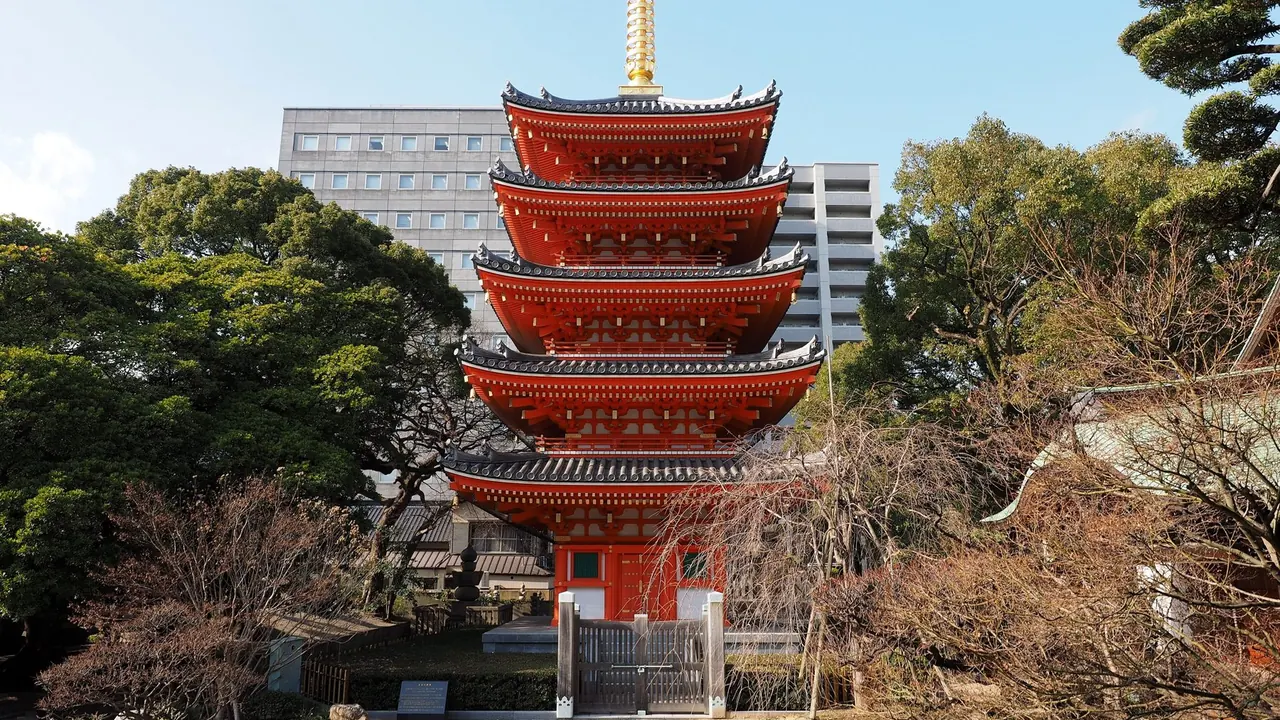
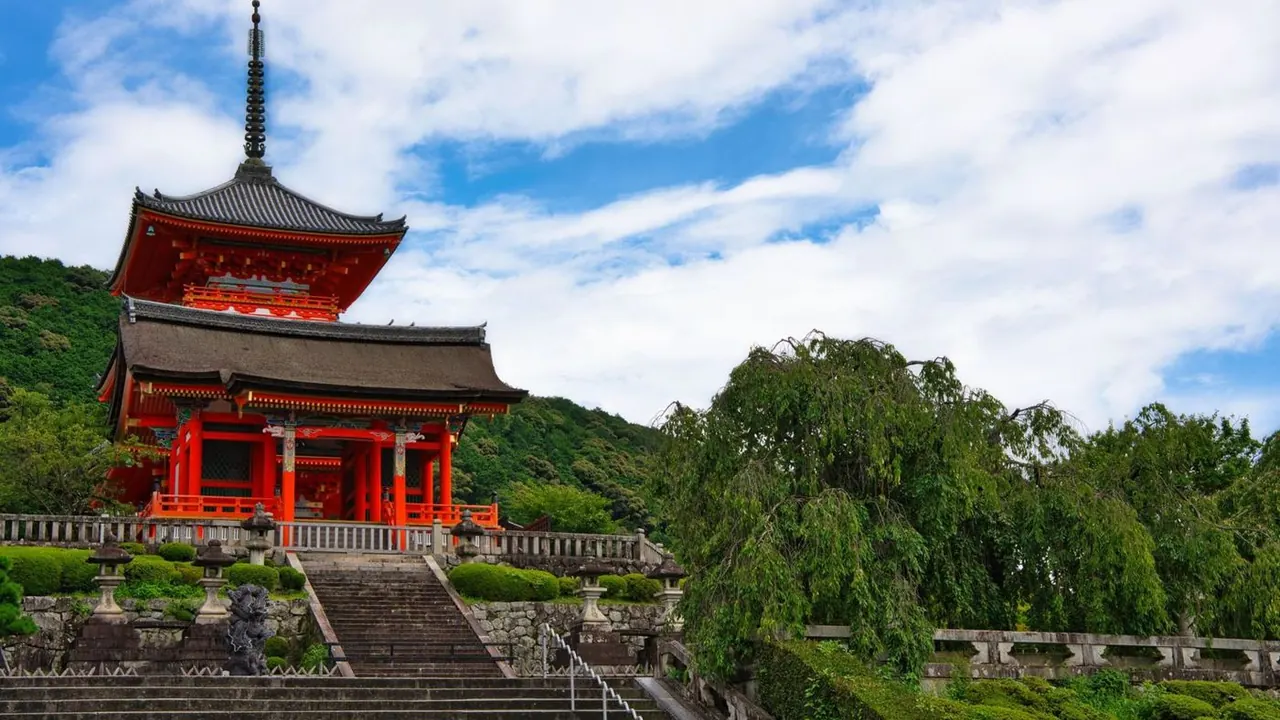
Photos: Fukuoka by Nick-D, CC BY-SA 4.0, cropped; Kyoto by Bert Mulder, Pexels License.
Fukuoka or Kyoto?
Our verdict in twelve categories, each scored against the same fixed benchmark cities, and the climate month by month, so you can choose for your trip.
Choose Fukuoka for
- beaches
- nightlife
- families
Fukuoka suits travellers who want an easy, relaxed Japanese city built around eating and drinking: tonkotsu ramen at the riverside yatai, bar-hopping in Daimyo and Tenjin, and a summer swim on the Itoshima coast. It is simpler with children and cheaper to stay in. The subway runs from the airport to the centre in minutes, so the city works well as a first taste of Japan or as a gateway to the rest of Kyushu.
Choose Kyoto for
- culture and sights
- live music and the arts
- day trips
For anyone travelling to see Japan's historic heart, Kyoto is the clear choice. Fukuoka has nothing to match its temples, gardens and wooden Gion lanes, or its living traditions of kaiseki, kabuki and geisha dance, and Nara, Osaka and Himeji are all easy to reach by train. Expect quieter evenings, crowds at the famous sights and higher hotel bills. Kyoto is for days spent looking rather than nights out.
Scoreboard
Twelve categories on one fixed scale from 0 to 100. The shaded stretch is the gap between the two.
Your match
Pick a travel style or drag the sliders, and both match scores follow your weighting.
Too close to call, 1 point apart
Wins on beaches and nightlife with your weighting.
Wins on culture and sights and live music and the arts with your weighting.
What matters to you?
Category by category
What the scores mean for a trip.
Beaches & swimming
Fukuoka is on the coast and Kyoto is not, which settles this one. Fukuoka has its own city beach at Momochi. Better still, the clear water and white sand of the Itoshima peninsula are under an hour west, and the islands of Shikanoshima and Nokonoshima offer quieter swims. The season is short, though, roughly July and August.
From Kyoto, the nearest swimming is on the freshwater shore of Lake Biwa, and the sea beaches of the Tango coast need an overnight stay. Neither is a beach destination, but only in Fukuoka can a swim fit into an ordinary afternoon.
Food & drink
Both are among Japan's best places to eat, but they feed you in opposite ways. Fukuoka is hearty and informal: tonkotsu ramen in Hakata and Nagahama, motsunabe and mizutaki hotpots, spicy mentaiko, and beer on a stool at a riverside yatai beside strangers.
Kyoto is about precision and ceremony, with kaiseki in old wooden houses in Gion, shojin ryori in temple precincts, tofu and yuba, and sweets made for tea. Fukuoka is the place for very fresh raw fish from the Genkai Sea. Kyoto has Nishiki Market and the sake breweries of Fushimi for an afternoon of grazing and tasting.
Culture & sights
This is the widest gap between the two. Kyoto escaped wartime bombing and keeps a thousand years of imperial heritage: seventeen UNESCO-listed sites from Kiyomizu-dera to the moss garden of Saiho-ji, well over a thousand temples and shrines, and whole lanes of wooden machiya in Higashiyama and Gion. A week only begins to cover it.
Fukuoka is a largely rebuilt modern city. Its old Hakata temple quarter, with Shofukuji and Tochoji's great wooden Buddha, the castle walls above Ohori Park and the ancient gold seal in the City Museum make for a pleasant two days. The region's grander heritage, Dazaifu included, lies outside the city.
Nightlife
Fukuoka is the city for a night out. Nakasu is western Japan's best-known entertainment district, and its yatai stalls are an easy place to start. The standing bars, craft beer and whisky bars and handful of clubs in Daimyo and Tenjin keep going late.
Kyoto's evenings centre on Pontocho and Kiyamachi, with small sake bars and izakaya by the Kamo River and terraces over the water in summer. The city winds down early. It suits a quiet drink after a day of temples, and anyone wanting more takes the train to Osaka.
Nature & outdoors
Kyoto has the more rewarding landscape on its doorstep. Forested hills wrap around the basin, and a short ride reaches the cedar path between Kurama and Kibune, the bamboo groves of Arashiyama, the Daimonji trail and the Hozu gorge. Cherry blossom and maple colour turn the whole city into scenery.
Fukuoka's outdoors leans towards the sea: the seaside park on the Uminonakamichi sandbar, the flower slopes of Nokonoshima, and the rocky capes and rice terraces of Itoshima, with hikes on Mount Homan inland. It is good for coast walks and cycling, while the volcanic country of Aso is a long day away.
Day trips
Both are excellent bases, but Kyoto sits at the centre of a closer and richer cluster. Nara is under an hour away, Osaka about half an hour, Uji twenty minutes and Himeji Castle under an hour by bullet train. That puts a different major sight within reach every day with little planning.
Fukuoka opens up Kyushu instead. Dazaifu and its Tenmangu shrine are half an hour away, followed by the canals of Yanagawa, Kumamoto Castle and the port history of Nagasaki, with Hiroshima and Miyajima about an hour off by shinkansen. Its range is wide, but its highlights are spread further apart.
Good for families
Fukuoka is the easier place to bring children. It is compact and calm, and the airport subway takes the strain out of arriving. Marine World, with its dolphin show, stands beside a seaside park with playgrounds and a small zoo, and the Anpanman Children's Museum is a treat for toddlers.
Kyoto is just as safe and has the excellent Railway Museum, an aquarium and the Edo-period film set at Toei Studio Park. Its days, though, revolve around temple steps, crowded buses and a lot of walking, and many families go to Osaka for a day at the theme park.
Getting around
Fukuoka is the simpler city to move around. The airport is on the subway, a few minutes from Hakata Station, and Hakata, Nakasu, Tenjin and Daimyo are joined by short walks along one compact axis.
Kyoto's flat grid centre is lovely on foot or by bicycle along the Kamo River. Its great temples, however, are spread around the edges of the basin, mostly out of reach of the two subway lines. Getting to them means juggling JR trains, private railways, the little Randen tram and city buses, which are slow and packed in the busy seasons.
Shopping & style
Kyoto is the better place to shop for things worth keeping. Shops run by the same families for generations sell Kiyomizu ceramics, Nishijin silk, fans, incense, washi paper, lacquer and hand-forged knives, and tea merchants sell matcha by weight. The monthly flea markets at To-ji and Kitano Tenmangu are worth planning a visit around.
Fukuoka is stronger on everyday fashion. It has Tenjin's department stores and long underground arcade, independent and vintage shops in Daimyo and Imaizumi, and Canal City near Hakata Station. Its own crafts, Hakata-ori silk and painted Hakata dolls, are fine but fewer.
Affordability
Fukuoka is the cheaper of the two. Compact business hotels near Hakata and Tenjin are good value, ramen and set lunches cost little, and the subway ride from the airport is an easy saving.
Kyoto's everyday food and transport are also reasonable, but its hotels and ryokan are expensive, and rooms become scarce and costly in the cherry blossom and autumn colour seasons. A kaiseki dinner is a real splurge. Staying near Kyoto Station and eating at good restaurants at lunch rather than dinner narrows the gap.
Live music & performing arts
Kyoto has the deeper traditional stage. The spring dances of the five geisha districts, kabuki at Minamiza (Japan's oldest kabuki house), regular Noh performances and the short samplers at Gion Corner offer things that are hard to see anywhere else. Much of it is seasonal, though, so a random evening can be thin.
Fukuoka's programme is regional, with touring kabuki and musicals at Hakataza and the Kyushu Symphony Orchestra in the Acros building. Its standout show is in the streets: the Hakata Gion Yamakasa in July, when teams race huge floats through the city at dawn.
Wellness & relaxation
Kyoto offers the more restorative stay. It has century-old neighbourhood sento, hot spring baths at Kurama and Ohara, and ryokan with deep wooden tubs. Zazen, a tea ceremony or a night in a temple lodging make slowing down part of the trip itself, best early in the morning or in winter.
Fukuoka relies on large bath complexes on its edges and Futsukaichi Onsen, half an hour south, while Beppu and Yufuin take a long day out. What it offers instead is a relaxed everyday pace, with sea air and the calm of Ohori Park.
When should you go?
Pick your month. The climate figures are measured averages, not a forecast.
Fukuoka in July
Kyoto in July
Daytime high, °C
Rainfall in the month, mm
Where the figures come from
Kyoto's sunshine is measured 43 km from the centre, at Osaka.
Temperature and rainfall are climate normals, averaged over the years shown. Fukuoka: 1991-2020 normals, Fukuoka (1.9 km from centre). Kyoto: 1971-2000 (sunshine 1991-2020) normals, Kyoto (3.2 km from centre).
Both cities follow the same broad Japanese year. Spring and autumn are mild and pleasant, the rainy season sets in from June, and July and August are hot and sticky at around 32°C, too hot for long days on foot. April, May, October and November are the best months for walking either city. Fukuoka's rain peaks sharply in July, at around 300mm, while Kyoto's is spread more evenly, staying heavy from June right through September.
The two differ most in winter and in summer. Fukuoka is slightly milder in winter, and it has the sea, which is warm enough to swim in from July into September and reaches 27°C in August. Kyoto's basin is colder, with January days around 9°C, but its winters are drier and sunnier than Fukuoka's. That makes December to February a crisp, clear season for its temple gardens.
Which traveller are you?
For a culture and arts trip, Kyoto is far ahead. A thousand years as the imperial capital left Kinkaku-ji, Ryoan-ji, Fushimi Inari and the machiya lanes of Higashiyama, along with kabuki at Minamiza and the spring geisha dances. Fukuoka's Hakata temple quarter fills a day or two.
On a food and nightlife trip, Fukuoka is the better pick. Both cities eat superbly, but Fukuoka follows its ramen and yatai stalls with late bar-hopping in Daimyo, Tenjin and Nakasu. Kyoto serves refined kaiseki and then goes to bed early.
On a beach and sun trip, Fukuoka is the only real option of the two. Momochi beach is in the city and the white sand of Itoshima is under an hour away in July and August. Kyoto is inland, and its nearest swimming is in a freshwater lake.
Before you go
| Measure | Fukuoka | Kyoto |
|---|---|---|
| Official language | Japanese | Japanese |
| Currency | Yen (JPY) | Yen (JPY) |
| Sockets | AB100 V, 50 and 60 Hz depending on the region | AB100 V, 50 and 60 Hz depending on the region |
| Driving side | Left | Left |
| Time zone | UTC+9 | UTC+9 |
| Emergency number | Police 110, fire 119 | Police 110, fire 119 |
| Elevation | 8 m | 51 m |
| Main airport | Fukuoka Airport (FUK)5 km from centre46 non-stop destinations | Kansai International Airport (KIX)81 km from centre62 non-stop destinations |
| Public holidays this year | 16 days | 16 days |
By the numbers
| Measure | Fukuoka | Kyoto |
|---|---|---|
| City population | 1,603,043 | 1,463,723 |
| People per km² | 4,715 | 1,768 |
| Museums within 10 km | 23 | 77 |
| UNESCO World Heritage sites within 50 km | 2 | 4 |
| Swim season, months above 21 °C | 4 months | 5 months |
Where else could you go?
Every comparison below shares a destination with this one, so you can follow Fukuoka or Kyoto somewhere new.