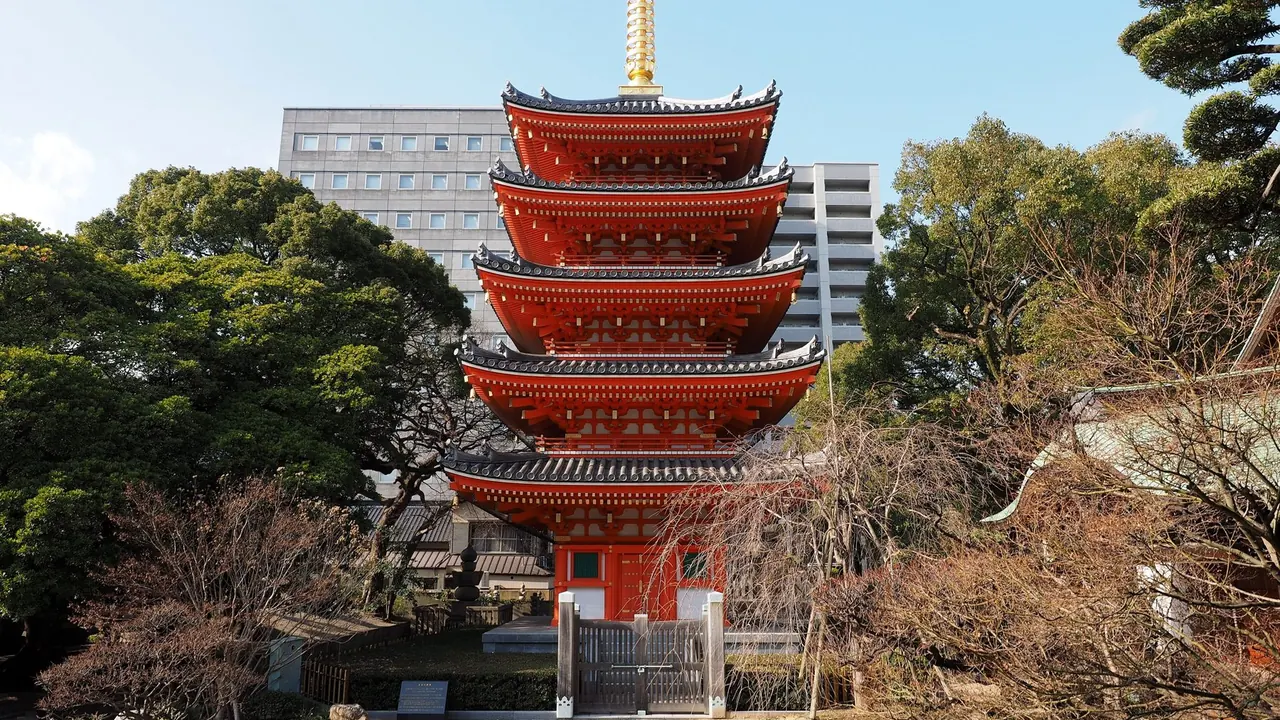
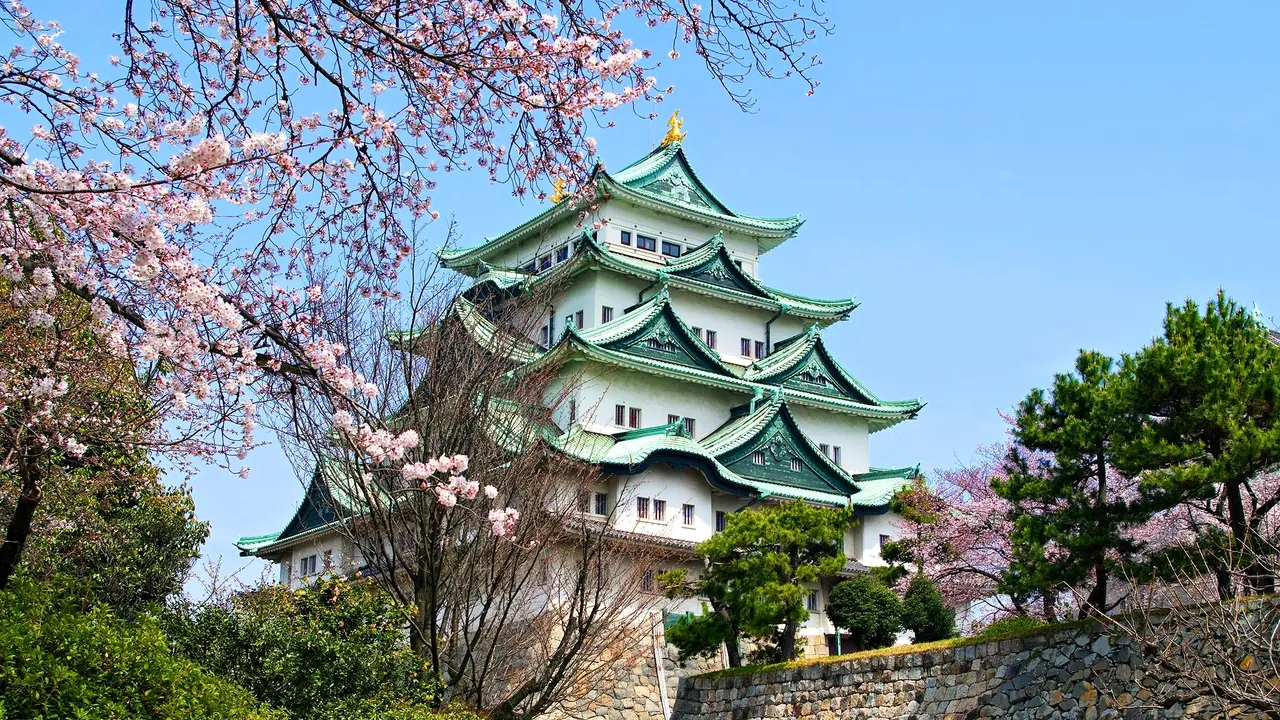
Photos: Fukuoka by Nick-D, CC BY-SA 4.0, cropped; Nagoya by Hiroaki Kaneko, CC BY-SA 3.0, cropped.
Fukuoka or Nagoya?
Our verdict in twelve categories, each scored against the same fixed benchmark cities, and the climate month by month, so you can choose for your trip.
Choose Fukuoka for
- nightlife
- beaches
- food and drink
Fukuoka suits travellers who want an easy, compact city where the evenings matter most. You can be at your hotel minutes after landing. Dinner can be ramen and skewers at a riverside yatai stall, followed by small bars in Daimyo. In summer the white sand of Itoshima is close by, and the fast trains make it a natural base for Nagasaki, Kumamoto and the rest of Kyushu.
Choose Nagoya for
- culture and sights
- families
- live music and the arts
Nagoya is the stronger choice for families and for anyone curious about how Japan was built, from samurai treasures to Toyota looms and bullet trains. Orcas at the port aquarium, Legoland and Ghibli Park fill days with children. Kyoto, Ise and two original castle keeps are all within day-trip range. Its nights out are quieter, and the wide avenues spread it out, so expect more time on trains.
Scoreboard
Twelve categories on one fixed scale from 0 to 100. The shaded stretch is the gap between the two.
Your match
Pick a travel style or drag the sliders, and both match scores follow your weighting.
Too close to call, 2 points apart
Wins on nightlife and beaches with your weighting.
Wins on culture and sights and families with your weighting.
What matters to you?
Category by category
What the scores mean for a trip.
Beaches & swimming
Fukuoka is the better choice for a swim. Momochi Seaside Park lies within the city for an evening paddle, and the clear water and white sand of Itoshima are less than an hour west, with Shikanoshima and Nokonoshima as quieter options.
Nagoya's own waterfront is port and industry. The nearest beaches, on the Chita Peninsula, are wide but sheltered and murky, and local families fill them at weekends. In both cities swimming is really a July and August extra.
Food & drink
Both are serious eating cities, but with different flavours. Fukuoka is about tonkotsu ramen, very fresh Genkai Sea fish and mentaiko, eaten at evening yatai stalls that are the closest thing in Japan to street food.
Nagoya's cooking is richer and sweeter, built on dark red miso. You go to specialist restaurants for hitsumabushi eel or tebasaki wings, and start the day with the café custom of morning service. Neither city has the international range of Tokyo.
Culture & sights
Nagoya has more to see. The rebuilt castle's Honmaru Palace in painted cypress, the forest setting of Atsuta Shrine and the samurai collection at the Tokugawa Art Museum are a stronger set than anything in Fukuoka. The Toyota and railway museums add a story of modern industry that Fukuoka lacks.
Fukuoka's best sights are close together in old Hakata, where Shofukuji, Tochoji's wooden Buddha and Kushida Shrine are a short walk apart. Its castle is only walls and turrets, and two or three days are enough for the whole city.
Nightlife
Fukuoka is the better city for a night out. Evenings start at the riverside stalls in Nakasu, then move on to the craft beer and whisky bars in the backstreets of Daimyo or the student strip of Oyafuko-dori, and they run late.
Nagoya's Sakae and Nishiki have tiny bars, karaoke and a few clubs that fill at weekends. On other nights the crowd is mostly office workers who leave early. Neither city is made for dancing until dawn.
Nature & outdoors
The outdoors is about as good in both, but the landscapes differ. Fukuoka's nature is coastal: the pond loop in Ohori Park, cycling paths on the Uminonakamichi sandbar, flower slopes on Nokonoshima and the rocky capes and rice terraces of Itoshima, with hikes in the Sefuri hills.
Nagoya sits on a flat, built-up plain, so its scenery is inland and further away. The choices are the Mount Gozaisho ropeway, Korankei's autumn maples and the old Nakasendo road through the Kiso Valley.
Day trips
Both are excellent bases, and the real difference is where they lead. From Nagoya, Kyoto is about 35 minutes away, Ise Jingu and Nara are within reach, and the original keeps at Inuyama and Hikone are easy outings. That puts Japan's best-known heritage right at hand.
Fukuoka opens up Kyushu instead: Dazaifu's shrine, Nagasaki's layered port history, Kumamoto Castle and the pottery villages of Arita. Hiroshima and Miyajima are also only about an hour away by shinkansen.
Good for families
Nagoya has more for children. Its port aquarium with orcas and belugas, Legoland, Ghibli Park, the huge Higashiyama Zoo and Nagashima Spa Land go well beyond anything Fukuoka has. The catch is that these sights sit in different corners of the city, so expect long train rides.
Fukuoka makes up for this by being compact and calm. Marine World and its seaside park, the Anpanman museum and the short ferry to Nokonoshima are all easy half-days.
Getting around
Fukuoka is the easier city to arrive in and move through. The airport sits on the subway, only minutes from Hakata Station, and the flat centre links Hakata, Nakasu, Tenjin and Daimyo with walks of about a quarter of an hour, crossing the river on the way.
Nagoya's post-war grid of very wide avenues is simple to read on a map but long and tiring on foot beyond Sakae, the castle and Osu, so the subway and the sightseeing loop bus do more of the work. One IC card covers the subway and the JR, Meitetsu and Kintetsu lines, and no car is needed. In Fukuoka a car only helps for the Itoshima coast.
Shopping & style
Shopping is close in these two, and both centre on big department stores with excellent food halls in the basement. Fukuoka's edge is in the side streets of Daimyo and Imaizumi, a short walk from Tenjin. Small fashion labels, select shops and vintage racks there make for an afternoon of browsing that Nagoya's thinner independent scene can't match.
Nagoya has more of the big names, with luxury and international houses along the wide avenues around Sakae. For something less polished, the covered arcades of Osu around the Kannon temple are full of anime goods, electronics and second-hand clothing. They make a scruffier and more playful hunt than anything in Fukuoka.
Affordability
Costs are much the same, with business hotels and set lunches keeping both cities affordable for Japan. Fukuoka saves you money with its quick, cheap airport subway and free temples and parks. Bills rise with sushi dinners and nights in Nakasu.
In Nagoya, the morning service breakfasts help a tight budget, and some travellers stay there as a cheaper base for Kyoto. Eel dinners, shinkansen day trips and theme-park tickets are where the money goes.
Live music & performing arts
Nagoya has the fuller stage programme. Opera and ballet play at the Aichi Arts Center, the Nagoya Philharmonic has a regular season, the Misono-za hosts grand kabuki seasons and a dedicated Noh theatre stands near the castle. Most of it is in Japanese, so check what is on first.
Fukuoka has Hakataza and the symphony hall in the Acros building. Its most memorable show is out in the streets, though: the dawn float races of the Hakata Gion Yamakasa in July and the Dontaku parade in May.
Wellness & relaxation
Both cities take part in everyday Japanese bathing, with sento and large bath complexes, so there is little between them. Fukuoka has historic Futsukaichi Onsen half an hour away and Beppu and Yufuin as a long day out. The city itself feels unusually relaxed, with sea air and Ohori Park.
Nagoya has the big Nagashima complex nearby, and Gero Onsen in the mountains is worth a night in a ryokan. Its working streets are orderly rather than restful, so calm comes from the teahouse gardens of Tokugawaen and Shirotori.
When should you go?
Pick your month. The climate figures are measured averages, not a forecast.
Fukuoka in July
Nagoya in July
Daytime high, °C
Rainfall in the month, mm
Temperature and rainfall are climate normals, averaged over the years shown. Fukuoka: 1991-2020 normals, Fukuoka (1.9 km from centre). Nagoya: 1991-2020 normals, Nagoya (5.7 km from centre).
The two cities share a similar year. Winters are cool, spring and autumn are mild, and summers are hot and sticky, with August highs of 32°C in Fukuoka and 33°C in Nagoya. April, May, late October and November are the best months for walking the streets in either place. For a swim, aim for July and August, when the sea warms to about 27°C off both coasts.
The rain falls at different times. Fukuoka's wet season is concentrated in early summer and peaks at around 301mm in July. Nagoya's rain is spread more evenly and is heaviest in September at 225mm, which makes early autumn the riskier time there. In winter Nagoya is clearly the sunnier of the two, with far brighter days from December to February than Fukuoka's grey winter skies.
Which traveller are you?
On a food and nightlife trip, Fukuoka is the better pick. Its yatai stalls, ramen counters in Hakata and late, friendly bar-hopping in Daimyo and Nakasu add up to a fuller night out than Nagoya, where people tend to go home early.
On a family trip with children, choose Nagoya. It has an aquarium with orcas and belugas, Legoland, Ghibli Park, a railway museum with full-size bullet trains and Nagashima's roller coasters nearby. Fukuoka is easier to manage but has no big theme parks.
For a culture and arts trip, Nagoya gives you more. It has the castle and its painted palace, Atsuta Shrine, the Tokugawa Art Museum's Genji scrolls, and kabuki, Noh and opera on stage. Fukuoka's temple quarter takes only a couple of days to cover.
Before you go
| Measure | Fukuoka | Nagoya |
|---|---|---|
| Official language | Japanese | Japanese |
| Currency | Yen (JPY) | Yen (JPY) |
| Sockets | AB100 V, 50 and 60 Hz depending on the region | AB100 V, 50 and 60 Hz depending on the region |
| Driving side | Left | Left |
| Time zone | UTC+9 | UTC+9 |
| Emergency number | Police 110, fire 119 | Police 110, fire 119 |
| Elevation | 8 m | 25 m |
| Main airport | Fukuoka Airport (FUK)5 km from centre46 non-stop destinations | Chubu Centrair International Airport (NGO)37 km from centre43 non-stop destinations |
| Public holidays this year | 16 days | 16 days |
By the numbers
| Measure | Fukuoka | Nagoya |
|---|---|---|
| City population | 1,603,043 | 2,326,844 |
| People per km² | 4,715 | 7,129 |
| Museums within 10 km | 23 | 63 |
| UNESCO World Heritage sites within 50 km | 2 | 0 |
| Swim season, months above 21 °C | 4 months | 5 months |
Where else could you go?
Every comparison below shares a destination with this one, so you can follow Fukuoka or Nagoya somewhere new.