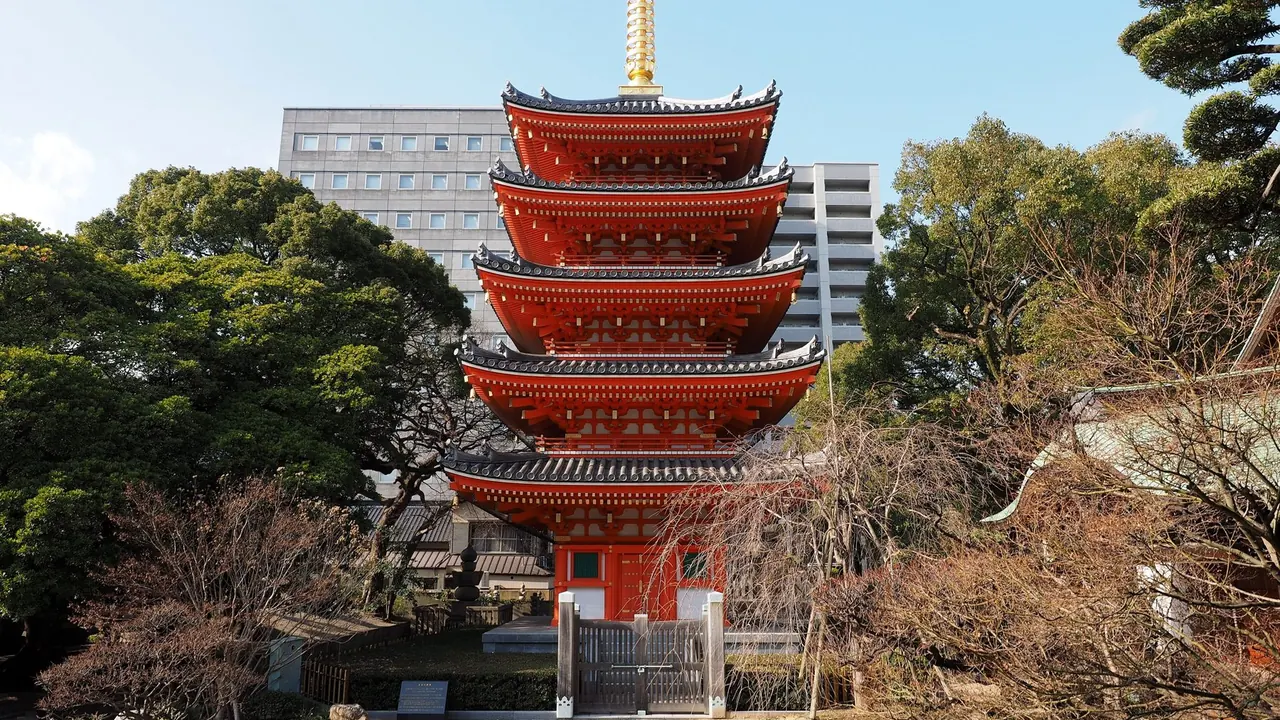
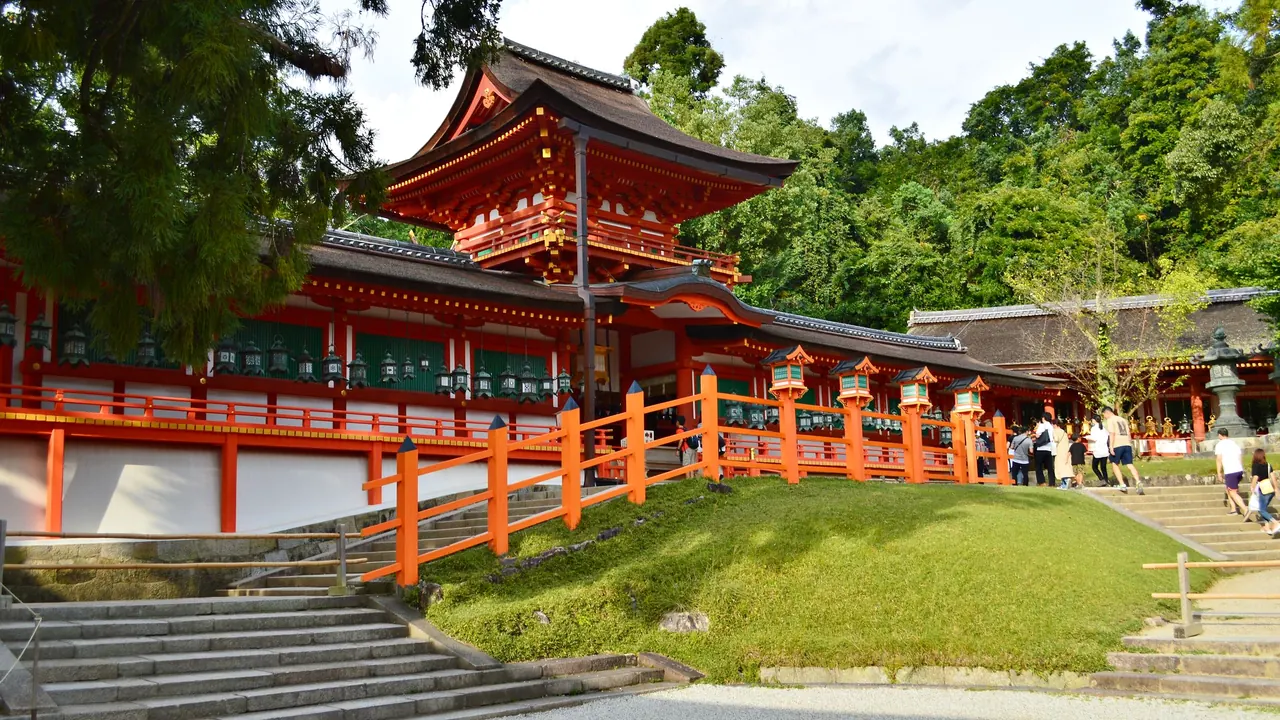
Photos: Fukuoka by Nick-D, CC BY-SA 4.0, cropped; Nara by Saigen Jiro, CC0.
Fukuoka or Nara?
Our verdict in twelve categories, each scored against the same fixed benchmark cities, and the climate month by month, so you can choose for your trip.
Choose Fukuoka for
- nightlife
- beaches
- food and drink
Fukuoka is the better pick if you plan your days around eating and your evenings around bars. You get ramen counters in Hakata, yatai stalls along the river in Nakasu, late nights in Daimyo, and in summer a beach on the Itoshima coast. It is also the easier of the two with children, and the shinkansen puts Nagasaki, Kumamoto and Hiroshima within reach.
Choose Nara for
- culture and sights
- day trips
- prices
Travellers who come for history will find more in Nara. The eighth-century capital has the Great Buddha at Todai-ji, the lantern paths of Kasuga Taisha and the quiet Tang-style temples in the west, and Fukuoka has nothing on that scale. Kyoto and Osaka are each a short train ride away, so the food and nightlife Nara lacks are easy to reach, and you come back to calm mornings in the deer park.
Scoreboard
Twelve categories on one fixed scale from 0 to 100. The shaded stretch is the gap between the two.
Your match
Pick a travel style or drag the sliders, and both match scores follow your weighting.
Wins on nightlife and beaches with your weighting.
Wins on culture and sights and day trips with your weighting.
What matters to you?
Category by category
What the scores mean for a trip.
Beaches & swimming
Only Fukuoka has beach days. Momochi is fine for an evening paddle, and the white sand on the Itoshima peninsula is under an hour away in July and August.
Nara is in an inland basin. The nearest sea is the industrial Osaka Bay shore, so in summer your only swim there is a pool.
Food & drink
Fukuoka is one of Japan's great eating cities, and Nara cannot match it. You have tonkotsu ramen in Hakata and Nagahama, stools at the yatai in Nakasu and Tenjin, mizutaki, very fresh Genkai Sea squid, and an izakaya on every block.
Nara's table is small and local: persimmon-leaf sushi, narazuke pickles, Miwa somen and sake tastings in Naramachi. It is worth trying, but food near the park is mostly quick lunches for day visitors, and a serious dinner usually means taking the train to Osaka.
Culture & sights
This is Nara's strongest card. The Great Buddha's wooden hall, Kofuku-ji's pagoda above the park, the lantern-lined approach to Kasuga Taisha and the Buddhist sculpture in the National Museum are some of the oldest and finest things in Japan.
Fukuoka is a rebuilt modern city. Its best area is the Hakata temple quarter, with Shofukuji and Tochoji, alongside the castle walls above Ohori Park and the ancient gold seal in the City Museum. It makes a pleasant afternoon or two, but people do not travel to Fukuoka for its sights.
Nightlife
Fukuoka likes to drink, and it shows. Nakasu's neon is reflected in the river, Daimyo and Tenjin hide craft beer and whisky bars in their backstreets, and nights run late, although there are few clubs.
Nara goes quiet once the day visitors leave. An evening there means an izakaya near Kintetsu Nara station or a sake counter, and a real night out means Osaka and watching the time of the last train back.
Nature & outdoors
Both cities have good green space, but of different kinds. Fukuoka looks to the sea: ferries to Nokonoshima's flower slopes, cycling paths on the Uminonakamichi sandbar, and rocky capes and rice terraces on Itoshima, with Mount Homan for a proper hike.
Nara's nature is woodland and quiet countryside. The deer roam the park lawns, the Kasugayama Primeval Forest sits behind them, the Yamanobe-no-michi follows the eastern foothills, and Yoshino's cherry and maple slopes are further south.
Day trips
Both are excellent bases, and Nara has the edge. Kyoto and Osaka are each under an hour away, Horyu-ji is a short ride, and Asuka, Uji and the mountain temple of Hase-dera add quieter days.
Fukuoka's reach is wider but more spread out. Dazaifu and Yanagawa are close, and the shinkansen brings Kumamoto, Hiroshima and Nagasaki within a day. The hot-spring towns of Beppu and Yufuin take a long day.
Good for families
Fukuoka is built for a longer stay with children. Marine World's dolphin show, the seaside playgrounds beside it, the city zoo, the Anpanman Children's Museum and the science museum fill a week, rain or shine.
In Nara, feeding the deer and squeezing through the pillar at Todai-ji are memorable, but that is most of what is aimed at children, and small ones need watching around hungry deer. Most families give it a day or two and go to Osaka for anything more.
Getting around
Both cities are easy to get around, in different ways. Fukuoka runs on its subway: the airport is a few minutes from Hakata Station, and the flat centre links Hakata, Nakasu and Tenjin on short walks.
Nara is mostly done on foot from Kintetsu Nara station, with rental bicycles for the flat basin and local trains or buses for the western temples. The buses fill up at weekends and in blossom season.
Shopping & style
Fukuoka is a real shopping city. It has the Tenjin department stores and the underground arcade beneath them, vintage and select shops in Daimyo and Imaizumi, and Canal City by Hakata Station, with Hakata-ori silk and boxed mentaiko to take home.
Nara is a place for craft rather than fashion. Look for sumi ink, calligraphy brushes, Nara-zarashi linen and Akahada pottery in Naramachi, plus sweets and deer souvenirs in the covered arcades.
Affordability
Daily costs are much the same, though the savings come in different places. In Fukuoka, the cheap subway from the airport, ramen counters and free parks and temples keep spending low.
In Nara, the deer park is free and the temples charge modest fees hall by hall. The cost that adds up is train fares if you go out to Kyoto and Osaka every day, so a regional rail pass is worth checking.
Live music & performing arts
Fukuoka has more to see on an ordinary evening. Hakataza stages touring kabuki and musicals, the Kyushu Symphony Orchestra plays in the Acros building, and small live houses in Tenjin host jazz and bands.
Nara's performances are tied to its shrines and temples: gagaku and bugaku at Kasuga Taisha, its role in the birth of Noh, and the winter On-matsuri. Outside those occasions there is little to book.
Wellness & relaxation
If you want to bathe, Fukuoka is the better base. There are large hot-spring complexes on the edge of the city, and Futsukaichi Onsen, one of Kyushu's oldest spa towns, is half an hour away.
Nara has no notable hot springs, only bathhouses and a few ryokan baths. What it offers instead is quiet: the park at dawn and a tea house beside a temple garden.
When should you go?
Pick your month. The climate figures are measured averages, not a forecast.
Fukuoka in July
Nara in July
Daytime high, °C
Rainfall in the month, mm
Where the figures come from
Nara's sunshine is measured 26 km from the centre, at Osaka.
Temperature and rainfall are climate normals, averaged over the years shown. Fukuoka: 1991-2020 normals, Fukuoka (1.9 km from centre). Nara: 1971-2000 (sunshine 1991-2020, rainfall 1991-2020) normals, Nara (2.6 km from centre).
The two cities follow much the same pattern. Spring and autumn are the best seasons for both. April and May are mild, around 20°C to 24°C, and October is still pleasant, so these are the months for long walks between temples or along the Fukuoka waterfront. July and August reach about 32°C in both cities and feel close and heavy, which makes sightseeing tiring.
The rain is where they differ. Fukuoka's wet season is much heavier, with about 300mm falling in July, while Nara stays drier through the summer. Nara's winters are a little colder but sunnier, which suits crisp temple visits. Only Fukuoka has a beach season, and it is short: the sea is at its warmest, about 27°C, in August.
Which traveller are you?
On a culture and arts trip, Nara is the clear choice. Todai-ji, Kofuku-ji, Kasuga Taisha, the National Museum and the western temples make up a first-rank set of early Japanese heritage. Fukuoka's temple quarter in Hakata is pleasant but takes a day or two.
For a food and nightlife trip, choose Fukuoka. Tonkotsu ramen, mentaiko, motsunabe and riverside yatai stalls fill the evenings, and Daimyo's standing bars carry on late. In Nara, most kitchens close early and the streets go quiet after dark.
On a family trip with children, Fukuoka offers more. Marine World and the seaside park at Uminonakamichi, the zoo, the Anpanman museum and a subway from the airport make days easy. Nara's deer are a lovely morning out, but there is little else made for children.
Before you go
| Measure | Fukuoka | Nara |
|---|---|---|
| Official language | Japanese | Japanese |
| Currency | Yen (JPY) | Yen (JPY) |
| Sockets | AB100 V, 50 and 60 Hz depending on the region | AB100 V, 50 and 60 Hz depending on the region |
| Driving side | Left | Left |
| Time zone | UTC+9 | UTC+9 |
| Emergency number | Police 110, fire 119 | Police 110, fire 119 |
| Elevation | 8 m | 70 m |
| Main airport | Fukuoka Airport (FUK)5 km from centre46 non-stop destinations | Kansai International Airport (KIX)59 km from centre62 non-stop destinations |
| Public holidays this year | 16 days | 16 days |
By the numbers
| Measure | Fukuoka | Nara |
|---|---|---|
| City population | 1,603,043 | 352,377 |
| People per km² | 4,715 | 1,273 |
| Museums within 10 km | 23 | 31 |
| UNESCO World Heritage sites within 50 km | 2 | 6 |
| Swim season, months above 21 °C | 4 months | 5 months |
Where else could you go?
Every comparison below shares a destination with this one, so you can follow Fukuoka or Nara somewhere new.