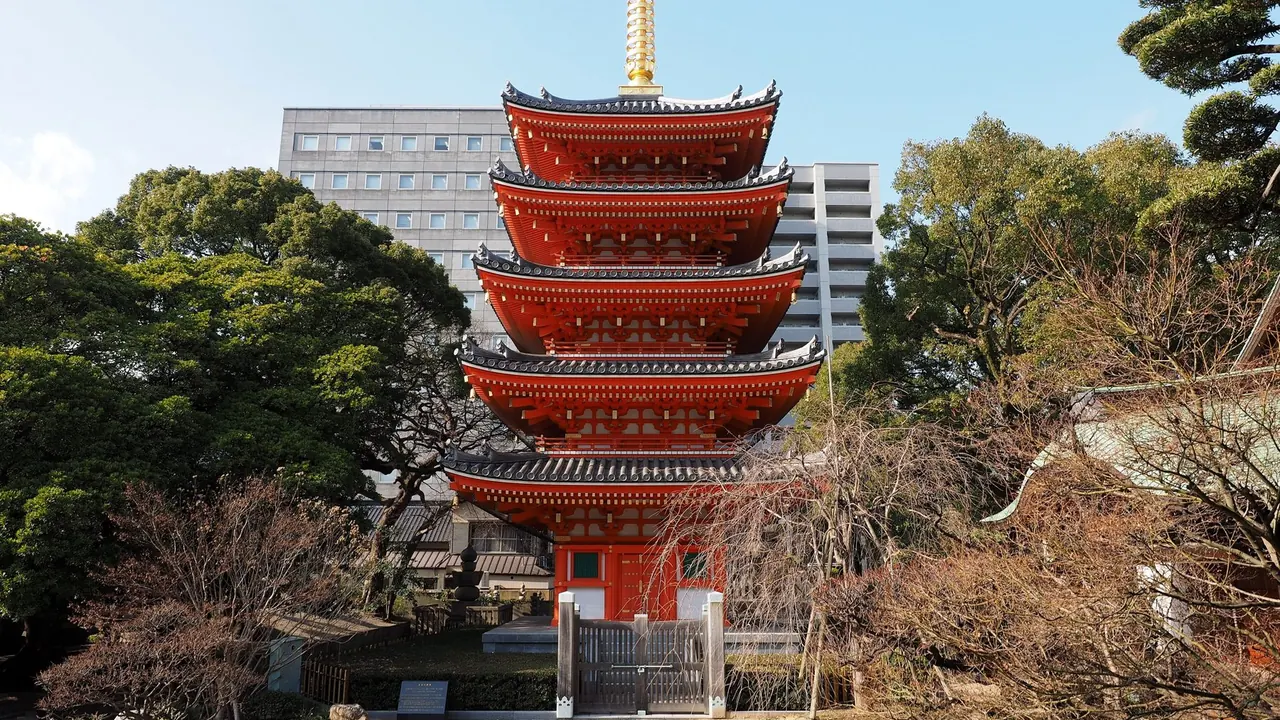
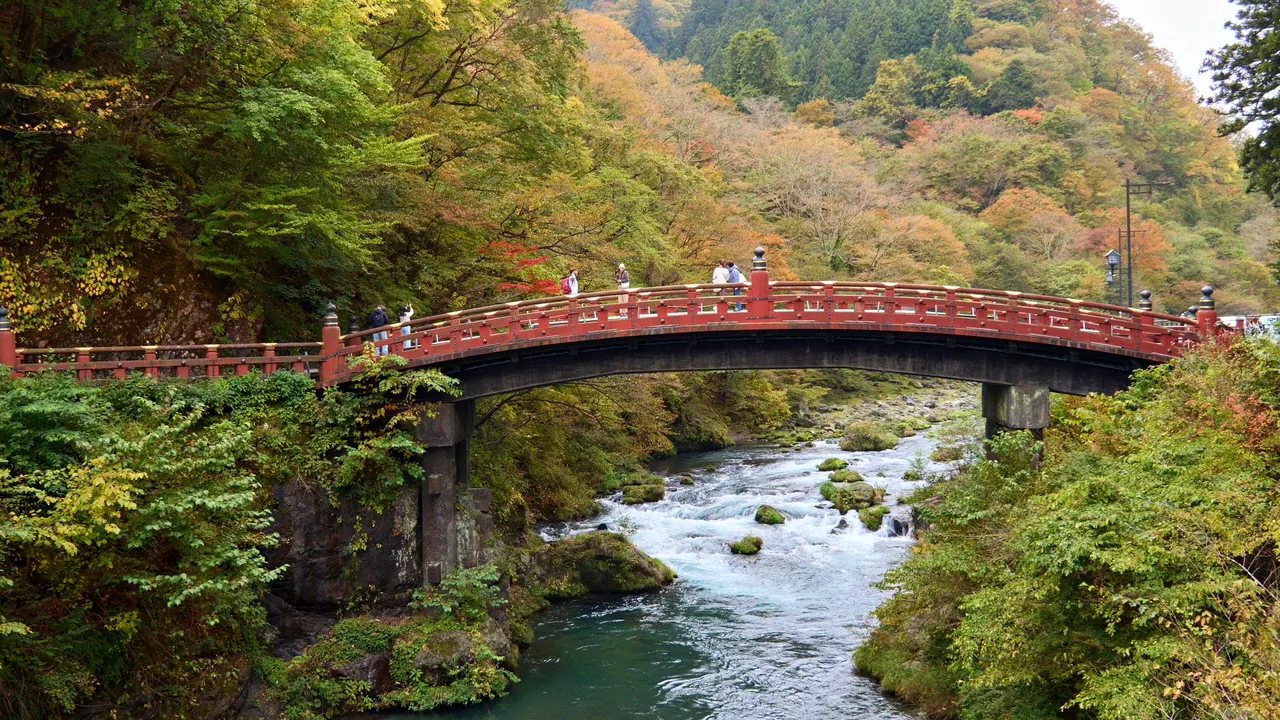
Photos: Fukuoka by Nick-D, CC BY-SA 4.0, cropped; Nikko by lumoplank, CC0.
Fukuoka or Nikko?
Our verdict in twelve categories, each scored against the same fixed benchmark cities, and the climate month by month, so you can choose for your trip.
Choose Fukuoka for
- nightlife
- food and drink
- shopping
Fukuoka is the choice for a trip built around eating, evenings out and easy movement. Ramen counters, riverside yatai and izakaya give every night a plan, the airport sits on the subway, and Hakata Station puts Nagasaki, Kumamoto and Hiroshima within a day's reach. That makes it a comfortable base for a week in Kyushu, with or without children.
Choose Nikko for
- wellness
- nature and the outdoors
- culture and sights
Travellers who want shrines, forest and hot water should pick Nikko instead. Toshogu and the shrines and temples around it, under their cedars, are grander than anything in Fukuoka's temple quarter. The national park climbs to Lake Chuzenji and Kegon Falls, and evenings belong to a ryokan dinner and an outdoor bath. Nikko rewards two or three slow days, but it is not the place for a long stay or a lively night.
Scoreboard
Twelve categories on one fixed scale from 0 to 100. The shaded stretch is the gap between the two.
Your match
Pick a travel style or drag the sliders, and both match scores follow your weighting.
Wins on nightlife and food and drink with your weighting.
Wins on wellness and nature and the outdoors with your weighting.
What matters to you?
Category by category
What the scores mean for a trip.
Beaches & swimming
Fukuoka has real swimming, though only for a short season. Momochi's man-made strand in town is good for an evening paddle, and the clear water and white sand of Itoshima, under an hour west, make a proper summer day out. Nikko has nothing comparable: its highland lakes, Chuzenji and Yunoko, are for boats and fishing, and summer water there means a hot spring rather than a swim.
Food & drink
Fukuoka is worth visiting for its food alone. There is tonkotsu ramen in Hakata and Nagahama, yatai stalls by the river, and mentaiko, mizutaki and fresh Genkai Sea fish, with izakaya on every block and serious sushi at the top end.
Nikko's menu is short and specific. Yuba from the temple cooking tradition, mountain soba and grilled river fish are worth trying. Most lunch spots cater to day visitors, though, and the best meal is usually the ryokan dinner booked with your room.
Culture & sights
Fukuoka's heritage is pleasant rather than grand. The Hakata temple quarter of Shofukuji, Tochoji and Kushida Shrine, the castle walls above Ohori Park and the ancient gold seal in the City Museum fill two good days. The Asian Art Museum also gives it the museum life that Nikko lacks.
Nikko, though, has one of Japan's great sights. The UNESCO-listed Toshogu is covered in lacquer, gold leaf and carvings, and it stands beside Rinnoji's gilded Buddhas and the Taiyuinbyo mausoleum in a forest of giant cedars. The Shinkyo bridge and the moss-covered Jizo statues of Kanmangafuchi are a short walk away.
Nightlife
Fukuoka is a city that likes a drink. Evenings start at the Nakasu yatai and move on to the standing bars and the craft beer and whisky bars of Daimyo and Tenjin, though there are few clubs. Nikko has almost nothing after dark: the day crowds leave, the main street empties, and a night out means a few bars in Kinugawa Onsen or your ryokan's own dinner and bath.
Nature & outdoors
Fukuoka's outdoors is gentle and close to hand. There is the walking and running loop around Ohori Park, the flower fields of Uminonakamichi and Nokonoshima, the rocky capes of Itoshima, and day hikes on Mount Homan and in the Sefuri range.
Nikko is a mountain destination on a different scale. The Irohazaka road climbs to Lake Chuzenji under Mount Nantai, and Kegon Falls drops nearly 100m. The choice runs from the level boardwalks of Senjogahara to steep climbs of Nikko-Shirane and rafting in the Kinugawa gorge, with maples in autumn and frozen waterfalls in winter.
Day trips
Fukuoka sits on the shinkansen at the gateway to Kyushu. Dazaifu, Yanagawa, Kumamoto Castle, Nagasaki and even Hiroshima and Miyajima all make comfortable days out, and Karatsu and the porcelain villages of Arita are nearer still.
Nikko's range is narrower. Tokyo is about two hours away, Utsunomiya's gyoza and the kilns of Mashiko make a pleasant outing, and Ouchi-juku is a stretch. Beyond those, the nearby options are mostly more mountains and lakes.
Good for families
Fukuoka works for a longer family stay. The zoo and botanical garden, the science museum and Fukuoka Tower cover rainy days, and the seaside park at Uminonakamichi has playgrounds and a small zoo, though the summer heat is hard on small children.
Nikko suits older children better than toddlers. The Edo-period village with its ninja shows, the park of miniature landmarks at Kinugawa and the boats on Lake Chuzenji fill two or three days, but after that the choice runs thin.
Getting around
Few cities are easier to arrive in than Fukuoka. The airport is a few subway stops from Hakata and Tenjin, the flat centre can be crossed on foot in about a quarter of an hour, and Hakata Station has trains to every corner of Kyushu.
Nikko is simple to get around but slow. The town follows one road, about 2km of gentle uphill walking from the stations to the shrines. The lakes and falls rely on buses up the Irohazaka road, which can crawl for hours on autumn foliage weekends.
Shopping & style
Fukuoka is good for a proper shopping trip. Tenjin has department stores above a long underground arcade, Daimyo and Imaizumi have independent and vintage shops, Canal City covers the mainstream brands, and local crafts include Hakata-ori silk and Hakata dolls. Nikko has a single street of souvenir and food shops, where Nikko-bori wood carving, straw-soled geta and boxed yuba are the things worth taking home, and anything more has to wait for Tokyo.
Affordability
Overall the two cost about the same, but the money goes in different places. In Fukuoka the savings are cheap ramen, good-value business hotels and an inexpensive subway, while sushi dinners and nights in Nakasu push costs up.
In Nikko a budget traveller does well in the plain guesthouses and hostels, eating soba and visiting the shrines. The stay most people come for, a ryokan with dinner and breakfast, is the big expense, and it costs most in autumn and up by the lakes.
Live music & performing arts
Fukuoka has a modest but real stage. Hakataza hosts kabuki and musicals, the Kyushu Symphony Orchestra plays at Acros, small Tenjin live houses put on jazz, and in July teams race huge floats through the streets at dawn for the Yamakasa. Nikko has no theatre or concert life, so plan around the Toshogu festival's armoured procession and horseback archery in spring and autumn; on other days there are only theme-park shows and the occasional shrine dance.
Wellness & relaxation
Fukuoka offers the everyday Japanese bath. There are neighbourhood sento, large hot-spring complexes on the city's edge and the old onsen town of Futsukaichi half an hour south, with Ohori Park and Hakata's temple gardens for a quiet hour.
Nikko is built for this kind of trip. Open-air baths look onto forest or river, the lake inns have their own springs, and the day settles into shrine paths in the morning, a long soak, dinner and an early night. It is quietest on winter weekdays, with snow on the outdoor baths.
When should you go?
Pick your month. The climate figures are measured averages, not a forecast.
Fukuoka in July
Nikko in July
Daytime high, °C
Rainfall in the month, mm
Where the figures come from
Nikko has no weather station within reach, so its figures come from a gridded climate model rather than a measured record, and read a broad area rather than the city itself.
Temperature and rainfall are climate normals, averaged over the years shown. Fukuoka: 1991-2020 normals, Fukuoka (1.9 km from centre). Nikko: 2001-2020 normals, NASA POWER reanalysis grid, no weather station within 90 km.
Fukuoka is most comfortable for walking in April, May, October and November. June and July bring the heavy rains, up to about 300mm in July, and August peaks near 32°C in humid air. That same high summer is the only stretch when the sea is warm enough for a proper swim at Itoshima, reaching about 27°C in August. Winters are mild enough for sightseeing in a coat.
Nikko runs much colder, with January highs near 3°C, so winter there is for the onsen rather than long walks. Its summer stays a few degrees cooler than Fukuoka's, which makes July and August usable for hiking. The wet season lasts longer, though, with heavy rain still falling through September and October. Late spring and the drier spells of autumn are the best times for both the shrines and the trails.
Which traveller are you?
For a food and nightlife trip, Fukuoka wins easily. Tonkotsu ramen, mentaiko and motsunabe at the riverside yatai lead straight into bar-hopping in Daimyo and Tenjin. In Nikko, by contrast, the restaurants close early and the streets go dark once the day visitors leave.
On a relaxing and wellness trip, Nikko is the better choice. Kinugawa's riverside inns and the milky sulphur water at Yumoto put a real hot-spring soak at the centre of every day, whereas Fukuoka's great onsen towns are a long day away.
On a family trip with young children, Fukuoka is the easier city. Its compact, flat centre, nursing rooms in the stations, Marine World's dolphin show and the Anpanman Children's Museum all suit small legs. In Nikko, the shrine staircases and long bus rides soon tire toddlers.
Before you go
| Measure | Fukuoka | Nikko |
|---|---|---|
| Official language | Japanese | Japanese |
| Currency | Yen (JPY) | Yen (JPY) |
| Sockets | AB100 V, 50 and 60 Hz depending on the region | AB100 V, 50 and 60 Hz depending on the region |
| Driving side | Left | Left |
| Time zone | UTC+9 | UTC+9 |
| Emergency number | Police 110, fire 119 | Police 110, fire 119 |
| Elevation | 8 m | 660 m |
| Main airport | Fukuoka Airport (FUK)5 km from centre46 non-stop destinations | Tokyo Haneda International Airport (HND)134 km from centre98 non-stop destinations |
| Public holidays this year | 16 days | 16 days |
By the numbers
| Measure | Fukuoka | Nikko |
|---|---|---|
| City population | 1,603,043 | 77,027 |
| People per km² | 4,715 | 53 |
| Museums within 10 km | 23 | 5 |
| UNESCO World Heritage sites within 50 km | 2 | 1 |
| Swim season, months above 21 °C | 4 months | - |
Where else could you go?
Every comparison below shares a destination with this one, so you can follow Fukuoka or Nikko somewhere new.