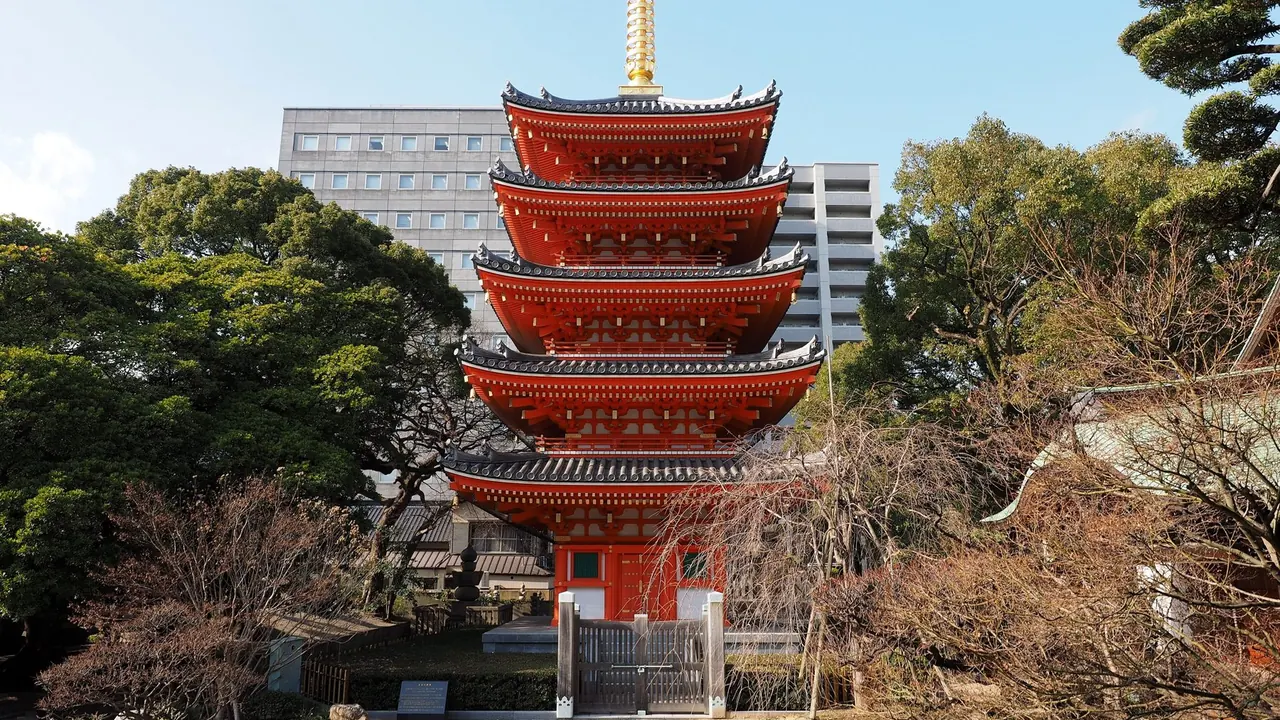
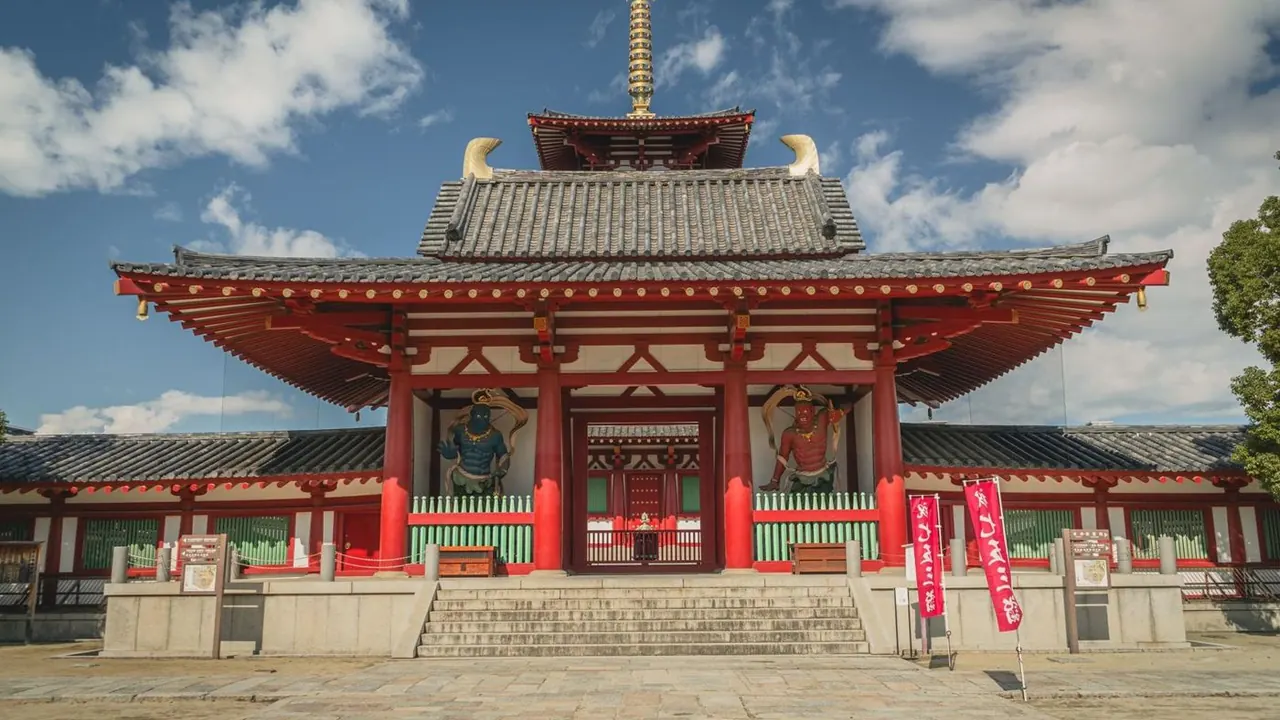
Photos: Fukuoka by Nick-D, CC BY-SA 4.0, cropped; Osaka by Sarmat Batagov, Pexels License.
Fukuoka or Osaka?
Our verdict in twelve categories, each scored against the same fixed benchmark cities, and the climate month by month, so you can choose for your trip.
Choose Fukuoka for
- beaches
- nature and the outdoors
Fukuoka suits travellers who want a calmer, more compact Japanese city: a place to eat tonkotsu ramen at a riverside yatai, walk between Hakata and Tenjin in a quarter of an hour, and spend a summer day on the white sand of Itoshima. It is also the natural base for Kyushu, with Nagasaki, Kumamoto and Dazaifu all close by train.
Choose Osaka for
- live music and the arts
- nightlife
- shopping
Osaka is the stronger pick for a trip built around eating, going out and seeing as much as possible. Its food and bar streets in Minami are livelier, Universal Studios Japan and Kaiyukan make it easy with children, and Kyoto, Nara and Himeji are all short train rides away, so a week here covers much of Japan's classic heritage.
Scoreboard
Twelve categories on one fixed scale from 0 to 100. The shaded stretch is the gap between the two.
Your match
Pick a travel style or drag the sliders, and both match scores follow your weighting.
Wins on beaches and nature and the outdoors with your weighting.
Wins on live music and the arts and nightlife with your weighting.
What matters to you?
Category by category
What the scores mean for a trip.
Beaches & swimming
Fukuoka is the better choice for a swim, and the reason is Itoshima. A short trip west of the city, the peninsula has pale sand, clear sea and surf-shack cafés, the kind of summer beach day Osaka can't match. The islands of Shikanoshima and Nokonoshima are calmer alternatives closer in. The window is narrow, though. Japanese beaches open only for the height of summer, and by the end of August jellyfish make the water less inviting, so plan the beach around a summer visit rather than the other way round.
Osaka's nearest sand, at Suma or Nishikinohama, is about an hour away by train. Both are coarse, suburban beaches on a heavily built-up bay. They are fine for cooling off on a hot afternoon, but for a real beach day from Osaka you would need a long journey down the coast or a flight.
Food & drink
Both are among Japan's great eating cities, but Osaka has more variety from the cheapest bites to the most expensive meals. Takoyaki from street griddles, okonomiyaki cooked at the table, grilled scallops at Kuromon Market and the refined kaiseki counters of Kitashinchi cover every budget and mood.
Fukuoka is more focused and arguably more distinctive: tonkotsu ramen, mentaiko and motsunabe, and the open-air yatai stalls along the river in Nakasu, where you share a bench with strangers. Its Genkai Sea fish is superb, though the range beyond local cooking is narrower.
Culture & sights
Osaka has the bigger landmarks. Its castle stands on the original huge stone walls and moats, Sumiyoshi Taisha and Shitennoji are major religious sites, and the Nakanoshima riverside groups several art museums, including the fine Museum of Oriental Ceramics.
Fukuoka's sights are quieter. The temple quarter of old Hakata, with Shofukuji and Tochoji's great wooden Buddha, is the highlight, and the city museum holds an ancient Chinese gold seal, but the castle keep is gone. Two days are enough here, and both cities send you elsewhere for grander heritage.
Nightlife
Osaka has the better nightlife. Minami's neon streets, the standing bars of Ura-Namba and the tiny bars around Ohatsutenjin make bar-hopping easy, Amerikamura adds DJ bars and small clubs, and many people stay out until the first morning train.
Fukuoka is friendly and drinks well, but its famous Nakasu district is mostly hostess clubs and snack bars for locals. For visitors the good evenings are in the backstreets of Daimyo and Tenjin, with craft beer and whisky bars after a long dinner, and the club scene is small.
Nature & outdoors
The two are broadly level, but the landscapes differ. Fukuoka's outdoors is coastal: Ohori Park's pond loop in the centre, the seaside parks of Uminonakamichi, the flower slopes of Nokonoshima a short ferry away, and the rocky capes and rice terraces of Itoshima for cycling.
Osaka is dense concrete in the city, so its green escapes are wooded hills an hour out: the stream trail to the Minoo waterfall, ridge walks in the Rokko mountains and gentle paths on Mount Ikoma. Choose Fukuoka for sea and islands, Osaka for forest walks and autumn maples.
Day trips
Both make excellent bases, but Osaka's surroundings are hard to beat. Kyoto is under half an hour, Nara about forty minutes, Himeji's original castle and Kobe's harbour are close, and Koyasan offers nights in a monastery, so a long stay never runs out of options.
Fukuoka is the gateway to Kyushu, with Dazaifu's shrine and national museum half an hour away, Kumamoto and Hiroshima reachable by shinkansen, and Nagasaki under two hours. Its best trips are generally longer than Osaka's.
Good for families
Osaka has more for children. Universal Studios Japan is a full theme-park resort a short train ride from the centre, Kaiyukan's whale sharks make an outstanding aquarium visit, and Expo '70 Commemorative Park and Kids Plaza fill more days. Weekend crowds are the cost.
Fukuoka has no theme park, but it is smaller and calmer, which makes it easier with young children. Marine World's dolphin show, the Anpanman Children's Museum and a ferry hop to Nokonoshima fill a relaxed few days.
Getting around
Osaka has the more complete network. The Midosuji line runs through every main district, the JR loop and other lines cover the rest, and one IC card carries you straight on to Kyoto, Nara and Kobe. The catch is Umeda, an underground maze where changing lines can take a long walk.
Fukuoka is simpler on a smaller scale. The airport is on the subway minutes from Hakata, and the centre is flat enough to walk between districts, though its buses take some working out.
Shopping & style
Osaka is the bigger shopping city. The long Shinsaibashi-suji arcade, the international flagships on Midosuji, the electronics and anime shops of Den Den Town and the kitchen knives of Doguyasuji cover everything from fashion to gadgets.
Fukuoka is better for local crafts. Tenjin's department stores and underground arcade, plus the independent shops of Daimyo and Imaizumi, are well worth browsing, and Hakata-ori silk, Hakata dolls and Arita porcelain make better souvenirs than anything Osaka has, though luxury fashion is thinner.
Affordability
Costs are much the same in both, and both are cheaper than Japan's capital. In Fukuoka the savings start on arrival, with the short subway ride from the airport, and compact business hotels near Hakata and Tenjin are good value.
Osaka is most generous at the table, where takoyaki, noodles and izakaya stay cheap even in Namba. Its rooms jump in cherry-blossom and autumn-leaf season, and Universal Studios Japan is a real expense for families.
Live music & performing arts
Osaka has far more on stage. It is the home of bunraku puppet theatre, with full seasons and English guides at the National Bunraku Theatre, and the Takarazuka Revue is forty minutes away. Manzai comedy fills the Namba theatres, though only for Japanese speakers.
Fukuoka has the Hakataza theatre for touring kabuki and the Kyushu Symphony Orchestra at Acros. Its biggest show is in the streets: the dawn float races of the Hakata Gion Yamakasa in July.
Wellness & relaxation
Osaka has the slight edge for bathing. Its super sento complexes make a cheap evening of hot pools and saunas, and Arima Onsen, with its iron-red springs and traditional inns, is only about an hour away.
Fukuoka has Futsukaichi Onsen half an hour south, near Dazaifu, while Beppu and Yufuin are a long day's trip. The city itself is more relaxing, though: Ohori Park and the temple gardens of old Hakata are calmer than anywhere in Osaka's noisy centre.
When should you go?
Pick your month. The climate figures are measured averages, not a forecast.
Fukuoka in July
Osaka in July
Daytime high, °C
Rainfall in the month, mm
Temperature and rainfall are climate normals, averaged over the years shown. Fukuoka: 1991-2020 normals, Fukuoka (1.9 km from centre). Osaka: 1991-2020 normals, Osaka (1.8 km from centre).
Fukuoka is at its best in April and May and again in October and November, when days are mild and good for walking, and October is one of its drier, sunnier months. Summer is hot and humid, and the rainy season hits hard, with July bringing about 301mm. August is the month for swimming, when the sea reaches about 27°C, though the water is a little cooler than Osaka's in July and September.
Osaka has the same pattern but runs slightly hotter in summer, with August highs of 34°C, which makes walking the streets hard going. Its rain is spread more evenly, so its August is fairly dry and sunny. October is wetter there than in Fukuoka, which makes November the more reliable autumn month. Its sea warms a touch earlier and stays warm a little longer into September. Both have cool rather than harsh winters, around 10°C by day in January, but Osaka gets clearly more winter sun, so it is the brighter choice for a December or January city trip.
Which traveller are you?
On a beach and sun trip, Fukuoka is the better choice. The Itoshima peninsula, under an hour away, has clear water and white sand, and Momochi gives an evening paddle in town. Osaka's suburban, coarse-sand beaches are only a summer outing for locals.
For a food and nightlife trip, Osaka wins. Takoyaki, okonomiyaki and kushikatsu fill Dotonbori, the izakaya alleys of Ura-Namba run late, and Amerikamura adds small clubs. Fukuoka eats superbly too, but its nights out are smaller and quieter.
On a culture and arts trip, Osaka gives far more. Bunraku at the National Bunraku Theatre, Sumiyoshi Taisha and the Museum of Oriental Ceramics are in town, and Kyoto and Nara are under an hour away. Fukuoka's sights fill only a couple of days.
Before you go
| Measure | Fukuoka | Osaka |
|---|---|---|
| Official language | Japanese | Japanese |
| Currency | Yen (JPY) | Yen (JPY) |
| Sockets | AB100 V, 50 and 60 Hz depending on the region | AB100 V, 50 and 60 Hz depending on the region |
| Driving side | Left | Left |
| Time zone | UTC+9 | UTC+9 |
| Emergency number | Police 110, fire 119 | Police 110, fire 119 |
| Elevation | 8 m | 20 m |
| Main airport | Fukuoka Airport (FUK)5 km from centre46 non-stop destinations | Kansai International Airport (KIX)38 km from centre62 non-stop destinations |
| Public holidays this year | 16 days | 16 days |
By the numbers
| Measure | Fukuoka | Osaka |
|---|---|---|
| City population | 1,603,043 | 2,751,862 |
| People per km² | 4,715 | 12,340 |
| Museums within 10 km | 23 | 44 |
| UNESCO World Heritage sites within 50 km | 2 | 6 |
| Swim season, months above 21 °C | 4 months | 5 months |
Where else could you go?
Every comparison below shares a destination with this one, so you can follow Fukuoka or Osaka somewhere new.