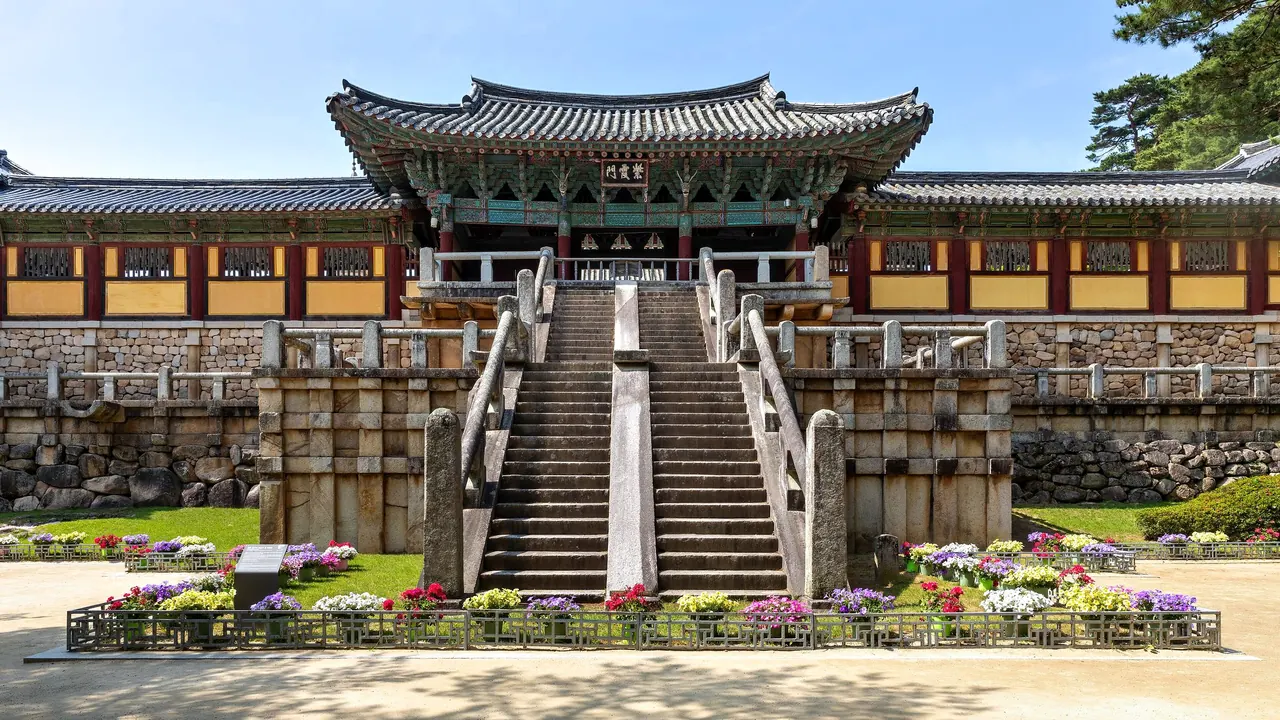
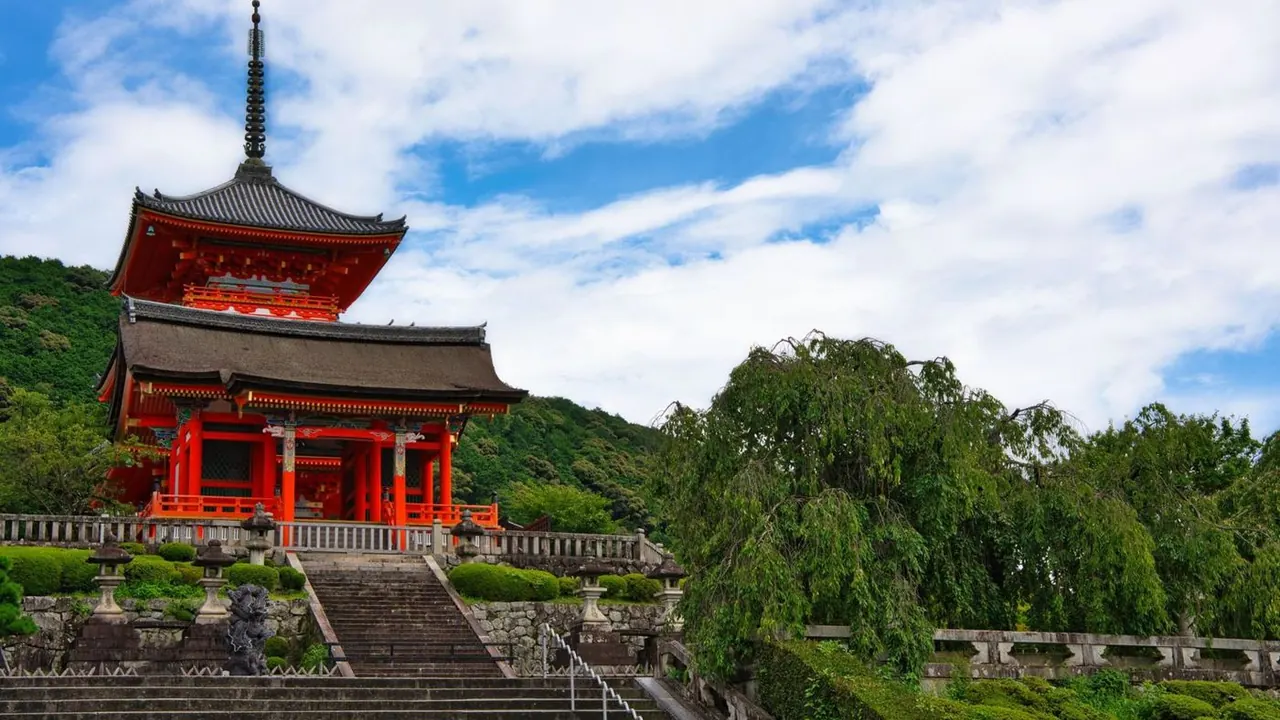
Photos: Gyeongju by Basile Morin, CC BY-SA 4.0, cropped; Kyoto by Bert Mulder, Pexels License.
Gyeongju or Kyoto?
Our verdict in twelve categories, each scored against the same fixed benchmark cities, and the climate month by month, so you can choose for your trip.
Choose Gyeongju for
- beaches
- prices
Gyeongju suits travellers who want an ancient capital they can take in at an easy pace. The Silla tombs, palace pond and museum sit together on flat ground for walking or cycling, the great temples are a short ride up the mountain, and the whole place costs less and feels calmer than Kyoto. It's a good fit for two or three unhurried days, a temple stay, or a stop on a wider trip through Korea with Busan close by.
Choose Kyoto for
- shopping
- food and drink
- live music and the arts
Kyoto is the stronger choice for anyone who wants depth in everything. It has a far larger body of temples and gardens, some of Japan's most refined cooking, traditional crafts sold by old family firms, and geisha dances and kabuki on its stages. Nara, Osaka and Himeji are all within easy reach by train. Expect bigger crowds and higher room rates, but it gives a week or more far more to fill it with.
Scoreboard
Twelve categories on one fixed scale from 0 to 100. The shaded stretch is the gap between the two.
Your match
Pick a travel style or drag the sliders, and both match scores follow your weighting.
Wins on beaches and prices with your weighting.
Wins on shopping and food and drink with your weighting.
What matters to you?
Category by category
What the scores mean for a trip.
Beaches & swimming
Neither city is a beach destination, but Gyeongju at least has a coast. The East Sea shore is about forty minutes away, with small beaches at Bonggil, Jeonchon and Gampo that are good for a swim in July and August. At Bonggil, the rocks of King Munmu's underwater tomb sit just offshore and make the trip worth it in their own right.
From Kyoto, the nearest swimming is in fresh water on Lake Biwa's sandy western shore. The clear water of the Sea of Japan coast is more than two hours north, which makes it an overnight trip rather than a few hours on the sand.
Food & drink
Kyoto is one of Japan's great food cities, and Gyeongju isn't in the same league. Kyoto has seasonal kaiseki in old wooden houses in Gion, Buddhist temple meals at Daitokuji and Tenryuji, tofu and yuba, tea sweets, the covered stalls of Nishiki Market, and the sake breweries of Fushimi for an afternoon.
Gyeongju's food is honest and filling rather than refined. The main local meal is ssambap, a spread of side dishes served with leaves for wrapping rice and meat, near the royal tombs. Add red-bean Hwangnam bread, beopju rice wine from Gyochon and the market stalls, and you have covered most of it.
Culture & sights
Both are former royal capitals with UNESCO-listed temples, but Kyoto's heritage is on another scale. It has seventeen listed sites, more than a thousand temples and shrines, whole districts of wooden machiya in Higashiyama and Gion, and gardens such as Ryoan-ji that are art in their own right. You could spend a week and only scratch the surface, though the famous sights are crowded at peak times.
Gyeongju's Silla heritage is more compact and in some ways stranger. Grassy burial mounds rise between ordinary streets, you can step inside a tomb chamber, and the granite Buddha of Seokguram sits in its grotto above Bulguksa. Two or three days covers the main sites, and it's easier to have them to yourself.
Nightlife
Neither city is built for late nights, but Kyoto has rather more going on. Pontocho's lantern-lit alley and the Kiyamachi canal street have small sake bars, standing izakaya, riverside terraces in summer and a few student clubs. Osaka is under an hour away if you want a proper night out.
Gyeongju's evening tends to be a walk past the floodlit Wolji Pond, then a glass of wine or makgeolli in Hwangnidan-gil. There are no clubs, and for a big night you would take the train to Busan or Daegu.
Nature & outdoors
Kyoto has more varied countryside right on its doorstep. There are the Higashiyama trails and the long Kyoto Trail, the bamboo and wooded slopes of Arashiyama, the cedar-forest path between Kurama and Kibune, the cable car up Mount Hiei, and boats down the Hozu gorge.
Gyeongju's outdoors is gentler and mixed with heritage. On Namsan, the trails pass Buddhas carved into the rock, and on Tohamsan people climb the ridges for sunrise towards the sea. The flat valley around Bomun Lake is made for cycling. Unlike Kyoto, Gyeongju also has a coast, where a path at Yangnam runs past columns of basalt.
Day trips
Kyoto is one of the best bases in Asia for day trips. Nara's great Buddha and deer park, Osaka, Uji's Byodo-in and tea, and Kobe are all close, and Himeji Castle is under an hour by bullet train. Frequent fast trains mean you can choose on the morning itself.
Gyeongju is well placed too, just with fewer headline names. Busan's port and seaside temples are about half an hour away by high-speed train, and the lived-in clan village of Yangdong and the monastery of Tongdosa are each about forty minutes by road. Hahoe and Haeinsa are long but rewarding days out.
Good for families
Kyoto has more for children despite all its temples. There is the Railway Museum with its steam locomotives and simulators, plus an aquarium and zoo near the centre, ninja shows at the Edo-era film set, and deer to feed in Nara. The downside is crowded buses and long flights of temple steps in the summer heat.
Gyeongju puts most of its family fun in one place, the Bomun Lake resort, with its roller coasters, water park, swan pedal boats and bird park. In the centre, the flat paths around the tombs suit buggies and tandem bikes. After a few days, though, the steady diet of heritage can wear thin for young children.
Getting around
Kyoto is the easier city to get around without a car. The flat central grid suits walking and cycling, and between JR lines, private railways, the Randen tram and buses you can reach almost any temple. The buses are slow in blossom and foliage season, so trains plus a bicycle is usually the quickest way.
In Gyeongju the heritage core is easy, because the tombs, museum and Hwangnidan-gil are all close together on flat ground. Everything beyond it is harder. The high-speed station is outside town, and Seokguram, Yangdong and the coast are reached on infrequent buses, so many visitors end up using taxis or hiring a car for a day.
Shopping & style
Shopping in Kyoto centres on craftsmanship. Family firms that go back generations sell Kiyomizu ceramics, Nishijin silk, fans, incense, lacquer and hand-forged knives. The Teramachi arcades, the Shijo department stores and the monthly flea markets at To-ji and Kitano Tenmangu fill in the rest.
Gyeongju's shopping is a few small shops in Hwangnidan-gil selling stationery and ceramics with Silla motifs, plus local markets and boxes of Hwangnam bread to take home. Anyone who wants more heads to Busan.
Affordability
Gyeongju is cheaper to stay in. Most of the historic centre is free to walk around, temple fees are small, and hanok guesthouses and motels are fairly priced on weekdays. The costs come from taxis between outlying sites and weekend rates at the Bomun resort hotels.
Kyoto's everyday costs are reasonable, with cheap noodle counters and inexpensive transport, but rooms are where it gets expensive. Ryokan and hotels are costly all year and especially at blossom and maple time, and kaiseki is a treat rather than an everyday meal.
Live music & performing arts
Kyoto has a real performing tradition that you can buy a ticket for. Geiko and maiko stage their spring dances in Gion and the other geisha districts, the Minamiza on the Kamo River is Japan's oldest kabuki house, and there are regular Noh performances, along with a concert hall and small jazz bars. Much of this is seasonal, though, so check what's on before you go.
In Gyeongju, live performance is mostly summer shows on Silla themes put on for visitors at Bomun Lake. The one real occasion is the Silla Cultural Festival each autumn, when court music, drumming and folk dance fill the streets around the tombs.
Wellness & relaxation
Both cities do quiet well, with Kyoto offering more ways to unwind. You can soak in century-old sento with tiled murals, stay in a ryokan with a wooden tub, find hot springs at Kurama and Ohara, or sit through a zazen session in front of a raked gravel garden. The catch is that the calm is easiest to find early in the morning or in winter.
Gyeongju offers hot-spring bathhouses around Bomun Lake and the ordinary Korean jjimjilbang. Its most distinctive retreat is a temple stay, at Bulguksa or at Golgulsa with its sunmudo martial arts and meditation. The whole town feels unhurried except at weekends.
When should you go?
Pick your month. The climate figures are measured averages, not a forecast.
Gyeongju in July
Kyoto in July
Daytime high, °C
Rainfall in the month, mm
Where the figures come from
Gyeongju's temperatures are measured 25 km from the centre, at Pohang.
Gyeongju has no rain gauge within 25 km of the centre, so its rainfall comes from a gridded climate dataset read at the city rather than from a gauge further away.
Kyoto's sunshine is measured 43 km from the centre, at Osaka.
Temperature and rainfall are climate normals, averaged over the years shown. Gyeongju: 1991-2020 normals, Pohang (25.3 km from centre). Kyoto: 1971-2000 (sunshine 1991-2020, rainfall 1991-2020) normals, Kyoto (3.2 km from centre).
The two cities follow a similar East Asian pattern. Spring and autumn are the best seasons in both, with April, May and October warm enough for long days on foot and drier than summer. Gyeongju tends to be sunnier than Kyoto through winter and spring, so its clear, cold winter days still work for walking among the tombs. In July and August it reaches about 30°C, with around 220mm of rain each month. Those are also the only months when the East Sea, at about 25°C at its warmest, is pleasant for swimming.
Kyoto gets hotter and wetter. August highs reach 32°C in a humid basin, and July is the wettest month at about 250mm. Heavy rain carries on through September and into October, so Kyoto's dependable autumn starts a little later than Gyeongju's, from late October into November. Winters in both cities are cold but manageable for sightseeing.
Which traveller are you?
For a food and nightlife trip, Kyoto is the clear pick. Kaiseki dinners, temple cooking, Nishiki Market and the sake bars of Pontocho give it far more depth than Gyeongju, where meals are pleasant, the choice is mostly Korean and the town goes to bed early.
On a shopping trip, choose Kyoto. Its family-run shops sell ceramics, silk, lacquer, knives and tea, and it also has covered arcades, department stores and temple flea markets. Gyeongju has a few design shops in its hanok lanes, but beyond those you would have to go to Busan.
On a trip with a tight budget, Gyeongju makes the money last longer. The tomb parks are free to wander, buses and bike hire are cheap, and weekday guesthouses are fairly priced. Kyoto's ryokan and peak-season hotels push a stay up fast.
Before you go
| Measure | Gyeongju | Kyoto |
|---|---|---|
| Official language | Korean, Korean Sign Language | Japanese |
| Currency | Won (KRW) | Yen (JPY) |
| Sockets | CF220 V, 60 Hz | AB100 V, 50 and 60 Hz depending on the region |
| Driving side | Right | Left |
| Time zone | UTC+9 | UTC+9 |
| Emergency number | Police 112, ambulance 119, fire 119 | Police 110, fire 119 |
| Elevation | 46 m | 51 m |
| Main airport | Gimhae International Airport (PUS)79 km from centre49 non-stop destinations | Kansai International Airport (KIX)81 km from centre62 non-stop destinations |
| Public holidays this year | 18 days | 16 days |
By the numbers
| Measure | Gyeongju | Kyoto |
|---|---|---|
| City population | 245,365 | 1,463,723 |
| People per km² | 185 | 1,768 |
| Museums within 10 km | 3 | 77 |
| UNESCO World Heritage sites within 50 km | 6 | 4 |
| Swim season, months above 21 °C | 4 months | 5 months |
Where else could you go?
Every comparison below shares a destination with this one, so you can follow Gyeongju or Kyoto somewhere new.