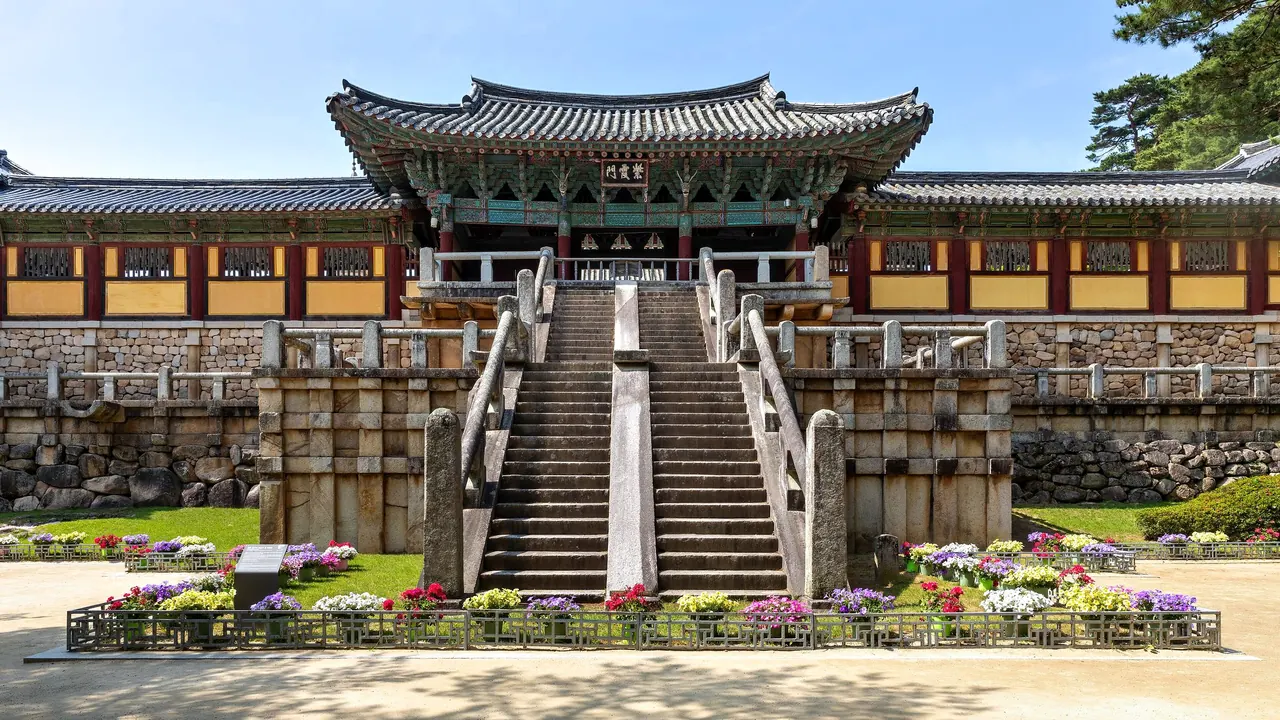
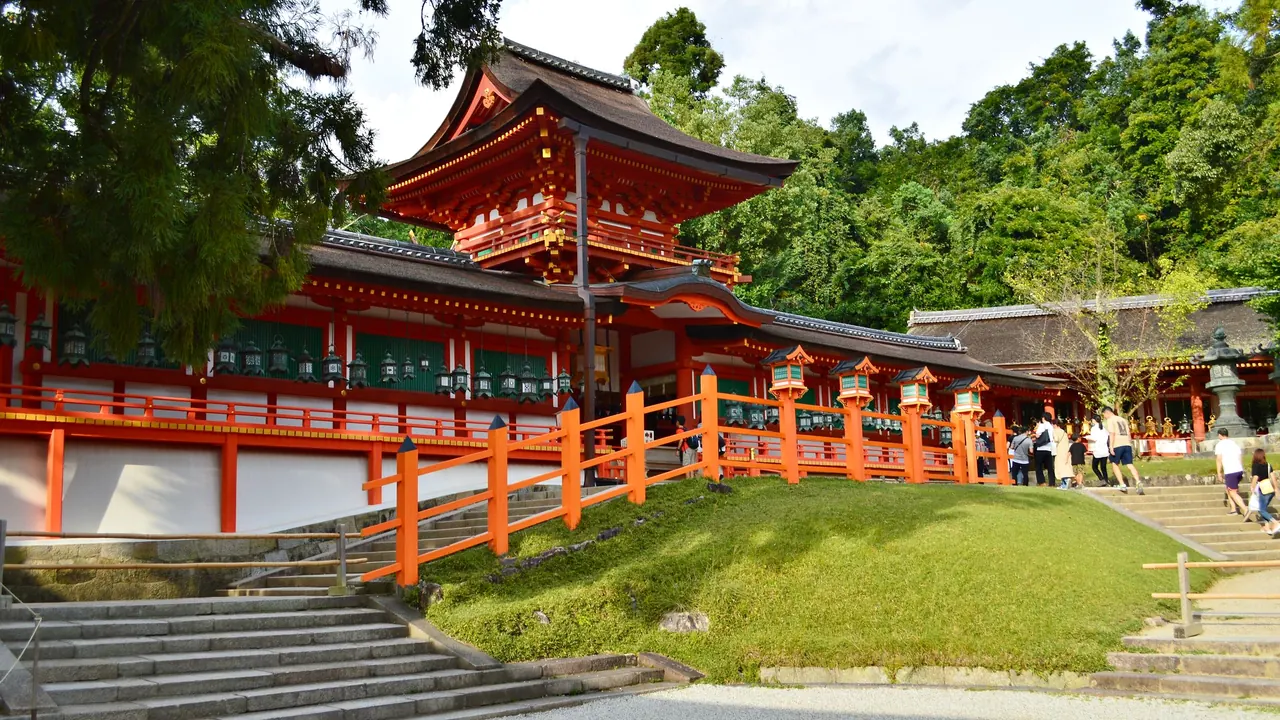
Photos: Gyeongju by Basile Morin, CC BY-SA 4.0, cropped; Nara by Saigen Jiro, CC0.
Gyeongju or Nara?
Our verdict in twelve categories, each scored against the same fixed benchmark cities, and the climate month by month, so you can choose for your trip.
Choose Gyeongju for
- beaches
- wellness
- families
Gyeongju suits a traveller who wants to slow down. Its Silla tombs, temples and rock-carved hillsides come with hot-spring bathhouses, temple stays and a lakeside resort with rides and a water park, and the East Sea coast is close enough for a summer swim. It rewards people who are happy to stay put for a few unhurried days and can accept taxis or long bus rides out to the furthest sites.
Choose Nara for
- day trips
- getting around
- shopping
Choose Nara for the stronger set of temples and the easier logistics. The Great Buddha, the lantern paths of Kasuga Taisha and the Tang-era halls to the west are all walkable from the station or a short train ride away. Kyoto, Osaka and Horyu-ji are close enough to visit and still be back by evening. It works best as a compact, efficient base in a wider trip around the Kansai region.
Scoreboard
Twelve categories on one fixed scale from 0 to 100. The shaded stretch is the gap between the two.
Your match
Pick a travel style or drag the sliders, and both match scores follow your weighting.
Too close to call, level with your weighting
Wins on beaches and wellness with your weighting.
Wins on day trips and getting around with your weighting.
What matters to you?
Category by category
What the scores mean for a trip.
Beaches & swimming
Gyeongju has a coast and Nara does not. About forty minutes east, Bonggil, Jeonchon and Gampo have small sandy and pebbly beaches. At Bonggil you can look out at the rocks of King Munmu's underwater tomb, which makes a swim there a heritage outing too. The water is only pleasant in July and August.
Nara is an inland basin. The nearest sea is the industrial shore of Osaka Bay, more than an hour away, and the good beaches of the Kii Peninsula take most of a day to reach. In summer, a swim in Nara means a pool.
Food & drink
Neither city is a destination for food, but the local dishes are quite different. In Gyeongju, the signature meal is ssambap, a table of a dozen or more side dishes with leaves for wrapping, eaten near the tombs. You can add market soups and rice cakes, boxes of red-bean Hwangnam bread and Gyochon's clear beopju rice wine.
Nara's dishes are preserved and delicate: kakinoha-zushi pressed in persimmon leaves, narazuke pickled in sake lees and fine Miwa somen noodles. The city also claims a founding role in sake, and there are tasting counters in Naramachi. Kitchens in Nara close early, though Osaka and Kyoto are close enough for a serious dinner.
Culture & sights
Gyeongju's Silla capital survives mostly as an open landscape. Grassy burial mounds rise between houses and streets, Tumuli Park lets you step inside a tomb chamber, and Cheomseongdae, the vast foundations of Hwangnyongsa and the reconstructed pavilions on Wolji Pond fill out the centre. Its two masterpieces, Bulguksa and the granite Buddha of Seokguram, are up on Tohamsan, away from town.
Nara has the edge because so much of its old capital still stands as great temple buildings. The Great Buddha's hall at Todai-ji, Kofuku-ji's pagoda above the park, the lantern-lined paths to Kasuga Taisha and the Tang-era proportions of Toshodai-ji and Yakushiji make a run of monumental architecture, and the National Museum's Buddhist sculpture adds to it. It is also tighter, with Naramachi's wooden townhouses and Gango-ji a short walk from the park.
Nightlife
Both towns go to bed early, and neither has clubs. Gyeongju's evening has more of an occasion to it: a walk past floodlit Wolji Pond, followed by wine, cocktails or makgeolli in the hanok lanes of Hwangnidan-gil, or soju and grilled meat downtown. In Nara, the evening means an izakaya near Kintetsu Nara station or a sake counter in the arcades. Osaka's bars are under an hour away, but you have to watch for the last train back.
Nature & outdoors
There is as much green space in both cities, though it is laid out differently. Nara's nature starts at the station: deer on the park lawns, the Kasugayama Primeval Forest behind it and an easy climb up Mount Wakakusa. Further out, the Yamanobe-no-michi path and Yoshino's blossom-covered hills extend it.
Gyeongju's outdoors are more spread out, with Namsan's trails past Buddhas carved into the rock and sunrise ridges on Tohamsan. There is also a cherry-lined path around Bomun Lake, and on the coast you can walk past the basalt columns of Yangnam.
Day trips
Nara is much better placed for day trips. Kyoto and Osaka are each well under an hour away, and Horyu-ji, with the oldest wooden buildings in the world, is a short train ride. Asuka, Uji's Byodo-in and the mountain temples of Hase-dera and Muro-ji are all within reach too, and Himeji's castle is possible in a longer day.
Gyeongju has good options as well: Busan by high-speed train in about half an hour, and the lived-in clan village of Yangdong and the great monastery of Tongdosa close by. Hahoe and Haeinsa, though, mean a long day on the road.
Good for families
Gyeongju is the better pick with children because of Bomun Lake, where an amusement park with roller coasters, a water park, pedal boats and a bird park can fill whole days. In the centre, children can ride family bikes around the flat tomb parks, see the gold crowns in the National Museum and dress up in hanbok.
In Nara, children love bowing to the deer and squeezing through the pillar at Todai-ji, but there is little else made for them. Small children need watching around the deer, and families usually head to Osaka for an aquarium or a theme park.
Getting around
In both cities you see the heart of the place on foot or by bike, on flat ground. Gyeongju's tomb parks, Cheomseongdae and Wolji Pond are joined by footpaths and cycle lanes. Nara's park temples and Naramachi make a longer day's walk, but an easy one. The real difference is in getting beyond the centre.
Gyeongju's outer sights are reached by road. Buses cope with Bomun Lake and Bulguksa, but buses to Seokguram, Yangdong and the coast run rarely, so a day out to any of them often depends on a taxi. Nara's outlying temples are on the railway: Toshodai-ji, Yakushiji and Horyu-ji are each a short local train ride away. Its one weak point is city buses, which get crowded at weekends and in blossom season.
Shopping & style
Gyeongju sells Silla motifs reworked as modern souvenirs, while Nara sells crafts the city has made for centuries. In Gyeongju, the hanok lanes of Hwangnidan-gil have small shops for stationery, ceramics and accessories, and Jungang and Seongdong markets add dried seafood and local produce.
Nara has more worth seeking out. Specialist shops in Naramachi sell sumi ink and calligraphy brushes, Nara-zarashi linen, Akahada pottery and carved Ittobori dolls, and the covered arcades near Kintetsu Nara station add sake and sweets. For fashion, you head to Busan or Daegu from Gyeongju and to Osaka from Nara.
Affordability
Day-to-day costs are much the same, and in both cities the best sights cost little: the tomb parks and pond surroundings in Gyeongju, the deer park in Nara, and modest temple fees in both. The extra costs come in different places. In Gyeongju, it is weekend and blossom-season prices, the Bomun resort hotels and taxis between outlying sites. In Nara, it is traditional ryokan with dinner and the rail fares that add up if you use the city as a base for day trips.
Live music & performing arts
Neither city has a theatre or concert scene, and each has one great annual occasion. Gyeongju's performances are mostly put on for visitors, with open-air traditional music and dance at Bomun Lake in the warm months, but the autumn Silla Cultural Festival fills the streets around the tombs with court music, drumming and processions.
Nara's performing arts are sacred and very old. It is one of the birthplaces of Noh, gagaku and bugaku are performed at Kasuga Taisha, and the winter On-matsuri festival has run for close to nine centuries.
Wellness & relaxation
Gyeongju offers more ways to relax. Hot-spring water feeds the bathhouses and hotel spas around Bomun Lake, and the jjimjilbang, with saunas and heated floors, are part of everyday life. Bulguksa and Golgulsa offer temple stays with early chanting, vegetarian meals and sunmudo meditation.
Nara has no hot springs in town, only old bathhouses, a few bathing complexes on the outskirts and ryokan baths. What it does offer is quiet: an early morning in the deer park, a tea house by a temple garden and an old town that empties once the day visitors leave.
When should you go?
Pick your month. The climate figures are measured averages, not a forecast.
Gyeongju in July
Nara in July
Daytime high, °C
Rainfall in the month, mm
Where the figures come from
Gyeongju's temperatures are measured 25 km from the centre, at Pohang.
Gyeongju has no rain gauge within 25 km of the centre, so its rainfall comes from a gridded climate dataset read at the city rather than from a gauge further away.
Nara's sunshine is measured 26 km from the centre, at Osaka.
Temperature and rainfall are climate normals, averaged over the years shown. Gyeongju: 1991-2020 normals, Pohang (25.3 km from centre). Nara: 1971-2000 (sunshine 1991-2020, rainfall 1991-2020) normals, Nara (2.6 km from centre).
Spring and autumn are the best seasons in both cities, with April, May and October mild enough to walk among temples all day. Summer differs more than winter. Gyeongju's rain is concentrated in July and August, when around 220mm falls each month. Those same months are the only time the East Sea is warm enough to swim, reaching about 25°C in August. Nara's summer is hotter, near 32°C in August, and it is humid, which makes long temple walks hard going.
Nara's rain is spread more evenly through the year, from the June rainy season to a fairly wet October, so autumn in Gyeongju tends to be drier. Winters are cold and clear in both cities, with highs in single figures. Gyeongju gets noticeably more sunshine from November to March, so a crisp winter visit there is more appealing than its temperatures suggest.
Which traveller are you?
For a relaxing and wellness trip, Gyeongju is the better choice. Bomun Lake has hot-spring baths, every neighbourhood has a jjimjilbang, and Bulguksa and Golgulsa offer temple stays with chanting and meditation. Nara's calm is real, but it has no hot springs in town.
On a family trip with children, Gyeongju offers more. Bomun Lake has an amusement park, a water park, swan boats and a bird park, and flat tomb parks suit family bikes. In Nara, feeding the deer is a wonderful day, but families end up taking the train to Osaka for anything more.
For a short city break, Nara is easier. The station sits at the edge of the park, Todai-ji, Kasuga Taisha and Naramachi are all within walking distance, and no car or taxi is needed. In Gyeongju, the arrival station is outside town and the major temples are spread across the hills.
Before you go
| Measure | Gyeongju | Nara |
|---|---|---|
| Official language | Korean, Korean Sign Language | Japanese |
| Currency | Won (KRW) | Yen (JPY) |
| Sockets | CF220 V, 60 Hz | AB100 V, 50 and 60 Hz depending on the region |
| Driving side | Right | Left |
| Time zone | UTC+9 | UTC+9 |
| Emergency number | Police 112, ambulance 119, fire 119 | Police 110, fire 119 |
| Elevation | 46 m | 70 m |
| Main airport | Gimhae International Airport (PUS)79 km from centre49 non-stop destinations | Kansai International Airport (KIX)59 km from centre62 non-stop destinations |
| Public holidays this year | 18 days | 16 days |
By the numbers
| Measure | Gyeongju | Nara |
|---|---|---|
| City population | 245,365 | 352,377 |
| People per km² | 185 | 1,273 |
| Museums within 10 km | 3 | 31 |
| UNESCO World Heritage sites within 50 km | 6 | 6 |
| Swim season, months above 21 °C | 4 months | 5 months |
Where else could you go?
Every comparison below shares a destination with this one, so you can follow Gyeongju or Nara somewhere new.