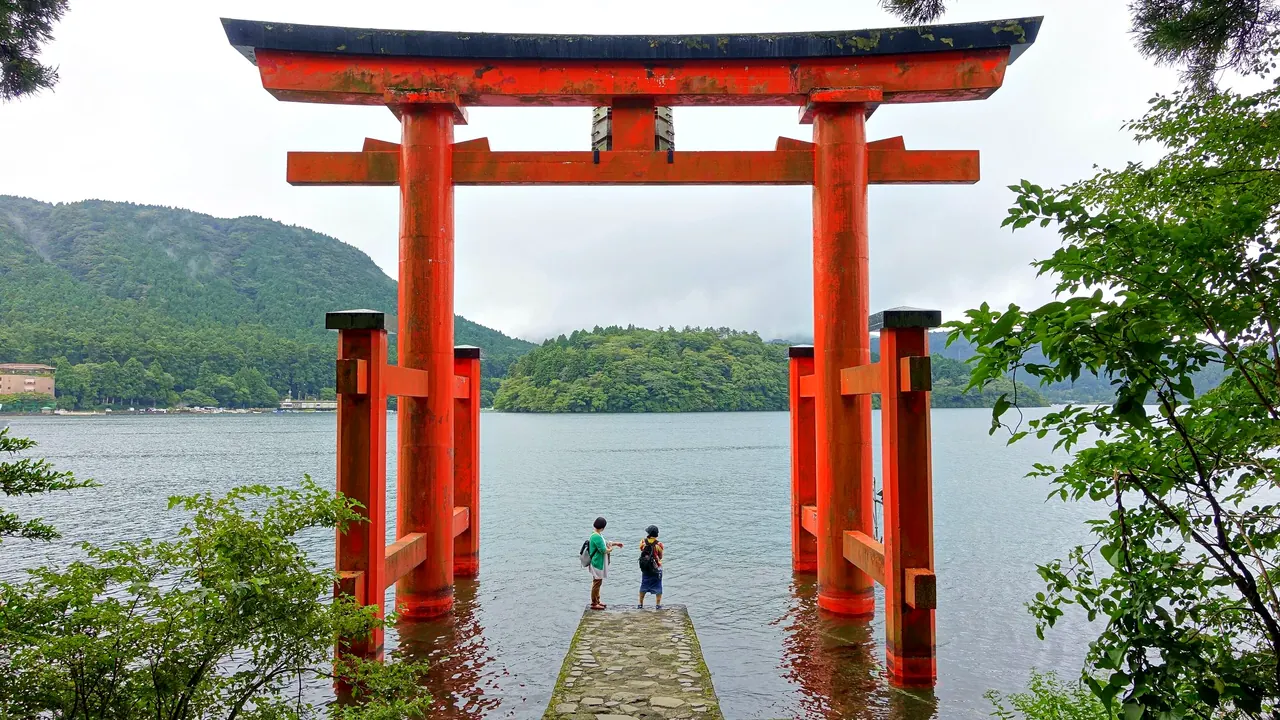
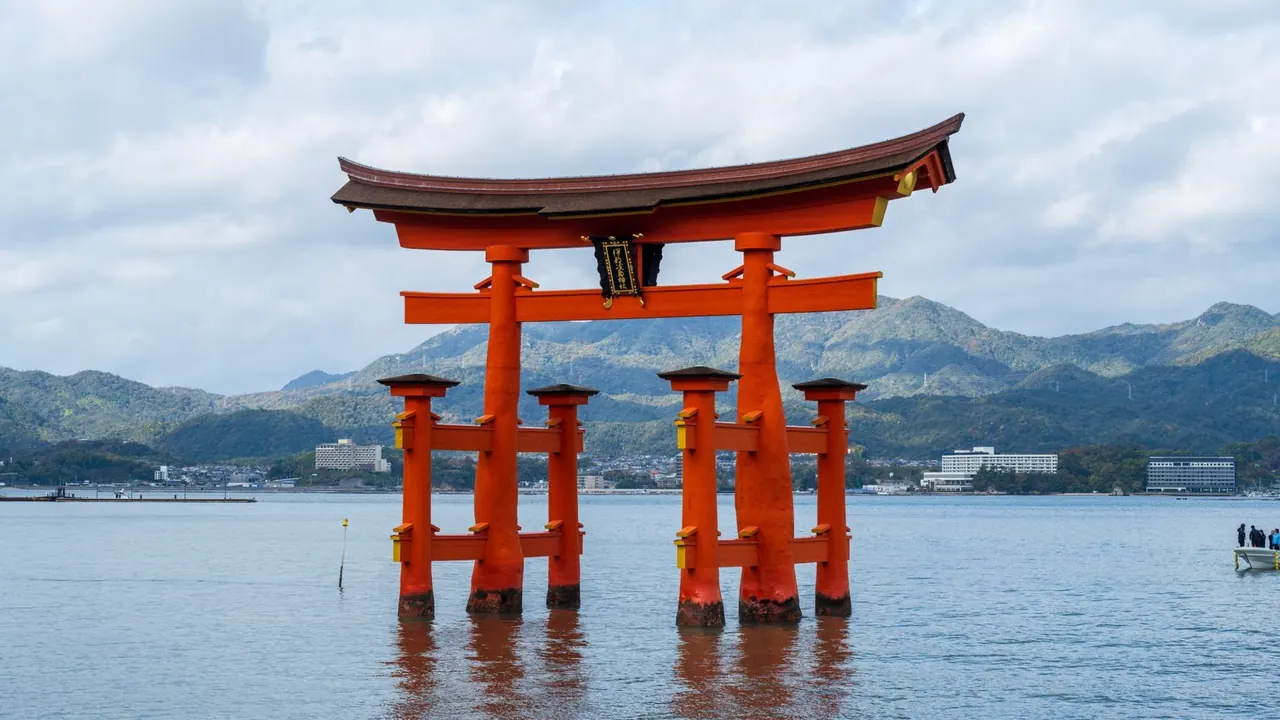
Photos: Hakone by Daderot, CC0; Hiroshima by Guohua Song, Pexels License.
Hakone or Hiroshima?
Our verdict in twelve categories, each scored against the same fixed benchmark cities, and the climate month by month, so you can choose for your trip.
Choose Hakone for
- wellness
- nature and the outdoors
- families
Hakone suits travellers who want to slow right down. A night or two in a ryokan brings a kaiseki dinner and outdoor baths under the cedars, and the days go on walking the volcanic caldera, crossing Lake Ashi and watching for Fuji. It is a retreat rather than a town, so come for the bathing and the landscape, and accept quiet evenings and the cost of a good inn.
Choose Hiroshima for
- nightlife
- food and drink
- live music and the arts
Choose Hiroshima for a fuller city stay with history at its centre. The Peace Memorial Park and its museum are among the most affecting sights in Japan. Okonomiyaki counters and the bars of Nagarekawa fill the evenings, and Miyajima and the Inland Sea islands are close by. It costs less day to day, and the trams and flat centre make it easy to get around.
Scoreboard
Twelve categories on one fixed scale from 0 to 100. The shaded stretch is the gap between the two.
Your match
Pick a travel style or drag the sliders, and both match scores follow your weighting.
Wins on wellness and nature and the outdoors with your weighting.
Wins on nightlife and food and drink with your weighting.
What matters to you?
Category by category
What the scores mean for a trip.
Beaches & swimming
Neither place is built for swimming. From Hakone the sea means a trip down the mountain. The shore at Odawara is steep and pebbly, so the realistic choice is the sheltered sand at Atami, under an hour away. You cannot swim in Lake Ashi.
Hiroshima makes a swim easier to fit in. A ferry to Miyajima, Ninoshima or Etajima reaches small sandy beaches on the calm Inland Sea, which works as an extra on a summer island day. The season is short, though, and jellyfish arrive towards its end.
Food & drink
Hakone's best meal is the one served at your inn. At a good ryokan the kaiseki dinner of seasonal courses, with river fish and local tofu, is very fine. Beyond that there are soba shops, tofu specialists and Owakudani's black eggs, and most places are shut by early evening.
Hiroshima gives you far more to explore. Okonomiyaki is layered on griddles in whole buildings of counter stalls, oysters from the bay are at their best in winter, and the izakaya serve fish from the Inland Sea. The breweries of Saijo are a short train ride away for sake tastings.
Culture & sights
Hakone's culture is mostly art set in the landscape. There is sculpture on the hillside lawns of the Open-Air Museum, Impressionist painting at the Pola in the beech forest, and stretches of the Tokaido with its rebuilt checkpoint and Hakone Shrine's torii standing in the lake. It is pleasant and unhurried, but the sights are scattered.
Hiroshima carries more weight. The A-Bomb Dome and the Peace Memorial Museum make a visit few people forget, and Shukkeien garden and the moated castle grounds fill out a stay. Expect a more serious, thoughtful day than anything in Hakone.
Nightlife
Hakone has essentially no nightlife. Evenings are dinner at the inn, a final soak and an early night, and only a few izakaya in Yumoto stay open later. Hiroshima's Nagarekawa is a grid of buildings stacked with small bars, karaoke boxes and izakaya, busy past midnight and best explored slowly, from one counter bar to the next. The scene is local and modest, but it is a real night out.
Nature & outdoors
Hakone's landscape is the stronger draw. You stay inside a volcanic caldera, with sulphur vents at Owakudani, Lake Ashi on the crater floor and Fuji behind it on clear days. Ridge walks lead to Mount Kintoki, and quiet paths run through the Sengokuhara pampas grass, although mist often hides the view.
Hiroshima's nature is gentler and closer to the water. Tree-lined rivers run through the city, and beyond them lie the forested islands of the Inland Sea, the trails up Mount Misen on Miyajima and the Sandankyo Gorge walk inland.
Day trips
Both make excellent bases, but they point in different directions. From Hakone the trips run east to Kamakura's Great Buddha and Zen temples, to Yokohama and, by express, to Tokyo. To the south lie Izu and Atami, and over the ridge are the Fuji lakes.
Hiroshima's day trips lean on the sea and the shinkansen. Choices include Miyajima's floating torii, Iwakuni's arched bridge, the old ports of Onomichi and Tomonoura and rabbit-filled Okunoshima. Himeji Castle and Kurashiki are about an hour away.
Good for families
Both work well for a few days with children, in different ways. In Hakone the transport is the fun: the zigzag railway, the ropeway over the steaming vents and the pirate ship on Lake Ashi, with seal shows and an onsen theme park as well. Formal inns, nude communal baths and steep paths can make it harder going.
Hiroshima is easier day to day, with flat pavements, simple trams and welcoming restaurants. Children can feed the deer on Miyajima, visit Asa Zoo or spend an evening at the baseball. Parents should think about how much of the Peace Memorial Museum young children see.
Getting around
Hakone's loop of mountain railway, cable car, ropeway, boat and bus is part of the sightseeing, all on one pass. It is slow, though, and weekend queues and traffic eat into the day. Hiroshima is simpler: the main sights sit within walking distance in a flat centre, and trams link the station, the Peace Park and the Miyajima ferry. JR trains and the shinkansen cover the longer trips.
Shopping & style
Hakone's one real find is yosegi-zaiku, the wooden marquetry puzzle boxes and trays made around Hatajuku. Besides that there are Yumoto's sweets and souvenirs and the museum shops, and for fashion you have to take the bus to the Gotemba outlets. Hiroshima offers more browsing, with the Hondori arcade, department stores and station food halls. To take home there are brushes from Kumano, rice paddles from Miyajima and sake from Saijo.
Affordability
Hakone is the dearer stay. People come for a ryokan night with dinner and a hot-spring bath, and at the better inns with private outdoor baths the cost adds up quickly, especially at weekends and in autumn. Simple inns in Yumoto and public bathhouses keep it down.
Hiroshima is easier on a budget. Business hotels are plentiful, okonomiyaki and noodles are cheap and filling, and the Peace Park is free to walk. The costs that mount up are shinkansen tickets for day trips and evenings of oysters and sake.
Live music & performing arts
Hakone has no theatre or concert hall, so you are left with the odd museum concert or a performance laid on at an inn. Hiroshima has its own kagura, a Shinto dance-drama of masks, demons and drumming that is staged in the evenings for visitors. It also has a symphony orchestra and small live houses for local bands. Neither is a place to travel to for performances, but in Hiroshima a show is easy to fit into an evening.
Wellness & relaxation
Here Hakone is in a different league. Its seventeen hot-spring areas run from riverside Yumoto to the milky sulphur water of Sengokuhara, with outdoor baths under maples, private balcony baths and day-bathhouses in the woods. The pace is slow, with misty mornings and early nights.
Hiroshima has no hot springs of its own. Relaxing there means a neighbourhood sento, a hotel's top-floor bath or a ryokan night on Miyajima, and true onsen are about an hour out. The riverside walks are calm, but they are not a reason to go.
When should you go?
Pick your month. The climate figures are measured averages, not a forecast.
Hakone in July
Hiroshima in July
Daytime high, °C
Rainfall in the month, mm
Where the figures come from
Hakone's temperatures are measured 43 km from the centre, at Kawaguchiko.
Hakone has no rain gauge within 25 km of the centre, so its rainfall comes from a gridded climate dataset read at the city rather than from a gauge further away.
Temperature and rainfall are climate normals, averaged over the years shown. Hakone: 1971-2000 (rainfall 1991-2020) normals, Kawaguchiko (42.9 km from centre). Hiroshima: 1991-2020 normals, Hiroshima (1.7 km from centre).
Hakone is a mountain resort and stays well cooler than Hiroshima all year. Winter highs sit around 5°C, which is cold for walking but makes the outdoor baths at their best. These are also the driest months and bring the clearest Fuji views. Summer is mild, but heavy rain runs from June right through October, and September and October are as wet as any time of year. Spring and November are the most comfortable months for walking. Down at Sagami Bay the sea is only warm enough for a swim in August and September.
Hiroshima is warmer throughout. Spring and October are the pleasant months for sightseeing on foot. The rainy season peaks in July at close to 300mm. August is the sunniest summer month but also turns hot at around 33°C, which suits an island swim in a 26°C sea more than long days in the streets. Winter is mild and fairly dry, and it is the season for oysters.
Which traveller are you?
On a relaxing and wellness trip, choose Hakone. Days fall into the ryokan rhythm: a soak before dinner, kaiseki in a yukata, another bath at dawn. Stay two midweek nights. Hiroshima has baths, but no stay built around them.
For a food and nightlife trip, Hiroshima wins. Evenings run from a griddle counter to an izakaya, then a small bar where the owner pours sake. In Hakone dinner is at your inn, and the night ends with a bath.
On an outdoors trip, Hakone gives the more dramatic walking, on volcanic ground with Fuji in view when the mist lifts. Hiroshima suits those who would rather cycle: the Shimanami Kaido crosses the islands to Shikoku, though its hills stay modest.
Before you go
| Measure | Hakone | Hiroshima |
|---|---|---|
| Official language | Japanese | Japanese |
| Currency | Yen (JPY) | Yen (JPY) |
| Sockets | AB100 V, 50 and 60 Hz depending on the region | AB100 V, 50 and 60 Hz depending on the region |
| Driving side | Left | Left |
| Time zone | UTC+9 | UTC+9 |
| Emergency number | Police 110, fire 119 | Police 110, fire 119 |
| Elevation | 734 m | 3 m |
| Main airport | Tokyo Haneda International Airport (HND)71 km from centre98 non-stop destinations | Hiroshima Airport (HIJ)43 km from centre10 non-stop destinations |
| Public holidays this year | 16 days | 16 days |
By the numbers
| Measure | Hakone | Hiroshima |
|---|---|---|
| City population | 10,925 | 1,198,021 |
| People per km² | 118 | 1,324 |
| Museums within 10 km | 16 | 18 |
| UNESCO World Heritage sites within 50 km | 2 | 2 |
| Swim season, months above 21 °C | 5 months | 4 months |
Where else could you go?
Every comparison below shares a destination with this one, so you can follow Hakone or Hiroshima somewhere new.