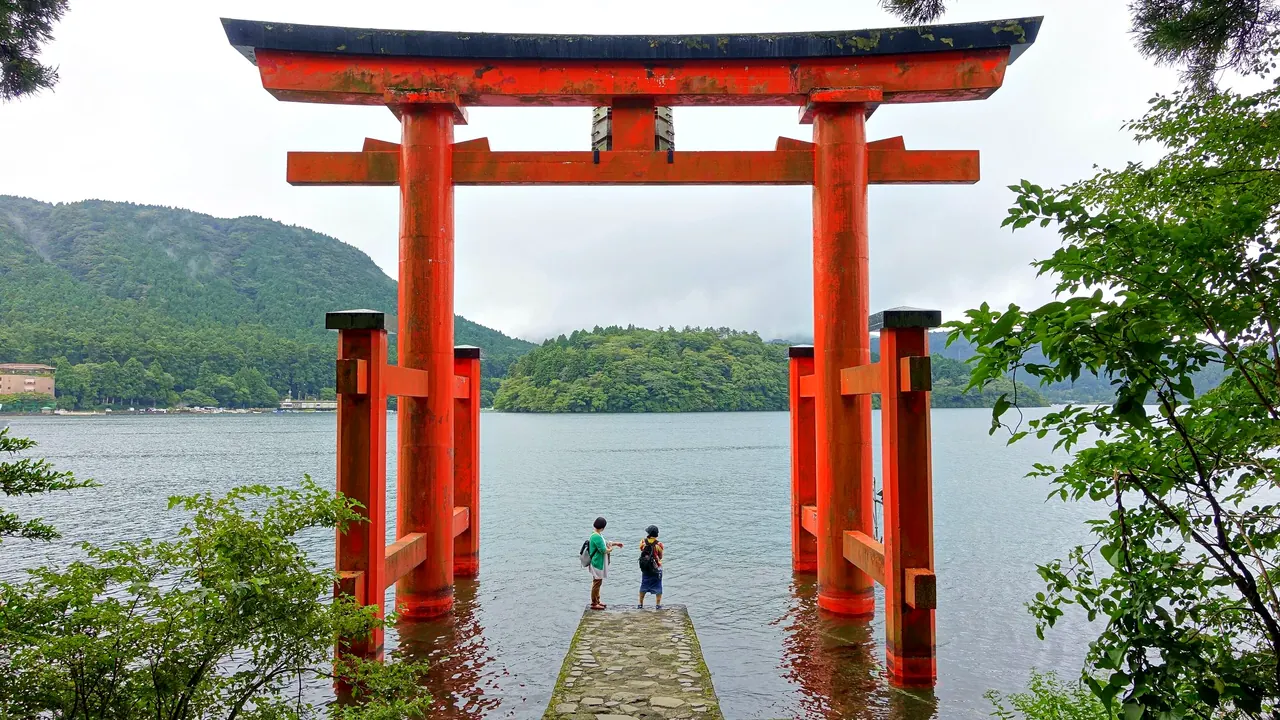
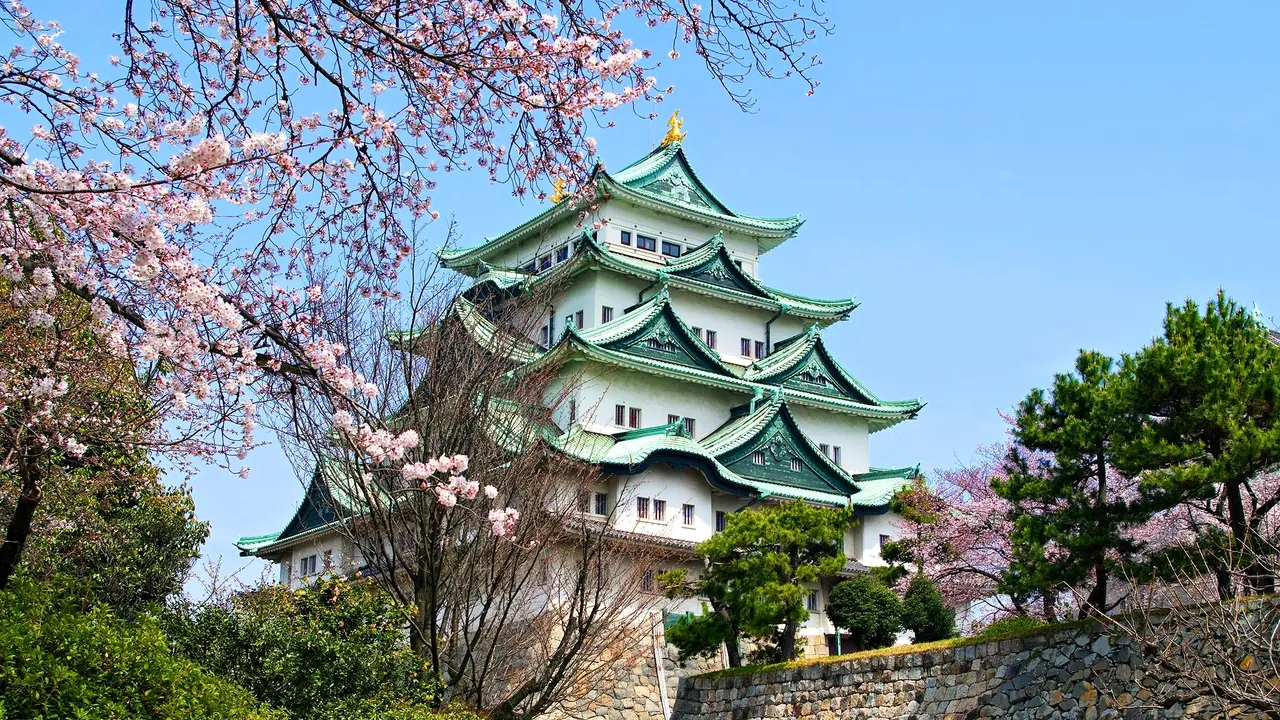
Photos: Hakone by Daderot, CC0; Nagoya by Hiroaki Kaneko, CC BY-SA 3.0, cropped.
Hakone or Nagoya?
Our verdict in twelve categories, each scored against the same fixed benchmark cities, and the climate month by month, so you can choose for your trip.
Choose Hakone for
- wellness
- nature and the outdoors
Hakone is for travellers who want to slow down. The stay centres on a hot-spring inn: a kaiseki dinner served in your room, an outdoor bath under cedars, and mornings spent walking a volcanic caldera with Lake Ashi below and, on clear days, Fuji behind it. It suits couples and anyone after rest and scenery, and two or three quiet days are enough.
Choose Nagoya for
- live music and the arts
- food and drink
- nightlife
Choose Nagoya if you want a city with more to eat, more to do after dark and more for children. Its miso-rich local cooking, department stores, kabuki and big aquarium keep the days full. Its place on the shinkansen line puts Kyoto, Ise and a string of castle towns within easy reach, and it costs noticeably less to stay there.
Scoreboard
Twelve categories on one fixed scale from 0 to 100. The shaded stretch is the gap between the two.
Your match
Pick a travel style or drag the sliders, and both match scores follow your weighting.
Wins on wellness and nature and the outdoors with your weighting.
Wins on live music and the arts and food and drink with your weighting.
What matters to you?
Category by category
What the scores mean for a trip.
Beaches & swimming
Neither city lets you swim on its doorstep, but Nagoya has the easier summer swim. Wide sandy beaches on the Chita Peninsula, such as Utsumi, are about an hour away by train, with small islands like Shinojima a ferry ride beyond, and local families fill them in July and August.
Hakone sits in a caldera where Lake Ashi is closed to swimmers and the shore below at Odawara is steep pebble. Atami's sheltered sand is the realistic option, a single outing rather than a choice of beaches.
Food & drink
Nagoya is one of Japan's distinctive regional food cities, with dishes such as hitsumabushi eel, misonikomi udon and kishimen noodles, each served by its own specialists. Add the morning-service café breakfasts, the deep department-store food halls and Osu's street snacks, and you can eat something different at every meal.
Hakone's strength is narrower. The kaiseki dinner at a good inn can be superb, but beyond it there are soba and tofu shops in Hakone-Yumoto, black eggs at Owakudani and set meals by the lake, most of them shut by early evening.
Culture & sights
Nagoya has more history to see in one place. The rebuilt castle and its painted Honmaru Palace, Atsuta Shrine in its forest and the Tokugawa Art Museum's samurai treasures sit alongside the Toyota and railway museums, which explain how industrial Japan was built.
Hakone's culture is quieter and more spread out. Its highlights are art in a landscape, sculpture on the lawns of the Open-Air Museum and Impressionists at the Pola, plus traces of the old Tokaido road at the lakeside checkpoint and Hakone Shrine's torii standing in the water.
Nightlife
Nagoya has a real night out, though a modest one by Japanese city standards. Sakae and Nishiki pack izakaya, tiny bars, karaoke and a few dance clubs into narrow buildings, and Friday and Saturday are lively.
Hakone has essentially nothing after dinner beyond a few small bars in Hakone-Yumoto. Evenings there are a bath and an early night, by design.
Nature & outdoors
This is Hakone's ground. You stay inside a volcanic caldera in a national park, with steaming sulphur vents at Owakudani, Lake Ashi on the crater floor, ridge walks to Mount Kintoki and the cedar-lined Old Tokaido Road, all reached without leaving the area.
Nagoya sits on a flat, built-up plain, so nature in the city means parks and formal gardens. The Suzuka Mountains, Korankei's maples and the Nakasendo trail in the Kiso Valley are fine, but each takes an hour or two of travel.
Day trips
Both are good bases, but Nagoya reaches further and faster. Kyoto is about 35 minutes by shinkansen, Osaka under an hour and Ise Jingu within two hours, while original castle keeps at Inuyama and Hikone and the pottery towns of Seto and Tokoname are closer still.
Hakone's outings point towards Tokyo and the coast instead: Kamakura's Great Buddha, Yokohama, Odawara's castle, Atami and the Izu Peninsula, with Tokyo itself under two hours on the Romancecar.
Good for families
Nagoya is much the stronger choice with children. The port aquarium with orcas and belugas, Legoland, Ghibli Park, Higashiyama Zoo and full-size bullet trains at the railway museum could fill a week, and Nagashima's roller coasters are under an hour away.
Hakone works for a short stay built around the rides: the zigzag railway, the ropeway and the pirate ship on Lake Ashi. Beyond those, a small seal aquarium and a swimsuit onsen park, little is aimed at children, and formal inns and nude communal baths can be awkward.
Getting around
Hakone's mountain railway, cable car, ropeway and lake boats all run on one regional pass and form a loop that is part of the sightseeing. They are also slow. The villages lie kilometres apart on winding roads, and at weekends and in the autumn-colour season the ropeway queues grow and the buses crawl.
Nagoya is quicker to get around. Its wide postwar grid is easy to follow, Sakae, the castle and Osu are within walking distance of one another, and one IC card covers the subway and the JR, Meitetsu and Kintetsu lines. Nagoya Station is a major interchange where the regional lines meet, so getting out of the city is straightforward.
Shopping & style
In Hakone there is one wood craft to buy, and Nagoya has whole streets of department stores. Hakone's craft is yosegi-zaiku, a geometric marquetry of naturally coloured woods made into puzzle boxes and trays in the workshops around Hatajuku. Beyond that, Hakone-Yumoto sells sweets and pickles, and for fashion you take a bus over the ridge to the outlet mall near Gotemba.
Nagoya has far more range. Large department stores stand around Sakae and above the station, with international brands on the avenues between them, while Osu's covered arcades around the Kannon temple mix secondhand clothing, anime and electronics. For something made locally, look for Arimatsu shibori tie-dye and pottery from Seto and Tokoname.
Affordability
Nagoya is the less expensive stay of the two, and most of the difference lies in the bed. In Hakone the night people come for is a ryokan, with dinner, breakfast and the hot-spring bath bundled into one bill, and that bill climbs steeply at the better inns, at weekends and in autumn. Nagoya's many business hotels offer a plain room for far less and leave you free to eat cheaply in noodle shops or over a morning-service breakfast.
Hakone narrows the gap if you settle for a simple inn near Yumoto and the public day-bathhouses, and once you have a bed its regional pass keeps the days themselves modest. Nagoya's costs sit elsewhere: eel dinners, shinkansen trips to Kyoto and the theme parks are what stretch a budget there.
Live music & performing arts
Nagoya has a full programme: opera and touring orchestras at the Aichi Arts Center, kabuki at the Misono-za, Noh near the castle and jazz in small live houses around Sakae. Much of it is aimed at Japanese speakers, so check what is on before you plan an evening.
Hakone has no theatre or concert hall at all. The most you will find is an occasional museum concert or a performance at an inn.
Wellness & relaxation
Hakone is one of Japan's great places for bathing. Its hot-spring villages range from riverside Yumoto to the milky sulphur water of Sengokuhara, many inns have a private bath on the balcony, and the slow pace is the point. A midweek stay avoids the Tokyo day-trippers.
Nagoya makes bathing easy rather than special. City sento and large super sento with saunas are easy to drop into, and Tokugawaen's ponds offer calm, but a classic onsen stay means two hours by train to Gero.
When should you go?
Pick your month. The climate figures are measured averages, not a forecast.
Hakone in July
Nagoya in July
Daytime high, °C
Rainfall in the month, mm
Where the figures come from
Hakone's temperatures are measured 43 km from the centre, at Kawaguchiko.
Hakone has no rain gauge within 25 km of the centre, so its rainfall comes from a gridded climate dataset read at the city rather than from a gauge further away.
Temperature and rainfall are climate normals, averaged over the years shown. Hakone: 1971-2000 (rainfall 1991-2020) normals, Kawaguchiko (42.9 km from centre). Nagoya: 1991-2020 normals, Nagoya (5.7 km from centre).
The two differ most in summer. Hakone sits high in the mountains, so August peaks around 27°C, while Nagoya on its plain climbs to about 33°C and turns heavy and humid, poor weather for walking between sights. Both get most of their rain from June to October. Hakone is the wetter of the two in autumn, with September and October above 200mm, and mist often hides Fuji then. Nagoya dries out sooner, and October is already comfortable. Neither is a beach destination, but the nearby coasts are warm enough to swim from July to September, with the sea reaching about 27°C at its peak.
Winter goes the other way. Hakone is cold, with highs near 5°C, but the air is clear and an outdoor bath is at its best then. Nagoya is milder and stays fairly sunny through the winter months, though June is its dullest month. For walking, both are at their best in April and May and again in November, when Hakone's hillsides colour and Nagoya's heat has gone.
Which traveller are you?
On a relaxing and wellness trip, Hakone wins clearly. Seventeen hot-spring areas, ryokan with private baths on the balcony and quiet evenings in a yukata make rest the whole purpose, while Nagoya offers city sento and a spa town two hours away.
For a food and nightlife trip, Nagoya is the obvious choice. Eel hitsumabushi, miso katsu and tebasaki wings each have specialist restaurants, and Sakae and Nishiki have bars and izakaya open late. In Hakone dinner is at your inn and the villages are dark soon after.
On a family trip with children, Nagoya has far more to fill the days: a huge aquarium with orcas, Legoland, Ghibli Park, a big zoo and the railway museum. Hakone's ropeways and pirate ship are fun for an afternoon, but its formal inns suit children less well.
Before you go
| Measure | Hakone | Nagoya |
|---|---|---|
| Official language | Japanese | Japanese |
| Currency | Yen (JPY) | Yen (JPY) |
| Sockets | AB100 V, 50 and 60 Hz depending on the region | AB100 V, 50 and 60 Hz depending on the region |
| Driving side | Left | Left |
| Time zone | UTC+9 | UTC+9 |
| Emergency number | Police 110, fire 119 | Police 110, fire 119 |
| Elevation | 734 m | 25 m |
| Main airport | Tokyo Haneda International Airport (HND)71 km from centre98 non-stop destinations | Chubu Centrair International Airport (NGO)37 km from centre43 non-stop destinations |
| Public holidays this year | 16 days | 16 days |
By the numbers
| Measure | Hakone | Nagoya |
|---|---|---|
| City population | 10,925 | 2,326,844 |
| People per km² | 118 | 7,129 |
| Museums within 10 km | 16 | 63 |
| UNESCO World Heritage sites within 50 km | 2 | 0 |
| Swim season, months above 21 °C | 5 months | 5 months |
Where else could you go?
Every comparison below shares a destination with this one, so you can follow Hakone or Nagoya somewhere new.