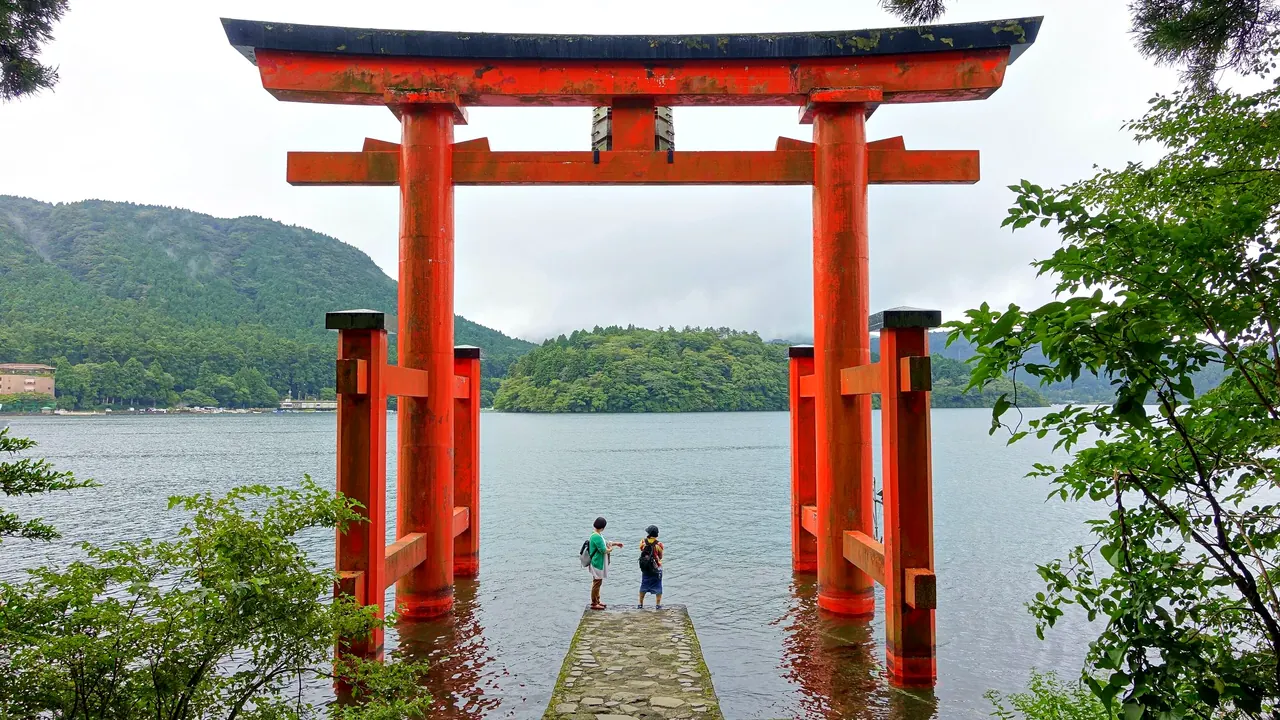
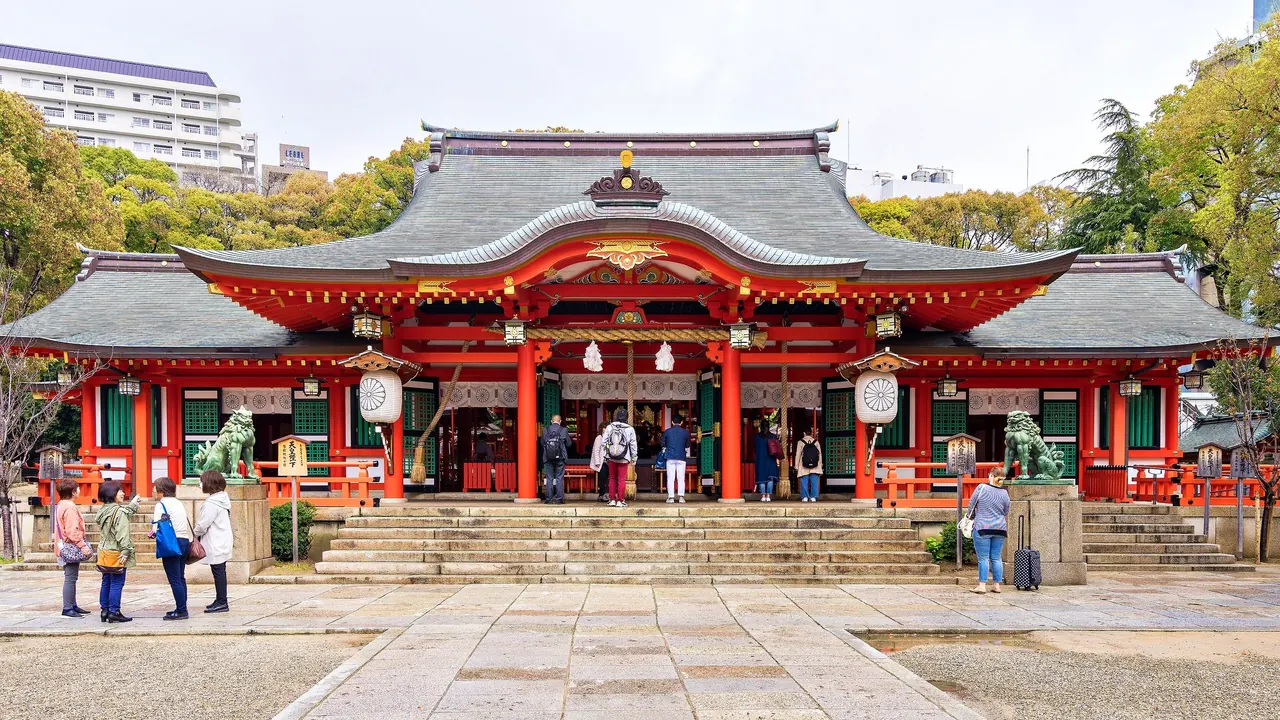
Photos: Hakone by Daderot, CC0; Kobe by Wei-Te Wong, CC BY-SA 2.0, cropped.
Hakone or Kobe?
Our verdict in twelve categories, each scored against the same fixed benchmark cities, and the climate month by month, so you can choose for your trip.
Choose Hakone for
- wellness
- nature and the outdoors
Hakone suits a traveller who wants to stop moving for a couple of nights. You come for the volcanic caldera, a night in a ryokan with a long kaiseki dinner, and soaking in hot springs under cedars, with Fuji appearing over Lake Ashi when the cloud lifts. It is a retreat in the mountains, not a city. Evenings end early, and there is little to eat, buy or watch outside your inn.
Choose Kobe for
- live music and the arts
- food and drink
- nightlife
Kobe is a working port city with plenty to do once the sightseeing is over. It eats better, from beef counters to Nada sake and old bakeries, it has jazz and a relaxed bar scene, and it is cheaper and easier to get around with children. It also sits on the rail line to Himeji, Kyoto and Osaka, so it makes a good base for a week, and Arima's hot springs are still within the city.
Scoreboard
Twelve categories on one fixed scale from 0 to 100. The shaded stretch is the gap between the two.
Your match
Pick a travel style or drag the sliders, and both match scores follow your weighting.
Wins on wellness and nature and the outdoors with your weighting.
Wins on live music and the arts and food and drink with your weighting.
What matters to you?
Category by category
What the scores mean for a trip.
Beaches & swimming
Neither is a beach destination, but Kobe at least has one within the city. Suma's long sandy beach is a short train ride from the centre, with lifeguards and warm water in July and August.
Hakone has no swimming at all. You cannot swim in Lake Ashi, and the shore at Odawara is steep and pebbly, so a swim means a summer trip down to the sand at Atami.
Food & drink
In Hakone you eat mainly at your inn. The kaiseki dinner of mountain vegetables, river fish and tofu can be superb, but outside the ryokan you are limited to soba, tofu shops and Owakudani's black eggs, and most of these close by early evening.
Kobe has far more choice and keeps serving later. Beyond the famous beef there are bakeries and coffee houses from its port days, steamed buns in Nankinmachi, sake tasting in Nada and casual izakaya around the stations.
Culture & sights
Kobe has a slight edge, and its sights are mostly about the port's modern history: the merchant houses of Kitano, the quay at Meriken Park left broken by the earthquake, and the Ando-designed art museum on the bay.
Hakone's strengths are different. It has art in natural settings, with sculpture on the lawns of the Open-Air Museum and paintings set in beech forest at the Pola. Its history comes from the Old Tokaido road and the rebuilt checkpoint, and these sights are spread around the caldera rather than gathered in a town centre.
Nightlife
Hakone has essentially no nightlife. The evening is dinner, a last bath and bed, and only Hakone-Yumoto keeps a few izakaya open a little later.
Kobe will not compete with Osaka, but the lanes running up from Sannomiya towards Kitanozaka are full of cocktail bars, whisky counters and izakaya. That makes it a good place to spend an evening eating and drinking, finished with a walk along the lit-up harbour at Harborland.
Nature & outdoors
Both have mountains close at hand, with ropeways and good walking, but Hakone's landscape is the more dramatic. It has steaming sulphur vents at Owakudani, a crater lake and Fuji on the skyline, and it sits inside a national park rather than behind a city.
Kobe's Rokko range starts almost at the shinkansen station. You can walk to the Nunobiki waterfalls, cross the range on a long ridge path, or take a cable car up for night views over the bay, and the Akashi Strait and Awaji Island add a coastline Hakone does not have.
Day trips
Both make good bases, but Kobe has more within reach. Himeji Castle is under an hour away, Kyoto and Nara are easy by train, and the shinkansen brings Okayama, Kurashiki and even Hiroshima within a day.
Hakone's day trips face the other way, towards eastern Japan. Kamakura, Yokohama and Tokyo are all reachable, along with the Izu Peninsula and the lakes at the foot of Fuji, though most of these take longer to reach than Kobe's.
Good for families
Hakone gives children a memorable circuit by mountain railway, cable car, ropeway over the steaming vents and pirate ship. After that there is little made for them, and the nude communal baths and quiet, formal inns do not suit every family.
Kobe has more for children to do over several days. Oji Zoo, the Suma aquarium, Kobe Animal Kingdom, the Ferris wheel at Harborland and the farm at the top of Rokko are all easy to reach, and Universal Studios Japan is an hour away.
Getting around
In Hakone, transport is part of the sightseeing. One pass strings together the railway, cable car, ropeway, boat and buses, but it is slow, and at weekends there are queues and traffic on the mountain roads.
Kobe is simpler. The city is a narrow strip, and parallel train lines run along it, all taking the same IC card. Chinatown, the harbour and the arcades are within walking distance of Sannomiya, and only the climb to Kitano is steep.
Shopping & style
There is little to buy in Hakone beyond yosegi marquetry from the Hatajuku workshops, sweets on Yumoto's main street and the books in the museum shops. For clothes, you take the bus to the outlet mall near Gotemba.
Kobe is a proper shopping city, with covered arcades, the old Daimaru store among the stone buildings of the former foreign settlement, and boutiques along Tor Road. Pearls, leather shoes from Nagata and Western-style cakes are the things to take home.
Affordability
Hakone is expensive because the reason to go is the ryokan. A good inn with dinner and a private outdoor bath costs a lot, especially at weekends and in autumn, though hostels in Yumoto and the public bathhouses keep costs down.
Kobe is easier on the budget. Business hotels around Sannomiya are good value, ramen and bakery breakfasts cost little, and the bill only climbs for a beef teppanyaki dinner or a night in an Arima ryokan.
Live music & performing arts
Hakone has no theatre, concert hall or regular live music, so a show means going back to Tokyo.
Kobe has a real live music scene built on jazz. There are resident trios in bars around Sannomiya and Kitano, and an autumn jazz festival in Kitano. The orchestra at the Hyogo Performing Arts Center and the Takarazuka Revue are both within an easy trip.
Wellness & relaxation
Hakone was built around bathing. Hot springs run through the whole caldera, from riverside Yumoto to the milky waters of Sengokuhara, and the slow routine of soaking, resting in a yukata and having dinner shapes the whole stay.
Kobe has Arima Onsen, one of Japan's oldest spa towns, with its rust-red kinsen water, about half an hour from the centre. It makes a lovely afternoon or overnight stay, but you return afterwards to a busy city rather than a quiet mountain.
When should you go?
Pick your month. The climate figures are measured averages, not a forecast.
Hakone in July
Kobe in July
Daytime high, °C
Rainfall in the month, mm
Where the figures come from
Hakone's temperatures are measured 43 km from the centre, at Kawaguchiko.
Hakone has no rain gauge within 25 km of the centre, so its rainfall comes from a gridded climate dataset read at the city rather than from a gauge further away.
Kobe's sunshine is measured 29 km from the centre, at Osaka.
Temperature and rainfall are climate normals, averaged over the years shown. Hakone: 1971-2000 (rainfall 1991-2020) normals, Kawaguchiko (42.9 km from centre). Kobe: 1971-2000 (sunshine 1991-2020, rainfall 1991-2020) normals, Kobe (1.3 km from centre).
Hakone sits high in the mountains and is cold from December to February, with daytime highs around 5°C. That is fine for soaking in an outdoor bath, and winter brings the clearest views of Fuji. Kobe is milder through the same months and also drier. Spring and autumn are the best seasons in both places. April and May are pleasant for walking, and November is cool and clear, with autumn colour on the hillsides around both.
Summer is where the two differ. Hakone stays fairly mild in the mountains but is wet from June to October, peaking at about 216mm in September, and mist often hides Fuji. Kobe gets very hot and humid, with highs near 32°C in August. It is wettest in July, but August is its sunniest month, and the sea at Suma is warm enough for swimming in high summer. Hakone has no beach of its own, so a summer swim means going down to Atami.
Which traveller are you?
On a relaxing and wellness trip, choose Hakone. Bathing is the whole point of going: seventeen hot-spring areas, private baths on the balconies of inns, and quiet evenings in a yukata. Arima is excellent, but in Kobe it is an outing from a busy city rather than the whole stay.
For a food and nightlife trip, Kobe is the clear choice. It has Kobe beef teppanyaki, Chinatown snacks, Nada sake and small whisky and jazz bars around Sannomiya, with Osaka twenty minutes away for later nights. In Hakone, dinner is at your inn and the villages go quiet soon after.
On a family trip with children, Kobe is easier. It has a zoo, a large aquarium at Suma, Harborland's Ferris wheel and simple trains everywhere. Hakone's mountain railway, ropeway and pirate ship are a great day or two, but its formal inns and steep paths make a longer stay harder.
Before you go
| Measure | Hakone | Kobe |
|---|---|---|
| Official language | Japanese | Japanese |
| Currency | Yen (JPY) | Yen (JPY) |
| Sockets | AB100 V, 50 and 60 Hz depending on the region | AB100 V, 50 and 60 Hz depending on the region |
| Driving side | Left | Left |
| Time zone | UTC+9 | UTC+9 |
| Emergency number | Police 110, fire 119 | Police 110, fire 119 |
| Elevation | 734 m | 17 m |
| Main airport | Tokyo Haneda International Airport (HND)71 km from centre98 non-stop destinations | Kobe Airport (UKB)7 km from centre15 non-stop destinations |
| Public holidays this year | 16 days | 16 days |
By the numbers
| Measure | Hakone | Kobe |
|---|---|---|
| City population | 10,925 | 1,521,707 |
| People per km² | 118 | 2,732 |
| Museums within 10 km | 16 | 46 |
| UNESCO World Heritage sites within 50 km | 2 | 3 |
| Swim season, months above 21 °C | 5 months | 5 months |
Where else could you go?
Every comparison below shares a destination with this one, so you can follow Hakone or Kobe somewhere new.