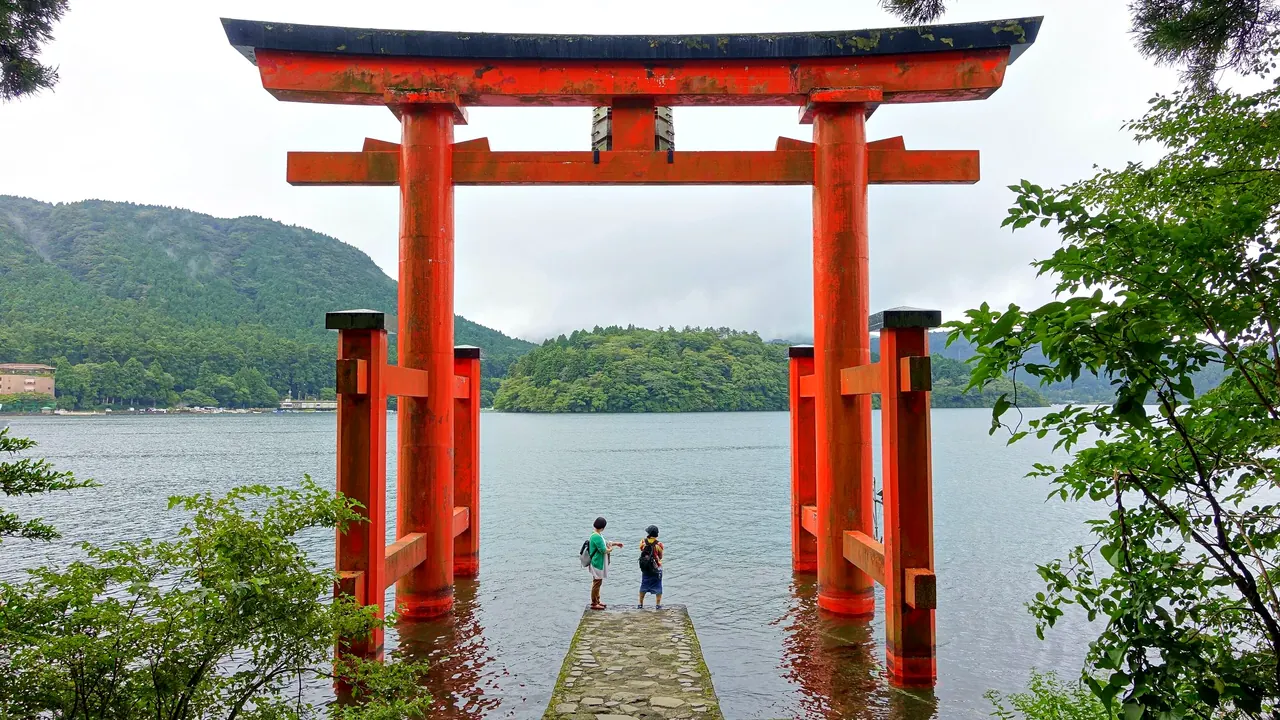
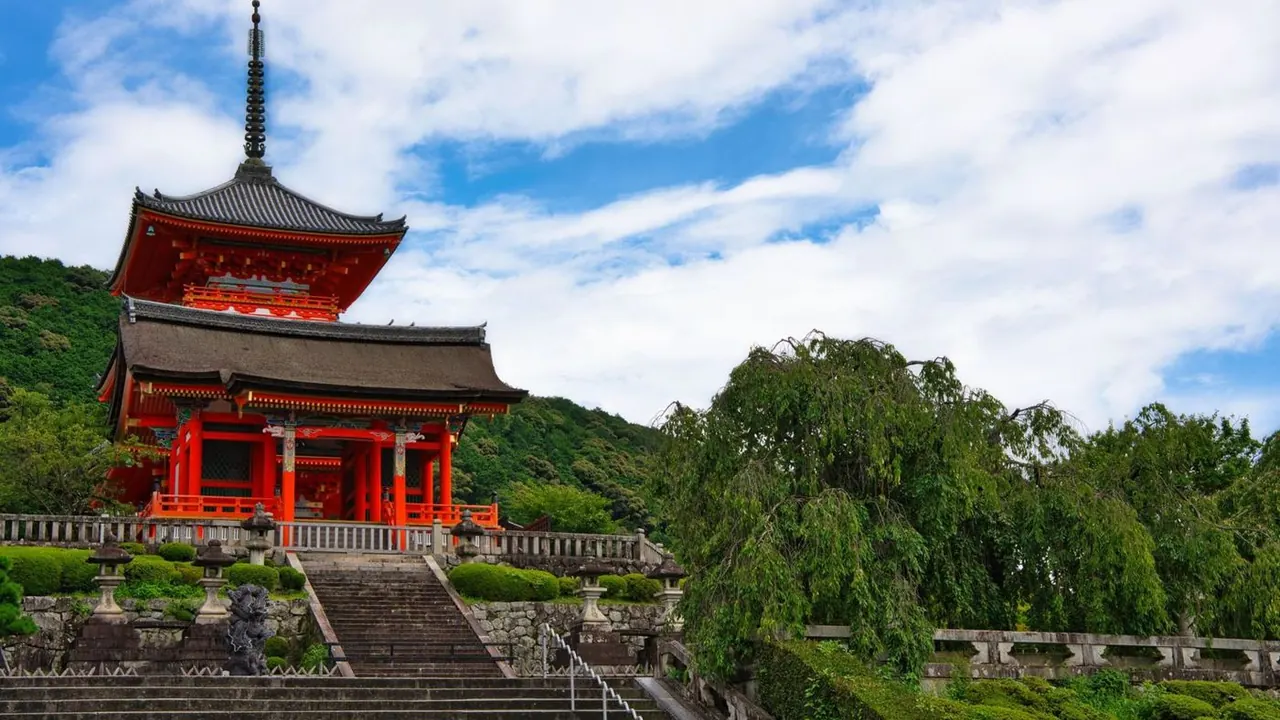
Photos: Hakone by Daderot, CC0; Kyoto by Bert Mulder, Pexels License.
Hakone or Kyoto?
Our verdict in twelve categories, each scored against the same fixed benchmark cities, and the climate month by month, so you can choose for your trip.
Choose Hakone for
- wellness
- nature and the outdoors
- beaches
Hakone suits travellers who want to slow right down. Its hot-spring inns, outdoor baths under cedars and the volcanic caldera around Lake Ashi make it a place for two or three quiet days of soaking, walking old mountain paths and eating a long kaiseki dinner at the inn. Evenings are for the bath, and there is little else to do after dark.
Choose Kyoto for
- live music and the arts
- food and drink
- culture and sights
For almost everything else, Kyoto is the stronger choice. A thousand years as the imperial capital left temples, gardens and wooden lanes on a scale Hakone cannot approach, and the city adds serious restaurants, craft shops, kabuki and geisha dances, plus fast trains to Nara, Osaka and Himeji. It makes the better base for a first look at traditional Japan, and many travellers add a night or two in Hakone's baths on the way.
Scoreboard
Twelve categories on one fixed scale from 0 to 100. The shaded stretch is the gap between the two.
Your match
Pick a travel style or drag the sliders, and both match scores follow your weighting.
Wins on wellness and nature and the outdoors with your weighting.
Wins on live music and the arts and food and drink with your weighting.
What matters to you?
Category by category
What the scores mean for a trip.
Beaches & swimming
Neither is a place for swimming, but the water you could reach is different. From Hakone the sea is close: the sheltered sand at Atami is under an hour away and gets properly warm in high summer, although Odawara's shore is steep and pebbly.
Kyoto is inland, so its easiest swim is in fresh water, at the Lake Biwa beaches such as Omi-Maiko. The good sea beaches on the Sea of Japan coast are far enough away to need an overnight stay.
Food & drink
Kyoto is one of Japan's great food cities, and Hakone is not. Kyoto has kaiseki in old wooden houses along the Kamo River, shojin ryori in temple precincts, Nishiki Market, ramen counters around Shijo and sake in Fushimi, so every meal can be different.
In Hakone the highlight is the kaiseki dinner and breakfast that come with your ryokan, and these can be excellent. Beyond the inns, the choice is mostly soba and tofu shops in Yumoto, black eggs at Owakudani and set meals for day visitors, and most places close by early evening.
Culture & sights
The gap is wide. Kyoto's seventeen UNESCO sites, its thousand-odd temples and shrines, Fushimi Inari's gates and the preserved lanes of Higashiyama could fill weeks, and the Kyoto National Museum adds a major art collection.
Hakone has a short but rewarding list: sculpture on the lawns of the Open-Air Museum, Impressionists in the forest at the Pola Museum, and Tokaido history at the Sekisho checkpoint and the torii gate of Hakone Shrine. Two unhurried days cover it.
Nightlife
Kyoto is quiet for a Japanese city, but it does have a night out: sake bars, standing izakaya and a few clubs along Pontocho and Kiyamachi, with Osaka under an hour away for anything louder. Hakone has almost nothing beyond a few small bars in Yumoto, and the mountain villages go dark after dinner, which is exactly the point.
Nature & outdoors
Hakone has the more dramatic landscape. You are inside a volcanic caldera, with sulphur vents steaming at Owakudani, Lake Ashi on the crater floor and Mount Fuji behind it on clear days, and ridge walks up Kintoki and Komagatake.
Kyoto's nature is gentler but closer to hand. You can reach the Higashiyama trails, the bamboo of Arashiyama and the cedar path from Kurama to Kibune from the city in a short ride, and the Kamo River gives a green walking route through the centre.
Day trips
Both make good bases, but Kyoto's rail links are hard to beat. Nara, Osaka, Uji, Kobe and Himeji Castle are each within an hour, so you can choose a trip on the morning without planning.
From Hakone the trips take longer: Odawara Castle is close, but Kamakura and Yokohama take around an hour and a half, and Tokyo a little under two hours on the Romancecar. The Izu Peninsula and the Fuji lakes are good for a full day out.
Good for families
Kyoto has a slight edge with children because it has more things built for them. The Railway Museum with its steam locomotives, the zoo and aquarium near the centre, the Edo-period film set at Toei Studio Park and a day at Osaka's theme park give plenty of breaks from temples.
In Hakone, the journey is the attraction: the zigzag railway, the ropeway over Owakudani, the pirate ship on Lake Ashi and the swimsuit onsen park all go down well. Beyond these, very little is aimed at children, and the formal inns and nude communal baths do not suit every family.
Getting around
Kyoto is easier to get around day to day. Its flat central grid is good for walking and cycling, and trains and buses reach the outlying temples, although the buses are slow in peak seasons.
In Hakone the villages are kilometres apart on winding roads, so you depend on the regional pass and its loop of railway, cable car, ropeway, lake boats and buses. The ride is scenic and part of the fun, but it is slow, and queues form at weekends.
Shopping & style
Kyoto is a serious place to shop for crafts: Kiyomizu-ware, Nishijin silk, fans, incense, washi, hand-forged knives and tea, many sold by families who have made them for generations. It also has the covered arcades of Teramachi, department stores on Shijo and the flea markets at To-ji and Kitano Tenmangu.
Hakone's one speciality is yosegi-zaiku wooden marquetry, made in workshops at Hatajuku. Otherwise there are sweets and souvenirs in Yumoto, and the outlet mall near Gotemba is a bus ride away.
Affordability
Kyoto is the cheaper of the two. Cheap noodle counters, department-store food halls and inexpensive transport keep daily costs down, and business hotels near the station are a sensible base.
A stay in Hakone is usually built around a night at a ryokan, and the better inns, especially rooms with a private bath, get expensive quickly. You can save with a Yumoto hostel and the public day-baths. Both get dearer in autumn.
Live music & performing arts
Kyoto has a real stage life. There is kabuki at the historic Minamiza, Noh on several stages, the geisha districts' spring dances, and orchestra, opera and jazz for modern tastes. Hakone has no theatre, concert hall or regular music, apart from the odd museum concert or a show put on at an inn.
Wellness & relaxation
Hakone is built around bathing. Seventeen hot-spring areas, from riverside Yumoto to the milky sulphur water of Sengokuhara, offer outdoor pools under maples, private baths on balconies and day-bathhouses in the woods, and everything is set up for a slow day.
Kyoto offers calm of a different kind: century-old neighbourhood sento, zazen sessions, tea ceremonies and raked gravel gardens. The hot springs are on the edges of the city, though, and crowds can spoil the calm unless you go early.
When should you go?
Pick your month. The climate figures are measured averages, not a forecast.
Hakone in July
Kyoto in July
Daytime high, °C
Rainfall in the month, mm
Where the figures come from
Hakone's temperatures are measured 43 km from the centre, at Kawaguchiko.
Hakone has no rain gauge within 25 km of the centre, so its rainfall comes from a gridded climate dataset read at the city rather than from a gauge further away.
Kyoto's sunshine is measured 43 km from the centre, at Osaka.
Temperature and rainfall are climate normals, averaged over the years shown. Hakone: 1971-2000 (rainfall 1991-2020) normals, Kawaguchiko (42.9 km from centre). Kyoto: 1971-2000 (sunshine 1991-2020, rainfall 1991-2020) normals, Kyoto (3.2 km from centre).
Hakone sits higher and stays cooler. Its daytime highs stay below 10°C from December to March, so winter is a season for the baths and the clearest views of Fuji, and even August only peaks at around 27°C. Rain is the bigger issue: it is heavy from June through October, with monthly totals passing 200mm, and mist often hides the mountain. Sagami Bay below is warm enough to swim in from July to September. April, May and November give the best mix of walking weather and drier days.
Kyoto is warmer all year and much hotter in summer, with July and August above 30°C and humid, the worst time for walking between temples. July is also its wettest month. April, May, October and November are the comfortable months for long days on foot, and winter is cold but often bright. In midsummer, Hakone's cooler mountain air is the easier of the two to bear.
Which traveller are you?
On a relaxing and wellness trip, Hakone is the place. Seventeen hot-spring areas, rooms with private outdoor baths and villages that go quiet after dinner give deeper rest than Kyoto's sento and gardens, where temple crowds often intrude.
For a culture and arts trip, Kyoto is the clear choice. Hakone's sculpture lawns and Tokaido checkpoint fill a day or two, but Kyoto has UNESCO-listed temples, Nijo Castle, Gion's machiya lanes, and kabuki at Minamiza or the spring geisha dances.
On a food and nightlife trip, Kyoto wins easily. In Hakone you eat at your inn and nearby places shut early, while Kyoto has kaiseki in Gion, temple cuisine, Nishiki Market, Fushimi's breweries and the small bars and izakaya of lantern-lit Pontocho.
Before you go
| Measure | Hakone | Kyoto |
|---|---|---|
| Official language | Japanese | Japanese |
| Currency | Yen (JPY) | Yen (JPY) |
| Sockets | AB100 V, 50 and 60 Hz depending on the region | AB100 V, 50 and 60 Hz depending on the region |
| Driving side | Left | Left |
| Time zone | UTC+9 | UTC+9 |
| Emergency number | Police 110, fire 119 | Police 110, fire 119 |
| Elevation | 734 m | 51 m |
| Main airport | Tokyo Haneda International Airport (HND)71 km from centre98 non-stop destinations | Kansai International Airport (KIX)81 km from centre62 non-stop destinations |
| Public holidays this year | 16 days | 16 days |
By the numbers
| Measure | Hakone | Kyoto |
|---|---|---|
| City population | 10,925 | 1,463,723 |
| People per km² | 118 | 1,768 |
| Museums within 10 km | 16 | 77 |
| UNESCO World Heritage sites within 50 km | 2 | 4 |
| Swim season, months above 21 °C | 5 months | 5 months |
Where else could you go?
Every comparison below shares a destination with this one, so you can follow Hakone or Kyoto somewhere new.