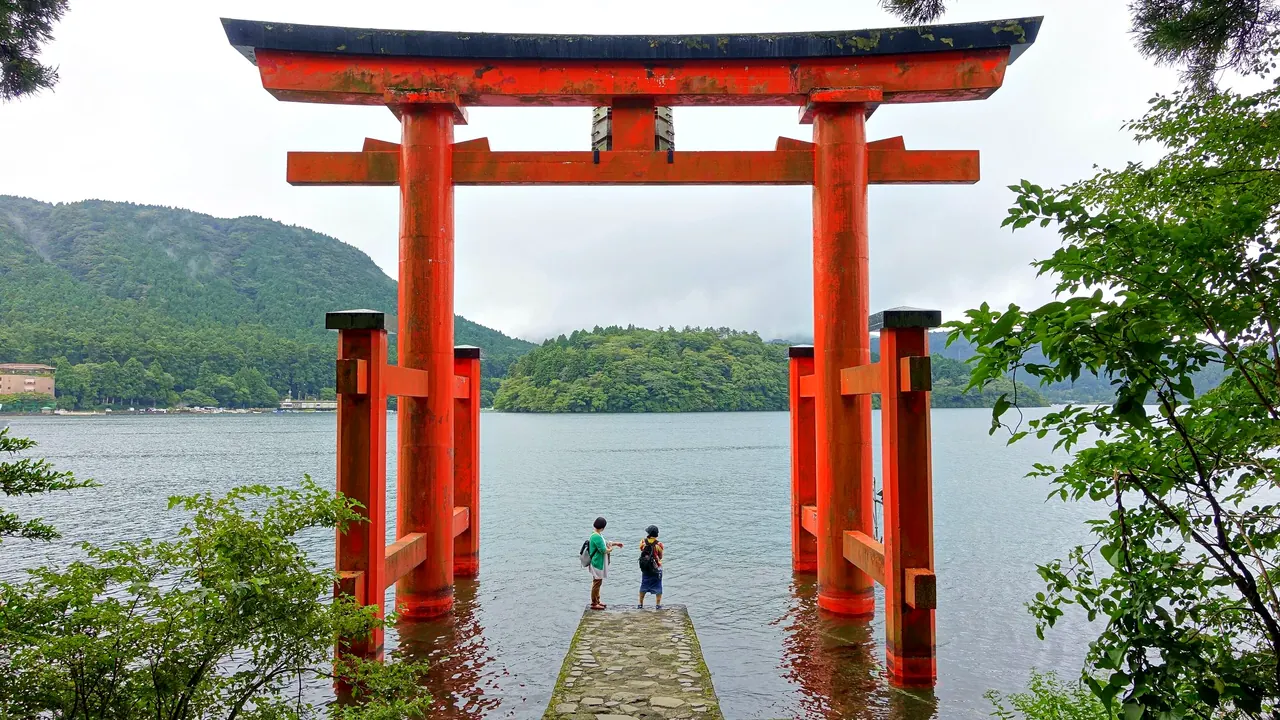
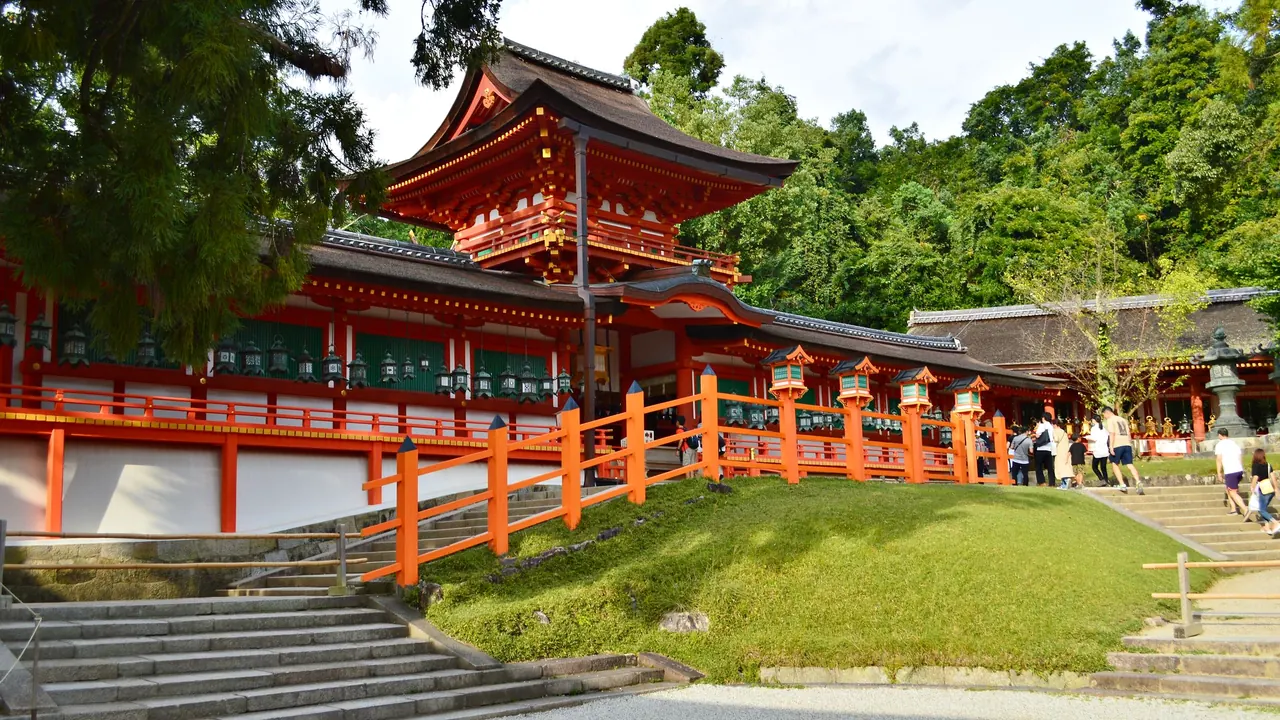
Photos: Hakone by Daderot, CC0; Nara by Saigen Jiro, CC0.
Hakone or Nara?
Our verdict in twelve categories, each scored against the same fixed benchmark cities, and the climate month by month, so you can choose for your trip.
Choose Hakone for
- wellness
- nature and the outdoors
- families
Hakone is for a slow, restorative stay in volcanic mountains: a night or two at a ryokan with a kaiseki dinner, outdoor baths under cedars and maples, and walks around the caldera with Fuji showing on clear days. It suits couples and anyone who wants to do very little, very well, and families whose children will love the loop of mountain railway, ropeway and lake boat.
Choose Nara for
- culture and sights
- prices
- live music and the arts
Choose Nara when history is the point of the trip. The temples of Japan's eighth-century capital, from the Great Buddha at Todai-ji to the lantern paths of Kasuga Taisha, sit within walking distance of one another. Beds cost less, and Kyoto and Osaka are both close enough for days out, so it suits culture-minded travellers and anyone building a wider route through Kansai.
Scoreboard
Twelve categories on one fixed scale from 0 to 100. The shaded stretch is the gap between the two.
Your match
Pick a travel style or drag the sliders, and both match scores follow your weighting.
Wins on wellness and nature and the outdoors with your weighting.
Wins on culture and sights and prices with your weighting.
What matters to you?
Category by category
What the scores mean for a trip.
Beaches & swimming
Neither is a beach destination, but Hakone at least has the sea within reach. Atami's sheltered sand is under an hour away and pleasant for a summer swim, although Lake Ashi is closed to swimmers and the shore at Odawara is steep, pebbly and often rough.
Nara is landlocked. The nearest beaches are on the industrial Osaka Bay shore, the good ones on the Kii Peninsula take most of a day to reach, and a pool is the only realistic place to swim.
Food & drink
In Hakone the best meal happens at your inn: a kaiseki dinner of mountain vegetables, river fish and local tofu, then a Japanese breakfast. Outside the inns there are soba and tofu shops in Yumoto, black eggs at Owakudani and set meals for day visitors by the lake, and most of it closes by early evening.
Nara gives you more to look for in town. There is persimmon-leaf sushi, narazuke pickles, Miwa somen noodles and sake tasting around Naramachi, with kakigori in summer. The choice is still narrow, but Osaka and Kyoto are a short train ride away when you want a bigger meal.
Culture & sights
Hakone's culture is mostly art. There is sculpture on the hillside lawns of the Open-Air Museum, Impressionist paintings at the Pola Museum in its beech forest, and reminders of the Tokaido road such as the rebuilt Sekisho checkpoint and the torii standing in Lake Ashi. All of it is spread around the caldera.
Nara is in another league. As Japan's capital in the eighth century, it has Todai-ji, Kofuku-ji, Kasuga Taisha and one of the country's finest collections of Buddhist sculpture, with Toshodai-ji, Yakushiji and the Heijo Palace site further west. For temples and early history it is the obvious pick.
Nightlife
Both go quiet after dinner. Hakone is the quieter of the two, with evenings spent at the inn and a few small izakaya in Yumoto. Nara has a little more: izakaya near Kintetsu Nara station, sake counters and small bars in the covered arcades. Osaka's bar districts are also under an hour away, as long as you keep an eye on the last train back.
Nature & outdoors
The landscape is the main reason to visit Hakone. Inside the volcanic caldera of the Fuji-Hakone-Izu National Park there are sulphur vents at Owakudani, Lake Ashi with Fuji behind it, and ridge walks up Mount Kintoki and Komagatake. Hydrangeas bloom in early summer and the hillsides turn red and gold in November.
Nara's nature is gentler and starts in the middle of town. Deer graze the lawns of Nara Park, the Kasugayama forest has been protected for more than a thousand years, Mount Wakakusa is an easy climb and the Yamanobe-no-michi runs past shrines and rice fields. For real mountains you have to go out to Yoshino.
Day trips
Hakone is a good base, but its outings take longer. Odawara's castle is close by, while Kamakura and Yokohama are about an hour and a half away, Tokyo is just under two hours on the Romancecar and the Fuji lakes take a full day by bus.
Nara's position is hard to beat. Kyoto and Osaka are each under an hour away and Horyu-ji is a short ride from the centre. Asuka's burial mounds, the tea and the Byodo-in at Uji, and Himeji's white castle fill further days.
Good for families
Hakone keeps children busier. Getting around is the entertainment, with the zigzag railway, the cable car, the ropeway over the steaming vents and a pirate ship across Lake Ashi. There are also seal shows at Hakone-en, net sculptures to climb at the Open-Air Museum and an onsen park where everyone bathes in swimsuits. The weak points are formal inns and nude communal baths.
Nara has one great draw in the deer, and children like squeezing through the hole in Todai-ji's pillar. Beyond that there is little for them, and summer heat wears out small legs, so most families go to Osaka for an aquarium or a theme park.
Getting around
Hakone's transport is part of the sightseeing. One pass covers the railway, cable car, ropeway, boats and buses in a loop. It is slow, though: the villages are kilometres apart on winding roads, and at weekends there are queues at the ropeway.
Nara is simpler. Todai-ji, Kasuga Taisha, the museum and Naramachi are all within walking distance of Kintetsu Nara station, the western temples are a short train or bus ride away, and rental bicycles suit the flat basin.
Shopping & style
Neither city is worth a shopping trip. Hakone has one craft, the yosegi-zaiku wood marquetry made in the Hatajuku workshops, plus souvenirs in Yumoto and an outlet mall over the ridge at Gotemba. Nara has a deeper craft tradition: sumi ink and brushes, Nara-zarashi linen, Akahada pottery and Ittobori dolls in Naramachi, with the covered arcades by the station for sweets and sake.
Affordability
Hakone is expensive because what people come for, a ryokan night with dinner and a hot-spring bath, costs a lot, especially with a private outdoor bath or at weekends and in autumn. A simple inn in Yumoto and the public day-bathhouses bring the cost down.
Nara is noticeably easier on the wallet. Business hotels and guesthouses near the stations are reasonably priced, the park is free and temple entry is modest. The main extra cost is rail fares if you use the city as a base for day trips.
Live music & performing arts
Hakone has essentially nothing on stage, apart from an occasional museum concert or a performance put on at an inn. Nara's performing arts are tied to its shrines and temples: it is one of the birthplaces of Noh, Kasuga Taisha keeps gagaku music and bugaku dance alive through the winter On-matsuri, and Todai-ji holds the Omizutori fire rites in early spring. For regular theatre or concerts, both cities send you elsewhere, to Tokyo from Hakone and to Osaka from Nara.
Wellness & relaxation
This is where Hakone is far ahead. Seventeen hot-spring areas, from riverside Yumoto to the milky sulphur water of Sengokuhara, offer outdoor baths under maples and cedars, private baths on room balconies and day-bathhouses in the woods. A midweek stay in autumn or winter is the most peaceful.
Nara is calm but has no hot springs of note. Old neighbourhood bathhouses and a few bathing complexes on the outskirts give you a Japanese soak, but the city's real restfulness comes from early mornings in the park and quiet evenings in the old town.
When should you go?
Pick your month. The climate figures are measured averages, not a forecast.
Hakone in July
Nara in July
Daytime high, °C
Rainfall in the month, mm
Where the figures come from
Hakone's temperatures are measured 43 km from the centre, at Kawaguchiko.
Hakone has no rain gauge within 25 km of the centre, so its rainfall comes from a gridded climate dataset read at the city rather than from a gauge further away.
Nara's sunshine is measured 26 km from the centre, at Osaka.
Temperature and rainfall are climate normals, averaged over the years shown. Hakone: 1971-2000 (rainfall 1991-2020) normals, Kawaguchiko (42.9 km from centre). Nara: 1971-2000 (sunshine 1991-2020, rainfall 1991-2020) normals, Nara (2.6 km from centre).
Hakone sits high in the mountains and stays cool. Winters are cold, around 5°C by day in January, and summer highs in the mid-20s keep July and August comfortable for walking, though mist often hides Fuji. The rain is heavy from June to October and peaks in September at about 216mm, so November, with its autumn colour and drier weather, and the clear cold of winter are the best times for a bathing stay. In August the sea at Atami reaches about 26°C, warm enough for a swim.
Nara has milder winters but much hotter summers, with highs near 32°C in August. That humid heat makes long temple walks hard going, and July is the wettest month. Spring, from March to May, and autumn, from October into November, are the seasons for sightseeing here, and late spring is one of the sunnier stretches of the year.
Which traveller are you?
On a relaxing and wellness trip, Hakone is the one to pick. A whole day can turn on bathing, with a soak before breakfast, a slow walk in the mountain air and another soak before dinner at the inn. Nara is calm but has no springs.
For a culture and arts trip, choose Nara. Two or three days on foot take you through the best of Japan's early Buddhist art and architecture, and the court music played at shrine ceremonies is still part of the city's year. Hakone's museums fill an afternoon between baths.
On a trip on a tight budget, Nara makes your money go further. Beds and sightseeing cost little, which leaves room for train days out to Kyoto and Osaka. In Hakone the ryokan night is the reason to go, and it rarely comes cheap.
Before you go
| Measure | Hakone | Nara |
|---|---|---|
| Official language | Japanese | Japanese |
| Currency | Yen (JPY) | Yen (JPY) |
| Sockets | AB100 V, 50 and 60 Hz depending on the region | AB100 V, 50 and 60 Hz depending on the region |
| Driving side | Left | Left |
| Time zone | UTC+9 | UTC+9 |
| Emergency number | Police 110, fire 119 | Police 110, fire 119 |
| Elevation | 734 m | 70 m |
| Main airport | Tokyo Haneda International Airport (HND)71 km from centre98 non-stop destinations | Kansai International Airport (KIX)59 km from centre62 non-stop destinations |
| Public holidays this year | 16 days | 16 days |
By the numbers
| Measure | Hakone | Nara |
|---|---|---|
| City population | 10,925 | 352,377 |
| People per km² | 118 | 1,273 |
| Museums within 10 km | 16 | 31 |
| UNESCO World Heritage sites within 50 km | 2 | 6 |
| Swim season, months above 21 °C | 5 months | 5 months |
Where else could you go?
Every comparison below shares a destination with this one, so you can follow Hakone or Nara somewhere new.