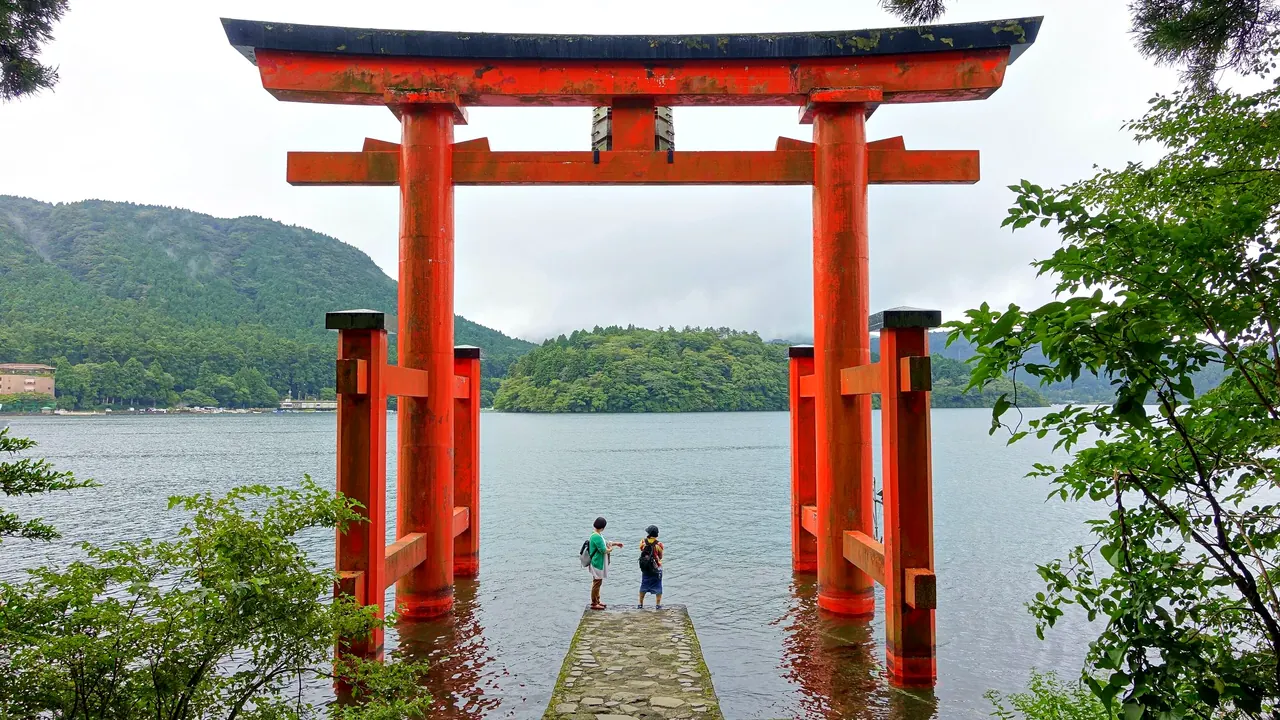
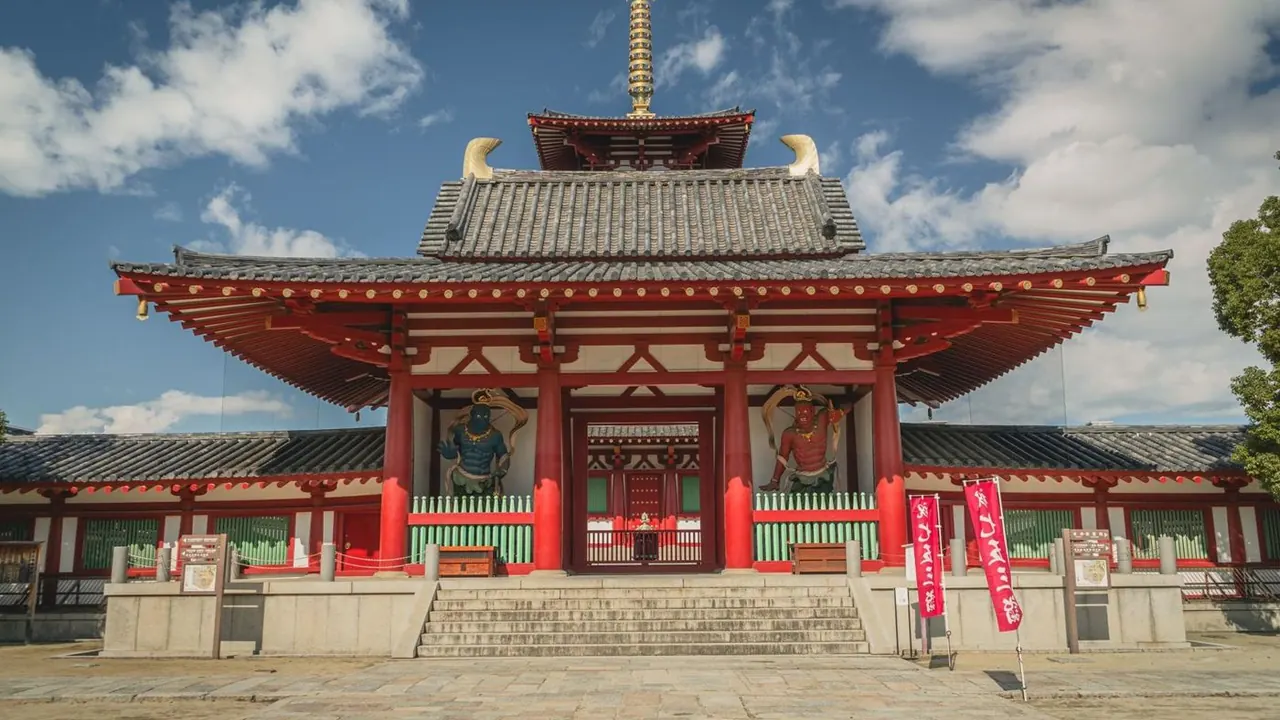
Photos: Hakone by Daderot, CC0; Osaka by Sarmat Batagov, Pexels License.
Hakone or Osaka?
Our verdict in twelve categories, each scored against the same fixed benchmark cities, and the climate month by month, so you can choose for your trip.
Choose Hakone for
- wellness
- nature and the outdoors
Hakone is the choice for a slow stay of two or three nights built around hot water and mountain scenery. You get an inn with a kaiseki dinner, outdoor baths under cedars, walks on the Old Tokaido Road and boat crossings of Lake Ashi with Fuji behind it on a clear day. It suits couples and anyone tired of cities, as long as they are happy with quiet evenings and almost nothing to do after dark.
Choose Osaka for
- nightlife
- live music and the arts
- food and drink
Travellers who want to eat well, go out late and see a great deal should pick Osaka. Its counters and izakaya, bar-hopping in Minami, simple trains and position beside Kyoto, Nara and Himeji make it a base for a week or more. It is also much easier for families and much kinder to a tight budget. What it cannot offer is calm, or real countryside on the doorstep.
Scoreboard
Twelve categories on one fixed scale from 0 to 100. The shaded stretch is the gap between the two.
Your match
Pick a travel style or drag the sliders, and both match scores follow your weighting.
Wins on wellness and nature and the outdoors with your weighting.
Wins on nightlife and live music and the arts with your weighting.
What matters to you?
Category by category
What the scores mean for a trip.
Beaches & swimming
Neither city is a beach destination, and Hakone is the weaker of the two. You cannot swim in Lake Ashi, the shore at Odawara is steep and pebbly, and the nearest sand worth the trip is the sheltered bay at Atami, under an hour away.
Osaka does a little better. Suma near Kobe and the beaches south towards Wakayama are about an hour by train and open properly in July and August, with water warm enough for a comfortable swim. The coarse sand and suburban setting still make them an afternoon out rather than a reason to go.
Food & drink
In Hakone the good food is the kaiseki dinner and Japanese breakfast that come with your inn, many small seasonal courses served in private. Outside the inns there are soba and tofu shops in Yumoto, the black eggs at Owakudani and set meals for day-trippers, and most of these places close by early evening.
Osaka is in a different class, and many people go just to eat. You can snack on takoyaki and grilled scallops along Dotonbori and in Kuromon Market, cook okonomiyaki at your table and eat kushikatsu in Tenma, then book a counter in Kitashinchi for sushi or kappo at the highest level. It is generous and good value at every level.
Culture & sights
Hakone's sights are scattered around the caldera and lean towards art in landscape. Sculpture fills the lawns of the Open-Air Museum, the Pola Museum keeps Impressionist paintings in the beech woods, and Tokaido history survives at the rebuilt Sekisho checkpoint and the shrine gate standing in the lake.
Osaka has more to see and more variety. It has the castle on its original stone walls, the ancient foundations of Shitennoji, the arched bridge at Sumiyoshi Taisha and the Korean and Chinese ceramics on Nakanoshima. The modern city is a sight in its own right, from the neon of Dotonbori to the old streets of Shinsekai under Tsutenkaku tower.
Nightlife
After dinner, Hakone means a last bath and bed. A handful of izakaya in Yumoto stay open a little later, but up the mountain the villages go quiet, and that is part of the appeal.
Osaka is known across Japan for its evenings. You can work through the standing bars of Ura-Namba, the DJ bars of Amerikamura and the tiny bars in the lanes around Ohatsutenjin, chatting with strangers at the counter, and many people stay out until the first train.
Nature & outdoors
Here Hakone is clearly ahead. The whole stay is inside a volcanic national park, with sulphur vents steaming at Owakudani, Lake Ashi filling the crater floor and Fuji rising behind it when the cloud lifts. You can see it on foot along ridge paths, through the pampas grass of Sengokuhara and under the cedars of the old highway.
Osaka itself is flat and built up, and its green space is mostly the castle park and the riverbanks. You need a train ride to reach the waterfall trail at Minoo or the ridges of Rokko, and these are good day hikes rather than real wild country.
Day trips
Both cities make good bases, and Hakone's list is good. Tokyo is within two hours on the Romancecar, Kamakura and Yokohama make easy days out, and the Izu Peninsula and the Fuji lakes lie over the ridges.
Osaka's position is almost unbeatable. Kyoto is under half an hour away, Nara and Himeji not much further, and Kobe, Uji and the monastery mountain of Koyasan are all easy by train, so a two-week stay would not run out of places to go.
Good for families
Children love Hakone's journey itself: the zigzag railway, the ropeway over the steaming vents, the pirate ship on the lake and the seal shows at Hakone-en. After that there is little made for them, the communal baths are nude, and the steep paths are hard with a pushchair.
Osaka can fill a week with children. It has Universal Studios Japan, the whale sharks at Kaiyukan, Tennoji Zoo, Kids Plaza and the Expo '70 park, and lifts and baby rooms make stations and department stores easy to manage.
Getting around
In Hakone the transport is part of the sightseeing, with one pass covering a loop of mountain railway, cable car, ropeway, boats and buses. It is slow, though. The villages are far apart on winding roads, and at weekends and in the autumn-colour season you queue at the ropeway, so it helps to send your luggage ahead.
Osaka is quicker and simpler. The Midosuji line runs through every central district, one IC card covers the city and the lines to Kyoto and Nara, and the flat streets are good for walking or cycling. The only real headache is changing trains in the underground maze at Umeda.
Shopping & style
Hakone has one craft worth taking home, the yosegi-zaiku wood marquetry made in the workshops of Hatajuku, plus the sweets and pickles of Yumoto's main street. For fashion you need the bus to the outlet mall near Gotemba.
Osaka offers far more. There is fashion and cosmetics in the long Shinsaibashi-suji arcade, flagship stores on Midosuji, vintage clothes in Amerikamura and electronics and anime in Den Den Town. Kitchen knives from Sennichimae Doguyasuji are the souvenir to remember.
Affordability
Hakone is the dearer stay, because the reason to go is a night at a ryokan with dinner and a bath, and the better rooms with private outdoor baths cost a lot. Simple inns and hostels in Yumoto, soba lunches and public day-baths keep the cost down, and the transport pass is good value.
Osaka is easier on the wallet, especially for food: noodles, set lunches and izakaya are cheap even in the busiest districts. Rooms are the main expense, and a compact business hotel a little outside Namba or Umeda keeps that under control.
Live music & performing arts
Hakone has no theatre, concert hall or regular live music, and at most you might catch a small museum concert or a performance laid on at an inn.
Osaka is the home of bunraku, staged at the National Bunraku Theatre with English guides, and of manzai comedy in the Namba theatres, which is performed entirely in Japanese. Orchestras play at Festival Hall and Symphony Hall, small live houses host rock and jazz, and the Takarazuka Revue is a short train ride away.
Wellness & relaxation
Hakone is built around bathing. Hot-spring areas are spread from riverside Yumoto to the milky sulphur water of Sengokuhara, and the routine of soaking outdoors under maples, putting on a yukata and eating an early dinner slows everything down, especially midweek in autumn or winter.
Osaka does have baths, from old neighbourhood sento to large super sento with saunas and open-air pools, and the historic springs of Arima are about an hour away. But the city around them is fast and noisy, so a soak there is a break at the end of a busy day rather than a whole trip.
When should you go?
Pick your month. The climate figures are measured averages, not a forecast.
Hakone in July
Osaka in July
Daytime high, °C
Rainfall in the month, mm
Where the figures come from
Hakone's temperatures are measured 43 km from the centre, at Kawaguchiko.
Hakone has no rain gauge within 25 km of the centre, so its rainfall comes from a gridded climate dataset read at the city rather than from a gauge further away.
Temperature and rainfall are climate normals, averaged over the years shown. Hakone: 1971-2000 (rainfall 1991-2020) normals, Kawaguchiko (42.9 km from centre). Osaka: 1991-2020 normals, Osaka (1.8 km from centre).
Hakone sits high in a mountain caldera and stays cooler than Osaka all year. Summer days peak around 27°C, pleasant for walking while the lowlands swelter, but June to October is the wet season, with mist that can hide Fuji for days. The sea at Atami is warm enough for a swim from July to September. Winter is cold, with highs around 5°C, but it is also the driest season, which suits the outdoor baths and brings the best Fuji views. November combines autumn colour with much less rain.
Osaka is at its best in April, May, October and November, when the days are mild enough for long hours on foot. June and July are the wettest months, with June close to 185mm, and July and August are hot and humid, with highs up to 34°C, too much for street sightseeing. August is the sunniest month of the year, and the bay water is then warm enough for a swim. Winters are milder than in Hakone and stay fairly bright.
Which traveller are you?
For a relaxing and wellness trip, Hakone is the clear choice. Its many hot-spring areas, outdoor baths in the forest, private balcony baths and early, quiet evenings are the whole point of going, while Osaka's bathhouses are a pleasant extra in a loud city.
On a food and nightlife trip, choose Osaka. Takoyaki stalls, okonomiyaki, Kuromon Market and the tiny izakaya of Ura-Namba fill the day, and the bars of Minami and Umeda run until the first train. In Hakone, dinner is at your inn and the villages are dark by nine.
For an outdoors trip, Hakone wins. You can walk ridge paths to Mount Kintoki, the cedar-lined Old Tokaido Road and the Sengokuhara grasslands, all inside a volcanic national park. Osaka has only day hikes at Minoo and in the Rokko hills, with no mountain country nearby.
Before you go
| Measure | Hakone | Osaka |
|---|---|---|
| Official language | Japanese | Japanese |
| Currency | Yen (JPY) | Yen (JPY) |
| Sockets | AB100 V, 50 and 60 Hz depending on the region | AB100 V, 50 and 60 Hz depending on the region |
| Driving side | Left | Left |
| Time zone | UTC+9 | UTC+9 |
| Emergency number | Police 110, fire 119 | Police 110, fire 119 |
| Elevation | 734 m | 20 m |
| Main airport | Tokyo Haneda International Airport (HND)71 km from centre98 non-stop destinations | Kansai International Airport (KIX)38 km from centre62 non-stop destinations |
| Public holidays this year | 16 days | 16 days |
By the numbers
| Measure | Hakone | Osaka |
|---|---|---|
| City population | 10,925 | 2,751,862 |
| People per km² | 118 | 12,340 |
| Museums within 10 km | 16 | 44 |
| UNESCO World Heritage sites within 50 km | 2 | 6 |
| Swim season, months above 21 °C | 5 months | 5 months |
Where else could you go?
Every comparison below shares a destination with this one, so you can follow Hakone or Osaka somewhere new.