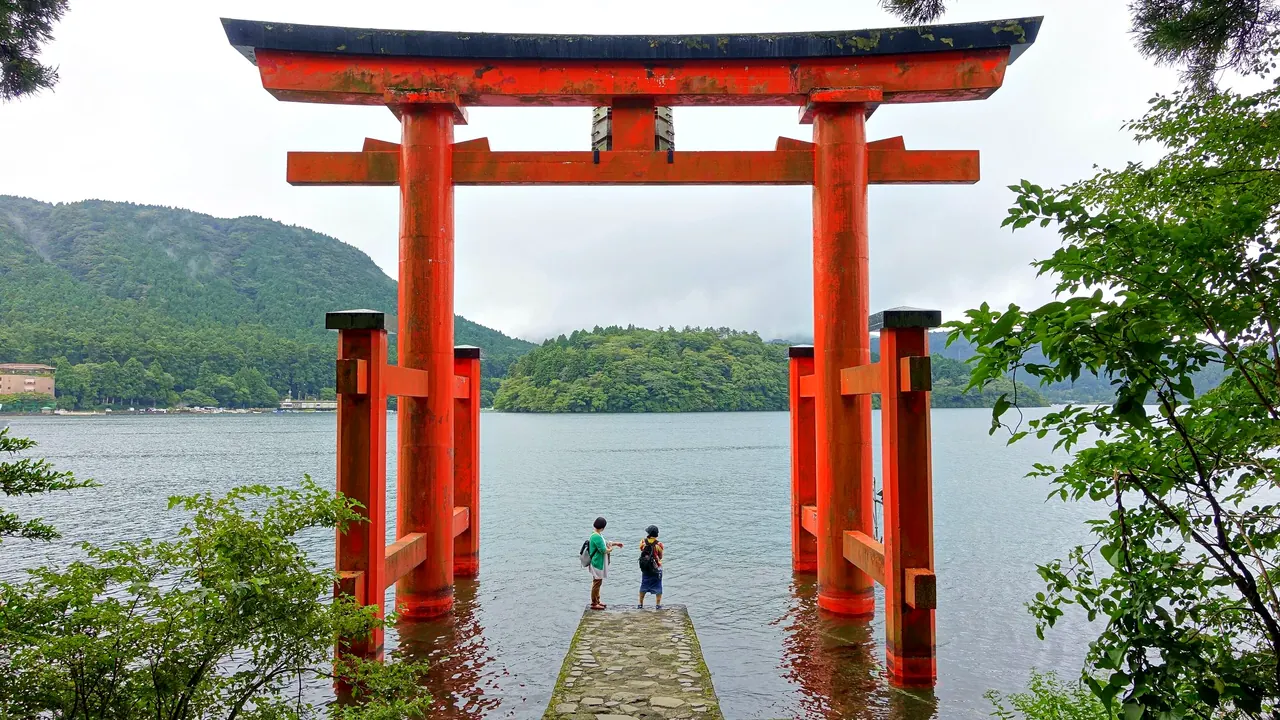
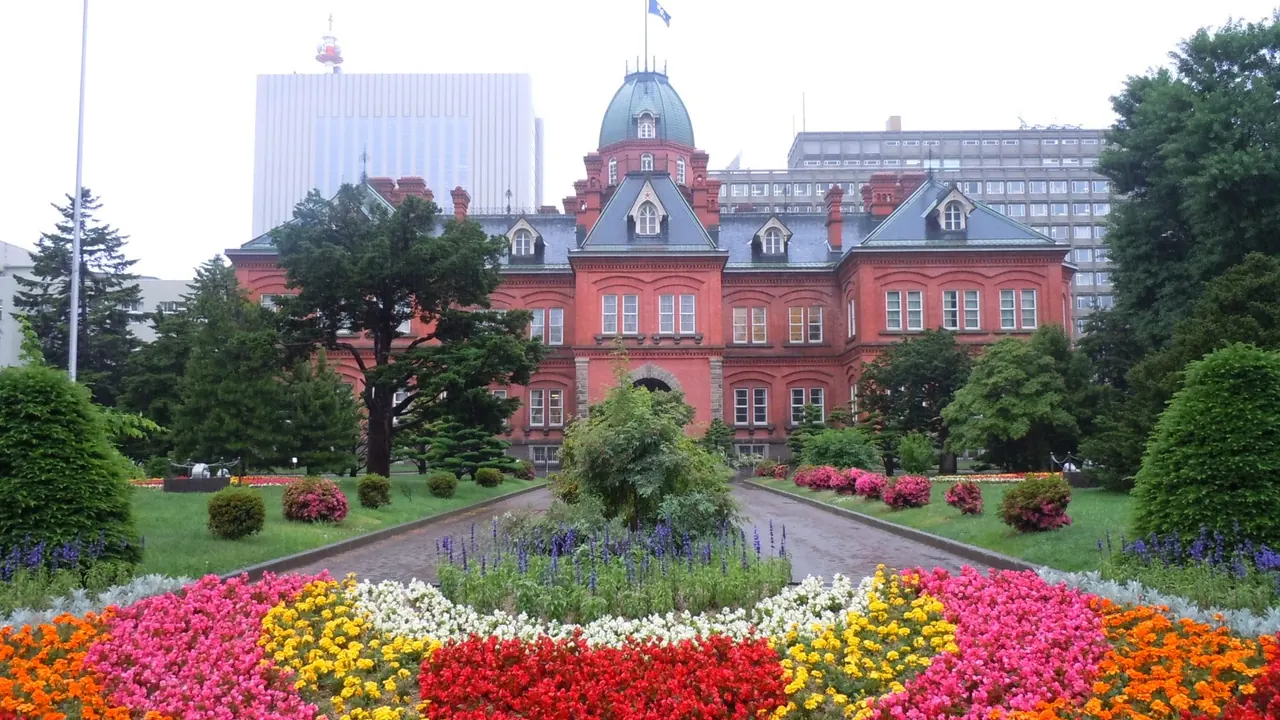
Photos: Hakone by Daderot, CC0; Sapporo by Feri88, CC BY 3.0, cropped.
Hakone or Sapporo?
Our verdict in twelve categories, each scored against the same fixed benchmark cities, and the climate month by month, so you can choose for your trip.
Choose Hakone for
- day trips
- wellness
- culture and sights
Hakone is for a slow retreat built around hot water and scenery. You stay a night or two in a ryokan, eat a kaiseki dinner in your room, soak outdoors under the cedars and walk the caldera rim for a view of Fuji. It suits couples and anyone who wants quiet evenings, and Tokyo, Kamakura and Yokohama are all close enough to add to the trip. Don't expect a night out or much choice of food outside your inn.
Choose Sapporo for
- nightlife
- food and drink
- live music and the arts
Sapporo suits travellers who want a real city with plenty going on: miso ramen and crab at the markets, beer halls, and the late bar counters of Susukino. It is also the better choice in deep snow, with ski slopes inside the city limits and the Snow Festival in February. Families, budget travellers and anyone who wants an easy, walkable base will find it the more practical of the two, with onsen still reachable by bus.
Scoreboard
Twelve categories on one fixed scale from 0 to 100. The shaded stretch is the gap between the two.
Your match
Pick a travel style or drag the sliders, and both match scores follow your weighting.
Wins on day trips and wellness with your weighting.
Wins on nightlife and food and drink with your weighting.
What matters to you?
Category by category
What the scores mean for a trip.
Beaches & swimming
Neither is a beach destination, but Sapporo makes a summer swim easier. The wide, plain sand at Ishikari or near Otaru is half an hour to an hour away, and local families gather there for barbecues during a few warm weeks from late July.
From Hakone, the nearest shore at Odawara is steep, pebbly and often rough, so swimming means going on to the sheltered sand at Atami. In both places the sea is a side trip, not a reason to go.
Food & drink
In Hakone, food mostly means the kaiseki dinner and Japanese breakfast that come with your inn. At a good ryokan these meals are refined and seasonal, but outside the inns there is little beyond soba, tofu, sweet bean buns and the black eggs at Owakudani, and most places close by early evening.
Sapporo is one of Japan's great food cities. It has its own dishes in miso ramen, soup curry and lamb grilled at the table, and sea urchin, salmon roe and crab at Nijo Market. Add the red-brick beer halls and a dense mix of izakaya and sushi bars around Susukino, and you have days of choice.
Culture & sights
The two are about equal, but the sights are very different in character. Hakone's are art museums set in landscape, such as the sculpture lawns of the Open-Air Museum and the Pola Museum in its beech forest, alongside relics of the old Tokaido road like the cedar-lined paving and the rebuilt checkpoint at Lake Ashi.
Sapporo has little from before the 1870s. Its interest lies in Meiji pioneer buildings such as the Clock Tower and the red-brick government office, the Ainu collections at the Hokkaido Museum, and Isamu Noguchi's Moerenuma Park. Either can be covered in about two days.
Nightlife
Hakone has no nightlife, and that is deliberate. After dinner you take a last soak and go to bed, and only a few small bars in Hakone-Yumoto stay open later.
Sapporo has Susukino, a block of neon-lit towers filled with tiny counter bars, karaoke rooms and late ramen shops. It stays busy past midnight even in midwinter. The night is about bar-hopping rather than clubbing, and it is easier to start in the side streets than on corners where touts work.
Nature & outdoors
Both offer strong scenery, but of different kinds. Hakone is a single volcanic caldera, with the steaming vents of Owakudani, Lake Ashi on the crater floor, Fuji behind it on clear days, and ridge walks to Mount Kintoki and through the Sengokuhara pampas grass.
Sapporo is about snow and the wide country around it. It has powder slopes at Teine and Kokusai inside the city and Niseko about two hours away. In summer you can canoe and hike volcanoes in Shikotsu-Toya, an hour south, or visit the flower fields of Furano and Biei. Skiers should choose Sapporo, and walkers who want Fuji views should choose Hakone.
Day trips
Hakone has the richer range of day trips because it sits within reach of Japan's most visited region. Tokyo is under two hours on the Romancecar, and Kamakura's Great Buddha and Zen temples, Yokohama, Odawara Castle and the Izu Peninsula are all easy trips.
Sapporo's best outings are Otaru's canal and warehouses, the Yoichi whisky distillery, the Ainu museum at Upopoy and the volcanic valley above Noboribetsu. Beyond those, most trips head into lakes and farmland rather than other towns.
Good for families
Children enjoy Hakone's transport: the zigzag railway, the ropeway over the steaming vents and the replica pirate ship on Lake Ashi. But there is little else made for them, the inns can feel formal, and the steep paths are hard with a pushchair.
Sapporo is easier for a longer family stay. Its subway and underground walkway make getting around simple, and it has polar bears at Maruyama Zoo, snow slides at the Snow Festival, and beginner ski slopes within the city. In summer, the fountains and play hills at Moerenuma give children plenty of room. Pack serious winter clothing for January and February.
Getting around
Hakone's railway, cable car, ropeway, boats and buses form a loop on one pass, and the ride is part of the sightseeing. The villages are far apart on winding roads, though, and at weekends the ropeway queues and slow buses can eat into the day.
Sapporo is far quicker to get around. The flat centre is laid out on a numbered grid and easy to walk, three subway lines take one IC card, and a heated underground walkway runs from the station to Susukino. Only outlying places such as Jozankei and Moerenuma need a bus.
Shopping & style
Hakone's one real buy is yosegi-zaiku, the geometric wood marquetry you can watch being made around Hatajuku, plus sweets and pickles on Yumoto's main street. Anyone who wants clothes needs to take the bus to the outlet mall near Gotemba.
Sapporo offers proper city shopping, with department stores above the station, the long covered Tanukikoji arcade, and basement food halls full of Hokkaido chocolate, cheese and dried seafood. Ainu woodcarving and textiles make a more distinctive souvenir.
Affordability
Sapporo is noticeably easier on the budget. Business hotels are comfortable, and ramen, soup curry and bento lunches cost little. Many of the main sights, such as the parks, the old government building and the university, are free. Costs only climb for crab dinners, ski passes and Snow Festival week.
Hakone's appeal is the ryokan night with dinner, breakfast and a bath, and the better inns, especially those with private outdoor tubs, cost a lot, more so at weekends and in autumn. The transport pass and public day-baths help keep the rest of the trip affordable.
Live music & performing arts
Hakone has no theatre, concert hall or regular music. At most you might find an occasional museum recital or a performance put on at an inn.
Sapporo has a genuine classical scene. The Kitara concert hall in Nakajima Park is home to the city's symphony orchestra and hosts the Pacific Music Festival each July. Touring opera and ballet, jazz bars in Susukino, and the Yosakoi Soran street dancing in June round out the programme.
Wellness & relaxation
Hakone is built for bathing. You can choose between seventeen spring areas, from riverside Yumoto to the milky sulphur water of Sengokuhara. Many rooms have their own balcony bath, and the slow routine of soaking, resting and an early dinner sets the pace of the whole stay.
In Sapporo, the onsen is an outing rather than the reason for the trip. Jozankei's open-air pools in a river gorge are about an hour away by bus, and Noboribetsu makes a good day or overnight trip. Back in the city, the wide streets and snowbound quiet make it calmer than its size suggests.
When should you go?
Pick your month. The climate figures are measured averages, not a forecast.
Hakone in July
Sapporo in July
Daytime high, °C
Rainfall in the month, mm
Where the figures come from
Hakone's temperatures are measured 43 km from the centre, at Kawaguchiko.
Hakone has no rain gauge within 25 km of the centre, so its rainfall comes from a gridded climate dataset read at the city rather than from a gauge further away.
Temperature and rainfall are climate normals, averaged over the years shown. Hakone: 1971-2000 (rainfall 1991-2020) normals, Kawaguchiko (42.9 km from centre). Sapporo: 1991-2020 normals, Sapporo (2.2 km from centre).
Hakone's winters are cold but mostly dry, and December to February bring the clearest views of Fuji. April and May are pleasant for walking before the wet months. From June to October the caldera is often rainy and misty, and September and October are the wettest months, each with more than 210mm of rain. Midsummer highs reach about 27°C. In August the sea at Atami is warm enough for a swim, but there is no swimming up on the mountain. For autumn colour, November is the month to go: the rain eases and the hillsides turn red and gold.
Sapporo has a much harder winter. Highs stay around 0°C from December to February, which brings reliable snow for skiing and the Snow Festival, but walking on icy streets is slow. Late spring and early summer are the driest and sunniest time, with about 55mm of rain a month in April and May, and good weather for the city's parks. The Sea of Japan is only warm enough to swim, at about 22°C, for a short spell in August. September is Sapporo's wettest month, but October is drier and a good time to see the Jozankei gorge turn red. Across the year, Sapporo is the place for snow and Hakone is the milder but wetter of the two.
Which traveller are you?
For a food and nightlife trip, Sapporo is the clear choice. Its miso ramen, soup curry, jingisukan and morning seafood bowls lead into evenings spent hopping between tiny bars in Susukino. In Hakone you eat at your inn, and the villages go quiet soon after dinner.
On a relaxing and wellness trip, Hakone is the place. The whole stay revolves around the bath: seventeen hot-spring areas, outdoor pools in the woods, private balcony baths and unhurried evenings in a yukata. Sapporo's onsen are a pleasant outing, but they are an hour away by bus.
On a trip with a tight budget, Sapporo goes further. It has good-value business hotels, cheap ramen and bento lunches, modest transit fares and many free sights. In Hakone the ryokan stay is the main draw and it costs a lot, so saving money means staying in hostels and skipping the experience you came for.
Before you go
| Measure | Hakone | Sapporo |
|---|---|---|
| Official language | Japanese | Japanese |
| Currency | Yen (JPY) | Yen (JPY) |
| Sockets | AB100 V, 50 and 60 Hz depending on the region | AB100 V, 50 and 60 Hz depending on the region |
| Driving side | Left | Left |
| Time zone | UTC+9 | UTC+9 |
| Emergency number | Police 110, fire 119 | Police 110, fire 119 |
| Elevation | 734 m | 5 m |
| Main airport | Tokyo Haneda International Airport (HND)71 km from centre98 non-stop destinations | New Chitose Airport (CTS)42 km from centre42 non-stop destinations |
| Public holidays this year | 16 days | 16 days |
By the numbers
| Measure | Hakone | Sapporo |
|---|---|---|
| City population | 10,925 | 1,959,313 |
| People per km² | 118 | 1,747 |
| Museums within 10 km | 16 | 33 |
| UNESCO World Heritage sites within 50 km | 2 | 1 |
| Swim season, months above 21 °C | 5 months | 1 month |
Where else could you go?
Every comparison below shares a destination with this one, so you can follow Hakone or Sapporo somewhere new.