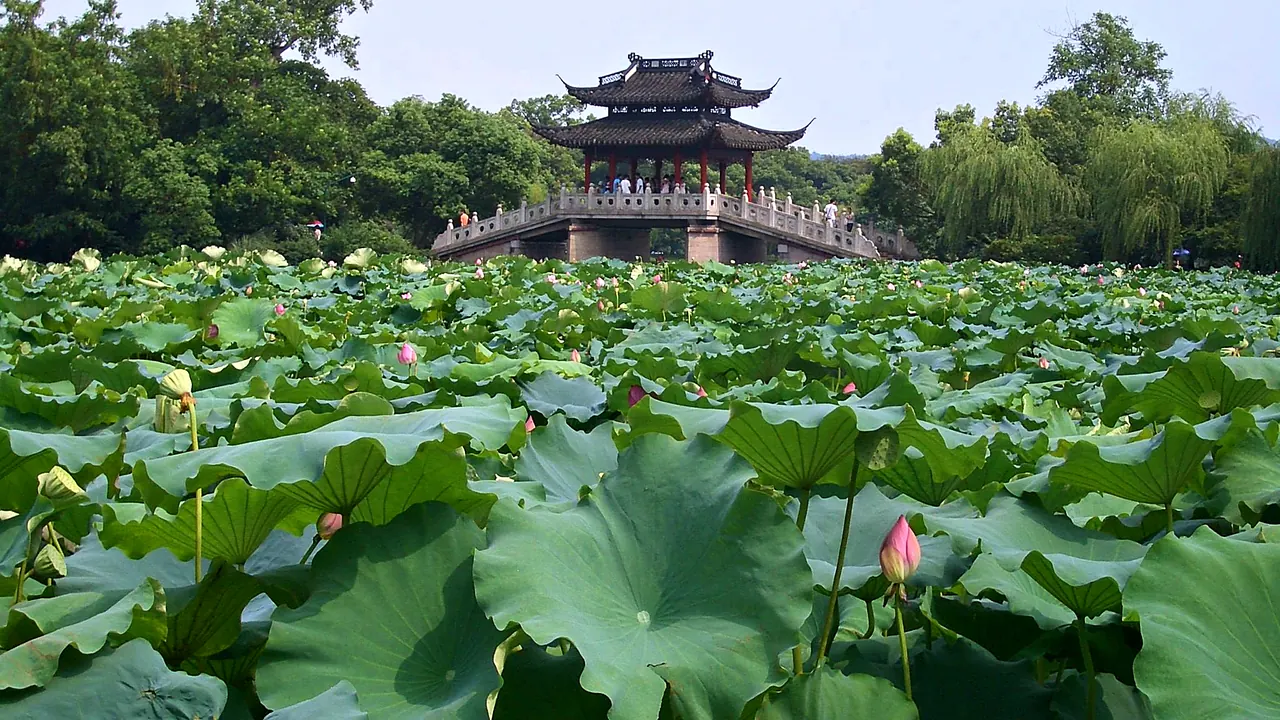
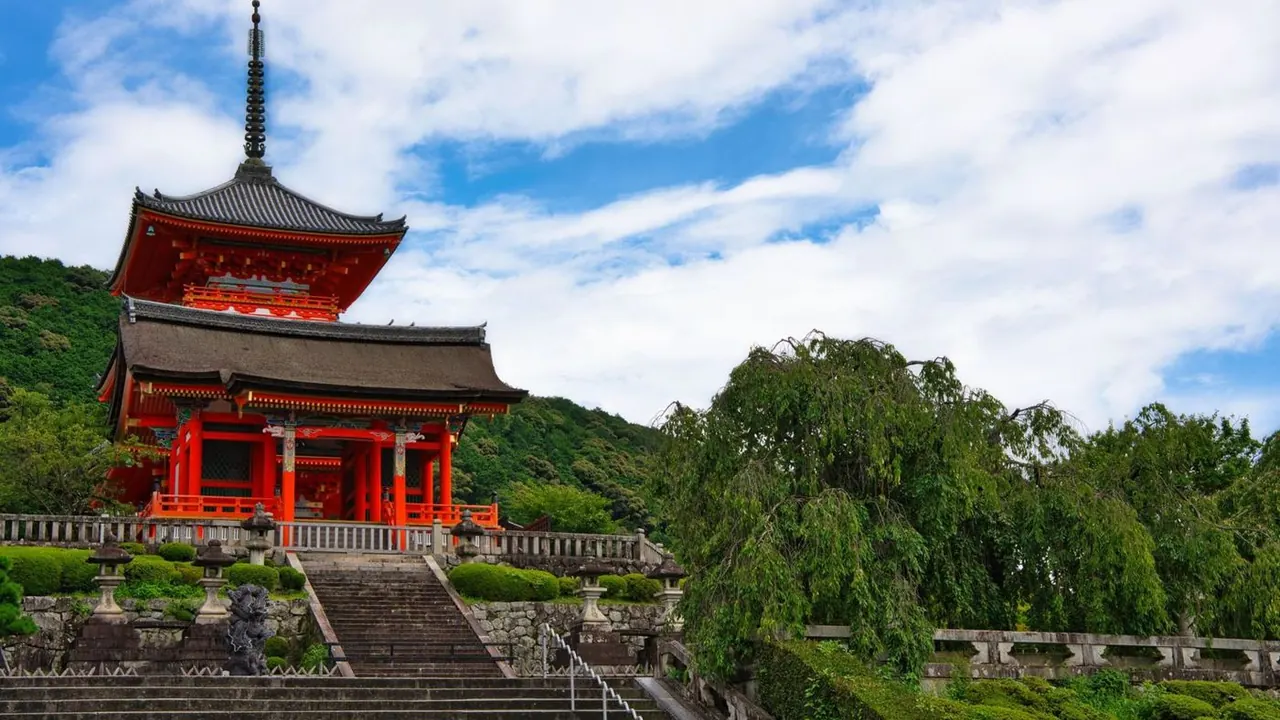
Photos: Hangzhou by Vmenkov, CC BY-SA 3.0, cropped; Kyoto by Bert Mulder, Pexels License.
Hangzhou or Kyoto?
Our verdict in twelve categories, each scored against the same fixed benchmark cities, and the climate month by month, so you can choose for your trip.
Choose Hangzhou for
- prices
- nightlife
Hangzhou suits a traveller who wants one great landscape rather than a long list of monuments, and who would like their money to go further. West Lake, the tea hills of Longjing and the Lingyin Temple make a slow, scenic stay, and the city works well as a base for the Yangtze delta, with Shanghai, Suzhou and the canal towns all close. It also fits easily into a wider trip around eastern China.
Choose Kyoto for
- culture and sights
- shopping
- food and drink
Kyoto is the stronger choice for anyone travelling for history, craft and food. Its temples, gardens and wooden lanes are intact on a scale Hangzhou cannot match, and kaiseki, sento bathhouses, kabuki and geisha dances give its evenings and rest days real depth. Nara, Osaka and Himeji are all within easy reach by train. You pay more for rooms, especially in the blossom and maple seasons, but the trip is richer for it.
Scoreboard
Twelve categories on one fixed scale from 0 to 100. The shaded stretch is the gap between the two.
Your match
Pick a travel style or drag the sliders, and both match scores follow your weighting.
Wins on prices and nightlife with your weighting.
Wins on culture and sights and shopping with your weighting.
What matters to you?
Category by category
What the scores mean for a trip.
Beaches & swimming
Neither city is a place for a beach vacation. Hangzhou is the weaker of the two: its estuary is brown and tidal, West Lake is for boating, and the nearest swimming is at Qiandao Lake, about two hours away.
Kyoto is a little better placed. In July and August the sandy freshwater strands on Lake Biwa's western shore are close enough for an afternoon swim, and the clear water of the Tango Peninsula can be reached on an overnight trip.
Food & drink
Both cuisines are refined and built around tea, but Kyoto's goes further. Hangzhou cooks in a sweet eastern Chinese style, with West Lake fish in vinegar sauce, Dongpo pork and shrimp with Longjing leaves, and you can drink the spring harvest in the villages where it is picked.
Kyoto has kaiseki in old Gion townhouses, Buddhist temple meals at Daitokuji and Tenryuji, and an unusual number of serious restaurants for a city of its size. Nishiki Market and the sake breweries of Fushimi keep the everyday eating just as interesting.
Culture & sights
Hangzhou's heritage is above all a landscape. West Lake's causeways and pagodas, the Lingyin Temple with the Feilai Feng carvings, and the silk and tea museums fill several good days. The old streets around Hefang, however, are largely rebuilt.
Kyoto works on a different scale. It was imperial capital for a thousand years and escaped wartime bombing, so Kinkaku-ji, Ryoan-ji, Fushimi Inari and Nijo Castle stand among more than a thousand temples and shrines, with whole districts of wooden machiya still intact around them.
Nightlife
Both cities wind down early, and serious night owls take the train to a bigger neighbour: Shanghai from Hangzhou, Osaka from Kyoto. Hangzhou has a little more range, with larger clubs and late lounges in Wulin, karaoke and craft beer bars, after a walk along the lit-up lakeshore.
Kyoto's evenings are smaller and more intimate. They gather in the lantern-lit alley of Pontocho and along Kiyamachi, in standing izakaya, sake and whisky bars, and on riverside terraces in summer.
Nature & outdoors
Both cities have green hills right at their edges, and they offer much the same amount of easy walking. Hangzhou's outdoors is about tea terraces and water: the Nine Creeks valley, cycling the causeways at dawn, and boats through the Xixi wetland, with Moganshan's bamboo hills an hour away.
Kyoto's is about forest and the seasons. There are trails over Higashiyama to Daimonji, the cedar path from Kurama to Kibune and boats down the Hozu gorge, and cherry blossom and maple colour bring the hills to life in spring and autumn.
Day trips
Both make excellent bases. Hangzhou puts Shaoxing under half an hour away, Shanghai an hour and Suzhou's gardens a little further, with the canal towns of Wuzhen and Xitang close by road.
Kyoto's list is even stronger and more tightly packed. Nara's deer and great Buddha, Uji's Byodo-in and Osaka are all under an hour, and Himeji Castle and Kobe are easy by bullet train, so you can decide the night before where to go.
Good for families
Kyoto is the easier of the two with children. The Kyoto Railway Museum's steam roundhouse, ninja shows at the Toei studio park and feeding the deer in Nara give children plenty to do, and the city's calm and order make the temple days manageable.
Hangzhou has its own appeal, with pedal boats on West Lake, beluga whales at the aquarium and Song-dynasty theme parks. Little English, dense festival crowds and humid summers make the logistics harder work.
Getting around
Hangzhou has the wider metro, clean and running out to the railway stations and the airport, and shared bikes make the lakeshore easy. The temples, tea villages and wetlands lie far apart, though, so most days rely on taxis or ride-hailing. Few signs or drivers use English, and nearly everything is paid through mobile apps that need setting up before you arrive.
Kyoto is the easier city to find your way around. Its flat central grid is a pleasure to walk or cycle, with the Kamo River paths as a quiet route from north to south, and its signs and tickets pose no real barrier to a foreign visitor. The outlying temples need a mix of JR, private lines and the Randen tram, and the buses slow down in the busy seasons, but a bicycle and the train cover most days.
Shopping & style
Each city sells its own crafts, but Kyoto's are richer. Hangzhou is the place for silk scarves and qipao and for Longjing bought straight from the growers, and Wulin has the bigger luxury malls of the two.
Kyoto has family-run shops, some going back generations, selling Kiyomizu ceramics, Nishijin textiles, lacquer, incense and hand-forged knives. The covered Teramachi arcade and the monthly flea markets at To-ji and Kitano Tenmangu make browsing a pleasure of its own.
Affordability
Hangzhou is the noticeably cheaper stay. Local restaurants, the metro, taxis and shared bikes cost little, and the lake and hill walks are free. Rooms only become expensive during the national festival weeks or right on the shore.
Kyoto's everyday meals and transport are reasonable too, but hotels and ryokan are expensive and become scarce in the blossom and maple seasons.
Live music & performing arts
Kyoto offers more traditional theatre to see. The spring dances of the geisha districts, kabuki at Minamiza, the oldest such house in Japan, and regular Noh performances are rare chances, though much of this follows a seasonal calendar.
In Hangzhou, most visitors see a staged spectacular on the surface of West Lake or at the theme parks. Its own Yue opera is sung in dialect, usually without English surtitles.
Wellness & relaxation
Kyoto has a real bathing culture, which Hangzhou lacks. Neighbourhood sento with tiled murals, hot spring baths at Kurama and Ohara, ryokan tubs and zazen in temple lodgings make rest part of the trip itself.
Hangzhou's calm is gentler and more social: tai chi and water calligraphy by the lake at dawn, pots of Longjing that last all afternoon in the hill tea houses, and foot massage in every neighbourhood.
When should you go?
Pick your month. The climate figures are measured averages, not a forecast.
Hangzhou in July
Kyoto in July
Daytime high, °C
Rainfall in the month, mm
Where the figures come from
Kyoto's sunshine is measured 43 km from the centre, at Osaka.
Temperature and rainfall are climate normals, averaged over the years shown. Hangzhou: 1991-2020 normals, Hangzhou (1.9 km from centre). Kyoto: 1971-2000 (sunshine 1991-2020, rainfall 1991-2020) normals, Kyoto (3.2 km from centre).
Both cities are at their best in spring and autumn, with April, May, October and November warm enough for long days on foot without the summer stickiness. Hangzhou gets hotter: July reaches 34°C, and the early-summer rains are heavy, with June the wettest month at 254mm. Its autumn is the more reliable of the two, since October is dry and mild. The estuary does warm up in late summer, but no one swims in it.
Kyoto's rain arrives later and lasts longer. July is the wettest month at 250mm, and September stays wet at 204mm, so its autumn colour is best enjoyed from late October into November. Winter in both cities is cool, with highs around 9°C in January. Kyoto's winters are drier and sunnier, which makes them good for quiet temple visits, while Hangzhou's are damp and grey.
Which traveller are you?
For a trip on a tight budget, Hangzhou is the better pick. Sleep a few streets back from the lake, avoid the national festival weeks, and use the fast trains to Shaoxing or Suzhou for extra days. Kyoto stays affordable only outside its two peak seasons.
On a culture and arts trip, Kyoto is the clear choice. Allow several days, reach the famous temples as they open, then drift to the quieter northern ones, and try to arrive for the spring geisha dances. Hangzhou suits a shorter stay centred on the lake.
On a relaxing and wellness trip, Kyoto has the edge. Book at least one night in a ryokan or a temple lodging, and come in winter, when the gardens are at their emptiest. In Hangzhou, choose a retreat hotel in the tea valleys and keep to weekdays.
Before you go
| Measure | Hangzhou | Kyoto |
|---|---|---|
| Official language | Putonghua | Japanese |
| Currency | Yuan Renminbi (CNY) | Yen (JPY) |
| Sockets | ACI220 V, 50 Hz | AB100 V, 50 and 60 Hz depending on the region |
| Driving side | Right | Left |
| Time zone | UTC+8 | UTC+9 |
| Emergency number | Police 110, ambulance 120, fire 119 | Police 110, fire 119 |
| Elevation | 19 m | 51 m |
| Main airport | Hangzhou Xiaoshan International Airport (HGH)25 km from centre131 non-stop destinations | Kansai International Airport (KIX)81 km from centre62 non-stop destinations |
| Public holidays this year | 6 days | 16 days |
By the numbers
| Measure | Hangzhou | Kyoto |
|---|---|---|
| City population | 11,936,010 | 1,463,723 |
| People per km² | 708 | 1,768 |
| Museums within 10 km | 13 | 77 |
| UNESCO World Heritage sites within 50 km | 3 | 4 |
| Swim season, months above 21 °C | 5 months | 5 months |
Where else could you go?
Every comparison below shares a destination with this one, so you can follow Hangzhou or Kyoto somewhere new.