Photos: Hanoi by xiquinhosilva, CC BY 2.0, cropped; Siem Reap by allPhoto Bangkok, Pexels License.
Hanoi or Siem Reap?
Our verdict in twelve categories, each scored against the same fixed benchmark cities, and the climate month by month, so you can choose for your trip.
Choose Hanoi for
- food and drink
- nature and the outdoors
- shopping
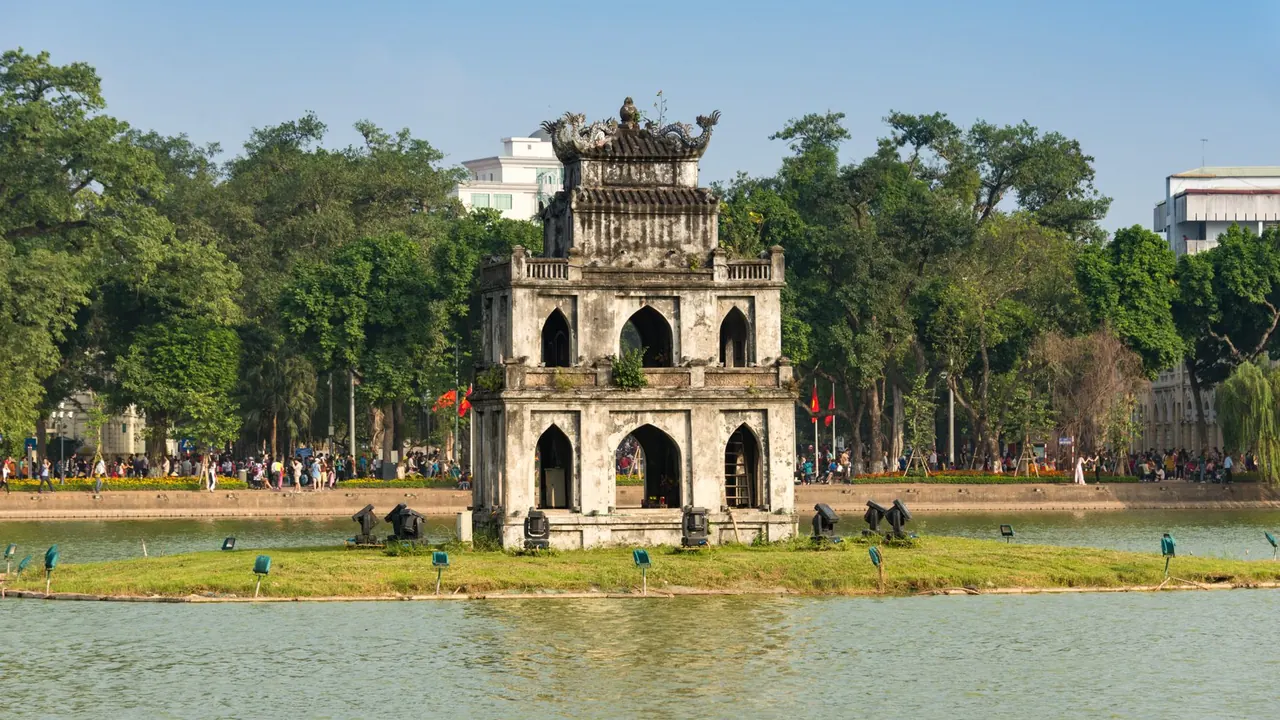
Hanoi suits travellers who want a capital to wander and eat their way through. The days go on pho at breakfast, bun cha at lunch, egg coffee up a narrow staircase and bia hoi on the pavement at dusk. In between come the Old Quarter's trade streets, the Temple of Literature and trips out to the karst country of Ninh Binh. It is cheaper still, livelier in the evening and better for shopping, as long as you can live with the horns and motorbikes.
Choose Siem Reap for
- culture and sights
- wellness
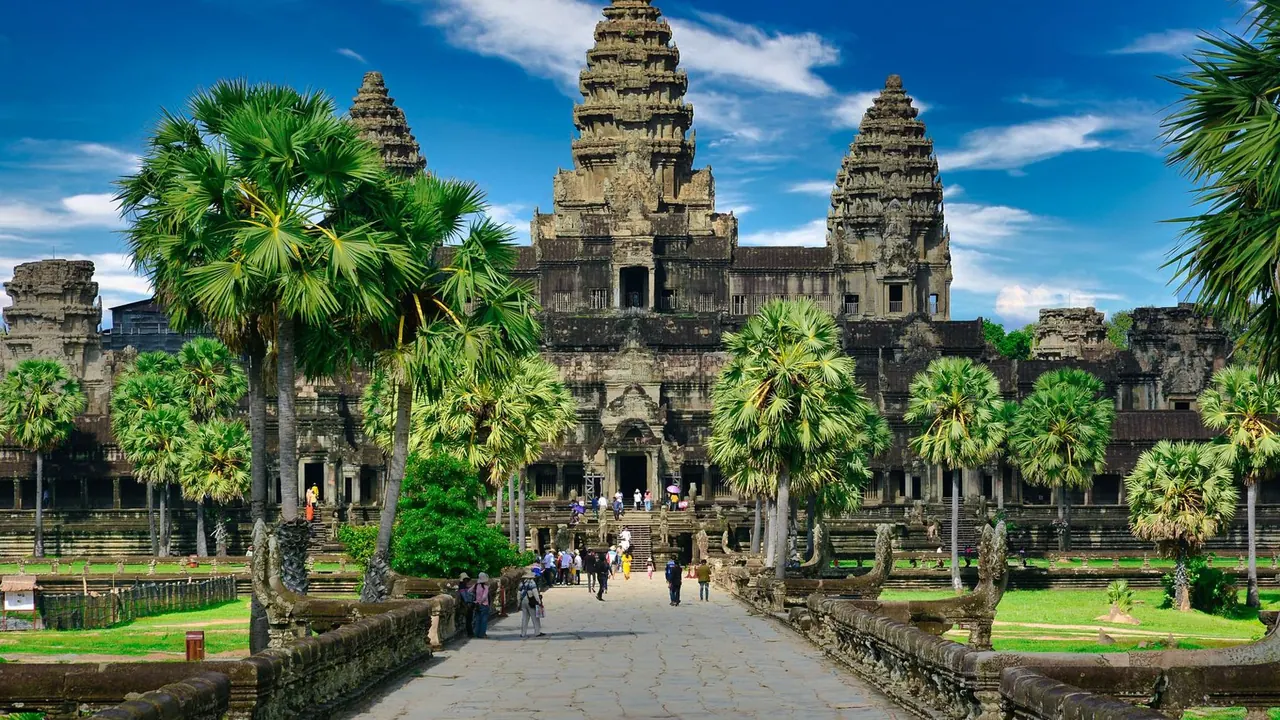
If Angkor is the reason for going, the answer is Siem Reap. The temples are among the great sights of the world, and Hanoi has nothing on that scale. Life in the town is built around them: dawn at the ruins, a long hot afternoon by a garden pool, a massage in the evening. The food and the town itself are thinner, so it works best as a focused stay of a few days rather than a long base.
Scoreboard
Twelve categories on one fixed scale from 0 to 100. The shaded stretch is the gap between the two.
Your match
Pick a travel style or drag the sliders, and both match scores follow your weighting.
Wins on food and drink and nature and the outdoors with your weighting.
Wins on culture and sights and wellness with your weighting.
What matters to you?
Category by category
What the scores mean for a trip.
Beaches & swimming
Neither is a place for the sea, and both need a separate stay if beaches matter. From Hanoi the nearest coast is Ha Long, Cat Ba or Sam Son, a long journey away, so swimming in town means a hotel pool or the water parks by West Lake.
Siem Reap's big water is the muddy Tonle Sap, which nobody swims in, and the Gulf of Thailand is most of a day away. The difference is that here the hotel pool shapes the day itself, as the place to cool off after a dawn at the temples.
Food & drink
This is where Hanoi pulls far ahead. It is the home of pho and bun cha, and its one-dish stalls and family shopfronts have been perfecting single recipes for decades. Add banh cuon, cha ca fried at the table, egg coffee, morning street sweets and evening bia hoi, and eating becomes one of the main reasons to go.
Siem Reap has good Khmer cooking in fish amok, sour soups and num banh chok from morning stalls, plus a few thoughtful tasting-menu kitchens and social-enterprise restaurants. But the centre around Pub Street leans to pizza and backpacker menus, and good meals take a tuk-tuk ride out to find.
Culture & sights
Siem Reap has the greater sight by a wide margin. Angkor Wat, the walled city of Angkor Thom with the Bayon, and the root-choked galleries of Ta Prohm are only the start of a forest full of temples. Three days barely covers the main circuits, and the town's own pagodas and museum are just a prelude.
Hanoi's heritage is spread more widely and is quieter in effect: the Old Quarter's guild streets and communal houses, the Temple of Literature, the French Quarter and Opera House, and the Imperial Citadel and Mausoleum at Ba Dinh. The Museum of Ethnology and Hoa Lo prison are better museums than anything in Siem Reap, but no single sight compares with Angkor.
Nightlife
Hanoi gives a fuller evening. It starts on bia hoi stools across the Old Quarter, gets loud around Ta Hien by nine, and also takes in cocktail bars, rooftop terraces and West Lake's craft-beer bars. On weekends the streets around Hoan Kiem become a pedestrian promenade. The catch is that most of the city winds down around midnight.
Siem Reap's going out is mostly a few neon blocks around Pub Street, open late and easygoing, with some quieter bars by the river. It is a single backpacker scene rather than a city's night, and the sunrise starts at Angkor cut many evenings short anyway.
Nature & outdoors
Hanoi has better scenery within reach. West Lake's shoreline path suits a walk or a ride. Ninh Binh, about two hours away, has limestone towers above rice paddies and boat trips through the caves of Trang An and Tam Coc. The Ba Vi hills add forest, and Ha Long Bay and Sapa are there for anyone with a spare night or two.
Around Siem Reap the land is flat paddy and sugar palm, lovely for an early bike ride. The highlights are the Tonle Sap's flooded forest, the bird colonies at Prek Toal, and the waterfall and trails of Phnom Kulen and Kbal Spean. The heat limits how much you can do outdoors for much of the year.
Day trips
The two are about even, but the outings feel quite different. From Hanoi the variety is wider: the old capital of Hoa Lu and Bai Dinh at Ninh Binh, the Perfume Pagoda by rowing boat, and craft villages such as Bat Trang for ceramics and Van Phuc for silk. There is also Duong Lam's laterite village and the carved pagodas of But Thap and Tay Phuong.
Siem Reap's days out are mostly more temples. Banteay Srei has exquisite pink sandstone carving, Beng Mealea lies collapsed in the jungle and Koh Ker has its pyramid. The other option is the stilt villages of Kampong Phluk and Kampong Khleang on the lake, with no other towns close enough to visit.
Good for families
Both welcome children warmly and both are hard work with small ones, for different reasons. Hanoi has more to fill a short outing, such as the water puppets by Hoan Kiem, the zoo and the village houses at the Museum of Ethnology. Its streets, full of motorbikes and parked scooters, make pushchairs a trial.
Siem Reap suits older children who like adventure, scrambling through Ta Prohm and Beng Mealea or taking a boat to the stilt villages. There is almost nothing built for kids, though, and steep temple steps and spring heat wear out younger ones quickly.
Getting around
Neither has public transport a visitor will use, and Hanoi is a little easier. Its main sights cluster between the Old Quarter, the lake, the French Quarter and Ba Dinh, so much can be walked once you learn to cross through the motorbikes slowly. Ride-hailing and cyclos fill the gaps.
Siem Reap's centre is tiny, but Angkor is spread across a wide area, so the day is built around a hired tuk-tuk driver, a car for outlying temples, or a bicycle on the flat circuits. Broken pavements and heat mean you are driven most of the time.
Shopping & style
Hanoi offers more, and more of a spectacle. Whole Old Quarter streets still sell a single trade, Hang Gai makes silk and made-to-measure clothes in a day or two, and Dong Xuan and the weekend night market fill the evenings. Bat Trang ceramics, lacquer and hill-tribe textiles are the buys worth carrying home.
Siem Reap's Old Market and riverside night markets are smaller and more souvenir-led. Its strength is the artisan workshops, where you can watch silk weaving and stone carving before buying work of far higher quality than the stalls sell.
Affordability
Both are very cheap, and Hanoi stretches money even further. Street meals, bia hoi, boutique rooms in the Old Quarter and ride-hailing all cost little, and the extras that add up, such as Ha Long cruises and imported wine, are easy to skip.
Siem Reap has one cost you cannot avoid: the Angkor pass, which takes a real share of a short stay's budget. Restaurants and hotels aimed at visitors also cost noticeably more than the stalls and simple Khmer eateries locals use.
Live music & performing arts
Hanoi has a little more to see on stage. Water puppetry by Hoan Kiem Lake is the classic show, and beyond it are the Opera House with the national symphony, ballet and opera, ca tru sung poetry in Old Quarter communal houses, and a small jazz scene.
Siem Reap's two good evenings are apsara dance, best in the smaller serious performances rather than buffet halls, and the much-admired Cambodian circus under its big top. After those there is little more to see.
Wellness & relaxation
Siem Reap is easier to rest in. Its natural rhythm of a dawn start and an idle afternoon by a garden pool suits slowing down. Spas use herbal compresses and local ingredients, yoga classes and small retreats are easy to find, and the lanes across the river are quiet.
Hanoi's foot and body massage shops are cheap enough to visit daily, but you come out into horns and traffic. Calm comes only by staying near West Lake or getting to the lakes at dawn.
When should you go?
Pick your month. The climate figures are measured averages, not a forecast.
Hanoi in July
Siem Reap in July
Daytime high, °C
Rainfall in the month, mm
Where the figures come from
Hanoi's sunshine is measured 86 km from the centre, at Phu Lien.
Siem Reap has no weather station within reach, so its figures come from a gridded climate model rather than a measured record, and read a broad area rather than the city itself.
Temperature and rainfall are climate normals, averaged over the years shown. Hanoi: 1991-2020 normals, Ha Noi (4.4 km from centre). Siem Reap: 2001-2020 normals, NASA POWER reanalysis grid, no weather station within 90 km.
Hanoi has real seasons and Siem Reap does not. Hanoi's winter is mild and grey, around 19°C in January with little sun, which is comfortable for walking but rarely bright. March, April, October and November are the most pleasant months for the streets. From May to September the city is hot and very wet, with daytime highs in the mid 30s and rain peaking at about 310mm in July and August.
Siem Reap stays hot all year, so the choice there is between dry and wet. November to January is the best time: dry and slightly less hot. From February to April it reaches 36°C, and temple days need early starts. The rains run from May to October and are heaviest in September at around 230mm. The countryside is green then and the Tonle Sap villages are at their fullest, but the ground at the temples is muddy.
Which traveller are you?
On a culture and arts trip, Siem Reap is the stronger choice. The temples of Angkor, from the Bayon's stone faces to Ta Prohm's tree-split galleries, have no equal in Hanoi, whose layered Old Quarter, citadel and museums are rewarding but less overwhelming.
For a food and nightlife trip, Hanoi wins clearly. Its street kitchens cook pho, bun cha and cha ca, and the coffee culture is a pleasure of its own. The evenings move from bia hoi stools to Old Quarter bars and West Lake rooftops, where Siem Reap mostly offers Pub Street.
On a relaxing and wellness trip, Siem Reap fits the slower pace you are after. Garden hotels with pools, Khmer spas, yoga classes and quiet lanes across the river make rest part of the day. Hanoi has cheap massage, but the city itself never really quietens.
Before you go
| Measure | Hanoi | Siem Reap |
|---|---|---|
| Official language | Vietnamese | Khmer |
| Currency | Dong (VND) | Riel (KHR) |
| Sockets | ACFG220 V, 50 Hz | ACG230 V, 50 Hz |
| Driving side | Right | Right |
| Time zone | UTC+7 | UTC+7 |
| Emergency number | Police 113, ambulance 115, fire 114 | Police 117, ambulance 119, fire 118 |
| Elevation | 10 m | 18 m |
| Main airport | Noi Bai International Airport (HAN)22 km from centre91 non-stop destinations | Siem Reap-Angkor International Airport (SAI)39 km from centre14 non-stop destinations |
| Public holidays this year | - | 21 days |
By the numbers
| Measure | Hanoi | Siem Reap |
|---|---|---|
| City population | 8,717,600 | 147,866 |
| People per km² | 2,595 | - |
| Museums within 10 km | 14 | 6 |
| UNESCO World Heritage sites within 50 km | 1 | 1 |
Where else could you go?
Every comparison below shares a destination with this one, so you can follow Hanoi or Siem Reap somewhere new.