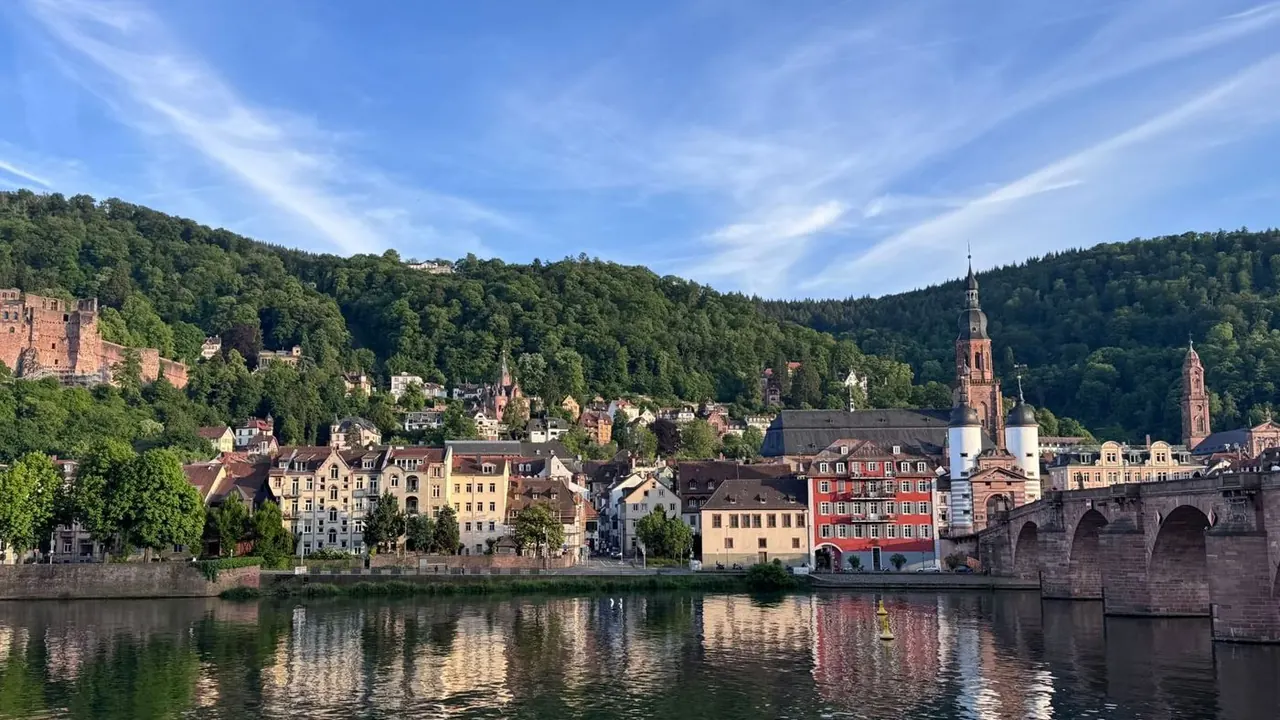
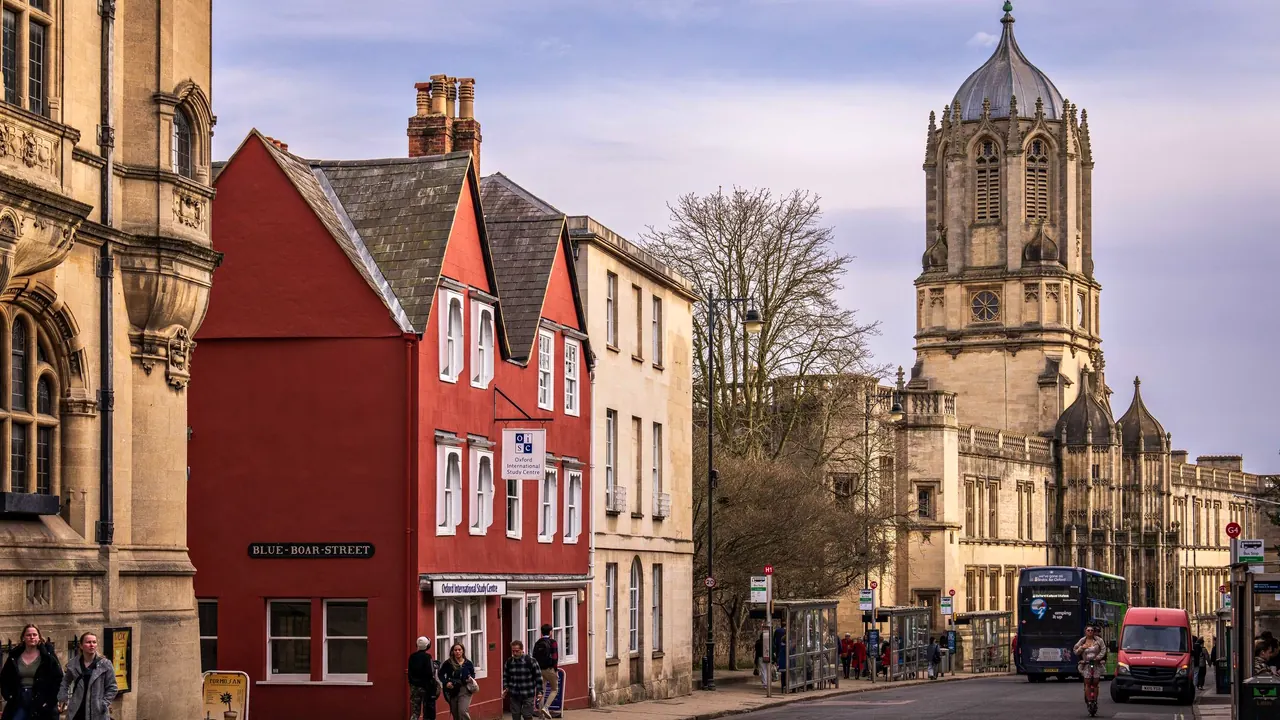
Photos: Heidelberg by Kuanling Chen, Pexels License; Oxford by Mark Stebnicki, Pexels License.
Heidelberg or Oxford?
Our verdict in twelve categories, each scored against the same fixed benchmark cities, and the climate month by month, so you can choose for your trip.
Choose Heidelberg for
- prices
- wellness
- nature and the outdoors
Heidelberg is the better pick for a slower, greener trip. The forest begins at the edge of the old town, local wine is poured in taverns a short ride away, and thermal baths lie within easy reach. Families get a funicular, a zoo and hands-on transport museums, and the whole stay usually costs less. It suits couples, families and walkers who want a romantic river town with real hills behind it.
Choose Oxford for
- culture and sights
- shopping
- day trips
Oxford rewards travellers who come to look and listen. Its working colleges, great libraries and free museums give it more depth than Heidelberg's compact castle-and-old-town set, and choral Evensong in a college chapel has no equal on the German side. Blenheim, the Cotswolds and London are all within reach for day trips, and the shopping has more character. Accommodation costs more, but for a culture-led stay it repays the extra.
Scoreboard
Twelve categories on one fixed scale from 0 to 100. The shaded stretch is the gap between the two.
Your match
Pick a travel style or drag the sliders, and both match scores follow your weighting.
Too close to call, level with your weighting
Wins on prices and wellness with your weighting.
Wins on culture and sights and shopping with your weighting.
What matters to you?
Category by category
What the scores mean for a trip.
Beaches & swimming
Neither city is a place to swim in the sea. What differs is where you go for a dip on a hot day. In Oxford you can swim right in town, in the Thames along Port Meadow or in the Cherwell, and there is a large open-air pool at Hinksey. Heidelberg's Neckar is for boats rather than swimming, so locals use the outdoor pools or drive about half an hour to the flooded gravel-pit lakes on the Rhine plain. The coast is far from both, though Oxford's is nearer at an hour and a half.
Food & drink
The two eat about equally well, but in very different ways. Heidelberg's strength is the glass: Riesling and Pinot from the Bergstrasse and Palatinate vineyards on its doorstep, served alongside hearty Baden dishes such as Maultaschen and Schäufele, and white asparagus in spring.
Oxford's table is the pub. Expect ale and a Sunday roast by the Thames, the old traders of the Covered Market and cheap Middle Eastern, South Asian and Caribbean food along Cowley Road. In both towns the main tourist streets are uneven, so it pays to head for Neuenheim or the wine villages around Heidelberg, or to Jericho in Oxford.
Culture & sights
Both are old university towns, but Oxford has more to see and more depth. Its honey-coloured colleges, the Radcliffe Camera, the Bodleian and Christ Church are all still in use. The Ashmolean, the Pitt Rivers and the Gothic glass hall of the Natural History Museum add museum collections Heidelberg cannot match, and you need two or three days to do them justice.
Heidelberg is a smaller, highly photogenic set: the red sandstone castle ruin above a baroque old town, the Old Bridge and the graffiti-covered Student Prison of Germany's oldest university. Most visitors see it well in a day or two.
Nightlife
Heidelberg keeps its evenings in one lane, while Oxford spreads them across the city. The narrow Untere Strasse in the Altstadt is packed with small pubs that fill late in term, and old student taverns with carved tables sit nearby. A few clubs lie out towards the station, and a bigger night means the train to Mannheim or Frankfurt.
In Oxford you choose by neighbourhood: historic taverns in the centre, riverside pubs along the Thames on summer evenings, late bars and small clubs on Cowley Road, and relaxed cocktail bars in Jericho. Both towns follow the university calendar and quieten outside term, so neither suits dancing until dawn.
Nature & outdoors
Heidelberg has the better outdoors because it has hills. Forest starts at the edge of the old town, the funicular climbs to the Königstuhl at 568m, where trails run on for hours, and the Heiligenberg hides Celtic ramparts among the trees. The Neckar cycle path and the sandstone crags of the Palatinate Forest add longer outings.
Oxford's green space is flat and pastoral: Port Meadow with its grazing horses, Christ Church Meadow, and punting on the Cherwell. For hills you need to travel up to an hour, to the Cotswolds, the Chilterns or the Ridgeway.
Day trips
Heidelberg's outings are mostly cathedrals, monasteries and river towns. Speyer's vast Romanesque cathedral and the baroque gardens at Schwetzingen are about half an hour away, Worms adds its medieval Jewish heritage, and the Carolingian gatehouse at Lorsch and the walled monastery at Maulbronn are both easy to reach. Upriver, Neckarsteinach with its four castles and hilltop Bad Wimpfen make a slow day out, and so do the half-timbered wine villages around Deidesheim. Strasbourg is possible for a long day.
Oxford is the stronger base, because several of England's best-known sights are close by. Blenheim Palace, where Churchill was born, is twenty minutes away. Cotswold villages such as Burford and Chipping Campden are within an hour, and London is an hour by train. Stratford-upon-Avon, Windsor Castle and Bath are all within about an hour and a half, though some of the Cotswold villages are much easier to reach with a car or a tour.
Good for families
Heidelberg gives children more to do. The funicular ride is an outing in itself and ends at a small fairy-tale park. The zoo and boat trips sit by the river, and the aircraft, space shuttle and submarine at Speyer and Sinsheim are within half an hour. The cobbled, sloping old town is the main drawback with a pushchair.
Oxford is just as safe and is flatter to walk, and its free dinosaur and Pitt Rivers collections, punting and the Harry Potter connections at Christ Church go down well. Beyond those, the city is mostly for adults, and the wildlife park and studio tour both need a trip out.
Getting around
Heidelberg's station is a tram ride from the old town, while Oxford's is a short walk from the centre. Once in Heidelberg, the Altstadt is a long, narrow strip that is easy to walk along the pedestrian Hauptstrasse, though the cobbles and the steep castle approach make the funicular welcome. One fare system covers trams, buses and the S-Bahn across the Rhine-Neckar area, which keeps outings simple.
Oxford's centre is compact and mostly flat, small enough to cross on foot in twenty minutes, with several streets closed to through traffic. Buses run out to the suburbs and bicycles are everywhere, but parking is scarce, so drivers leave the car at a park-and-ride.
Shopping & style
Oxford is the better place to browse. Beyond the chains on Cornmarket, it has the Covered Market's small traders, independents in Jericho and on Little Clarendon Street, antique map dealers, and Blackwell's vast basement of books. The designer outlet village near Bicester is twenty minutes away.
Heidelberg's long Hauptstrasse moves from high-street chains to cuckoo clocks, beer steins and Studentenkuss chocolates, with only a few boutiques off it. A bottle of Bergstrasse wine is the best thing to take home, and serious fashion means a train to Frankfurt.
Affordability
Heidelberg is the cheaper of the two, though in both cities the hotel is the main cost. Both have few rooms and see prices rise around graduations and conferences, so visitors often stay in Mannheim or on the edge of Oxford.
Once you are there, Oxford's free museums help, but college entry and library tours add up over a few days. Heidelberg's modest admissions, student cafés, simple taverns and good-value regional transport ticket keep costs lower.
Live music & performing arts
Oxford has the more memorable evenings. The college choirs at Christ Church, Magdalen and New College sing Evensong on most term evenings to world standards, and the Sheldonian and the historic Holywell Music Room add concerts. Its theatre is mostly touring productions and summer student shows in college gardens.
Heidelberg has a fuller theatre programme for its size: a municipal house with opera, drama and dance, its own orchestra, the spring Heidelberger Frühling chamber festival, and summer shows in the castle courtyard. Mannheim's larger opera house is twenty minutes away.
Wellness & relaxation
Heidelberg suits a restorative break better because thermal water is close. The Kraichgau spa towns, with saline pools and saunas, are about half an hour away, and Baden-Baden is an hour south. Evenings on the Neckar meadows and slow meals in wine taverns add to the calm.
Oxford offers quiet rather than treatments. Its options are early mornings in the Botanic Garden, Addison's Walk past the Magdalen deer park and an afternoon on a punt. Spas are few, with no bathing tradition.
When should you go?
Pick your month. The climate figures are measured averages, not a forecast.
Heidelberg in July
Oxford in July
Daytime high, °C
Rainfall in the month, mm
Where the figures come from
Oxford's temperatures are measured 37 km from the centre, at Fairford Royal Air Force Base.
Oxford has no rain gauge within 25 km of the centre, so its rainfall comes from a gridded climate dataset read at the city rather than from a gauge further away.
Oxford's sunshine is measured 57 km from the centre, at Lyneham.
Temperature and rainfall are climate normals, averaged over the years shown. Heidelberg: 1991-2020 (sunshine 1971-2000) normals, Heidelberg (4.5 km from centre). Oxford: 1961-1990 (sunshine 1991-2020, rainfall 1991-2020) normals, Fairford Royal Air Force Base (37 km from centre).
Both cities are cold, grey and short of daylight from November to February, with highs around 5°C. The difference shows from spring onwards. Heidelberg warms faster and further: April is already pleasant for walking, and by July and August afternoons reach about 26°C with long hours of sunshine, against roughly 22°C in Oxford. That is warm enough for an afternoon at the lakes on the Rhine plain. Heidelberg's summer also brings its heaviest rain, around 80mm in July, mostly as showers and thunderstorms.
Oxford's summers are milder and rarely too hot for walking between colleges, which makes June and July comfortable for long days on foot or on a punt. Its wettest stretch comes later, in October and November at close to 69mm a month, while Heidelberg's autumn is a little drier. For warmth and sun, May to September favours Heidelberg. For gentle, even weather, late spring and early autumn suit Oxford.
Which traveller are you?
On a culture and arts trip, Oxford is the stronger choice. Its colleges, the Bodleian, the Ashmolean and the Pitt Rivers fill two or three full days, and Evensong sung by the college choirs is a live experience Heidelberg cannot match.
On a family trip with children, Heidelberg works better. The funicular up to a small fairy-tale park, the riverside zoo, boat trips past castles and the climb-in aircraft at Technik Museum Speyer keep children busy, whereas much of Oxford appeals to grown-ups.
For a relaxing and wellness trip, Heidelberg has the edge. Large thermal bath complexes in the Kraichgau and Baden-Baden are within easy reach, and the Neckar meadows and wine taverns help you slow down. Oxford offers quiet gardens but no bathing tradition.
Before you go
| Measure | Heidelberg | Oxford |
|---|---|---|
| Official language | German | English |
| Currency | Euro (EUR) | Pound Sterling (GBP) |
| Sockets | CF230 V, 50 Hz | G230 V, 50 Hz |
| Driving side | Right | Left |
| Time zone | UTC+1, UTC+2 in summer | UTC, UTC+1 in summer |
| Emergency number | 112 | 112 or 999 |
| Elevation | 114 m | 73 m |
| Main airport | Frankfurt Main Airport (FRA)69 km from centre281 non-stop destinations | London Heathrow Airport (LHR)63 km from centre224 non-stop destinations |
| Public holidays this year | 12 days | 8 days |
By the numbers
| Measure | Heidelberg | Oxford |
|---|---|---|
| City population | 156,092 | 147,500 |
| People per km² | 1,433 | 3,235 |
| Museums within 10 km | 17 | 11 |
| UNESCO World Heritage sites within 50 km | 4 | 1 |
Where else could you go?
Every comparison below shares a destination with this one, so you can follow Heidelberg or Oxford somewhere new.
- Frankfurtvs Heidelberg
- Stuttgartvs Heidelberg
- Baden-Badenvs Heidelberg
- Londonvs Oxford
- Bathvs Oxford
- Bristolvs Oxford