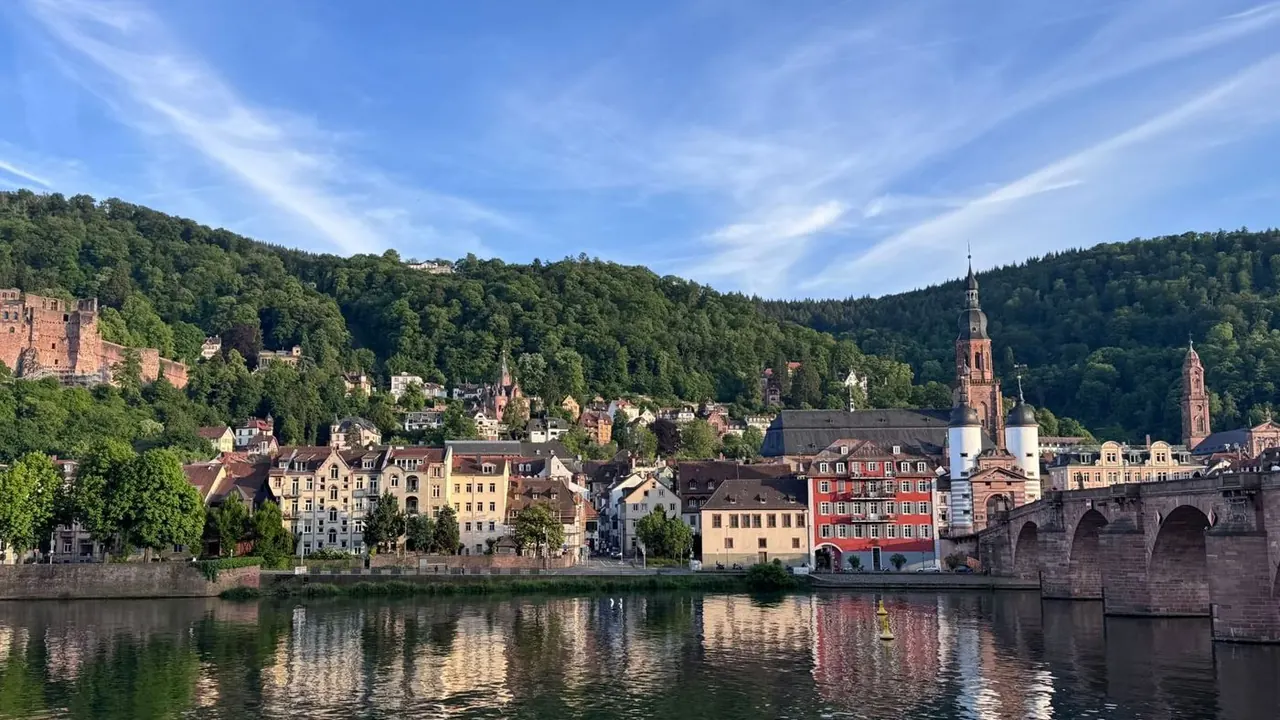
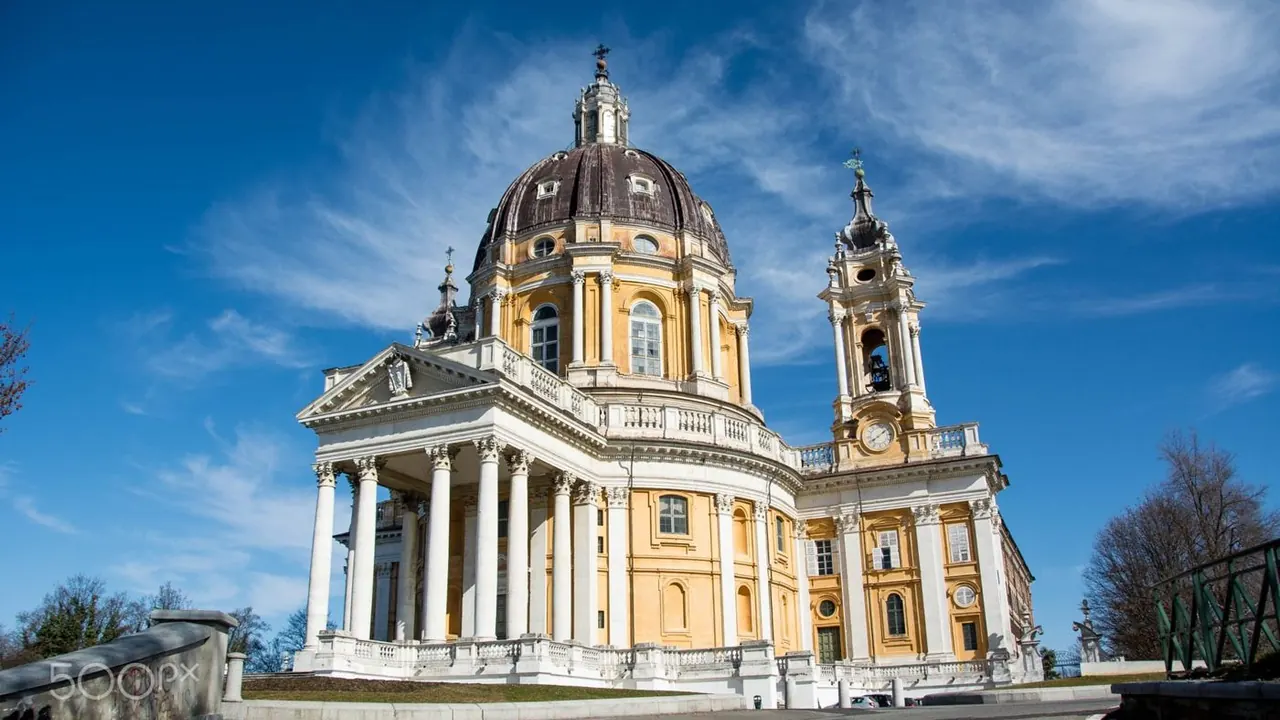
Photos: Heidelberg by Kuanling Chen, Pexels License; Turin by Konstantin Dacosta, CC BY 3.0, cropped.
Heidelberg or Turin?
Our verdict in twelve categories, each scored against the same fixed benchmark cities, and the climate month by month, so you can choose for your trip.
Choose Heidelberg for
- families
- getting around
- wellness
Heidelberg suits a shorter, gentler trip. Its castle ruin, old bridge and university lanes make a compact Romantic set you can see in a day or two, with forest paths starting at the edge of the old town and wine taverns in the villages around it. One regional ticket also covers cathedral towns, palaces and Neckar castles, so a few easy days out are simple to add. It is the better choice for a quiet long weekend or a stop on a wider tour of south-west Germany.
Choose Turin for
- food and drink
- culture and sights
- nature and the outdoors
Turin repays a longer stay and a bigger appetite. A former royal capital, it has the Egyptian Museum, the Savoy palaces and an opera house with a full season, along with some of the richest cooking in Italy and an aperitivo habit that shapes every evening. The Alps and the Langhe wine hills are close enough for day trips, and the city costs less than its German rival. Choose it if food, museums and mountains matter more to you than a small-town setting.
Scoreboard
Twelve categories on one fixed scale from 0 to 100. The shaded stretch is the gap between the two.
Your match
Pick a travel style or drag the sliders, and both match scores follow your weighting.
Wins on families and getting around with your weighting.
Wins on food and drink and culture and sights with your weighting.
What matters to you?
Category by category
What the scores mean for a trip.
Beaches & swimming
Neither city is any use for a beach trip. Heidelberg's summer swimming means outdoor pools or the gravel-pit lakes on the Rhine plain, and the sea is hours away. Turin has small lakes such as Avigliana and Viverone, and the Ligurian Riviera is close enough for a long day out, so from Turin at least the sea is within reach.
Food & drink
Heidelberg eats in the Baden and Palatinate style: Maultaschen, Schäufele, Flammkuchen and white asparagus in spring. Its strength is the wine from the Bergstrasse and the Palatinate. The tourist strip below the castle is uneven, so the better meals are in Neuenheim and the village wine taverns.
Turin is somewhere to plan a trip around eating. It offers agnolotti del plin, vitello tonnato, white truffles from the Langhe and lists heavy with Barolo and Barbaresco, plus gianduiotti and bicerin in the old arcade cafés. Porta Palazzo market and the evening aperitivo, which started here, add a daily rhythm that Heidelberg has nothing to match.
Culture & sights
Heidelberg's sights are few but very fine: the red sandstone castle ruin, the baroque Altstadt, the Old Bridge and Germany's oldest university with its graffiti-covered Student Prison. It is a picturesque set that takes a day or two.
Turin has far more to see, as you would expect from the first capital of united Italy. The Museo Egizio alone justifies a visit. Beyond it are the Royal Palace, Palazzo Madama, the cathedral that holds the Shroud, the UNESCO-listed Savoy residences and the Cinema Museum inside the Mole, with contemporary art at Rivoli for good measure.
Nightlife
Both cities' nightlife depends on students and quietens outside term. Heidelberg's comes down to one lane, the Untere Strasse, plus old student taverns and a few clubs, and anyone after a bigger night takes the train to Mannheim or Frankfurt. Turin has more to choose from: aperitivo first, then wine bars in the Quadrilatero Romano, crowds outside the bars of San Salvario, a more alternative mood in Vanchiglia and the Murazzi by the Po in summer.
Nature & outdoors
In Heidelberg the woods are on the doorstep. The Philosophers' Walk, the funicular up the Königstuhl and the Neckar cycle path make this easy walking and cycling country, though it is green and gentle rather than dramatic.
Turin wins on scale. The Alps line the horizon, and the Susa valley, the ibex and high trails of Gran Paradiso and the ski slopes of the Via Lattea are an hour or so away, for skiing in winter and hut-to-hut hiking in summer. The city itself is flat, though, and the wilder country needs a car or a train.
Day trips
Both make excellent bases. Heidelberg's days out are mostly history: the cathedrals of Speyer and Worms, Schwetzingen's palace gardens, the monastery at Maulbronn and castle villages up the Neckar, all easy by regional train.
Turin has slightly more pull, mainly because of the Langhe. Alba, Barolo and La Morra make a day of wine country that few cities can match. The Sacra di San Michele on its rock, Milan by fast train and Genoa or Aosta for a longer outing widen the choice further.
Good for families
Both are manageable with children, but in different ways. Heidelberg has more for younger ones: the funicular, the small fairy-tale park on the Königstuhl, a zoo by the river and the climb-in aircraft of the Technik Museum Speyer. The cobbled, sloping old town is hard work with a pushchair, though.
Turin is flat and arcaded, which makes it easy with a buggy. Its mummies, the glass lift up the Mole and the car museum appeal more to older children. There is no zoo in the city, and the large zoo park at Cumiana really needs a car.
Getting around
Heidelberg is one long line and Turin is a grid. In Heidelberg nearly everything sits along the pedestrian Hauptstrasse between the river and the castle hill, with a tram ride in from the station, which is some way out, and a funicular up to the castle. A single Rhine-Neckar fare covers trams, buses and the S-Bahn, so trips out to Speyer or up the Neckar are easy without a car.
Turin's flat, arcaded centre is walkable in every direction, from Porta Nuova through the great piazzas to the Mole and the Po, and the arcades keep you out of the rain. Once you leave the core, though, there is only the one driverless metro line, and the trams and buses are slower and take some working out.
Shopping & style
Heidelberg's Hauptstrasse has the usual chains at one end and souvenirs, beer steins and Studentenkuss chocolates at the other, with a few bookshops and boutiques in between. Bergstrasse wine is the best thing to take home, and serious shoppers go to Frankfurt.
Turin has more variety. Via Roma has the big labels under its arcades, there are antique dealers on Via Maria Vittoria and the Balon flea market fills Saturdays. The real draw is food shopping: chocolate makers, pastry shops and delicatessens stocked with truffles and Piedmontese cheese.
Affordability
Turin is the easier city on the budget. Central hotels are fairly priced most of the year, a generous aperitivo can stand in for dinner, and transport costs little. Fine dining and the truffle season are where the costs add up.
In Heidelberg, rooms are the problem. The town has few of them, and congresses and graduations push prices up, so many visitors sleep in Mannheim and come in by train. Meals in student cafés and simple taverns stay reasonable.
Live music & performing arts
Heidelberg does well for its size. The municipal theatre stages opera, drama and dance, the Heidelberger Frühling brings chamber music in spring and the castle courtyard becomes an open-air stage in summer, which is hard to beat for setting. For a bigger house, Mannheim is close by.
Turin offers more and at a higher level. The Teatro Regio runs a full opera and ballet season, and the RAI National Symphony Orchestra plays at its own auditorium. There are also concerts at Renzo Piano's Lingotto hall and jazz clubs in the centre, though spoken theatre is almost all in Italian.
Wellness & relaxation
Neither city has baths of its own, but a proper spa day is easier from Heidelberg. The thermal complexes of the Kraichgau are within half an hour and Baden-Baden about an hour away, whereas from Turin it is close to two hours to Acqui Terme or the Aosta valley. Day to day, Heidelberg's calm comes from the Neckar meadows and forest paths, and Turin's from long coffee breaks in historic cafés and slow walks in Valentino park.
When should you go?
Pick your month. The climate figures are measured averages, not a forecast.
Heidelberg in July
Turin in July
Daytime high, °C
Rainfall in the month, mm
Where the figures come from
Turin has no rain gauge within 25 km of the centre, so its rainfall comes from a gridded climate dataset read at the city rather than from a gauge further away.
Temperature and rainfall are climate normals, averaged over the years shown. Heidelberg: 1991-2020 normals, Heidelberg (4.5 km from centre). Turin: 1991-2020 normals, Torino / Caselle (15.4 km from centre).
Heidelberg is at its best from May to September. Afternoons are warm without being heavy, July and August reach about 26°C, and these are by far the sunniest months, warm enough for an afternoon at the gravel-pit lakes. Summer is also clearly the wetter half of the year. July brings about 80mm, close to double the rain of January or February, though the long hours of sunshine make up for it. December and January are cold and grey, with highs around 5°C and very little sun.
Turin is warmer and has a sharper wet season. July climbs to about 29°C, which can feel sticky for walking the arcades, and May is often wet, so June is the most comfortable month for sightseeing, with late April and early July close behind. From September the rain picks up and lasts through November, the wettest of those months at around 88mm. Winters are a little milder and drier than Heidelberg's. Heidelberg's good season runs on into September, but Turin is best from late spring to the end of August, before the autumn rain arrives.
Which traveller are you?
On a food and nightlife trip, Turin is the clear pick. Agnolotti, Barolo and autumn truffles, an aperitivo ritual that grew up here and lively bar streets in San Salvario and the Quadrilatero go well beyond Heidelberg's hearty taverns and student pubs.
For an outdoors trip, Turin has the bigger landscape. The Alps, Gran Paradiso and the ski slopes around Sestriere are about an hour or so away. Heidelberg offers gentler forest walks and riverside cycling that start right on the doorstep.
For a short city break, Heidelberg works better. The castle, Old Bridge and university fit into a day or two along one walkable strip, while Turin's museums, palaces and neighbourhoods need more time than a weekend allows.
Before you go
| Measure | Heidelberg | Turin |
|---|---|---|
| Official language | German | Italian |
| Currency | Euro (EUR) | Euro (EUR) |
| Sockets | CF230 V, 50 Hz | CFL230 V, 50 Hz |
| Driving side | Right | Right |
| Time zone | UTC+1, UTC+2 in summer | UTC+1, UTC+2 in summer |
| Emergency number | 112 | 112 |
| Elevation | 114 m | 239 m |
| Main airport | Frankfurt Main Airport (FRA)69 km from centre281 non-stop destinations | Turin Airport (TRN)14 km from centre65 non-stop destinations |
| Public holidays this year | 12 days | 13 days |
By the numbers
| Measure | Heidelberg | Turin |
|---|---|---|
| City population | 156,092 | 841,600 |
| People per km² | 1,433 | 6,474 |
| Museums within 10 km | 17 | 72 |
| UNESCO World Heritage sites within 50 km | 4 | 4 |
Where else could you go?
Every comparison below shares a destination with this one, so you can follow Heidelberg or Turin somewhere new.