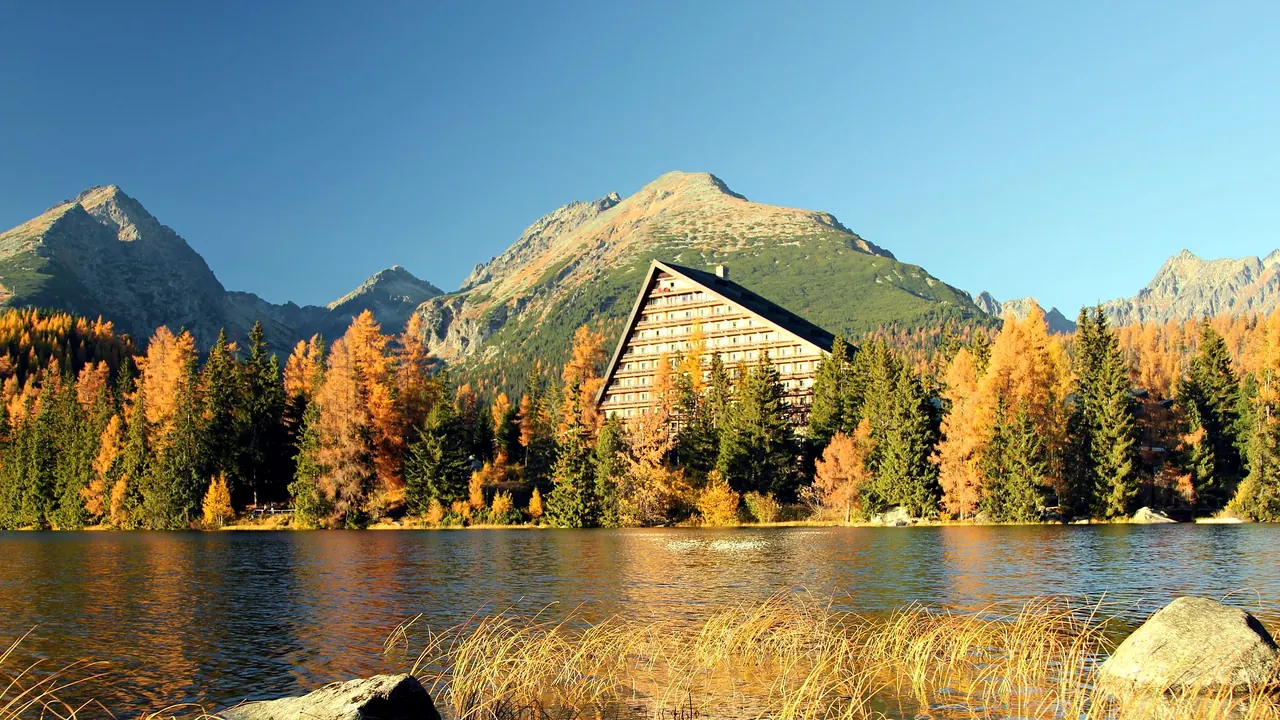
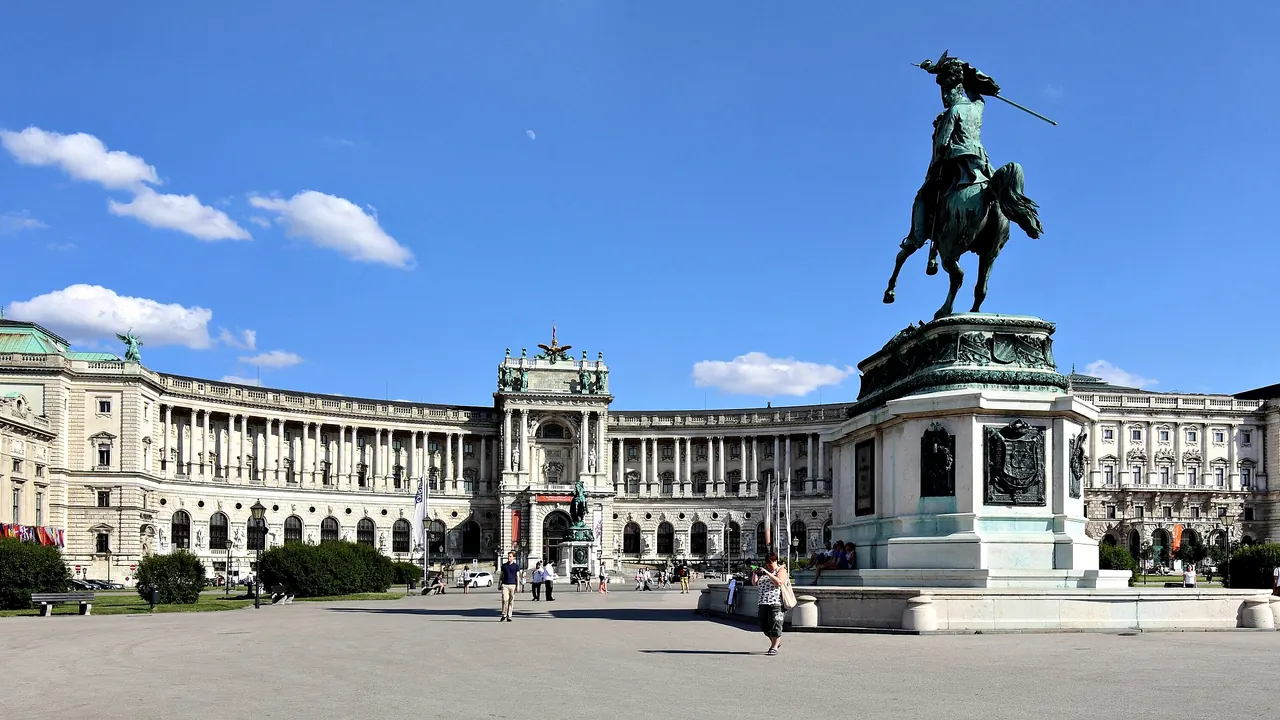
Photos: High Tatras by Marián Moravčík, Pexels License; Vienna by C.Stadler/Bwag, CC BY-SA 3.0 AT, cropped.
High Tatras or Vienna?
Our verdict in twelve categories, each scored against the same fixed benchmark cities, and the climate month by month, so you can choose for your trip.
Choose High Tatras for
- nature and the outdoors
- prices
- wellness
The High Tatras suit travellers who want the mountains themselves to be the trip. Granite peaks, glacial tarns and hut-to-hut trails start a short walk from the resort stations, and winter brings compact skiing. Evenings are early and quiet, and the money goes further than in a capital. Choose it for hiking, fresh air and a slower pace, with the Spiš castles and towns below for a change of scene.
Choose Vienna for
- live music and the arts
- culture and sights
- shopping
Vienna is for anyone who wants a great city to fill their days and nights. Habsburg palaces, world-class art museums and an opera house with something on almost every night make it the clear choice for culture and music. Coffee houses, wine taverns and an easy transport system add to that. It also works better with children and on a short break, though you pay more for it and the countryside comes in smaller doses.
Scoreboard
Twelve categories on one fixed scale from 0 to 100. The shaded stretch is the gap between the two.
Your match
Pick a travel style or drag the sliders, and both match scores follow your weighting.
Wins on nature and the outdoors and prices with your weighting.
Wins on live music and the arts and culture and sights with your weighting.
What matters to you?
Category by category
What the scores mean for a trip.
Beaches & swimming
Neither place is a beach destination, but Vienna does summer swimming far better. The Danube Island and the warmer Alte Donau, with lidos like the Gänsehäufel, are a U-Bahn ride from the centre, and the Neusiedler See adds lake bathing an hour away.
In the Tatras the tarns are cold and closed to swimmers, so a dip means a trip to the geothermal pools around Poprad or the Liptov water parks. That makes a pleasant break between hikes and nothing more.
Food & drink
The Tatras serve hearty Slovak mountain food: bryndzové halušky, cabbage soup and game in kolíba taverns, and the best of it is soup and beer at a mountain hut after a climb. Beyond that the choice is narrow.
Vienna eats far better. It has a whole cuisine of its own, from schnitzel and Tafelspitz in the Beisl to strudel and Sachertorte in the grand coffee houses, and it makes wine on its own city slopes, poured in Heuriger taverns. It also has a solid fine-dining tier that the mountain resorts cannot offer.
Culture & sights
Sightseeing is where these two are furthest apart. In the High Tatras the sights take an afternoon: the timber and Art Nouveau villas, sanatoria and grand hotels of the old spa settlements at Starý Smokovec, Tatranská Lomnica and Štrbské Pleso, and the national park museum, which covers the range's natural history and highland folk life. They are pleasant to stroll past between hikes, but the region's older heritage lies down in the valley, not in the resorts.
Vienna could keep a curious visitor busy for a week without repeating itself. Beyond the palaces there is the UNESCO-listed old town around St Stephen's tiled roof, the grand buildings along the Ringstrasse, the Albertina's graphic art and the Leopold's Schiele works. The Secession and Otto Wagner's stations show the same turn-of-the-century style as the Tatra villas, but in Vienna it is a whole second chapter of European art rather than a backdrop to mountain air.
Nightlife
Vienna has a real night out: bars and small clubs under the Gürtel arches, the Bermuda Triangle in the old town, deckchair bars on the Danube Canal in summer and the winter ball season. It is relaxed rather than wild, but it is there.
Tatra evenings end over dinner and a borovička, because hikers rise early. A few après-ski bars stay open later in winter, but there are no clubs.
Nature & outdoors
The Tatras are a true alpine range, with granite peaks above 2,600m, more than a hundred tarns, chamois, marmots and bears. Cable cars, funiculars and trails such as Rysy start right at the resorts, and skiing takes over in winter.
Vienna's green spaces are gentler. It has the beech-covered Vienna Woods, vineyard walks to the Kahlenberg, the Prater meadows and the Donau-Auen floodplain forest. Its nearest real mountains, the Rax and Schneeberg, are about 90 minutes away.
Day trips
Both make good bases, and Vienna has the wider reach. Bratislava, the Wachau with Melk and Dürnstein, Baden, Eisenstadt and Brno are all within easy train or boat range, so a different country or landscape is a simple day out.
From the Tatras the excursions are more concentrated: Kežmarok, walled Levoča, the huge ruins of Spiš Castle, and Košice or Zakopane further out. The heritage is rich, but the small towns are much easier to visit by car than by bus.
Good for families
Vienna gives children more to do. It has Schönbrunn Zoo, the Prater rides and Ferris wheel, the Haus des Meeres aquarium and hands-on museums for rainy days, all reached by pram-friendly trams.
The Tatras work for active families who like gentle outdoor days. There are the funicular to Hrebienok and its waterfalls, the flat lake path at Štrbské Pleso, the Belianska cave, and ski schools and sledging in winter. Small legs will not manage the longer hikes, though, and on wet days the main option is a water park.
Getting around
Vienna is much easier to get around. A compact old town, five U-Bahn lines, dense trams and one ticket take you everywhere, from Schönbrunn to the vineyard villages, and a car only gets in the way.
In the Tatras a narrow-gauge railway links the resorts, and funiculars and cable cars do the climbing. Services run less often, though, and many visitors hire a car for the Spiš towns and the Pieniny.
Shopping & style
In the Tatras shopping means outdoor gear, smoked sheep's cheese and a bottle of local spirit, with Poprad's shopping centres for anything ordinary.
Vienna offers far more. Luxury houses line the Graben and Kohlmarkt, Mariahilfer Strasse handles everyday fashion, and Neubau has independent designers. Augarten porcelain, crystal and Loden make gifts worth carrying home.
Affordability
The Tatras are the cheaper trip. Hut and tavern meals, apartments and the local railway cost far less than a comparable alpine stay, though cable cars and ski passes add up, and the big spa hotels at Štrbské Pleso charge more.
Vienna costs more day to day, especially on hotels and full-price palace and museum tickets. Set lunches, sausage stands, free gardens and opera standing places help keep it within reach.
Live music & performing arts
For music, Vienna is one of the world's great cities. The State Opera, the Musikverein's Golden Hall, the Konzerthaus, the Volksoper and the Burgtheater offer performances most nights, and the Vienna Boys' Choir sings Mass on Sundays.
The Tatras have no theatre or concert hall at all, only the odd folk ensemble or tavern musicians around dinner.
Wellness & relaxation
The two are about level for rest, but the rest is of a different kind. In the Tatras it comes from mountain air and stillness: hotel wellness floors in former climatic spas, forest walks and the geothermal pools of Poprad and Vrbov.
Vienna relaxes you in a more urban way. There are long coffee house afternoons, the large thermal complex at Oberlaa, the Art Deco Amalienbad, and Baden's sulphur springs half an hour away.
When should you go?
Pick your month. The climate figures are measured averages, not a forecast.
High Tatras in July
Vienna in July
Daytime high, °C
Rainfall in the month, mm
Where the figures come from
High Tatras's station stands 272 m below the city centre, so the centre is likely a little cooler than the figures say.
Temperature and rainfall are climate normals, averaged over the years shown. High Tatras: 1991-2020 normals, Poprad / Tatry (8.4 km from centre). Vienna: 1991-2020 normals, Wien / Hohe Warte (4.7 km from centre).
The Tatras have a short mountain summer. Highs rise through June and peak around 24°C in August, which is comfortable hiking weather, but these are also the wettest months, with July bringing about 101mm. Many high trails stay closed until mid-June, so July to September is the window for the classic routes. September is clearly cooler, at around 18°C, but it is drier and still sunny enough for long walks. From December to February highs sit near 1°C, and the resorts turn to skiing, sledging and cross-country.
Vienna is several degrees warmer all year. July and August reach about 27°C and have the most sunshine, which is warm enough for the Danube lidos but hot for long days of sightseeing. May, June and September are the most comfortable months for walking the old town. Winters are cold and grey rather than snowy, and they suit museums, concerts and coffee houses better than outdoor plans.
Which traveller are you?
On an outdoors trip, the High Tatras are the obvious pick. Cable cars, funiculars and the long magistrála trail put real alpine hiking, wildlife and tarns at your door, while Vienna offers wooded hills and riverside cycling rather than high peaks.
For a culture and arts trip, Vienna is in another league. The Hofburg, Schönbrunn, the Kunsthistorisches Museum and the Belvedere fill the days, and the State Opera and Musikverein fill the evenings. The Tatra resorts have villas and a single museum.
On a trip on a tight budget, the Tatras stretch money further. Tavern meals, guesthouse rooms and the local railway are cheap by alpine standards, and staying in Poprad saves more. In Vienna, full museum admissions and capital hotel rates add up.
Before you go
| Measure | High Tatras | Vienna |
|---|---|---|
| Official language | Slovak | German, Austrian Sign Language |
| Currency | Euro (EUR) | Euro (EUR) |
| Sockets | CE230 V, 50 Hz | CF230 V, 50 Hz |
| Driving side | Right | Right |
| Time zone | UTC+1, UTC+2 in summer | UTC+1, UTC+2 in summer |
| Emergency number | 112 | 112 |
| Elevation | 966 m | 151 m |
| Main airport | Poprad-Tatry Airport (TAT)8 km from centre4 non-stop destinations | Vienna International Airport (VIE)18 km from centre204 non-stop destinations |
| Public holidays this year | 15 days | 16 days |
By the numbers
| Measure | High Tatras | Vienna |
|---|---|---|
| Population | 3,749 | 2,028,289 |
| People per km² | 10 | 4,890 |
| Museums within 10 km | 1 | 152 |
| UNESCO World Heritage sites within 50 km | 4 | 4 |
Where else could you go?
Every comparison below shares a destination with this one, so you can follow High Tatras or Vienna somewhere new.
- Zakopanevs High Tatras
- Bratislavavs Vienna
- Krakowvs High Tatras
- Brnovs Vienna
- Grazvs Vienna
- Cesky Krumlovvs Vienna