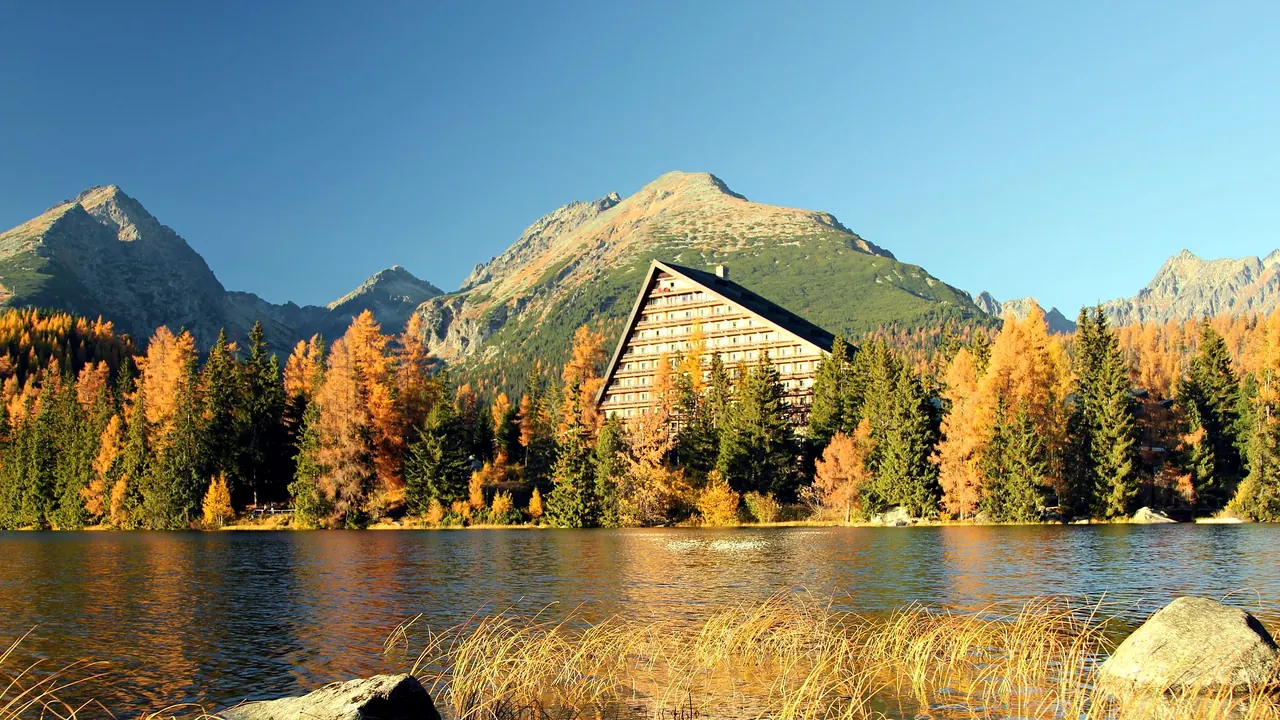
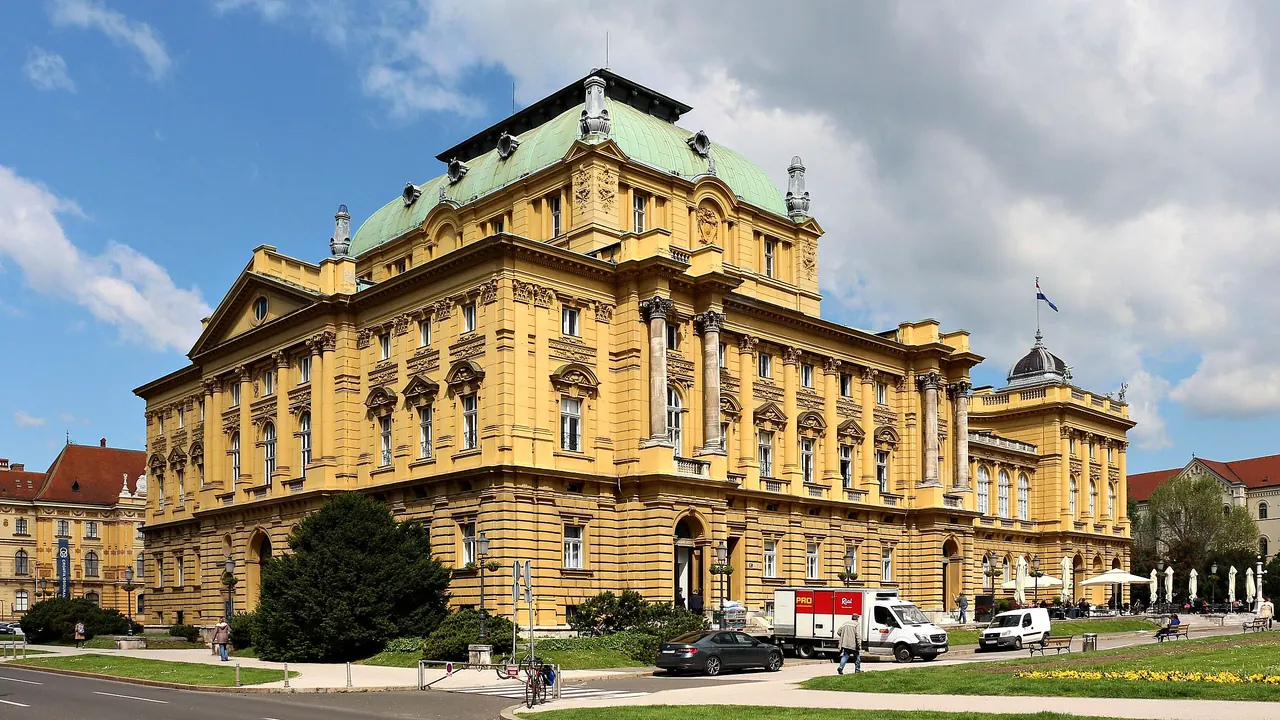
Photos: High Tatras by Marián Moravčík, Pexels License; Zagreb by Bernard Gagnon, CC BY-SA 4.0, cropped.
High Tatras or Zagreb?
Our verdict in twelve categories, each scored against the same fixed benchmark cities, and the climate month by month, so you can choose for your trip.
Choose High Tatras for
- nature and the outdoors
- wellness
- families
The High Tatras are for travellers who want real mountains right outside the door. Granite peaks, glacial tarns and hut-to-hut trails start from the resorts by funicular and cable car, and in winter there is compact skiing. Evenings are quiet and the spa hotels make it restful. The medieval Spiš towns in the valley provide the history that the resorts themselves lack.
Choose Zagreb for
- live music and the arts
- culture and sights
- nightlife
If you want a city with layers to explore, choose Zagreb. It has a medieval Upper Town, a Lower Town grid lined with galleries and theatres, a proper opera and concert season, and café terraces that turn into bars after dark. The country around it is gentle and green, so walkers get beech woods and low hills rather than peaks.
Scoreboard
Twelve categories on one fixed scale from 0 to 100. The shaded stretch is the gap between the two.
Your match
Pick a travel style or drag the sliders, and both match scores follow your weighting.
Wins on nature and the outdoors and wellness with your weighting.
Wins on live music and the arts and culture and sights with your weighting.
What matters to you?
Category by category
What the scores mean for a trip.
Beaches & swimming
Neither place has a beach, and both offer only a way to cool off. In the Tatras that means geothermal pools around Poprad or the larger thermal water parks in the Liptov valley, so the water is warm and the setting is a built complex.
Zagreb swims outdoors in lakes, at the pebbly, lifeguarded shores of Jarun and at smaller Bundek. The Adriatic is about two hours away, which makes it possible to add a coastal stop.
Food & drink
Zagreb offers a lot more to eat. Dolac market sells farm cheese and vegetables every morning, štrukli and Zagorje sausages appear on menus everywhere, and wines from Plešivica and Slavonia are worth seeking out. Above all there is the café culture, with long coffees on Lower Town terraces.
The Tatras serve sturdy mountain cooking: bryndzové halušky, cabbage soup and game in timbered kolíba taverns. The most memorable meals are often bowls of soup at a hut after a climb. Beyond that the choice is thin, and it is a place to eat well after walking rather than to travel for food.
Culture & sights
Here the two are far apart. Zagreb has the medieval Gradec and Kaptol on their hill, with St Mark's tiled roof and the twin-spired cathedral. Below them is the Austro-Hungarian Lower Town around the Green Horseshoe, with a solid set of museums that runs from old masters to the Museum of Broken Relationships.
The Tatra resorts were built for mountain air, so their sights are the timber and Art Nouveau villas and sanatoria of the old spa settlements and the national park museum. For real heritage you have to go down to the Spiš towns.
Nightlife
Zagreb is the only one of the two with any going out. Café-bars along Tkalčićeva fill their terraces on warm nights, smaller cocktail and craft beer bars sit around Flower Square, and in summer the crowd moves to the lakeside clubs at Jarun. It is friendly rather than wild.
In the Tatras, people end the day with dinner and a beer or a glass of borovička. Apart from a few après-ski bars in the winter season, they are in bed early for the next hike.
Nature & outdoors
This is where the Tatras clearly win. It is a true alpine range, with granite peaks above 2,600m, glacial valleys, tarns and chamois, and the cable car to Lomnický štít and the funicular to Hrebienok put the high country within easy reach of the resorts. Slovak Paradise and rafting on the Dunajec in the Pieniny are within an hour.
Zagreb's outdoors is gentler. Medvednica rises to about 1,030m at the edge of the city, with beech woods and huts reached by tram and bus, and Plitvice's lakes make a long day to the south. It is good for a walk between museums, but it is not mountain country.
Day trips
Both have plenty within reach, but of different kinds. Below the Tatras lies a dense cluster of medieval Spiš heritage: Levoča's walled square and towering Gothic altar, the vast ruin of Spiš Castle and Kežmarok's UNESCO wooden church. You can see two or three of them in one day, and Zakopane is just over the Polish border.
Zagreb's trips lead to baroque Varaždin, Trakošćan castle above its lake, the Zagorje pilgrimage church and the Plešivica wine roads, with Ljubljana as a long day. Here the appeal is a spread of pleasant places rather than one concentrated core.
Good for families
The Tatras have a slight edge for active families. The funicular to Hrebienok leads to easy forest walks and waterfalls, a flat pushchair path circles the lake at Štrbské Pleso, the Belianska cave suits older children, and winter brings ski schools and sledging. Thermal water parks fill wet days.
Zagreb works better for a city stay with children. It has the zoo in Maksimir, trams and planes at the Tesla technical museum, the tiny funicular and lake swimming at Jarun. Neither has a theme park.
Getting around
Zagreb is the easier place to get around. The main square, Dolac and the Upper Town are a short walk apart, a dense web of blue trams covers the rest, and you only need a car for Zagorje or Plitvice.
The Tatra resorts are strung along about 30km, linked by a narrow-gauge electric railway and a rack railway up to Štrbské Pleso, and lifts take you on from there to the trailheads. Services are less frequent, and reaching Spiš or the Pieniny without a car takes planning, which is why so many visitors hire one.
Shopping & style
Zagreb has the only real shopping. Ilica and the streets around it have chains, local fashion and design shops, and there are good things to take home: licitar honey-dough hearts, Croatian neckties, lace, wine and goods from Dolac's covered hall.
The Tatras offer outdoor gear, smoked sheep's cheese and bottles of spirit in small resort shops, with Poprad's ordinary malls for anything else.
Affordability
Costs are much the same in both, but the money goes on different things. In the Tatras, meals at huts, guesthouse rooms and the local railway cost far less than in the Alps, but cable cars and ski passes add up, and July, August and Christmas are the dearest weeks.
In Zagreb, apartments, trams, museums and market food are easy on the budget and clearly cheaper than the summer coast. Smart restaurants, cocktails and top hotels cost about what they would in Western Europe.
Live music & performing arts
Zagreb has a full season. The ochre Croatian National Theatre stages opera, ballet and drama, the Lisinski hall is home to the Zagreb Philharmonic, the Zagreb Soloists play in churches, and there are summer concerts in Upper Town courtyards and jazz in small clubs.
The Tatra resorts have no theatre or concert hall, only an occasional folk ensemble or music with dinner in a tavern.
Wellness & relaxation
The Tatras are the more restorative of the two. The resorts were founded as climatic spas for clean mountain air, the big hotels in Štrbské Pleso and Tatranská Lomnica keep pools and saunas, and Poprad and Vrbov have geothermal water. The quiet itself is part of the cure.
Zagreb relaxes you through its pace: slow café mornings and shaded parks. For a proper thermal soak you need to go to Tuheljske or Stubičke Toplice in the Zagorje hills, about an hour away.
When should you go?
Pick your month. The climate figures are measured averages, not a forecast.
High Tatras in July
Zagreb in July
Daytime high, °C
Rainfall in the month, mm
Where the figures come from
High Tatras's station stands 272 m below the city centre, so the centre is likely a little cooler than the figures say.
Temperature and rainfall are climate normals, averaged over the years shown. High Tatras: 1991-2020 normals, Poprad / Tatry (8.4 km from centre). Zagreb: 1991-2020 (sunshine 1981-2010, rainfall 1981-2010) normals, Zagreb / Gric (0.6 km from centre).
The High Tatras are best for walking in summer and early autumn. Highs reach about 24°C in August, which is warm enough for long climbs but rarely too hot, and July and August are also the sunniest months. Summer is the wettest time too, with about 101mm of rain in July, so expect some wet days on the trails. September is drier and still mild. November and March are cold but stay above freezing. From December to February daytime highs stay around 1°C, which suits skiing rather than walking.
Zagreb warms up earlier in the year and gets much hotter. July reaches about 29°C, and by the afternoon the Upper Town cobbles are tiring to walk. June is its wettest month, with around 108mm. May and September are the most comfortable months for sightseeing, warm and fairly sunny. Winters are grey and chilly but milder than in the mountains, so a city break in Zagreb still works when the high Tatra trails are closed.
Which traveller are you?
On an outdoors trip, choose the High Tatras without hesitation. Alpine peaks, more than a hundred tarns and the Tatranská magistrála trail begin a short walk from the resort stops. Zagreb's Medvednica offers pleasant woodland walks, but nothing on this scale.
For a culture and arts trip, Zagreb is the clear choice. The Upper Town churches, the Lower Town galleries, Mirogoj cemetery and an opera, ballet and orchestral season fill several days. The Tatra resorts offer spa architecture and one park museum.
On a relaxing and wellness vacation, the High Tatras suit better. The resorts grew up as climatic spas, with hotel pools, saunas, geothermal pools at Poprad and Vrbov, and quiet evenings. Zagreb's thermal resorts are an hour away in Zagorje.
Before you go
| Measure | High Tatras | Zagreb |
|---|---|---|
| Official language | Slovak | Croatian |
| Currency | Euro (EUR) | Euro (EUR) |
| Sockets | CE230 V, 50 Hz | CF230 V, 50 Hz |
| Driving side | Right | Right |
| Time zone | UTC+1, UTC+2 in summer | UTC+1, UTC+2 in summer |
| Emergency number | 112 | 112 |
| Elevation | 966 m | 127 m |
| Main airport | Poprad-Tatry Airport (TAT)8 km from centre4 non-stop destinations | Zagreb Franjo Tuđman International Airport (ZAG)11 km from centre67 non-stop destinations |
| Public holidays this year | 15 days | 14 days |
By the numbers
| Measure | High Tatras | Zagreb |
|---|---|---|
| Population | 3,749 | 767,131 |
| People per km² | 10 | - |
| Museums within 10 km | 1 | 27 |
| UNESCO World Heritage sites within 50 km | 4 | 0 |
Where else could you go?
Every comparison below shares a destination with this one, so you can follow High Tatras or Zagreb somewhere new.
- Zakopanevs High Tatras
- Krakowvs High Tatras
- Ljubljanavs Zagreb
- Grazvs Zagreb
- Bledvs Zagreb
- Triestevs Zagreb