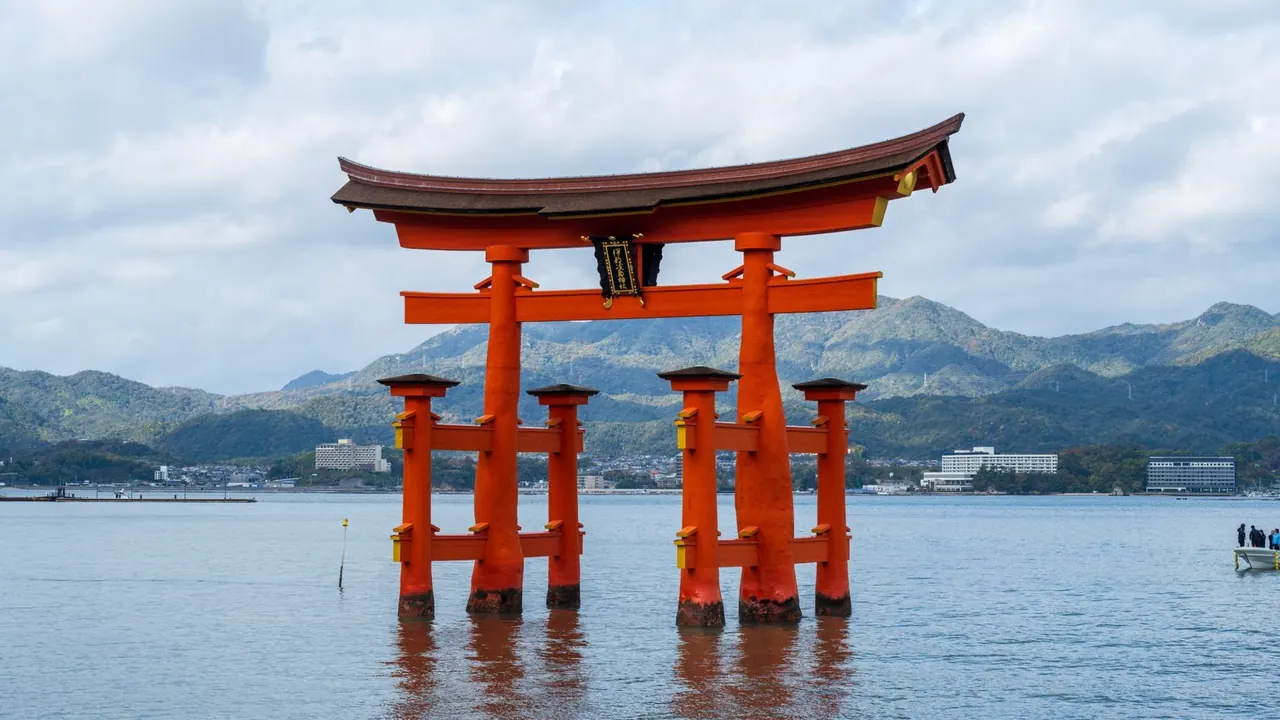
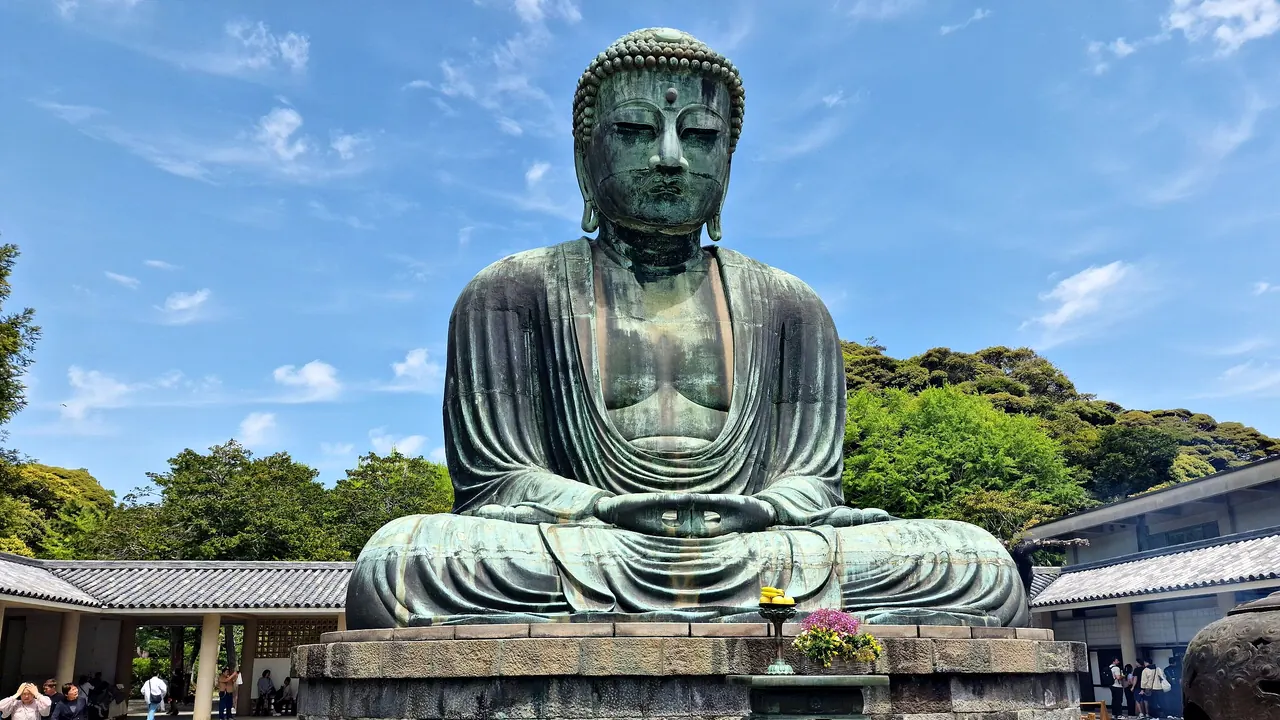
Photos: Hiroshima by Guohua Song, Pexels License; Kamakura by Anagoria, CC BY-SA 4.0, cropped.
Hiroshima or Kamakura?
Our verdict in twelve categories, each scored against the same fixed benchmark cities, and the climate month by month, so you can choose for your trip.
Choose Hiroshima for
- nightlife
- food and drink
- live music and the arts
Hiroshima suits travellers who want a proper city with a story to tell and a lively table. The Peace Memorial Park and its museum make a visit that people remember for years, okonomiyaki counters and Inland Sea oysters give the eating a strong local character, and Nagarekawa keeps the evenings going. It is also cheaper to sleep in, and it works well as a base for Miyajima, Kurashiki and Himeji by shinkansen.
Choose Kamakura for
- beaches
- culture and sights
- nature and the outdoors
Kamakura is the better choice for a slower stay among Zen temples, wooded ridges and the sea. The Great Buddha, the Kita-Kamakura temples and the trails between them give it more historic depth on the ground than Hiroshima has, and in summer the beach is a walk from the station. Evenings are quiet and rooms cost more, but Tokyo and Yokohama are close enough to fill whatever the town itself lacks.
Scoreboard
Twelve categories on one fixed scale from 0 to 100. The shaded stretch is the gap between the two.
Your match
Pick a travel style or drag the sliders, and both match scores follow your weighting.
Wins on nightlife and food and drink with your weighting.
Wins on beaches and culture and sights with your weighting.
What matters to you?
Category by category
What the scores mean for a trip.
Beaches & swimming
Kamakura is the one where a swim fits naturally into the day. The long curve of Yuigahama and Zaimokuza lies within walking distance of the station, beach houses go up in summer, and the Enoden runs on to Koshigoe and Katase, with calmer water at Zushi and Hayama. The sand is dark and volcanic, though, and the water is rarely clear.
Hiroshima's waterfront is port and reclaimed land, so a beach means taking a ferry to Miyajima, Ninoshima or Etajima, or travelling out towards Kure. The sheltered Inland Sea is calm and warm in high summer, but the beaches are small and jellyfish arrive late in the season.
Food & drink
Hiroshima eats better and with more variety. It has a signature dish in layered okonomiyaki, oysters from the bay, conger eel and tsukemen, plus izakaya across Nagarekawa and Hondori and the sake breweries of Saijo a short train ride away.
Kamakura's cooking is gentler and more seasonal: whitebait over rice near the beach, refined shojin ryori around the Zen temples, and snacks on Komachi-dori. It has little to offer late in the evening, and for serious sushi or ramen most visitors go up the line to Yokohama or Tokyo.
Culture & sights
Kamakura has more history to walk through. As the seat of Japan's first warrior government it kept its temples: the open-air Great Buddha, Tsurugaoka Hachimangu at the end of its avenue, and the great Zen temples of Engaku-ji and Kencho-ji, with Hase-dera, Hokoku-ji's bamboo and Meigetsu-in's round window to follow.
Hiroshima offers one experience of enormous weight rather than a spread of old buildings. The A-Bomb Dome and the Peace Memorial Museum need half a day and some emotional room. Beyond them come the castle grounds, Shukkeien garden and a largely modern city, because the bombing left little older architecture standing.
Nightlife
Hiroshima has a real night out, and Kamakura does not. Nagarekawa is a grid of buildings packed with tiny counter bars, izakaya and karaoke, busy past midnight on Fridays and after home baseball games, even if it remains local in character. In Kamakura a few bars near the station and the beach serve a drink after dinner, nothing runs late, and anyone wanting more takes the train to Yokohama or Tokyo.
Nature & outdoors
Kamakura has a slight edge because its nature starts at the temple gates. Ridge trails such as the Daibutsu and Tenen routes link the temples through forest, the bay has surfers and paddleboarders, and on clear winter days Fuji shows across the water.
Hiroshima's outdoors lie further afield but range more widely: the forested islands of the Inland Sea, the climb up Mount Misen on Miyajima, the long walk through Sandankyo Gorge, and the island-hopping Shimanami Kaido cycle route from near Onomichi.
Day trips
Both are first-rate bases, but the trips differ. Kamakura's include big cities: Yokohama is under half an hour away and Tokyo about an hour, with Enoshima on the doorstep and Hakone's hot springs and lake further west.
Hiroshima's list leans towards historic towns and islands. Miyajima's floating torii comes first, followed by Iwakuni's arched bridge, Takehara's merchant quarter, Onomichi and the rabbit island of Okunoshima, with Himeji Castle and Kurashiki an easy shinkansen ride away.
Good for families
Kamakura has a little more to fill a family day. Children can climb inside the Great Buddha, ride the Enoden along the sea, explore Enoshima's caves and visit the large aquarium at Katase, and summer brings gentle swimming. Temple staircases and weekend crowds are the cost.
Hiroshima is flatter and easier to push a stroller around, and Miyajima's deer, the Misen ropeway and Okunoshima's rabbits are reliable hits. It has no aquarium or theme park nearby, though, and parents need to think carefully about the graphic material in the Peace Memorial Museum.
Getting around
Neither town needs a car, but they work differently. Hiroshima is a flat city on a delta, where broad riverside streets, Japan's largest tram network and a shinkansen stop do the work. Kamakura is a small town on foot and on the little Enoden, with JR trains to Tokyo, but its narrow roads clog at weekends and many temples sit up valleys or flights of steps.
Shopping & style
Hiroshima gives a shopper more to work with. The covered Hondori arcade has department stores and chains, the station area has malls and food halls, and good local buys include Kumano brushes, Miyajima rice paddles and Saijo sake.
Kamakura's shopping is an afternoon on Komachi-dori and Wakamiya-oji, with sweets, tenugui and temple souvenirs. Kamakura-bori lacquered woodwork is the craft to look for, and anything more ambitious means a trip to Yokohama.
Affordability
Hiroshima is the easier one on the wallet. It has plenty of fairly priced business hotels, cheap okonomiyaki and noodle lunches, and the Peace Park is free to walk, so the main costs are shinkansen fares for day trips and a night on Miyajima.
In Kamakura the problem is where to sleep. Hotels are few and popular with Tokyo weekenders, which is why many visitors stay in Yokohama or Fujisawa, although temple fees and lunches stay modest.
Live music & performing arts
Hiroshima has more to watch on an ordinary evening. Kagura, the masked and drummed Shinto dance-drama of the surrounding mountains, is staged regularly for visitors, and the city also has a symphony orchestra and concert halls. In Kamakura, performances mostly follow the shrine calendar, with spring dance and autumn yabusame archery at Tsurugaoka Hachimangu, plus occasional Noh.
Wellness & relaxation
Neither town has hot springs of its own, so each offers a different kind of calm. In Hiroshima it comes from bathing, in sento, super-sento and hotel rooftop baths, or from a ryokan night on Miyajima. In Kamakura it comes from zazen at Engaku-ji and Kencho-ji and early mornings among the moss gardens of Kita-Kamakura, with Hakone's onsen within reach.
When should you go?
Pick your month. The climate figures are measured averages, not a forecast.
Hiroshima in July
Kamakura in July
Daytime high, °C
Rainfall in the month, mm
Where the figures come from
Kamakura's sunshine is measured 45 km from the centre, at Tokyo.
Temperature and rainfall are climate normals, averaged over the years shown. Hiroshima: 1991-2020 normals, Hiroshima (1.7 km from centre). Kamakura: 1991-2020 normals, Yokosuka Fwf (11.6 km from centre).
Both towns are at their best in spring and autumn, when the days are mild enough for long walks between sights. Summer is a different matter in each. Hiroshima gets properly hot, with August highs around 33°C, and its wettest stretch comes earlier, in the June and July rainy season, when July alone brings about 300mm. Kamakura stays a few degrees cooler in summer, but its heaviest rain falls later, in September and October, so its early autumn can be damper than Hiroshima's.
The sea warms to about 26°C off both coasts in August, so July to early September is the window for swimming in either place. Winter is cool but rarely harsh in both. Kamakura is the sunnier of the two from December to February, with clear days that often show Mount Fuji across the bay, while Hiroshima's winters are greyer, though that is also the season for its oysters.
Which traveller are you?
On a food and nightlife trip, Hiroshima is the clear pick. Its okonomiyaki buildings, winter oysters and izakaya serving Inland Sea fish feed straight into Nagarekawa's small bars and karaoke boxes, while Kamakura goes quiet once the day-trippers leave.
For a beach and sun trip, Kamakura comes out well ahead. Yuigahama and Zaimokuza are a short walk from town and Enoshima is a short ride away, whereas Hiroshima's swimming means a ferry to small island beaches for a few summer weeks.
On a trip on a tight budget, Hiroshima stretches the money further. Plentiful business hotels, cheap filling meals and inexpensive trams keep costs down, while Kamakura's few hotels are in demand from Tokyo weekenders and many budget visitors end up sleeping elsewhere.
Before you go
| Measure | Hiroshima | Kamakura |
|---|---|---|
| Official language | Japanese | Japanese |
| Currency | Yen (JPY) | Yen (JPY) |
| Sockets | AB100 V, 50 and 60 Hz depending on the region | AB100 V, 50 and 60 Hz depending on the region |
| Driving side | Left | Left |
| Time zone | UTC+9 | UTC+9 |
| Emergency number | Police 110, fire 119 | Police 110, fire 119 |
| Elevation | 3 m | 17 m |
| Main airport | Hiroshima Airport (HIJ)43 km from centre10 non-stop destinations | Tokyo Haneda International Airport (HND)34 km from centre98 non-stop destinations |
| Public holidays this year | 16 days | 16 days |
By the numbers
| Measure | Hiroshima | Kamakura |
|---|---|---|
| City population | 1,198,021 | 172,929 |
| People per km² | 1,324 | 4,356 |
| Museums within 10 km | 18 | 18 |
| UNESCO World Heritage sites within 50 km | 2 | 1 |
| Swim season, months above 21 °C | 4 months | 5 months |
Where else could you go?
Every comparison below shares a destination with this one, so you can follow Hiroshima or Kamakura somewhere new.
- Yokohamavs Kamakura
- Hakonevs Kamakura
- Tokyovs Kamakura
- Nikkovs Kamakura
- Fukuokavs Hiroshima
- Takayamavs Kamakura