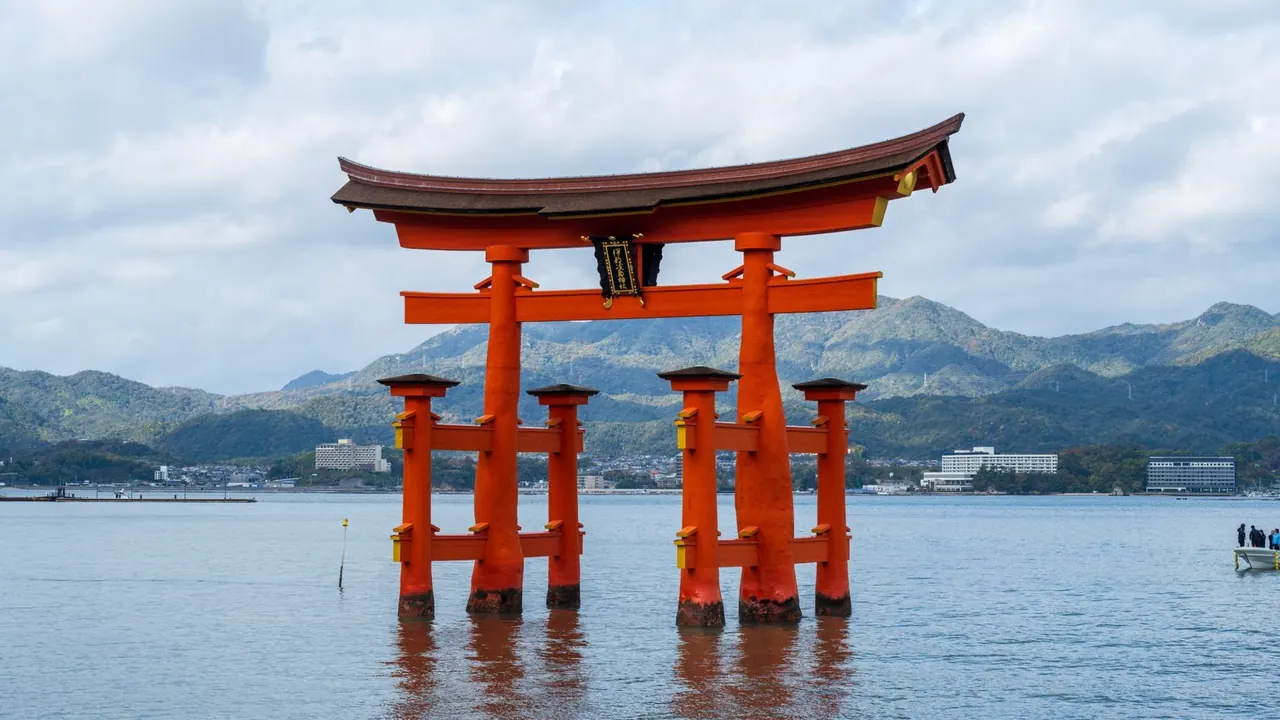
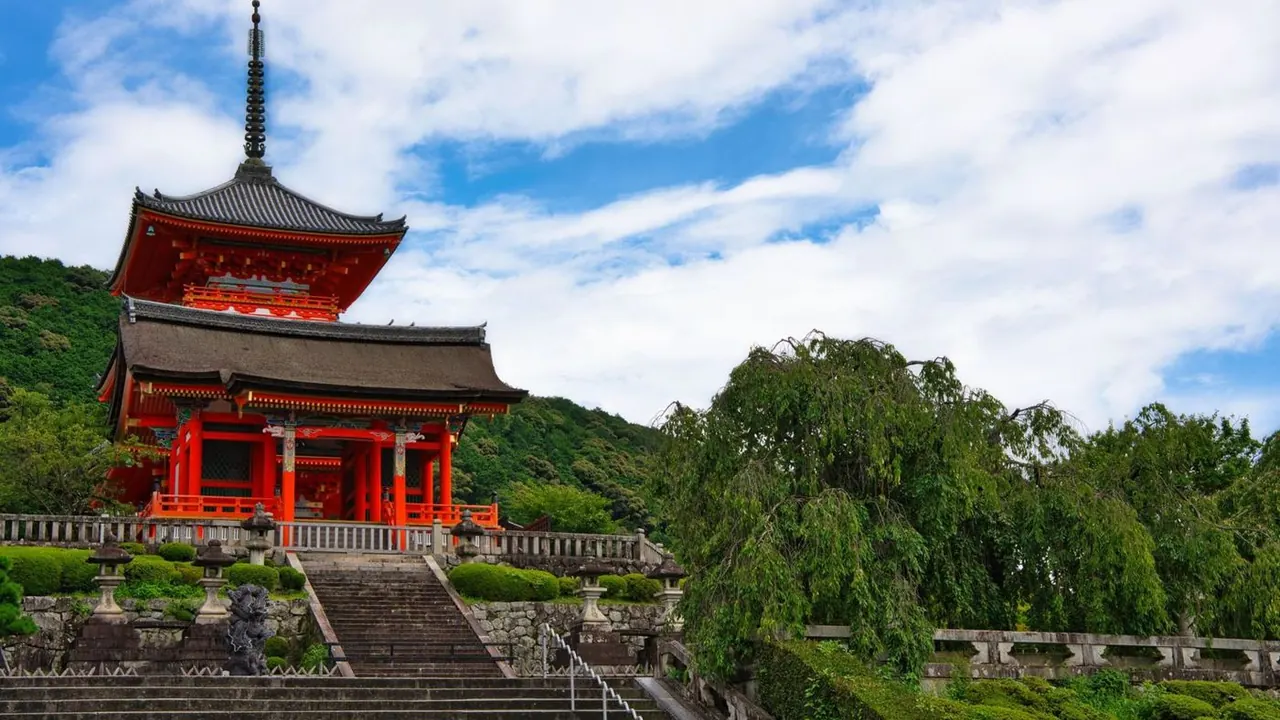
Photos: Hiroshima by Guohua Song, Pexels License; Kyoto by Bert Mulder, Pexels License.
Hiroshima or Kyoto?
Our verdict in twelve categories, each scored against the same fixed benchmark cities, and the climate month by month, so you can choose for your trip.
Choose Hiroshima for
- beaches
- nightlife
- prices
Hiroshima suits a traveller who wants one deeply affecting visit, the Peace Memorial Park and its museum, set in an easy, unhurried city on the water. Evenings in Nagarekawa run later than anything in Kyoto, hotels and meals cost less, and the Inland Sea is on the doorstep, with Miyajima and the islands a ferry ride away. Two or three days cover the city, which makes it a natural stop on a longer route through western Japan.
Choose Kyoto for
- culture and sights
- live music and the arts
- shopping
Kyoto is the stronger choice for almost everything else a first trip to Japan is about. It escaped wartime bombing and keeps a thousand years of temples, gardens and wooden lanes, the most refined cooking in the country, craft shops run by the same families for generations, and stage traditions such as kabuki and the geisha dances. With Nara, Osaka and Uji close by, it can fill a week without repeating itself, as long as you can handle the crowds and higher room prices in the peak seasons.
Scoreboard
Twelve categories on one fixed scale from 0 to 100. The shaded stretch is the gap between the two.
Your match
Pick a travel style or drag the sliders, and both match scores follow your weighting.
Wins on beaches and nightlife with your weighting.
Wins on culture and sights and live music and the arts with your weighting.
What matters to you?
Category by category
What the scores mean for a trip.
Beaches & swimming
Neither is a beach destination, but Hiroshima at least has salt water close at hand. A ferry to Miyajima, Ninoshima or Etajima leads to small sandy beaches in a calm, sheltered sea that is warm in high summer, and that makes a good add-on to an island day.
Kyoto is inland, in its basin among the hills. The nearest swim is in fresh water on the western shore of Lake Biwa, and the Sea of Japan coast is too far away for anything less than an overnight trip.
Food & drink
Hiroshima eats well but narrowly. Its meals revolve around okonomiyaki layered on the griddle at counter stalls, winter oysters from the bay and sake tastings in Saijo, and once you have had those the range of cooking thins out.
Kyoto goes much deeper. Kaiseki in old wooden houses in Gion, temple shojin ryori at Daitokuji and Tenryuji, tofu, yuba and tea sweets give it a level of refinement Hiroshima cannot match. Nishiki Market and the breweries of Fushimi cover the everyday side just as well.
Culture & sights
Hiroshima's cultural core is a single, profound visit. The A-Bomb Dome and the Peace Memorial Museum need half a day and some emotional space, and beyond them come Shukkeien garden and the castle grounds in a largely modern city.
Kyoto is on another scale entirely, precisely because it was spared the bombing that erased old Hiroshima. Kinkaku-ji, Ryoan-ji, Fushimi Inari, Nijo Castle and over a thousand other temples and shrines sit among intact machiya lanes, and a week there still leaves plenty unseen.
Nightlife
Hiroshima has the livelier evenings. Nagarekawa is a dense grid of small bars, izakaya and karaoke that stays busy past midnight, especially after a home baseball game.
Kyoto winds down early. Pontocho and the Kiyamachi canal are lovely for a sake by the river, with terraces in summer, but anyone wanting a late night usually takes the train to Osaka.
Nature & outdoors
Kyoto's countryside starts where the city stops. You can walk from the eastern temples up to Daimonji, take the cedar path between Kurama and Kibune, wander Arashiyama's bamboo slopes or follow the Kamo River banks, all reached by short trips on foot, bus or train, and the autumn maples are spectacular.
Hiroshima's finest scenery is maritime. The forested islands of the Inland Sea, seen from the top of Mount Misen, are its great view, but they need a ferry, and Sandankyo Gorge and the Shimanami Kaido bike route take a long day each.
Day trips
Hiroshima makes a fine base for western Japan's coast. Miyajima's floating torii, Iwakuni's arched bridge, Onomichi's hillside temples and Okunoshima's rabbits are all easy to reach.
Kyoto does even better, because Nara, Osaka and Uji are each under an hour, and Himeji, Kobe and Arima are not much further. That gives you ancient capitals, a major city and Japan's finest castle without changing hotels. Both cities reach Himeji, but from Kyoto it is one option among many.
Good for families
Both cities are safe and easy with children, but Kyoto has more made with them in mind. The Railway Museum with its steam roundhouse, the aquarium, the zoo and the samurai shows at Toei Studio Park are all there, and Osaka's theme park is within an hour.
Hiroshima's highlights for children lie mostly out of town: the deer and ropeway on Miyajima and the rabbits of Okunoshima. Parents also have to judge how much of the Peace Memorial Museum's graphic material young children should see.
Getting around
Both are easy without a car, but they work differently. Hiroshima's flat, compact centre puts the Peace Park, castle and Hondori within walking distance, and its trams, the largest network in Japan, run all the way to the Miyajima ferry.
Kyoto's central grid is ideal for cycling, but the big temples are scattered around the edges of the basin, out of reach of its two subway lines. That means juggling private railways, the Randen tram and buses that crawl when the blossom and maple crowds arrive.
Shopping & style
Kyoto is the better place to buy something lasting. Family-run shops sell Kiyomizu-ware, Nishijin silk, fans, incense, lacquer and hand-forged knives, and the monthly flea markets at To-ji and Kitano Tenmangu are worth planning a day around.
Hiroshima's shopping is mainly the Hondori arcade and the station malls. Its distinctive buys are smaller: Kumano brushes, Miyajima rice paddles and boxes of momiji manju.
Affordability
Hiroshima is the easier city on a budget. Its business hotels stay reasonably priced all year and its staple meals are cheap, so the costs that add up are mainly shinkansen day trips and a night on Miyajima.
Kyoto's everyday eating and temple fees are modest too, but rooms get scarce and expensive during cherry blossom and autumn colour, and a kaiseki dinner is a real splurge.
Live music & performing arts
Kyoto holds Japan's classical stage traditions. Minamiza, the country's oldest kabuki house, Noh stages and the spring dances of the geisha districts offer things you cannot easily see elsewhere, though the calendar is seasonal.
Hiroshima's own offering is kagura, a loud, masked and drummed Shinto dance-drama staged in the evenings with visitors in mind. Past that it has a solid regional programme of orchestra and touring shows.
Wellness & relaxation
Kyoto offers more ways to slow down. Old tiled sento, hot springs at Kurama, Ohara and Arashiyama, zazen sessions and nights in temple lodgings sit alongside its contemplative gardens, best enjoyed early before the crowds.
Hiroshima has no onsen of its own, so bathing means super-sento or a drive into the hills. Its calm comes instead from the city's easy pace and from a ryokan night on Miyajima after the day-trippers leave.
When should you go?
Pick your month. The climate figures are measured averages, not a forecast.
Hiroshima in July
Kyoto in July
Daytime high, °C
Rainfall in the month, mm
Where the figures come from
Kyoto's sunshine is measured 43 km from the centre, at Osaka.
Temperature and rainfall are climate normals, averaged over the years shown. Hiroshima: 1991-2020 normals, Hiroshima (1.7 km from centre). Kyoto: 1971-2000 (sunshine 1991-2020) normals, Kyoto (3.2 km from centre).
The two cities share very similar weather. Spring and autumn are the best seasons in both: April, May, October and early November are mild enough for long days on foot, and Kyoto's cherry blossom and maple colour fall in the same windows. Both get uncomfortably hot and sticky in July and August, when Hiroshima reaches about 33°C, so temple-walking and city strolls are hard work in high summer.
The rain is where they differ. Hiroshima's wet season peaks sharply in July at around 299mm, and then it turns into the better summer choice, because by August the Inland Sea has warmed to about 26°C and the island beaches are at their best. Kyoto has two wet spells, in June and July and again in September at about 215mm. Its winters are cold, with highs near 9°C, but they are fairly dry and clear, a quiet time for its gardens.
Which traveller are you?
On a culture and arts trip, give Hiroshima one unhurried day for the Peace Memorial Museum, a visit few places anywhere can equal, with Shukkeien afterwards to recover. Then move to Kyoto for the rest of the week, starting early at the northern temples.
For a trip on a tight budget, make Hiroshima the longer stop. A cheap room and a griddle supper stretch the money further, and Miyajima costs only a tram and ferry ride. Save Kyoto for the quieter weeks between the blossom and maple seasons.
For a relaxing and wellness trip, Hiroshima's easy riverside pace is a gentle way to begin, but Kyoto deserves more nights. Go in winter or rise early so its gardens are quiet, and book a ryokan for a long bath and dinner.
Before you go
| Measure | Hiroshima | Kyoto |
|---|---|---|
| Official language | Japanese | Japanese |
| Currency | Yen (JPY) | Yen (JPY) |
| Sockets | AB100 V, 50 and 60 Hz depending on the region | AB100 V, 50 and 60 Hz depending on the region |
| Driving side | Left | Left |
| Time zone | UTC+9 | UTC+9 |
| Emergency number | Police 110, fire 119 | Police 110, fire 119 |
| Elevation | 3 m | 51 m |
| Main airport | Hiroshima Airport (HIJ)43 km from centre10 non-stop destinations | Kansai International Airport (KIX)81 km from centre62 non-stop destinations |
| Public holidays this year | 16 days | 16 days |
By the numbers
| Measure | Hiroshima | Kyoto |
|---|---|---|
| City population | 1,198,021 | 1,463,723 |
| People per km² | 1,324 | 1,768 |
| Museums within 10 km | 18 | 77 |
| UNESCO World Heritage sites within 50 km | 2 | 4 |
| Swim season, months above 21 °C | 4 months | 5 months |
Where else could you go?
Every comparison below shares a destination with this one, so you can follow Hiroshima or Kyoto somewhere new.