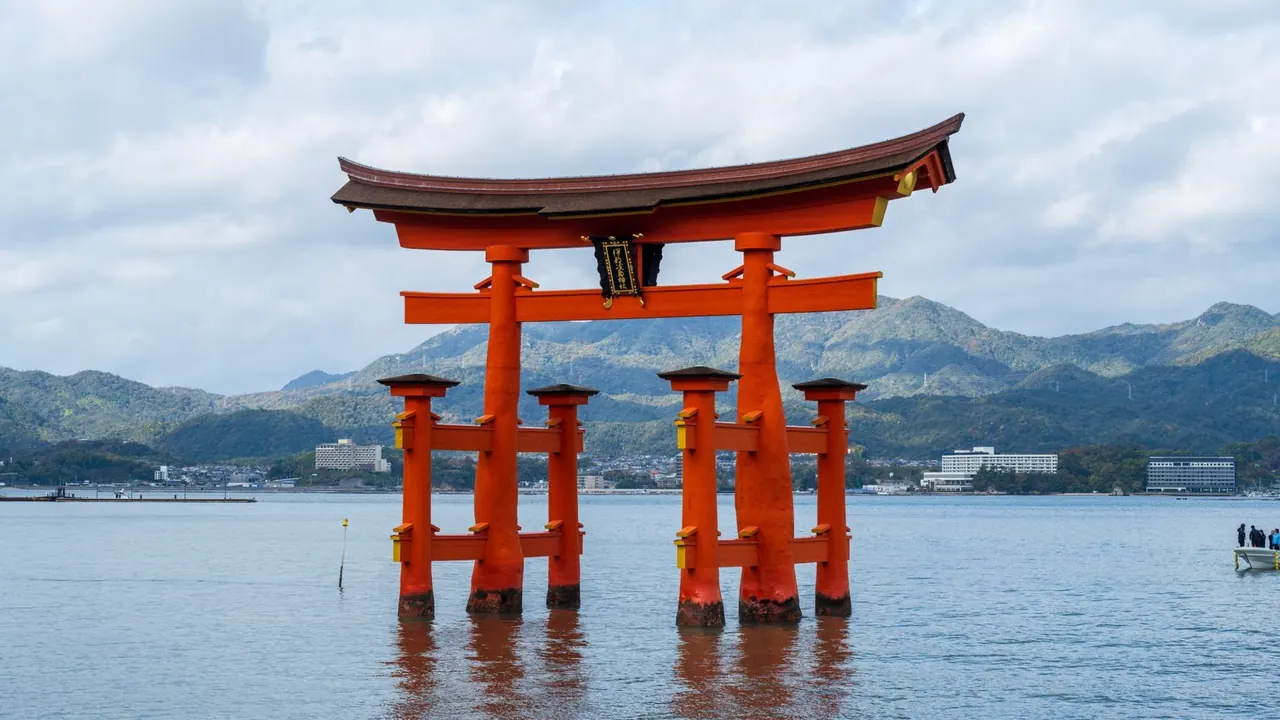
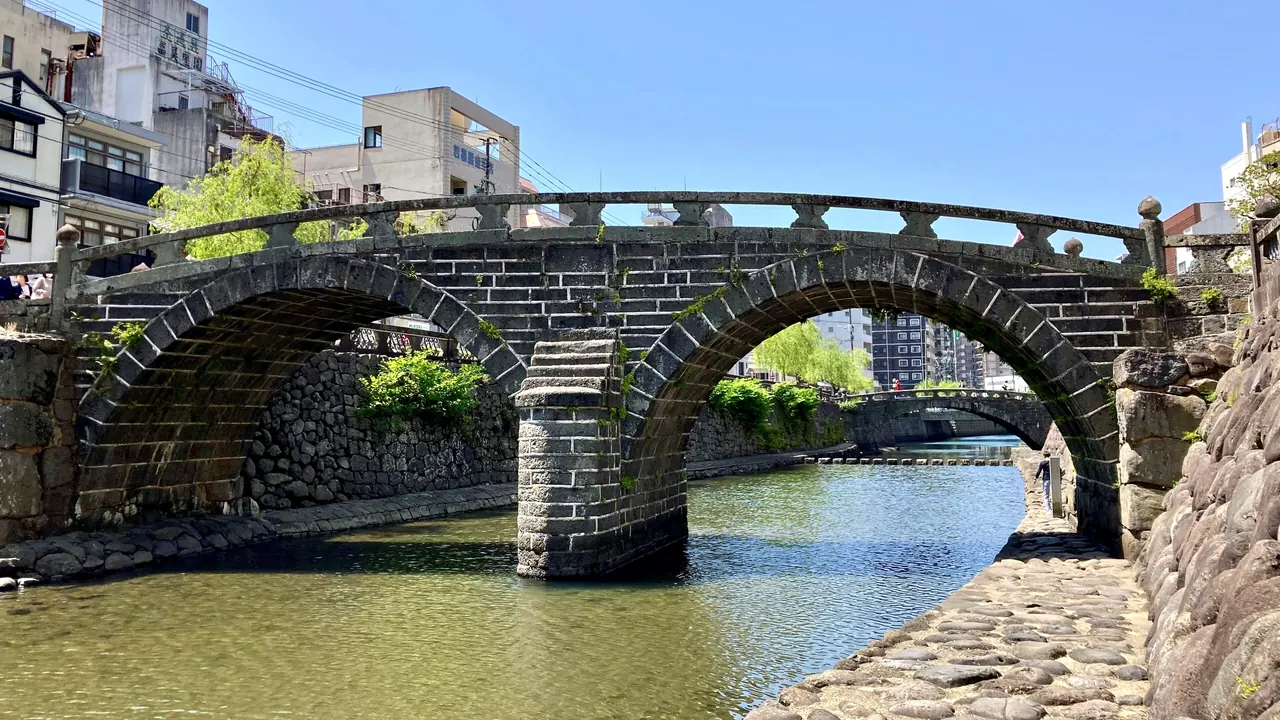
Photos: Hiroshima by Guohua Song, Pexels License; Nagasaki by Dudva, CC0.
Hiroshima or Nagasaki?
Our verdict in twelve categories, each scored against the same fixed benchmark cities, and the climate month by month, so you can choose for your trip.
Choose Hiroshima for
- day trips
- shopping
- nightlife
Hiroshima suits travellers who want a base as much as a destination. Miyajima's floating torii is under an hour away, and the shinkansen brings Himeji Castle, Kurashiki and Okayama's Korakuen within easy reach, so a week here can cover a good part of western Japan. The flat riverside centre is easy on the feet, Nagarekawa keeps going later at night, and the Hondori arcade gives you more to browse.
Choose Nagasaki for
- beaches
- culture and sights
- prices
Nagasaki rewards people who would rather go deep into one place. Beyond its atomic bomb sites it holds four centuries of contact with the outside world: Dejima, the merchant houses of Glover Garden, Oura Cathedral and the Chinese temples of Teramachi. Its steep harbour setting and the night view from Mount Inasa give it a character of its own. In return you get quieter evenings, a lot of stairs and longer journeys for day trips.
Scoreboard
Twelve categories on one fixed scale from 0 to 100. The shaded stretch is the gap between the two.
Your match
Pick a travel style or drag the sliders, and both match scores follow your weighting.
Wins on day trips and shopping with your weighting.
Wins on beaches and culture and sights with your weighting.
What matters to you?
Category by category
What the scores mean for a trip.
Beaches & swimming
Neither city is a place to come for the sea, but Nagasaki has the better of it. Takahama on the Nomo coast is a clean sandy bay on open water, about an hour away by bus, and Iojima's small resort beach is a short ferry ride from the harbour.
Hiroshima's swimming means taking a ferry to the small, calm beaches of Miyajima, Ninoshima or Etajima, or heading out towards Kure. The sheltered water is gentle for young children, but the beaches are modest, and it works best as part of an island day.
Food & drink
The two are evenly matched at the table, but they taste very different. Hiroshima's cooking is built around its layered okonomiyaki, eaten at griddle counters in buildings full of stalls, plus Inland Sea oysters at their best in winter and sake from the breweries of Saijo, a short train ride away.
Nagasaki's food carries its trading past: champon and sara udon from its Chinese community, castella from the Portuguese, and the shared shippoku banquet that mixes Chinese, Dutch and Japanese dishes. Hiroshima's izakaya district is the larger, but neither city goes far into fine dining.
Culture & sights
Both cities have an atomic bomb museum, and in Hiroshima the shattered A-Bomb Dome and the Peace Memorial Museum are among the most affecting sights in Japan. Beyond the Peace Park, though, the city is mostly postwar. Shukkeien's Edo-period garden and the castle moats are the main older places.
Nagasaki has much more on top of its own museum and hypocentre. The Dutch trading post at Dejima, the Western houses of Glover Garden, Oura Cathedral, Sofukuji temple and the Meganebashi bridge trace a story of foreign contact that no other Japanese city can tell.
Nightlife
Hiroshima is the better choice for an evening out. Nagarekawa, the largest entertainment district in its region, is packed with small bars, izakaya and karaoke, and it stays busy past midnight, especially after a home baseball game. There are also a few clubs and bars used to foreign guests.
Nagasaki's Shianbashi has the same kind of counter bars and snack bars, but most are built around regulars, and the streets empty well before midnight on weeknights. Many visitors spend the evening on Mount Inasa looking at the lights instead.
Nature & outdoors
The scenery is just as good in both, but the landscapes are different. Hiroshima looks out on the calm, island-dotted Seto Inland Sea, with forest trails up Mount Misen on Miyajima, the riverside walk through Sandankyo Gorge and the Shimanami Kaido cycling route across the islands.
Nagasaki's surroundings are steeper and wilder. Green hills drop straight into a deep harbour, the Nomo coast is rocky, and two hours away the volcanic Unzen area has steaming vents and hikes up Mount Fugen.
Day trips
This is where Hiroshima pulls clearly ahead. Miyajima and Iwakuni's Kintaikyo bridge are each less than an hour away. Old towns such as Takehara, Onomichi and Tomonoura are close, and the shinkansen brings Himeji Castle, Kurashiki and Korakuen within about an hour.
Nagasaki's best outing, the boat trip to the ruins of Gunkanjima, depends on the weather for a landing. Most of the other trips, to Shimabara, Arita or Hirado, take two hours or more each way, and the Goto Islands really need a night away.
Good for families
Both are safe, clean and easy with children, but the days out look different. Hiroshima's flat centre and wide pavements suit a pushchair, and its best moments are with animals and in the open air: feeding the deer on Miyajima, Okunoshima's rabbits, Asa Zoo in the northern hills and a loud summer evening at the baseball. What it lacks is a theme park or a large aquarium close by.
Nagasaki has more in the way of big set attractions. At the Penguin Aquarium the birds walk out onto a small beach, and Huis Ten Bosch has rides, canals and light shows, but the city's many stairways make getting around with small children and a pushchair hard work. In both cities, parents should decide how much of the bomb museum younger children see.
Getting around
Both cities run on trams and neither needs a car. The difference is the ground under your feet. Hiroshima's centre is flat, so the Peace Park, the castle and Nagarekawa are an easy walk apart, and its station on the main shinkansen line makes onward travel simple.
Nagasaki's few tram lines are easy to use and cover the main sights along the valley floor. Anywhere off that floor, though, you are climbing narrow lanes and long flights of steps, with the ropeway and buses filling the gaps.
Shopping & style
Hiroshima gives you more to browse. The long covered Hondori arcade mixes department stores, Japanese chains and independent shops, and the crafts to take home are distinctive: Kumano brushes, Miyajima rice paddles, and Saijo sake and lemon products.
Nagasaki's Hamanomachi arcade is mainly for everyday shopping. The best things to buy there are boxed castella, local glassware and porcelain from Hasami, Mikawachi and nearby Arita, not fashion.
Affordability
Both are among the gentler places in Japan to travel on a moderate budget, with fair business hotels near the station and cheap local staples in okonomiyaki and champon. Where the money goes differs. In Hiroshima it is shinkansen tickets for day trips and island hotels on Miyajima. In Nagasaki it is the Gunkanjima boat tours and the Inasa ropeway.
Live music & performing arts
Hiroshima has more you can actually plan an evening around. Regular performances of kagura in the centre, a masked Shinto dance-drama full of demons and drumming, are staged with visitors in mind, and the city adds a symphony orchestra and small live-music venues.
Nagasaki's highlights are festivals: the dragon dances and ship floats of the Kunchi every October, and the Lantern Festival around Chinese New Year. Outside those dates there is little to see.
Wellness & relaxation
Neither city has hot springs of real note within its limits, so both rely on sento, hotel baths and trips out. Nagasaki's nearby spas are the more memorable: Obama's seaside footbath facing the sunset and Unzen's mountain springs among steaming vents, both worth a night in a ryokan.
Hiroshima's onsen villages are about an hour away. Its calm comes more from the city itself, with flat riverside walks, Shukkeien's ponds and a quiet ryokan night on Miyajima.
When should you go?
Pick your month. The climate figures are measured averages, not a forecast.
Hiroshima in July
Nagasaki in July
Daytime high, °C
Rainfall in the month, mm
Temperature and rainfall are climate normals, averaged over the years shown. Hiroshima: 1991-2020 normals, Hiroshima (1.7 km from centre). Nagasaki: 1991-2020 normals, Nagasaki (2.2 km from centre).
Both cities share the same basic year. Spring from April to May and autumn from October to November are the best times for walking and sightseeing, with mild days and moderate rain. The rainy season sets in during June and is heavier in Nagasaki, which gets about 334mm that month. Hiroshima's wettest month comes a little later, in July. High summer is hot and humid in both, and Hiroshima reaches about 33°C in August, which is tiring for long days on foot. Winters are cool but mild, a degree or so warmer in Nagasaki, though Hiroshima gets noticeably more winter sunshine.
For swimming, July and August are the months to go in both places. Nagasaki's open sea warms to about 28°C in August, against roughly 26°C in Hiroshima's sheltered Inland Sea, and both stay swimmable into September. August is also clearly drier in Hiroshima, so a late-summer island day there is less likely to be rained off.
Which traveller are you?
On a culture and arts trip, Nagasaki is the better pick. Next to its peace sites it has Dejima, Glover Garden, Oura Cathedral and Chinese temples, all a tram ride apart. Hiroshima's powerful Peace Park stands among largely modern streets.
For a food and nightlife trip, choose Hiroshima. Okonomiyaki counters, winter oysters and Saijo sake match Nagasaki's champon and castella, but Nagarekawa's maze of bars and izakaya stays busy past midnight, while Shianbashi goes quiet much earlier.
On a shopping trip, Hiroshima gives you more. Its Hondori arcade has department stores and independent shops, and there are Kumano brushes and Miyajima woodcraft to take home. Nagasaki's shopping is mostly everyday chains, apart from castella, glassware and regional porcelain.
Before you go
| Measure | Hiroshima | Nagasaki |
|---|---|---|
| Official language | Japanese | Japanese |
| Currency | Yen (JPY) | Yen (JPY) |
| Sockets | AB100 V, 50 and 60 Hz depending on the region | AB100 V, 50 and 60 Hz depending on the region |
| Driving side | Left | Left |
| Time zone | UTC+9 | UTC+9 |
| Emergency number | Police 110, fire 119 | Police 110, fire 119 |
| Elevation | 3 m | 105 m |
| Main airport | Hiroshima Airport (HIJ)43 km from centre10 non-stop destinations | Nagasaki Airport (NGS)19 km from centre10 non-stop destinations |
| Public holidays this year | 16 days | 16 days |
By the numbers
| Measure | Hiroshima | Nagasaki |
|---|---|---|
| City population | 1,198,021 | 404,656 |
| People per km² | 1,324 | 996 |
| Museums within 10 km | 18 | 26 |
| UNESCO World Heritage sites within 50 km | 2 | 2 |
| Swim season, months above 21 °C | 4 months | 6 months |
Where else could you go?
Every comparison below shares a destination with this one, so you can follow Hiroshima or Nagasaki somewhere new.
- Fukuokavs Nagasaki
- Fukuokavs Hiroshima
- Kobevs Hiroshima
- Busanvs Nagasaki
- Osakavs Hiroshima
- Naravs Hiroshima