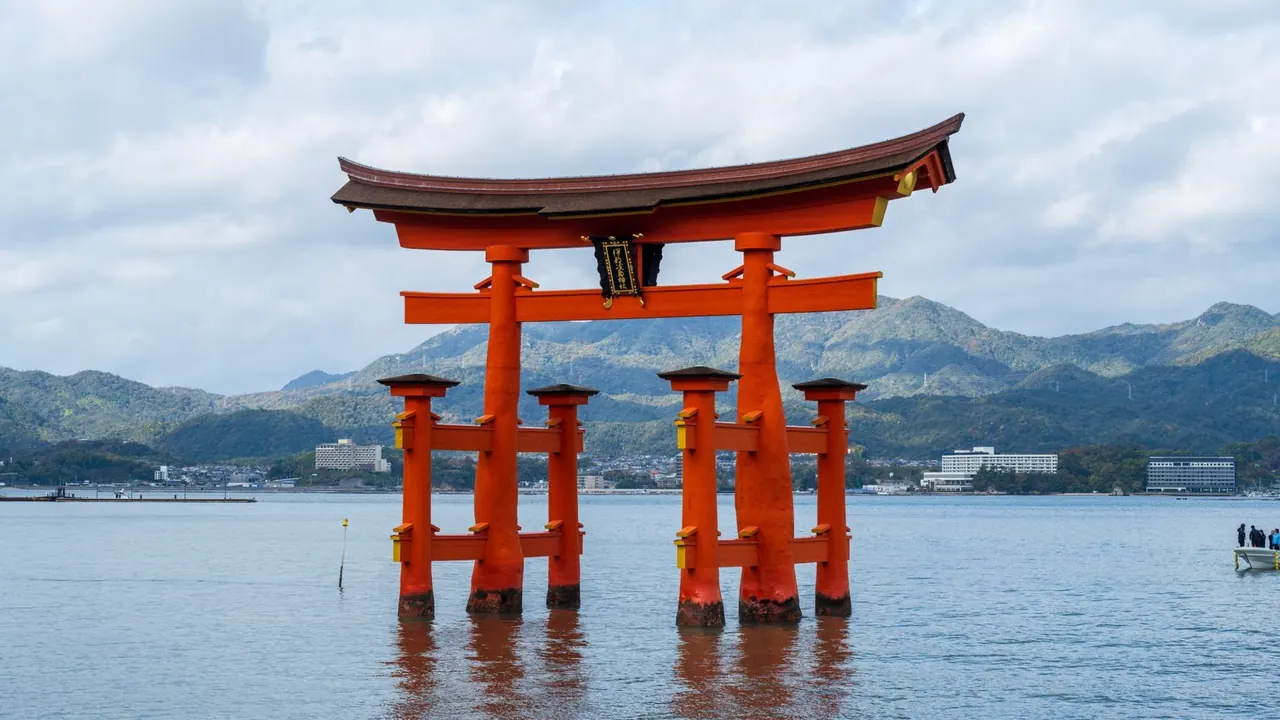
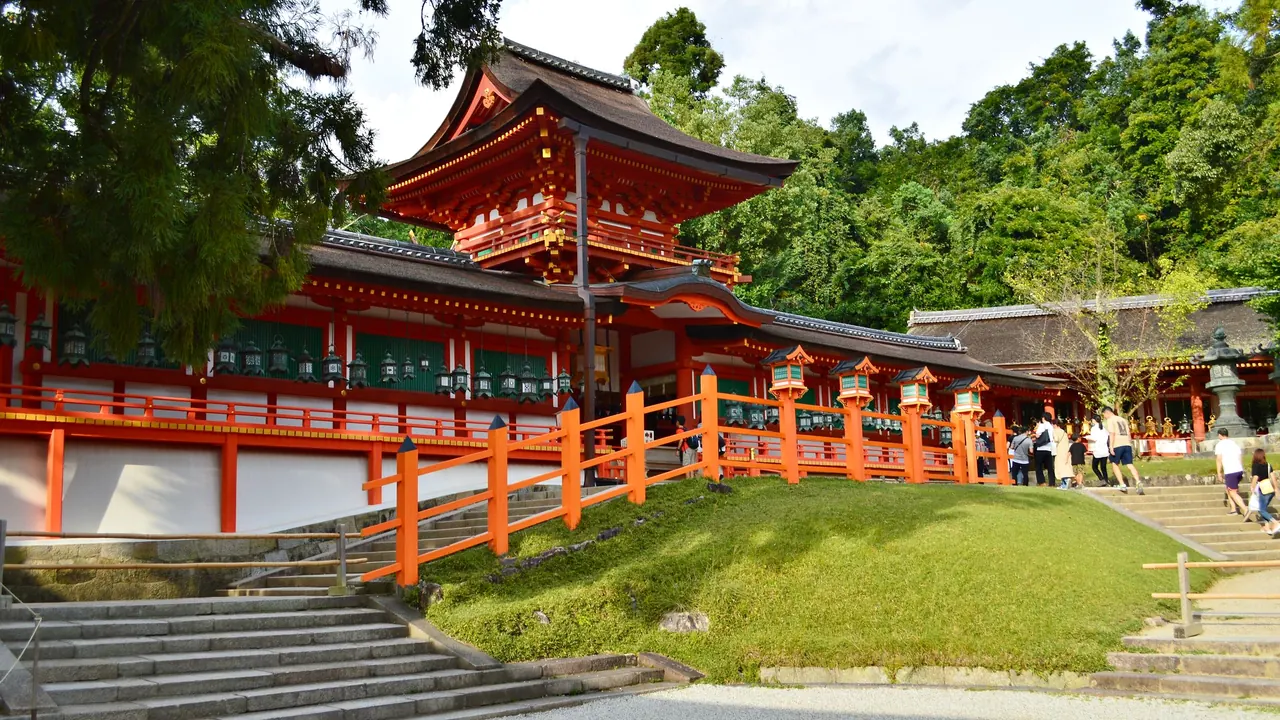
Photos: Hiroshima by Guohua Song, Pexels License; Nara by Saigen Jiro, CC0.
Hiroshima or Nara?
Our verdict in twelve categories, each scored against the same fixed benchmark cities, and the climate month by month, so you can choose for your trip.
Choose Hiroshima for
- nightlife
- food and drink
- beaches
Hiroshima suits travellers who want a city with evenings worth staying out for and a sea on its doorstep. The Peace Memorial Park is why most people come. The okonomiyaki counters, winter oyster stands, Nagarekawa's small bars and the island ferries across the Inland Sea give a longer stay more variety than Nara offers after dark. Families with children will also find more to fill the days here.
Choose Nara for
- culture and sights
- day trips
- getting around
Choose Nara if temples, Buddhist sculpture and Japan's eighth-century capital are the point of the trip. Todai-ji, Kasuga Taisha and the western temples are a group of sights Hiroshima cannot match. With Kyoto and Osaka each under an hour away, Nara is also the better base for a wider trip through the region. Expect quiet nights and a narrower choice of food.
Scoreboard
Twelve categories on one fixed scale from 0 to 100. The shaded stretch is the gap between the two.
Your match
Pick a travel style or drag the sliders, and both match scores follow your weighting.
Wins on nightlife and food and drink with your weighting.
Wins on culture and sights and day trips with your weighting.
What matters to you?
Category by category
What the scores mean for a trip.
Beaches & swimming
Neither city is a beach destination, but Hiroshima at least has the sea within reach. A ferry to Miyajima, Ninoshima or Etajima brings you to small sandy beaches and calm, warm water in high summer. That is enough for an afternoon swim as part of an island day.
Nara is landlocked in its basin. The nearest beaches are on the industrial shore of Osaka Bay, over an hour away, so a hotel or public pool is the realistic option.
Food & drink
Hiroshima eats better and with more character. You can have layered okonomiyaki at a counter, oysters from the bay in winter, conger eel on rice and Inland Sea fish in the izakaya of Nagarekawa. The sake breweries of Saijo are a short train ride away.
Nara's local dishes are fewer: persimmon-leaf sushi, narazuke pickles, fine Miwa somen and sake counters in Naramachi. All are worth trying, but much of the food near the park is quick lunches for day visitors, and for a serious dinner many people take the train to Osaka or Kyoto.
Culture & sights
Nara has the deeper set of sights. Todai-ji's Great Buddha, Kofuku-ji's pagoda, the lantern-lined paths of Kasuga Taisha and the Tang-style temples of Toshodai-ji and Yakushiji survive as a whole group from the old capital. The National Museum's Buddhist sculpture adds to them, along with the wooden lanes of Naramachi.
Hiroshima's main sight is of a different kind. The A-Bomb Dome and the Peace Memorial Museum make a sobering half-day with nothing like it in Nara. Beyond them, the city is modern, and Shukkeien garden and the castle moats are its main older settings.
Nightlife
Hiroshima has a real night out and Nara does not. Nagarekawa's buildings stacked with small bars, izakaya and karaoke boxes stay lively past midnight, especially after a home baseball game. Moving from an izakaya to a counter bar is one of the quiet pleasures of a stay.
In Nara, the streets by the park empty once the day visitors leave. The choice comes down to an izakaya near Kintetsu Nara station or a sake counter in the arcades. Osaka's bar districts are within reach, but the last train home sets the limit.
Nature & outdoors
The two are evenly matched outdoors, but they look in different directions. Hiroshima's landscape is the water: forested islands of the Inland Sea linked by ferries, the climb up Mount Misen with its island views, the long walk through Sandankyo Gorge and the Shimanami Kaido bridges for cyclists.
Nara's green begins in the middle of town, with the deer lawns of Nara Park, the ancient Kasugayama forest and the easy grassy climb up Mount Wakakusa. Further out, the Yamanobe-no-michi and Yoshino's cherry and maple hills offer gentle country walking rather than sea views.
Day trips
Both are good bases, but Nara's position is hard to beat. Kyoto and Osaka are each under an hour by train and Horyu-ji is a short ride away. Asuka, Uji and the mountain temples of Hase-dera and Muro-ji can fill several more days.
Hiroshima's outings are excellent but more spread out. Miyajima's floating torii, Iwakuni's arched bridge and the old towns of Onomichi and Takehara lie along the coast, while Kurashiki and Okayama's Korakuen garden need the shinkansen. Himeji Castle is within reach of both cities, from opposite sides.
Good for families
Both cities are safe, clean and easy with children, and both have deer to feed. Hiroshima has more to fill the days: the ropeway up Mount Misen, Okunoshima's rabbits, Asa Zoo, a free science museum and the chanting crowd at a baseball game. Parents should think about how much of the Peace Memorial Museum younger children see.
Nara is lovely for a day or two of deer crackers on the lawns and squeezing through the pillar at Todai-ji. It has no zoo or aquarium, though, and families usually go to Osaka for those.
Getting around
Neither city needs a car, and both are easy, but they work differently. Hiroshima's flat centre is easy to walk along the rivers, and its trams, the largest network in Japan, run to the Peace Park and on to the Miyajima ferry, though slowly at busy times.
In Nara you mostly walk. The main temples, the museum and Naramachi all lie within a walk of Kintetsu Nara station. The western temples need a bus or local train, and a rented bicycle suits the flat basin well.
Shopping & style
Hiroshima has more everyday shopping. There is the long covered Hondori arcade with department stores and chains, the malls by the station, and local crafts such as Kumano makeup brushes and Miyajima rice paddles.
Nara's shopping is smaller and almost entirely traditional. Specialist shops in Naramachi sell sumi ink, calligraphy brushes, hand-woven linen and Akahada pottery. It is rewarding if you are hunting for crafts, but there are no fashion streets.
Affordability
Costs are much the same, and both have plenty of fairly priced business hotels near their stations. In Hiroshima, cheap okonomiyaki and inexpensive trams keep daily spending down, while Miyajima hotels and evenings of oysters and sake push it up.
In Nara, the park and deer are free and temple fees are modest. The bill mainly depends on how many rail fares you pay as you head out to Kyoto and Osaka, and on whether you book a ryokan with dinner.
Live music & performing arts
Hiroshima has more you can simply turn up to. Regular evening kagura shows in the centre bring masked demons, lavish costumes and drumming to visitors. There is also a symphony orchestra and a handful of live houses.
Nara's performing arts are older and tied to the religious calendar. Gagaku and bugaku at Kasuga Taisha and the Omizutori fire rites at Todai-ji are remarkable if your dates line up, but on most evenings there is little to attend.
Wellness & relaxation
Neither city has hot springs of its own, so a soak means a bathhouse in either. Hiroshima offers a little more: large super-sento, baths on the top floors of business hotels, onsen villages about an hour out and a quiet ryokan night on Miyajima after the day-trippers leave.
Nara's strength is its pace rather than its baths. You have early mornings in the park, tea houses by temple gardens and an old town that falls silent in the evening.
When should you go?
Pick your month. The climate figures are measured averages, not a forecast.
Hiroshima in July
Nara in July
Daytime high, °C
Rainfall in the month, mm
Where the figures come from
Nara's sunshine is measured 26 km from the centre, at Osaka.
Temperature and rainfall are climate normals, averaged over the years shown. Hiroshima: 1991-2020 normals, Hiroshima (1.7 km from centre). Nara: 1971-2000 (sunshine 1991-2020, rainfall 1991-2020) normals, Nara (2.6 km from centre).
The two cities follow much the same year. Winter days are cool, with highs around 10°C, but dry enough for sightseeing. Spring and autumn are the comfortable months for walking, and summers are hot and humid in both. The main difference is rain. Hiroshima's rainy season is far heavier, with close to 300mm in July. Nara's wettest month gets about two-thirds of that, and its spring is noticeably drier too.
High summer is the only time a swim makes sense around Hiroshima, when the sea reaches about 26°C off the islands in August. That same month brings 33°C in the city, and the heat makes long walks around the Peace Park or Nara's temple grounds hard going. For walking in either city, aim for April and May or October and November.
Which traveller are you?
On a culture and arts trip, Nara is the clear choice. Its eighth-century temples, the Great Buddha at Todai-ji and the National Museum's Buddhist sculpture give you days of first-rank sights. In Hiroshima, the Peace Memorial Park dominates and little older architecture survives.
For a food and nightlife trip, Hiroshima wins easily. Okonomiyaki off the griddle, winter oysters and Inland Sea fish lead into Nagarekawa's grid of tiny bars, which stay busy past midnight. In Nara, most kitchens and bars close early.
On a family trip with children, Hiroshima offers more to fill several days: Miyajima's deer and ropeway, Okunoshima's rabbits, a zoo, a science museum and a night at the baseball. Nara's deer park and Great Buddha make one or two good days.
Before you go
| Measure | Hiroshima | Nara |
|---|---|---|
| Official language | Japanese | Japanese |
| Currency | Yen (JPY) | Yen (JPY) |
| Sockets | AB100 V, 50 and 60 Hz depending on the region | AB100 V, 50 and 60 Hz depending on the region |
| Driving side | Left | Left |
| Time zone | UTC+9 | UTC+9 |
| Emergency number | Police 110, fire 119 | Police 110, fire 119 |
| Elevation | 3 m | 70 m |
| Main airport | Hiroshima Airport (HIJ)43 km from centre10 non-stop destinations | Kansai International Airport (KIX)59 km from centre62 non-stop destinations |
| Public holidays this year | 16 days | 16 days |
By the numbers
| Measure | Hiroshima | Nara |
|---|---|---|
| City population | 1,198,021 | 352,377 |
| People per km² | 1,324 | 1,273 |
| Museums within 10 km | 18 | 31 |
| UNESCO World Heritage sites within 50 km | 2 | 6 |
| Swim season, months above 21 °C | 4 months | 5 months |
Where else could you go?
Every comparison below shares a destination with this one, so you can follow Hiroshima or Nara somewhere new.