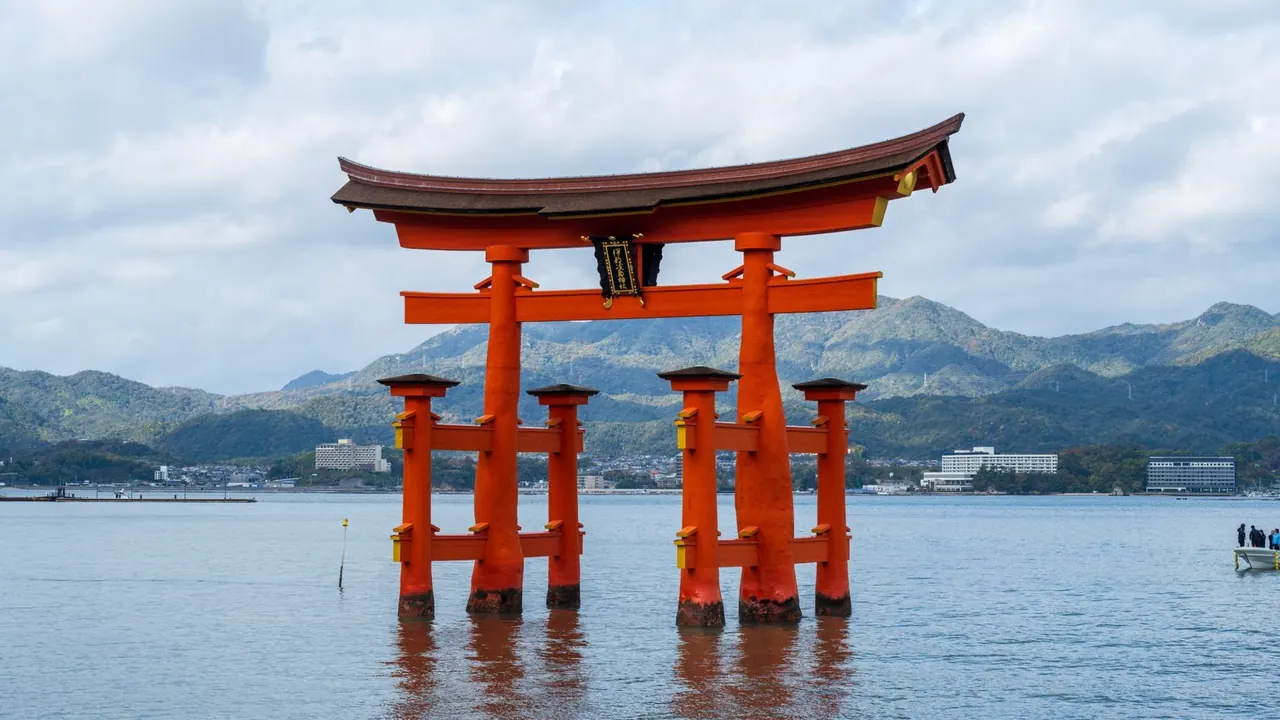
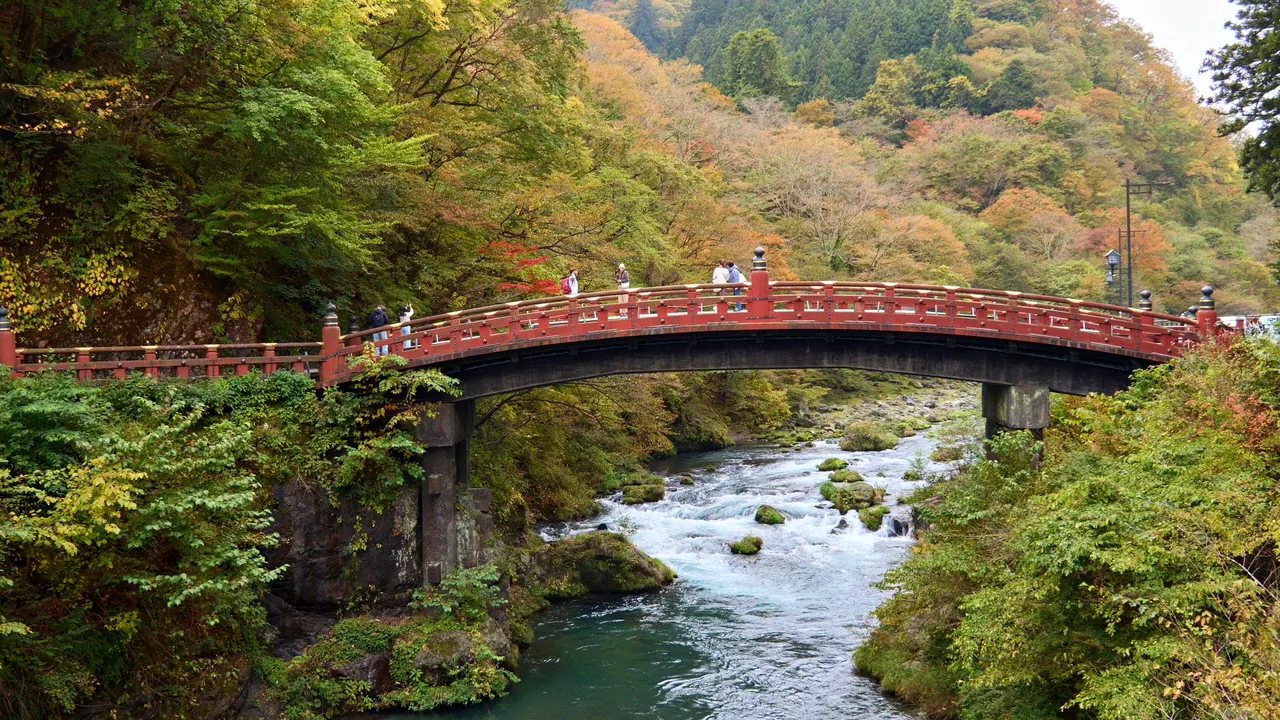
Photos: Hiroshima by Guohua Song, Pexels License; Nikko by lumoplank, CC0.
Hiroshima or Nikko?
Our verdict in twelve categories, each scored against the same fixed benchmark cities, and the climate month by month, so you can choose for your trip.
Choose Hiroshima for
- nightlife
- food and drink
- shopping
Hiroshima suits travellers who want a working city base. It has the Peace Memorial Park, okonomiyaki counters and izakaya evenings in Nagarekawa, and trams and trains that put Miyajima, Kurashiki and Himeji within easy reach. It is the better choice for eating well, for evenings out and for a trip that moves around the Inland Sea rather than staying in one place.
Choose Nikko for
- wellness
- nature and the outdoors
- culture and sights
Choose Nikko if you want to slow down in the mountains. The gilded shrines of Toshogu stand among giant cedars, the falls and marshland of the national park lie above Lake Chuzenji, and each day can end with a long onsen soak before a ryokan dinner. Hiroshima has nothing quite like this. Expect quiet evenings and little to eat or buy beyond the local dishes.
Scoreboard
Twelve categories on one fixed scale from 0 to 100. The shaded stretch is the gap between the two.
Your match
Pick a travel style or drag the sliders, and both match scores follow your weighting.
Wins on nightlife and food and drink with your weighting.
Wins on wellness and nature and the outdoors with your weighting.
What matters to you?
Category by category
What the scores mean for a trip.
Beaches & swimming
Neither is a beach destination, but Hiroshima at least has the sea. In July and August a ferry to Miyajima, Ninoshima or Etajima brings you to small sandy beaches and calm, warm water for an afternoon swim.
Nikko is far inland. Its highland lakes, Chuzenji and Yunoko, are for boating and fishing rather than bathing, so in summer the hot springs are where people get into the water.
Food & drink
Hiroshima eats far better. Layered okonomiyaki cooked on the griddle in front of you, Inland Sea oysters in winter, izakaya all across Nagarekawa and the sake breweries of Saijo give you several evenings of good eating.
Nikko has one real speciality, yuba from the temple kitchens, along with soba and river fish. Most places serve lunch to day visitors and close early, so the best meal is usually the ryokan dinner that comes with your room.
Culture & sights
Hiroshima's sightseeing centres on one visit of great weight rather than a spread of fine buildings. The A-Bomb Dome and the Peace Memorial Museum make a profound and demanding half day. Beyond them come Shukkeien garden and the castle grounds with their moats and rebuilt keep, in a largely modern city where little older architecture survived the bombing.
Nikko has the richer historic ensemble. Toshogu's lacquer, gold leaf and carving go well beyond anything left standing in Hiroshima, and with Rinnoji's hall of Buddhas, Futarasan Shrine and the quieter Taiyuinbyo it forms a UNESCO-listed group in a cedar forest. The red Shinkyo bridge and the moss-covered Jizo of Kanmangafuchi add enough to fill a day or two.
Nightlife
Hiroshima has a night out and Nikko does not. Nagarekawa's stacked buildings of counter bars, izakaya and karaoke stay busy past midnight. The scene is modest by big-city standards but easy to explore.
In Nikko the day visitors leave by late afternoon and the main street goes dark early. Evenings mean a ryokan dinner, a bath and perhaps a drink in a Kinugawa hotel lounge.
Nature & outdoors
Nikko is the real mountain trip. The Irohazaka road climbs to Lake Chuzenji beneath Mount Nantai, Kegon Falls drops from the lake's outlet, and the Senjogahara boardwalks lead on to more waterfalls and Lake Yunoko. Steep summit hikes, rafting and winter snow are there for anyone who wants more.
Hiroshima's outdoors is gentler and on the coast: the forested islands of the Inland Sea, the ropeway and trails up Mount Misen, the Sandankyo Gorge walk and the Shimanami Kaido cycling route. Its hills are modest, and what it offers instead of height is views over the sea.
Day trips
Hiroshima is the stronger base. Miyajima's floating torii is under an hour away, and the shinkansen puts Himeji Castle, Kurashiki and Korakuen within about an hour. Onomichi, Takehara, Iwakuni's arched bridge and Okunoshima's rabbits make smaller outings.
From Nikko the big excursion is Tokyo, a long day at about two hours each way. Utsunomiya's gyoza, the pottery town of Mashiko and the thatched post town of Ouchi-juku are also within reach. Beyond those, most of what lies nearby is more mountains and lakes.
Good for families
Both are safe and clean, but Hiroshima keeps children busy for longer. Flat pavements, simple trams, the deer on Miyajima, Okunoshima's rabbits, a free science museum and a noisy baseball evening fill a stay. The Peace Memorial Museum needs care with young ones.
Nikko's child-friendly side is at Kinugawa, with an Edo theme village and a park of miniature landmarks, and older children enjoy the lake boats and boardwalks. The shrine staircases and long bus rides wear toddlers out, so Nikko suits two or three days rather than a week.
Getting around
Hiroshima's centre is flat and easy to walk. Japan's largest tram network links the station, the Peace Park and the Miyajima ferry, and the shinkansen stop makes onward travel easy.
Nikko is simple at its core: one road leads from the stations up to the shrines on a gentle uphill walk. The lake, the falls and the marshland all depend on buses up the Irohazaka road, though, and these can crawl for hours on autumn foliage weekends.
Shopping & style
Hiroshima has proper shopping along the covered Hondori arcade, with department stores, fashion and station malls. It also has distinctive crafts in Kumano brushes, Miyajima rice paddles and Saijo sake.
Nikko is a single street of souvenir shops. The buys worth having are Nikko-bori wood carving and straw-soled Nikko geta, and anything more has to wait for Tokyo.
Affordability
Overall costs are close, and the difference lies in where the money goes. In Hiroshima, plentiful business hotels and cheap okonomiyaki keep daily spending modest, and the bills come from shinkansen day trips and evenings of oysters and sake.
Nikko's soba, buses, shrine entry and hostels are also reasonably priced. The classic stay, though, is an onsen ryokan with dinner and breakfast, which costs considerably more, especially by the lake and in autumn.
Live music & performing arts
Hiroshima has more to see on an ordinary evening. Regular kagura performances in the centre bring masks, demons and drumming, and the city also has a resident symphony orchestra and touring shows in its concert halls.
Nikko has no theatre or concert life, but the Toshogu festival in spring and autumn is a spectacle of its own, with around a thousand men in samurai armour and displays of horseback archery. It is worth timing a visit around, but on other days there is little to see.
Wellness & relaxation
Nikko is built for a hot-spring stay. Kinugawa Onsen's riverside inns, the milky sulphur water of Yumoto beside Lake Yunoko and open-air baths looking onto forest make the soak the centre of the day. In winter there is snow around the outdoor pools.
Hiroshima has no springs of its own. Relaxing there means a neighbourhood sento or a larger suburban bathhouse, a hotel's rooftop bath or a ryokan night on Miyajima, and a true onsen is about an hour away.
When should you go?
Pick your month. The climate figures are measured averages, not a forecast.
Hiroshima in July
Nikko in July
Daytime high, °C
Rainfall in the month, mm
Where the figures come from
Nikko has no weather station within reach, so its figures come from a gridded climate model rather than a measured record, and read a broad area rather than the city itself.
Temperature and rainfall are climate normals, averaged over the years shown. Hiroshima: 1991-2020 normals, Hiroshima (1.7 km from centre). Nikko: 2001-2020 normals, NASA POWER reanalysis grid, no weather station within 90 km.
Hiroshima is at its most comfortable in April and October, when days are warm enough for long walks and the rain is moderate. May is pleasant too but already fairly wet, and June and July are the wettest stretch of the year, with 299mm in July. August is hot and humid at about 33°C, though late summer is the only time for a swim, when the Inland Sea reaches about 26°C. Winters are cool and fairly dry, and fine for sightseeing.
Nikko is several degrees cooler all year. Its summer peaks around 29°C in town, a relief from the lowland heat, but heavy rain lasts from July right through to October. Late spring and the drier days of November are the best for walking. Winter is properly cold, with January highs near 3°C and snow higher up, so it suits a hot-spring stay better than long days on foot.
Which traveller are you?
For a food and nightlife trip, Hiroshima is the clear choice. Okonomiyaki counters, winter oysters and Inland Sea fish fill the day, and Nagarekawa's small bars stay open past midnight. In Nikko the restaurants close early and the street goes dark.
On a relaxing and wellness trip, Nikko wins easily. Hot springs run from Kinugawa's gorge to Yumoto's sulphur pools, and the day settles into shrine walks, an afternoon soak and a ryokan dinner. In Hiroshima, bathing means public bathhouses and hotel baths.
For an outdoors trip, Nikko gives more height and variety, with waterfalls, Lake Chuzenji, the Senjogahara boardwalks and real summit climbs in a national park. Hiroshima's island trails and cycling route are pleasant but gentler, and the draw there is the sea rather than mountains.
Before you go
| Measure | Hiroshima | Nikko |
|---|---|---|
| Official language | Japanese | Japanese |
| Currency | Yen (JPY) | Yen (JPY) |
| Sockets | AB100 V, 50 and 60 Hz depending on the region | AB100 V, 50 and 60 Hz depending on the region |
| Driving side | Left | Left |
| Time zone | UTC+9 | UTC+9 |
| Emergency number | Police 110, fire 119 | Police 110, fire 119 |
| Elevation | 3 m | 660 m |
| Main airport | Hiroshima Airport (HIJ)43 km from centre10 non-stop destinations | Tokyo Haneda International Airport (HND)134 km from centre98 non-stop destinations |
| Public holidays this year | 16 days | 16 days |
By the numbers
| Measure | Hiroshima | Nikko |
|---|---|---|
| City population | 1,198,021 | 77,027 |
| People per km² | 1,324 | 53 |
| Museums within 10 km | 18 | 5 |
| UNESCO World Heritage sites within 50 km | 2 | 1 |
| Swim season, months above 21 °C | 4 months | - |
Where else could you go?
Every comparison below shares a destination with this one, so you can follow Hiroshima or Nikko somewhere new.