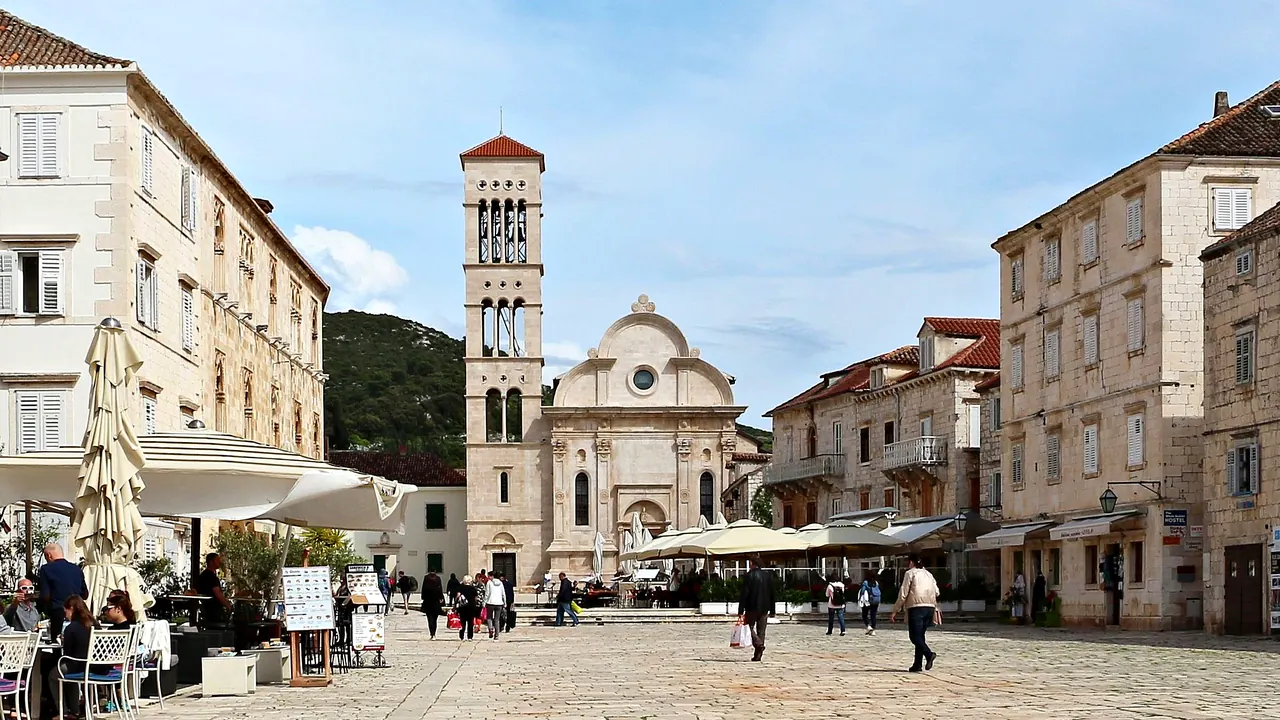
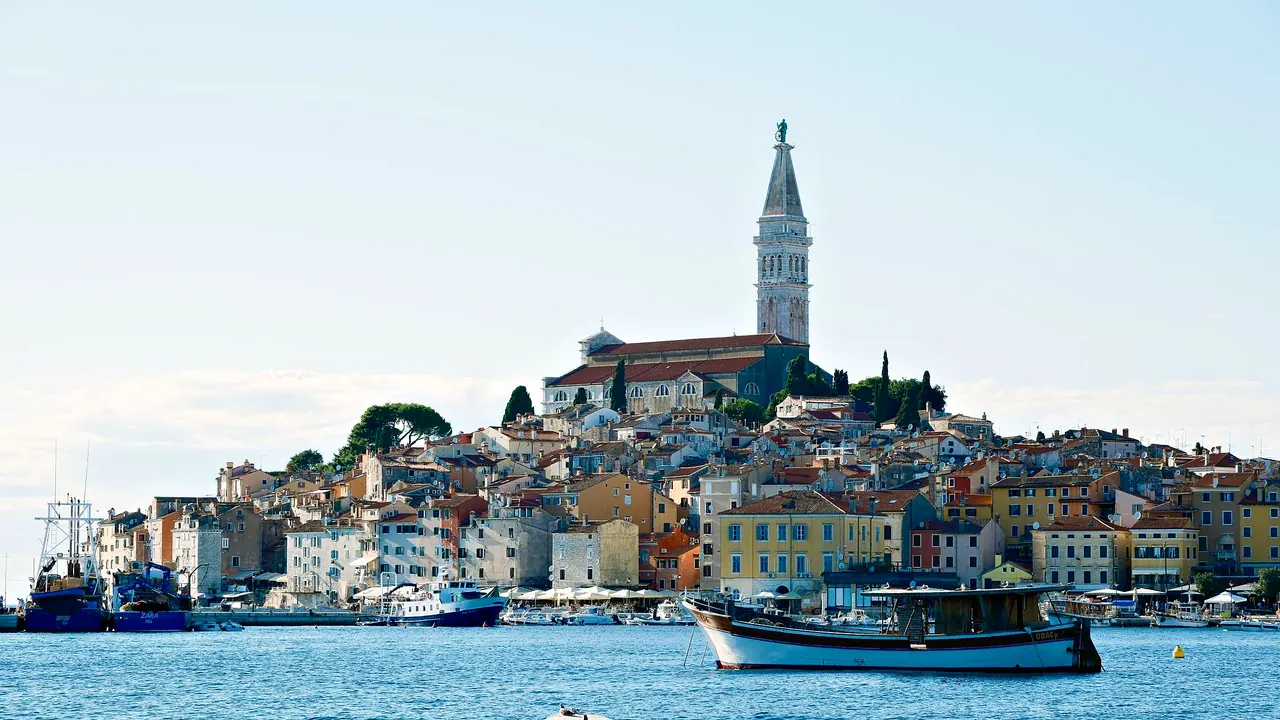
Photos: Hvar by Bernard Gagnon, CC BY-SA 4.0, cropped; Istria by Ramon Karolan, Pexels License.
Hvar or Istria?
Our verdict in twelve categories, each scored against the same fixed benchmark cities, and the climate month by month, so you can choose for your trip.
Choose Hvar for
- nightlife
- beaches
Hvar is the choice for a summer built around the sea. The water is very clear, taxi boats run out to the Pakleni Islands, and Hvar Town has a party scene that the Istrian coast makes no attempt to match. It suits couples and friends who want to swim all day and stay out late. It also suits anyone happy to retreat to Jelsa or Vrboska and do very little. You give up depth of sightseeing, and every trip off the island depends on a ferry timetable.
Choose Istria for
- culture and sights
- families
- day trips
Pick Istria if you want more to do between swims. Pula's Arena, the mosaics of Poreč and hill towns such as Motovun and Grožnjan make its sights far richer, and the truffle and wine country inland gives it the better table. Families get campsites, water parks and shallow bays around Medulin. With a car, a trip here can reach into Slovenia and Trieste as well. In return, the evenings are quieter and the beaches, though good, come second to Hvar's.
Scoreboard
Twelve categories on one fixed scale from 0 to 100. The shaded stretch is the gap between the two.
Your match
Pick a travel style or drag the sliders, and both match scores follow your weighting.
Wins on nightlife and beaches with your weighting.
Wins on culture and sights and families with your weighting.
What matters to you?
Category by category
What the scores mean for a trip.
Beaches & swimming
On both coasts you swim from rock and pebble in very clear water, so neither is a destination for sand. The real difference is the setting. Hvar's swimming feels more like an island. Taxi boats run to the pine-backed bays of the Pakleni Islands, tracks or boats reach wild south-coast coves such as Dubovica, and the north side around Jelsa has calmer shallows.
Istria's closest match is the Kamenjak cape at the southern tip, with dozens of wild coves facing open water. Elsewhere, much of the shore along the Poreč and Umag coasts is resort bathing from concrete platforms. Medulin's gently shelving bays are the exception, and they suit small children.
Food & drink
Hvar eats well in a simple Dalmatian way: lamb under the peka bell, gregada and Plavac Mali from the slopes around Ivan Dolac. You eat it best in the family konobas of Pitve or Velo Grablje.
Istria is a food destination in its own right, with a cuisine closer to the Venetian side of the Adriatic. Black and white truffles from the forests around Motovun, boškarin beef, Lim Bay oysters and Malvazija tasted in hill-town cellars give it far more range. Rovinj and Novigrad also have fine dining that Hvar Town only partly matches.
Culture & sights
Hvar's sights are handsome and quickly seen. Hvar Town has its white-stone square and cathedral, the 1612 theatre above the Arsenal and the Fortica. In Stari Grad there is the Tvrdalj, and behind the town the Greek field boundaries of its UNESCO-listed plain. Two or three days cover it.
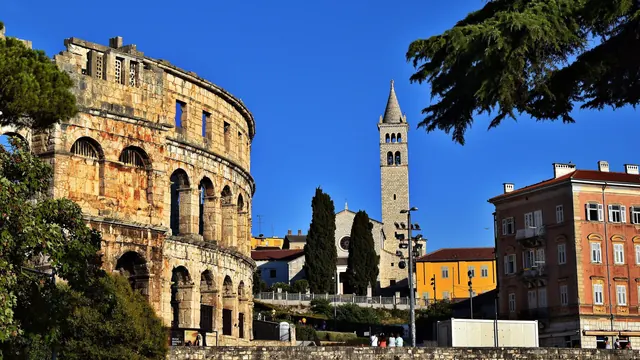
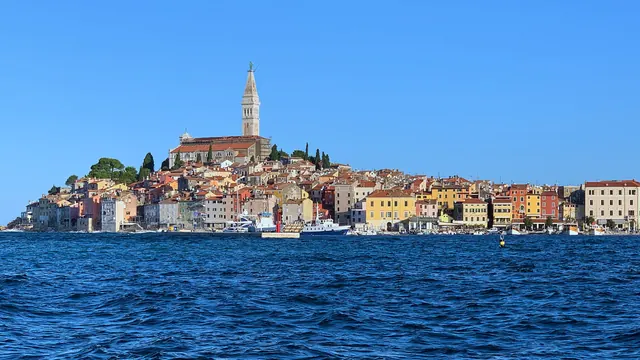
Istria has more weight and more layers, from Roman to Austro-Hungarian. Pula's Arena still stands to its full height, and the Euphrasian Basilica in Poreč holds sixth-century gold mosaics. Add Rovinj's old town, the hilltop towns of Motovun and Hum and the frescoes at Beram, and you have a week of old-stone wandering. Neither destination is a place for big museums.
Nightlife
Here the order is reversed. In July and August, Hvar Town is one of the Adriatic's party ports. Its harbour cocktail bars fill with yacht crews, and day parties at the Pakleni beach clubs run into the night, with taxi boats going back and forth. It is loud, glamorous and costly, and it winds down by early September.
Istria's evenings are mostly long dinners and a drink on the waterfront in Rovinj or Poreč, plus a few seasonal clubs on the Poreč and Medulin coasts. Pula, a port with students, is the one place where something goes on outside summer.
Nature & outdoors
Hvar is a single limestone ridge. You can climb Sveti Nikola at 626m for sea views towards Vis, see the lavender around Velo Grablje in early summer, and kayak or snorkel around the Pakleni Islands. It is pleasant rather than dramatic.
Istria has more variety, and more to do on land. The bare ridge of Učka rises to about 1,400m and gives proper hiking. The Parenzana railway path and the signposted routes between hill towns make it much the better place to cycle. Kamenjak, the Lim Bay and the Brijuni national park add coast and parkland.
Day trips
From Hvar, nearly every outing starts with a catamaran. Split and Diocletian's Palace, Korčula's walled town and Vis are all within reach, but the timetables shape the day and the choice thins out after summer. On the island, Stari Grad, Jelsa and Vrboska make easy short trips.
Istria is on the mainland and has a motorway, so the options are wider and you are freer to choose. Within the region you have the hill towns, the wine roads and the boat to Brijuni. Over the border are Piran and Trieste, about an hour away, plus Opatija, the Postojna and Škocjan caves and even Ljubljana.
Good for families
Hvar suits families who are content with simple seaside days. Jelsa, Stari Grad and Vrboska have calm bays and evening promenades, but nothing is built for children. Hvar Town, with its stepped lanes and party nights, is best avoided.
Istria has been set up for families for a long time. Large campsites and resort villages with pools cluster around Poreč, Umag and Medulin. There are water parks near Poreč and Novigrad, a dinosaur park near Funtana, an aquarium in an old fort in Pula and a small safari park on Brijuni. The shallow bays at Medulin and Premantura suit toddlers.
Getting around
Neither is easy without a car, but for different reasons. On Hvar you arrive by ferry or catamaran and then rely on infrequent buses along the island's spine and taxi boats from Hvar Town. For the south coast and the hill villages you need a car or scooter, and the roads are narrow, including a single-lane tunnel.
Istria is a little simpler. A motorway down the west side keeps the main towns within about an hour of each other, and coastal buses link Pula, Rovinj, Poreč and Umag. The hill towns and wineries still need your own wheels, and summer traffic around the resorts takes patience.
Shopping & style
Neither is a place for fashion or design, and both mostly sell what they produce. Hvar has lavender oil from the harbour stalls, lace made by Benedictine nuns and a few resort boutiques selling linen and swimwear. Istria offers a little more: truffle products from Motovun and Buzet, single-estate olive oil and Teran from the cellars, and the galleries and craft studios of Rovinj's Grisia street and Grožnjan.
Affordability
Both are expensive in July and August. Hvar Town at its peak is the costlier of the two, with rooms, cocktails, beach-club loungers and taxi boats priced for the yacht crowd. On Hvar the way to save is an apartment in Jelsa or Vrboska and meals in village konobas.
Istria gives you a little more room to economise, with campsites, private apartments and inland farm stays, simple tavern meals and wine bought straight from the producer. In both places, June and September are noticeably cheaper than high summer.
Live music & performing arts
Hvar's 1612 theatre above the Arsenal is worth seeing as a building, but it has no regular season. Live performance on the island comes down to summer evenings of chamber music in the churches and the Franciscan cloister, and klapa singing at village feasts. Once summer ends, there is very little.
Istria gives you more to plan around. On summer evenings the Roman Arena in Pula hosts open-air concerts and the long-running film festival, and young musicians play in the squares and churches of Grožnjan. Out of season, Pula's theatre keeps a modest programme going, which Hvar cannot match.
Wellness & relaxation
Neither has much of a spa culture, and both rest mostly on their slow pace. On Hvar the calm is in Vrboska, Stari Grad and the hill villages, with pine and lavender in the air, as long as you avoid Hvar Town in high summer. Istria has a slight edge. It has Istarske Toplice, a sulphur spring in the Mirna valley used since Roman times, and quiet stays in stone farmhouses among the olive groves.
When should you go?
Pick your month. The climate figures are measured averages, not a forecast.
Hvar in July
Istria in July
Daytime high, °C
Rainfall in the month, mm
Where the figures come from
Hvar's temperatures are measured 38 km from the centre, at Split / Marjan.
Hvar has no rain gauge within 25 km of the centre, so its rainfall comes from a gridded climate dataset read at the destination rather than from a gauge further away.
Hvar's sunshine is measured 38 km from the centre, at Split / Marjan.
Istria's temperatures are measured 57 km from the centre, at Trieste.
Istria has no rain gauge within 25 km of the centre, so its rainfall comes from a gridded climate dataset read at the destination rather than from a gauge further away.
Temperature and rainfall are climate normals, averaged over the years shown. Hvar: 1991-2020 (sunshine 1971-2000) normals, Split / Marjan (38.2 km from centre). Istria: 1991-2020 normals, Trieste (56.5 km from centre).
In summer Hvar is the hotter, drier and sunnier of the two. Where most visitors stay, highs reach about 31°C in July and August and July brings barely 18mm of rain. On Istria's coast the peak is nearer 29°C, and rain is spread more evenly through the summer. Both seas are warm enough to swim from June to late September. Istria's water touches 26°C in August, a shade above Hvar's.
For walking the old towns and the countryside, May, June and September suit both, because midsummer is hot enough to push walks into the early morning. The autumn rains start in September in both places. On Hvar they peak in November at 116mm. Winters are cool in both, slightly milder and brighter on Hvar, and neither is a beach destination from October to May.
Which traveller are you?
On a beach and sun trip, Hvar has the edge. The water is very clear and the summers are sunnier and drier. Taxi boats take you to the pine-backed Pakleni bays and wild south-coast coves, which feel more like island swimming than Istria's resort platforms.
For a culture and arts trip, Istria is much the richer choice. Pula's Arena, the gold mosaics of Poreč and walled hill towns such as Motovun and Hum outweigh Hvar's compact set of sights. The Arena's summer concerts also give you evenings that Hvar cannot offer.
On a family trip with children, Istria is the easier choice. Campsites with pools, water parks near Poreč, Pula's aquarium and Medulin's shallow bays keep children busy. Hvar has quiet north-side bays and boat trips, but nothing built for children.
Before you go
| Measure | Hvar | Istria |
|---|---|---|
| Official language | Croatian | Croatian |
| Currency | Euro (EUR) | Euro (EUR) |
| Sockets | CF230 V, 50 Hz | CF230 V, 50 Hz |
| Driving side | Right | Right |
| Time zone | UTC+1, UTC+2 in summer | UTC+1, UTC+2 in summer |
| Emergency number | 112 | 112 |
| Main airport | Split Saint Jerome Airport (SPU)69 non-stop destinations | Pula Airport (PUY)34 non-stop destinations |
| Public holidays this year | 14 days | 14 days |
By the numbers
| Measure | Hvar | Istria |
|---|---|---|
| Swim season, months above 21 °C | 4 months | 4 months |
Where else could you go?
Every comparison below shares a destination with this one, so you can follow Hvar or Istria somewhere new.