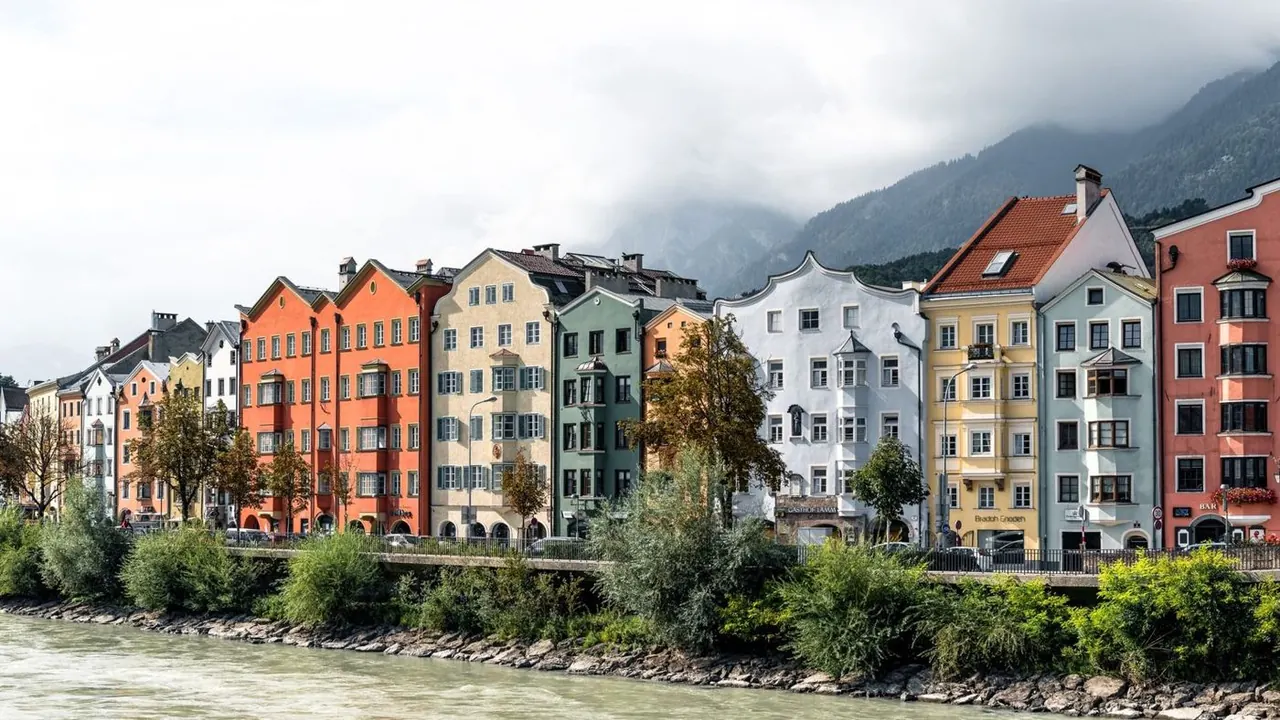
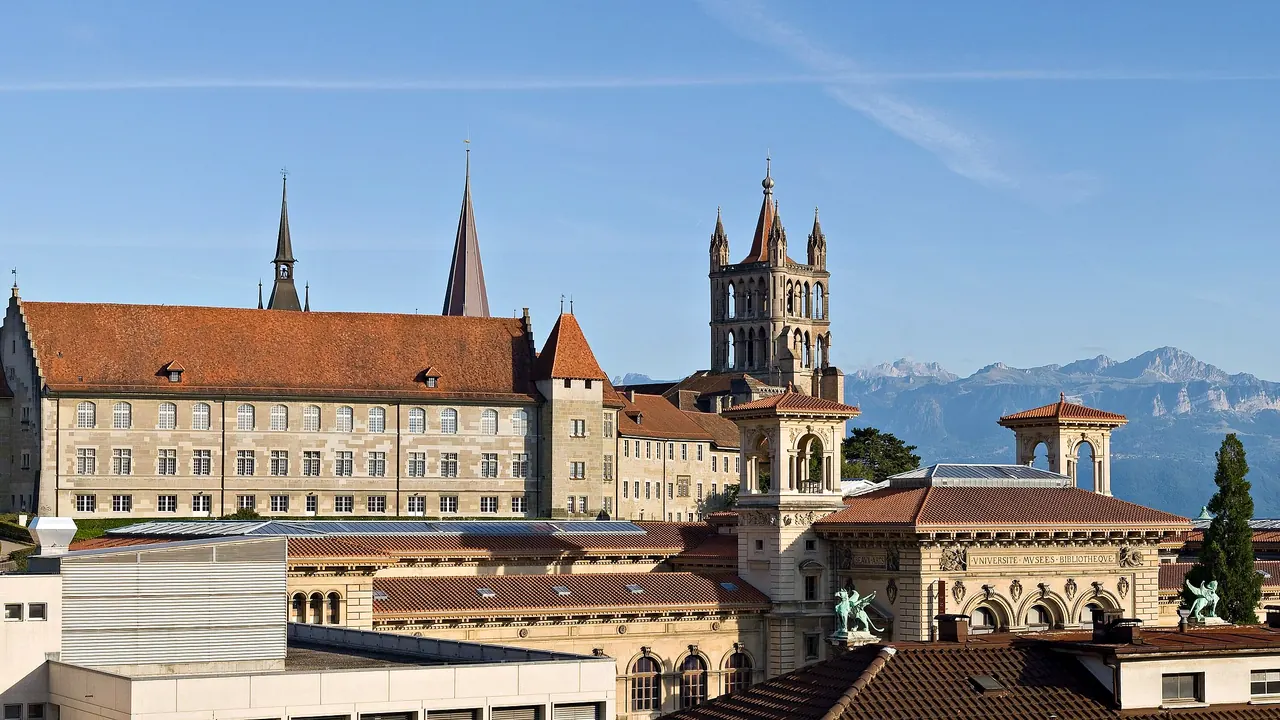
Photos: Innsbruck by Wolfgang Weiser, Pexels License; Lausanne by Christian Mehlführer, CC BY-SA 3.0, cropped.
Innsbruck or Lausanne?
Our verdict in twelve categories, each scored against the same fixed benchmark cities, and the climate month by month, so you can choose for your trip.
Choose Innsbruck for
- prices
- nature and the outdoors
- culture and sights
Innsbruck is for travellers who want the mountains to be the trip itself. A funicular and cable cars run from the edge of the old town to an Alpine ridge, there are ski areas all around and hut-to-hut trails in summer, and the bill, though not small, is easier to live with than in Switzerland. The town is compact and flat, with a Habsburg old town to fill the evenings between days on the peaks.
Choose Lausanne for
- beaches
- food and drink
- live music and the arts
Lausanne suits a slower, more varied stay with a lake view. It has better food and wine, with the Lavaux terraces and their village caveaux just along the shore, a stage life led by ballet and contemporary theatre, and trains and boats to Montreux, Geneva, Bern and Gruyères. The Alps are a backdrop and an easy day out rather than the main event, and everything costs a good deal more.
Scoreboard
Twelve categories on one fixed scale from 0 to 100. The shaded stretch is the gap between the two.
Your match
Pick a travel style or drag the sliders, and both match scores follow your weighting.
Wins on prices and nature and the outdoors with your weighting.
Wins on beaches and food and drink with your weighting.
What matters to you?
Category by category
What the scores mean for a trip.
Beaches & swimming
Neither city has a sea, so swimming means a lake in both, but in Lausanne it fits much more easily into the day. Lake Geneva runs along the whole southern edge of town, and you can swim from the lawns at Vidy or the old lido at Bellerive between other sights.
In Innsbruck you go up to the small, shallow plateau lakes such as the Lanser See, or out to the beautiful but chilly Achensee. That is a half-day outing rather than a swim on the doorstep.
Food & drink
Innsbruck's food is hearty mountain fuel: Gröstl, Kaspressknödel, Speck and Kaiserschmarrn, at their best in a hut after a climb. Beyond that the choice narrows quickly. There is no market life, and the wine mostly comes from elsewhere.
Lausanne eats better, mainly because of what grows around it. The Chasselas from the Lavaux terraces is poured everywhere and can be tasted from the growers in village caveaux. The Saturday market brings in the region's cheese and charcuterie, and lake perch and a strong top tier of restaurants add more range than Innsbruck can offer.
Culture & sights
The two are well matched, but their culture comes in different forms. Innsbruck's is imperial and largely about the buildings themselves: the Golden Roof, the Hofburg, Maximilian's tomb with its ring of bronze figures in the Hofkirche, and Ambras Castle with its cabinet of curiosities.
Lausanne has one great monument, the Gothic cathedral, with a steep old town around it. Otherwise its strength is in its museums, from the Olympic Museum by the lake to the fine arts, photography and design collections at Plateforme 10.
Nightlife
Both cities are small university towns with more going on after dark than their size suggests, and neither is somewhere to come for the nightlife. In Innsbruck the action is in bars squeezed into the brick arches under the railway viaduct, and in winter much of the partying moves out to après-ski in the resorts.
Lausanne's equivalent is the Flon, a warehouse valley of clubs and terraces that fills on Friday and Saturday nights. In summer, evenings also spill onto the lakeside at Ouchy. The drinks cost noticeably more.
Nature & outdoors
Innsbruck has the mountains right at its door. The funicular from the old town links to cable cars up the Nordkette, the Karwendel nature park lies behind the ridge, and the Stubai Glacier holds snow for most of the year. Several ski areas share one pass.
Lausanne's landscape is gentler and spread wider. Its highlights are the view of the French Alps across the lake, the walk through the Lavaux vineyards, and sailing and paddleboarding on the water. Real mountains, in the Vaud Alps or the Jura, are about an hour away rather than overhead.
Day trips
From Innsbruck the trains reach three countries, but most of the big names take a while. Munich and Salzburg are each a little under two hours away, and Bolzano and Merano lie over the Brenner Pass. Neuschwanstein and the Bavarian castles need a car. Closer at hand are medieval Hall in Tirol, glassblowing Rattenberg, Kitzbühel about an hour down the line and the Crystal Worlds at Wattens.
Lausanne is the better base, because far more is close and needs no car. Vevey and Montreux are about twenty minutes along the lake, with the Château de Chillon just beyond. Geneva is under an hour and Bern only a little more, and Gruyères, Murten or a boat across to Évian fill the other days easily.
Good for families
Innsbruck's family days are spent outdoors on the mountain. The Alpenzoo, with its ibex, bears and wolves, sits on the funicular line, and in summer there are adventure trails and playgrounds by the huts, with a plateau lake for a swim. A wet day is harder to fill.
Lausanne has more under a roof, with the hands-on Olympic Museum and the aquarium-vivarium, plus pedal boats and a lookout tower at Sauvabelin and paddle steamers on the lake. The trade-off is steep streets that are tiring with a pushchair, and family meals that cost a lot.
Getting around
Both are easy to manage without a car, but the ground is very different. Innsbruck's centre is flat, so the old town, the Hofburg and the river are a short stroll apart, and the mountains start from a funicular at the edge of town.
Lausanne climbs steeply from the lake in layers of stairs and bridges. The m2 metro does the hard work, rising more than 300m from Ouchy to the upper town, and lake boats link the shore towns.
Shopping & style
Neither is a shopping destination, though Lausanne has slightly more polish. Rue de Bourg is the place for Swiss watches, jewellery and chocolatiers, and the Flon adds a few small design shops.
Innsbruck's best buys are practical and local: loden jackets, dirndls, woodcarvings, Speck and schnapps. Its specialist outdoor and ski shops beat anything in Lausanne.
Affordability
Innsbruck is clearly the cheaper of the two, though it still has Alpine resort prices. Spring and autumn bring hotel rates down, and the guest cards that bundle transport with lifts take the edge off an active trip.
Lausanne is expensive in every way: rooms, meals, wine and taxis. Most budget visitors end up picnicking by the lake and saving restaurant meals for one special evening, although a glass of Chasselas at a Lavaux caveau is still good value.
Live music & performing arts
Lausanne has the more serious stage for its size, and dance comes first. It is home to the Béjart Ballet Lausanne and the Prix de Lausanne, and the Théâtre de Vidy produces contemporary work that tours Europe. Montreux Jazz is a short ride away in July.
Innsbruck offers a solid regional programme at the Landestheater. Its standout is the summer Festival of Early Music, held in settings such as the Spanish Hall at Ambras Castle, which is well worth timing a visit around if that is your music.
Wellness & relaxation
Innsbruck's way to unwind is the Alpine one: hotel spas with mountain views up in Igls, a sauna after a day on the trails, and the large thermal complexes of the Ötztal and Zillertal about an hour out. The town itself is calm and unhurried.
Lausanne has real warm springs closer by. Yverdon-les-Bains is under half an hour by train, and Lavey-les-Bains, the hottest springs in Switzerland, lies up the Rhône valley. Add the grand lakeside hotel spas and the slow walks through the Lavaux vines, and the two end up close, though Lausanne's steeper, busier centre means you find the quiet on its edges.
When should you go?
Pick your month. The climate figures are measured averages, not a forecast.
Innsbruck in July
Lausanne in July
Daytime high, °C
Rainfall in the month, mm
Where the figures come from
Lausanne's temperatures are measured 40 km from the centre, at Payerne.
Lausanne has no rain gauge within 25 km of the centre, so its rainfall comes from a gridded climate dataset read at the city rather than from a gauge further away.
Temperature and rainfall are climate normals, averaged over the years shown. Innsbruck: 1991-2020 normals, Innsbruck-Flughafen (3.3 km from centre). Lausanne: 1991-2020 (sunshine 1961-1990) normals, Payerne (39.7 km from centre).
Both cities have almost the same temperatures: about 4°C in midwinter and 26°C in July, with comfortable walking weather from May to September. Lake swimming works in both from late June to early September. The real difference is the rain and the light. Innsbruck gets most of its rain in summer, up to 144mm in August, so a hiking trip there needs some flexible days. Its winters are drier and noticeably sunnier, which helps on a ski trip.
Lausanne's rain is spread evenly through the year at around 100mm a month. Its summers are the sunniest season of either city, so July and August are the best months for the lakeside. From November to January the town is often grey and dull, though the mountains above it can be in sunshine. For an Alpine summer, Lausanne's drier, brighter July is easier. For winter, Innsbruck is the clear pick.
Which traveller are you?
On an outdoors trip, Innsbruck is the stronger choice. You can be on the Nordkette ridge within half an hour of the old town, the Karwendel starts behind it, and ski slopes, via ferratas, mountain biking and rafting are all close at hand.
On a culture and arts trip, Lausanne has the edge. Its museums are strong, from the Olympic Museum to Plateforme 10 and the Art Brut collection, and in the evenings there is Béjart's ballet company, the Théâtre de Vidy and a full opera season.
On a trip on a tight budget, Innsbruck is the better option, though neither is cheap. Lausanne is among the most expensive places in Europe, while Innsbruck's student cafés, spring and autumn rates and bundled city cards keep costs within reach.
Before you go
| Measure | Innsbruck | Lausanne |
|---|---|---|
| Official language | German, Austrian Sign Language | French, German, Italian, Romansh |
| Currency | Euro (EUR) | Swiss Franc (CHF) |
| Sockets | CF230 V, 50 Hz | CJ230 V, 50 Hz |
| Driving side | Right | Right |
| Time zone | UTC+1, UTC+2 in summer | UTC+1, UTC+2 in summer |
| Emergency number | 112 | 112 |
| Elevation | 574 m | 495 m |
| Main airport | Innsbruck Airport (INN)4 km from centre40 non-stop destinations | Geneva International Airport (GVA)52 km from centre150 non-stop destinations |
| Public holidays this year | 16 days | 9 days |
By the numbers
| Measure | Innsbruck | Lausanne |
|---|---|---|
| City population | 132,499 | 144,873 |
| People per km² | 1,263 | 3,499 |
| Museums within 10 km | 28 | 31 |
| UNESCO World Heritage sites within 50 km | 1 | 3 |
Where else could you go?
Every comparison below shares a destination with this one, so you can follow Innsbruck or Lausanne somewhere new.
- Genevavs Lausanne
- Chamonixvs Lausanne
- Bernvs Lausanne
- Annecyvs Lausanne
- Interlakenvs Lausanne
- Munichvs Innsbruck