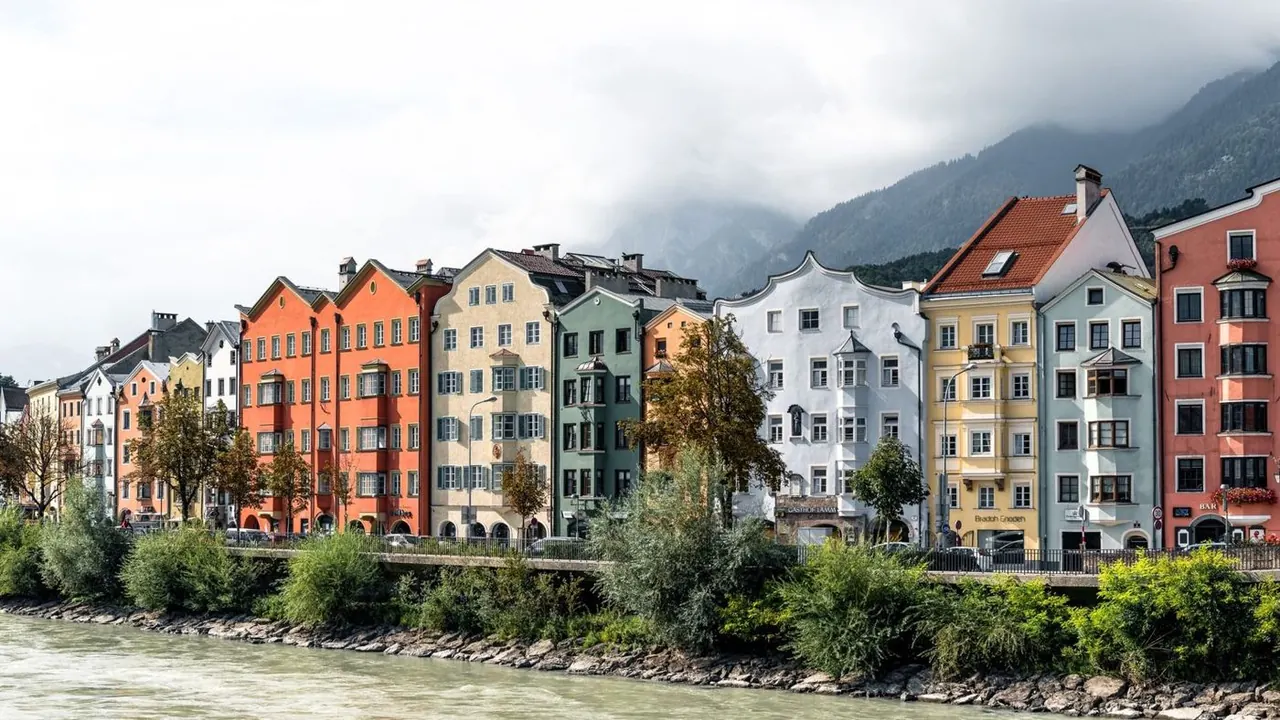
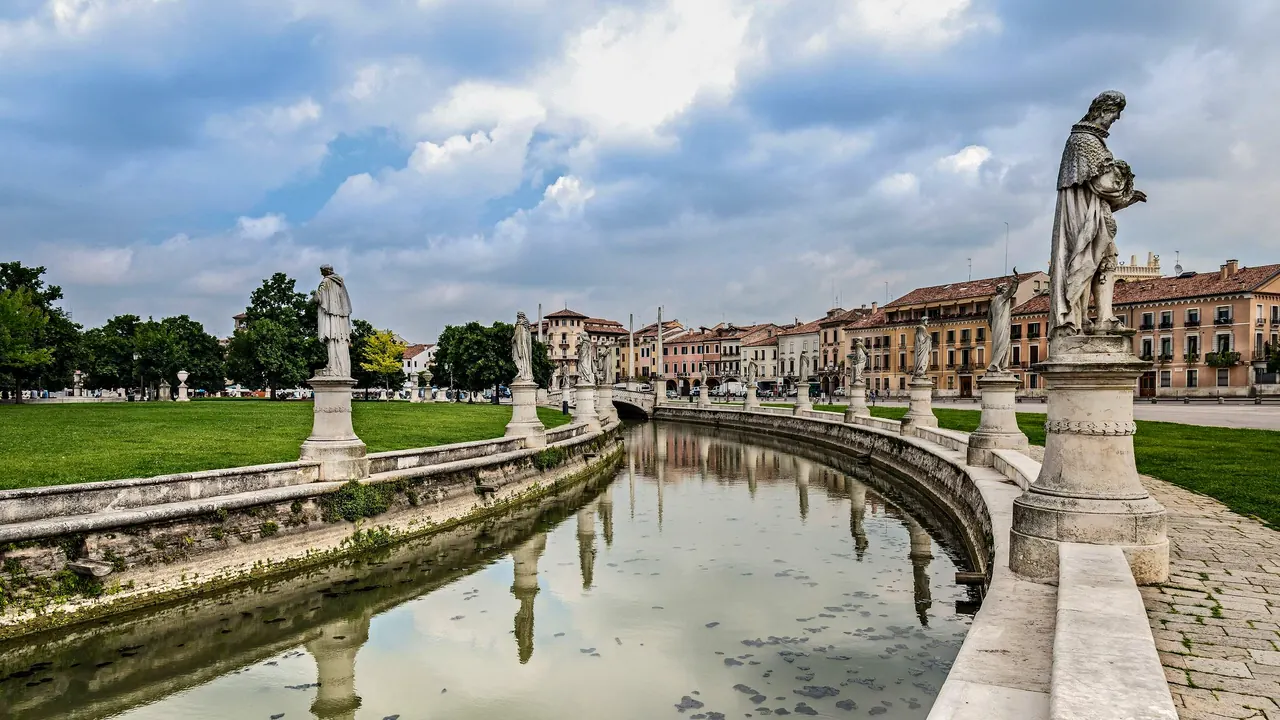
Photos: Innsbruck by Wolfgang Weiser, Pexels License; Padua by Didier Descouens, CC BY-SA 4.0, cropped.
Innsbruck or Padua?
Our verdict in twelve categories, each scored against the same fixed benchmark cities, and the climate month by month, so you can choose for your trip.
Choose Innsbruck for
- nature and the outdoors
- families
- live music and the arts
Innsbruck suits travellers who want the mountains to be the point of the trip. Cable cars run from the edge of the Habsburg old town to high Alpine ridges, so you can ski in winter and hike, climb or raft in summer, then be back for dinner in town. Children do well here too, with the Alpenzoo and mountain trails close at hand. In return the food is plainer, evenings are quieter and the bills are higher.
Choose Padua for
- wellness
- food and drink
- day trips
Padua is the better pick for art, food and seeing a whole region from one comfortable base. Giotto's Scrovegni frescoes and the Basilica of Saint Anthony are in the centre, the market squares and the evening spritz shape the day, and Venice, Vicenza and Verona are quick train rides away. Rooms cost less, and the thermal pools of Abano are close for a soak. Its countryside is gentle hills and canal paths rather than high peaks, and there is less for young children.
Scoreboard
Twelve categories on one fixed scale from 0 to 100. The shaded stretch is the gap between the two.
Your match
Pick a travel style or drag the sliders, and both match scores follow your weighting.
Wins on nature and the outdoors and families with your weighting.
Wins on wellness and food and drink with your weighting.
What matters to you?
Category by category
What the scores mean for a trip.
Beaches & swimming
Neither city is built for a beach trip. Innsbruck's swimming is in lakes: the small plateau lakes such as the Lanser See warm up in July and August, and the Achensee is beautiful but cold, so it makes a pleasant summer afternoon at best.
Padua has the edge because it has real sea within reach. Sottomarina and the Lido of Venice are about an hour away, with warm, shallow, calm water that suits paddling children, even if the sand is flat and lined with umbrellas.
Food & drink
Innsbruck's cooking is hearty Tyrolean food: Gröstl, Kaspressknödel, Speck and Kaiserschmarrn. It tastes best in a mountain hut after a walk. In town the choice is narrow, and there is no market life to speak of.
Padua eats better and more variously. The morning markets in Piazza delle Erbe and Piazza della Frutta, bigoli with duck sauce and baccalà, and Euganean wines from just outside town give the day its shape. The standing spritz in the squares and Caffè Pedrocchi add a drinking culture Innsbruck cannot match, though fine dining is thin in both.
Culture & sights
Innsbruck's sights come from its time as a Habsburg seat: the Golden Roof, the Hofburg and the Hofkirche, where Maximilian I's tomb is ringed by bronze giants. Out of town, Ambras Castle has its cabinet of curiosities. It is handsome and compact, and two or three days cover it.
Padua's sights carry more weight in the history of art and science. Giotto's Scrovegni Chapel changed European painting, its fourteenth-century fresco cycles are listed by UNESCO, and the Basilica of Saint Anthony holds Donatello's altar. The anatomical theatre at Palazzo Bo and the botanical garden of 1545 make the city's place in learning easy to see.
Nightlife
Both are student towns with modest evenings, but Padua's are the more sociable. Innsbruck's life gathers in the bars and small clubs under the railway viaduct, which run late at weekends, and in winter many visitors do their partying at après-ski up in the resorts.
In Padua, going out means the aperitivo. Crowds stand over spritz glasses in Piazza delle Erbe and Piazza dei Signori until late on warm nights. Clubs are few, and the city empties in high summer.
Nature & outdoors
This is Innsbruck's great strength, and the gap is wide. The Nordkette ridge at about 2,300m is under half an hour from the old town, and the Karwendel nature park starts behind it. Add the Stubai Glacier, several linked ski areas, paragliding and rafting, and you have the Alps on the doorstep.
Padua's outdoors is gentler and further out. The volcanic Euganean Hills, about 15km away, have vineyard trails and good road cycling, and the Brenta towpaths make easy, level rides. Real mountain walking in the pre-Alps means about an hour and a half by car.
Day trips
Innsbruck is a good base. Hall in Tirol and Rattenberg are close by, Munich and Salzburg are under two hours by train, and Bolzano and Merano lie over the Brenner Pass.
Padua is better still, because so much is so close. Venice is under half an hour by train, Vicenza's Palladian palaces a quarter of an hour, and Verona, Bologna and Ferrara about an hour. The Brenta villas, Arquà Petrarca and the walled towns of Este and Montagnana fill the gaps, so you could spend a week on day trips without repeating yourself.
Good for families
Innsbruck gives children more to do. The funicular to the Alpenzoo, with its ibex, bears and wolves, is an outing in itself, and summer brings adventure trails, hut playgrounds and swims in the plateau lakes, with ski schools on gentle slopes in winter. Rainy days take some planning.
Padua is safe, flat and welcoming, and children are at home in any trattoria. Beyond running around Prato della Valle and the botanical garden's glasshouses, though, the city offers them little, so families tend to drive to Gardaland or the Adriatic.
Getting around
Both have flat, compact centres that are easy on foot, and neither needs a car in town. The difference is direction. Innsbruck's transport goes up: a funicular from the old town links to the Nordkette cable cars, and ski buses run to the slopes. Padua's goes out: a tram, sheltering arcades and a station on main lines in every direction make train day trips effortless.
Shopping & style
Neither city is worth a trip for shopping, but Padua has a little more range. Innsbruck has Maria-Theresien-Strasse's chain stores, loden jackets, dirndls and woodcarvings, and excellent outdoor and ski shops for anyone kitting up.
Padua's arcades add Italian fashion and shoe shops, independent boutiques and university bookshops. The market delicatessens are the place for cheese and Euganean wine to take home, and once a month a large antiques market fills Prato della Valle.
Affordability
Padua is noticeably easier on the budget. Innsbruck adds an Alpine resort premium to Western European prices, rooms are dearest in ski season and at the Christmas markets, and cable car tickets add up fast, although the guest cards help.
Padua has ordinary northern Italian prices. Its fairly priced hotels are why many people sleep there while touring the region, and a standing spritz with market food costs little. Rooms rise mainly around trade fairs and graduation season.
Live music & performing arts
Innsbruck has a little more to offer on its own stage. The Tiroler Landestheater stages opera, operetta and dance, the Tyrolean Symphony Orchestra plays through the season, and the summer Festival of Early Music fills settings such as the Spanish Hall at Ambras Castle.
Padua's programme is smaller: theatre and some opera at the horseshoe-shaped Teatro Verdi, and chamber concerts in the Sala dei Giganti and the Basilica. Its real advantage is nearby, with the Fenice in Venice and the summer Arena in Verona both easy to reach.
Wellness & relaxation
Padua is the stronger choice for a restful trip, because Abano Terme and Montegrotto Terme lie about 12km away. Together they form one of Europe's largest thermal districts, with hot mineral pools and mud treatments used since Roman times, and the spa hotels welcome day visitors. Back in town, long lunches and the botanical garden keep the pace slow.
Innsbruck has no springs of its own. Its rest is the Alpine kind: hotel saunas in Igls with mountain views, quiet walks, and the large spas of the Ötztal and Zillertal about an hour away.
When should you go?
Pick your month. The climate figures are measured averages, not a forecast.
Innsbruck in July
Padua in July
Daytime high, °C
Rainfall in the month, mm
Where the figures come from
Padua's temperatures are measured 35 km from the centre, at Treviso / Istrana.
Padua has no rain gauge within 25 km of the centre, so its rainfall comes from a gridded climate dataset read at the city rather than from a gauge further away.
Padua's sunshine is measured 36 km from the centre, at Treviso / S. Angelo.
Temperature and rainfall are climate normals, averaged over the years shown. Innsbruck: 1991-2020 normals, Innsbruck-Flughafen (3.3 km from centre). Padua: 1991-2020 normals, Treviso / Istrana (35.4 km from centre).
Innsbruck has two seasons for visitors. In winter, daytime highs are only a few degrees above freezing, which suits skiers more than sightseers. Summer is warm enough for hiking, at around 26°C in July, but June to August is also the wettest part of the year, with rain peaking at about 144mm in August, so plan for some wet days. Late May and September are a better balance. They are mild, clearly drier than high summer and still fairly sunny, which makes them good for both the trails and the town.
Padua is warmer and milder all year. July and August reach about 31°C and feel heavy for long days of sightseeing, but they are also the sunniest months, and the nearby Adriatic warms to 26°C for a beach day. For walking the streets, April, May, September and early October are the most comfortable. Winters are milder than in Innsbruck but grey. Rain is spread fairly evenly through the year rather than falling in one wet season, and it peaks in November at around 97mm.
Which traveller are you?
On an outdoors trip, Innsbruck is the clear winner. Cable cars from the old town reach Alpine ridges in under half an hour, with skiing in winter and hut-to-hut hikes, via ferratas and rafting in summer, while Padua offers gentle hills.
For a culture and arts trip, Padua is the richer choice. Giotto's Scrovegni frescoes, Donatello's work at the Basilica of Saint Anthony and the world's oldest permanent anatomical theatre share one walkable centre, and Vicenza and Venice are short train rides away.
On a family trip with children, Innsbruck is easier to fill. The Alpenzoo, adventure trails, hut playgrounds and ski schools keep children busy outdoors, while Padua's frescoes and churches leave families relying on day trips to Gardaland or the coast.
Before you go
| Measure | Innsbruck | Padua |
|---|---|---|
| Official language | German, Austrian Sign Language | Italian |
| Currency | Euro (EUR) | Euro (EUR) |
| Sockets | CF230 V, 50 Hz | CFL230 V, 50 Hz |
| Driving side | Right | Right |
| Time zone | UTC+1, UTC+2 in summer | UTC+1, UTC+2 in summer |
| Emergency number | 112 | 112 |
| Elevation | 574 m | 12 m |
| Main airport | Innsbruck Airport (INN)4 km from centre40 non-stop destinations | Venice Marco Polo Airport (VCE)39 km from centre103 non-stop destinations |
| Public holidays this year | 16 days | 13 days |
By the numbers
| Measure | Innsbruck | Padua |
|---|---|---|
| City population | 132,499 | 206,496 |
| People per km² | 1,263 | 2,220 |
| Museums within 10 km | 28 | 29 |
| UNESCO World Heritage sites within 50 km | 1 | 5 |
| Swim season, months above 21 °C | - | 4 months |
Where else could you go?
Every comparison below shares a destination with this one, so you can follow Innsbruck or Padua somewhere new.
- Venicevs Padua
- Veronavs Padua
- Munichvs Innsbruck
- Cortina d'Ampezzovs Innsbruck
- Bolognavs Padua
- Cortina d'Ampezzovs Padua