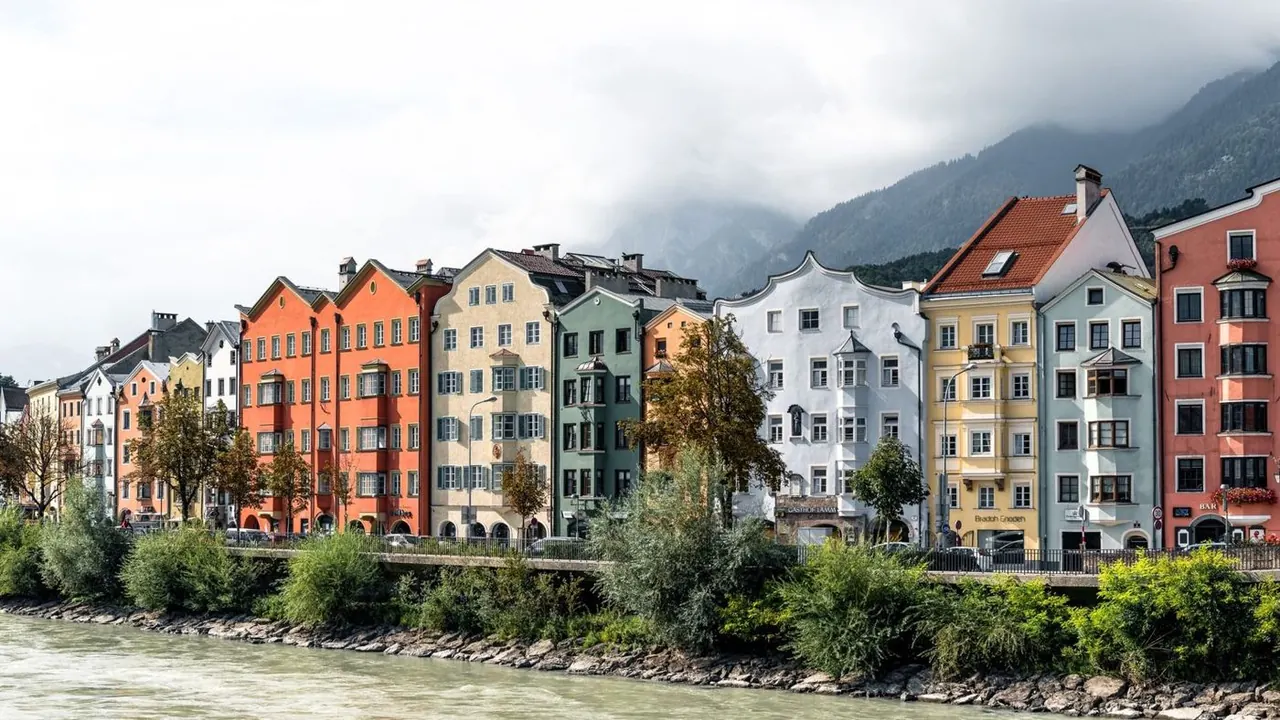
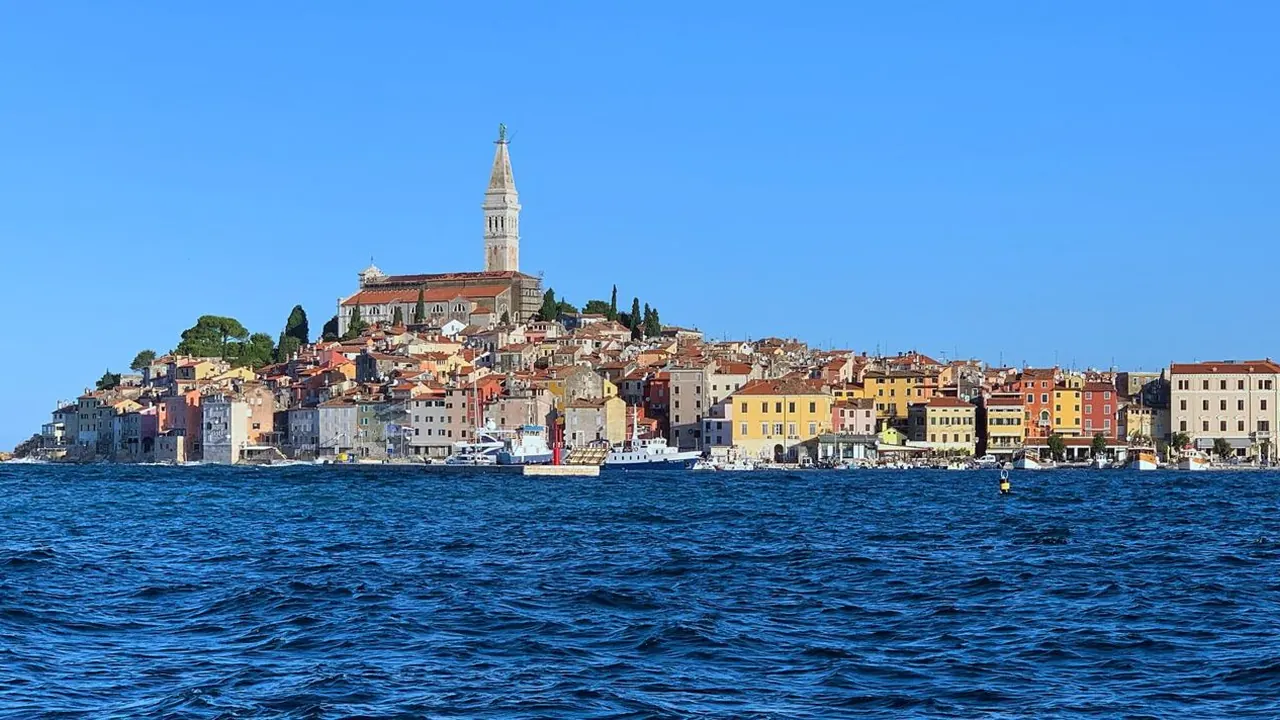
Photos: Innsbruck by Wolfgang Weiser, Pexels License; Rovinj by Vyacheslav Bukharov, CC BY-SA 4.0, cropped.
Innsbruck or Rovinj?
Our verdict in twelve categories, each scored against the same fixed benchmark cities, and the climate month by month, so you can choose for your trip.
Choose Innsbruck for
- nature and the outdoors
- live music and the arts
- getting around
Innsbruck is for travellers who want the mountains to be the trip. Cable cars leave from the edge of the old town, the Karwendel and the Stubai valley are right behind it, and skiing, hut-to-hut hiking and via ferratas are all within easy reach. It also has the stronger Habsburg heritage, a proper theatre and orchestra, and trains that take you to Munich, Salzburg and South Tyrol without a car.
Choose Rovinj for
- beaches
- food and drink
Rovinj suits a slower summer by the sea. You swim off limestone ledges under the pines, take taxi boats to the islands, and spend evenings on Istrian fish, truffles and Malvazija with the sun setting over the water. The town itself is the main sight, and a car opens up Roman Pula, the hill towns and the wine estates inland. If you want culture, night-time entertainment or easy transport, the pleasures here are fewer.
Scoreboard
Twelve categories on one fixed scale from 0 to 100. The shaded stretch is the gap between the two.
Your match
Pick a travel style or drag the sliders, and both match scores follow your weighting.
Wins on nature and the outdoors and live music and the arts with your weighting.
Wins on beaches and food and drink with your weighting.
What matters to you?
Category by category
What the scores mean for a trip.
Beaches & swimming
Rovinj is a real swimming destination and Innsbruck is not. On the Istrian side you get kilometres of limestone ledges, pebble coves and bathing platforms along the Golden Cape, plus quieter coves on St Catherine and Red Island. You can swim straight off the rocks below the old town walls. There is no sand, though, so pack water shoes.
Innsbruck's swimming is a summer afternoon at the Lanser See or Natterer See on the plateaus above town, shallow lakes that warm up in July and August. The Achensee is beautiful but too cold for most people.
Food & drink
Rovinj eats better and more varied food. It has seafood from the boats, scampi buzara, Istrian pasta with truffle, peppery olive oil, local Malvazija and Teran, and konobas in the hinterland that are worth the drive. Innsbruck's cooking is good after exercise but heavy: Gröstl, Kaspressknödel, Speck and Kaiserschmarrn, best eaten at a mountain hut.
Both towns have tourist menus at their centres, around the Golden Roof and along Rovinj's harbourfront. Rovinj at least has a morning market, while Innsbruck adds Viennese-style coffee houses and cheap student places.
Culture & sights
Innsbruck has far more to see. Its Habsburg past left the Hofburg, the Hofkirche with the tomb of Maximilian I, the Golden Roof and Ambras Castle with its cabinet of curiosities. Add the Ferdinandeum and the folk art museum, and you have enough for two or three days.
In Rovinj the town is the attraction: Venetian houses climbing the former island to St Euphemia, the Balbi Arch and Grisia lane. With the Batana House and a small town museum, it fills an afternoon.
Nightlife
Neither is a nightlife destination, but Innsbruck has more going on. Its university fills the bars and small clubs in the brick arches under the railway viaduct, which stay open late at weekends all year, and in winter the resorts around it add après-ski.
Rovinj's evenings are a long dinner and a drink on the rocks at sunset, with a few waterfront cocktail bars. The town is mostly quiet by midnight and has almost nothing on outside summer.
Nature & outdoors
Innsbruck's mountains are on another scale. The Nordkette ridge at about 2,300m is under half an hour from the centre, with the Karwendel nature park behind it and glaciers in the Stubai. In winter that means skiing, and in summer hut-to-hut hiking, via ferratas, mountain biking and rafting.
Rovinj's outdoors is calmer and closer to the water. You can walk or cycle the pine paths of the Golden Cape, kayak or dive around the low islands, and take a boat into the green Lim Fjord. It is pleasant country, but there are no high peaks.
Day trips
Both make good bases, but the trips are very different. From Innsbruck the trains do the work: Hall in Tirol in ten minutes, Munich and Salzburg in a little under two hours, and Bolzano and Merano over the Brenner. You only need a car for the Bavarian castles around Füssen.
Rovinj's day trips are closer together but mostly need a car. Pula's Roman amphitheatre and Poreč's Euphrasian Basilica are each about forty minutes away, the hill towns of Motovun and Hum are inland, and Piran and Trieste are over the border.
Good for families
Innsbruck works better with children, mainly because it is easy to get them into the mountains. The funicular stops at the Alpenzoo with its ibex and lynx, the huts have adventure trails and playgrounds, and there are ski schools on gentle slopes in winter. Rainy days need some planning, though.
Rovinj offers island boat trips, gelato, and resort pools and playgrounds. On the other hand, the shore is rocky, so young children need watching, and the old town's steep, polished cobbles are hard work with a pushchair.
Getting around
Innsbruck is easier on two counts. The flat centre is walkable, and trams, buses, the Hungerburg funicular and regional trains reach the mountains and the valley towns, so you don't need a car.
Rovinj is fine on foot inside the car-free old town and along the promenade, but there is no railway. Getting to the wineries and hill towns realistically means driving, and parking near the old town is tight in summer.
Shopping & style
Neither is a shopping trip, but Innsbruck has a bit more range. Maria-Theresien-Strasse has high-street chains, the old-town arcades sell Tyrolean crafts and loden, and the specialist ski and outdoor shops are excellent.
Rovinj's shopping is food and art to take home: truffle products, olive oil, Teran and lavender, plus the small galleries and studios along Grisia.
Affordability
Both are expensive, for different reasons. Innsbruck adds an Alpine premium in ski season and around the Christmas markets, and cable car tickets add up quickly. The guest cards that bundle lifts and transport take some of the sting out.
In Rovinj, high-summer rooms near the old town and fish sold by weight on the harbour push costs up. Private apartments and the campsites are the way to save, and late spring and September are noticeably cheaper.
Live music & performing arts
Innsbruck has a real programme all year. The Tiroler Landestheater stages opera, drama and dance, the Tyrolean Symphony Orchestra plays through the season, and in summer the Festival of Early Music fills the Spanish Hall at Ambras Castle.
In Rovinj, performance is mostly summer concerts in St Euphemia and on the squares, plus the occasional bitinada singing. For bigger shows you would go to Pula's arena.
Wellness & relaxation
Neither town has thermal springs, so the two are close, but they relax you in different ways. Innsbruck's version is a sauna with mountain views in the spa hotels of Igls after a day on the trails, with the large thermal complexes of the Ötztal and Zillertal about an hour away.
Rovinj's calm comes from the sea: late swims off the rocks, walks in the pines and long lunches, best in May, June and September. In high summer you have to look for quiet away from the crowded harbour.
When should you go?
Pick your month. The climate figures are measured averages, not a forecast.
Innsbruck in July
Rovinj in July
Daytime high, °C
Rainfall in the month, mm
Where the figures come from
Rovinj's temperatures are measured 64 km from the centre, at Trieste.
Rovinj has no rain gauge within 25 km of the centre, so its rainfall comes from a gridded climate dataset read at the city rather than from a gauge further away.
Temperature and rainfall are climate normals, averaged over the years shown. Innsbruck: 1991-2020 normals, Innsbruck-Flughafen (3.3 km from centre). Rovinj: 1991-2020 normals, Trieste (63.7 km from centre).
Innsbruck changes a great deal through the year. December and January are cold, with daytime highs around 4°C, and that is the season for the ski areas rather than the streets. February and March warm steadily, and by late May the old town and the high trails are pleasant. Late May, June and September are the best months for walking. July and August reach about 26°C, warm enough for the plateau lakes, but they are also the wettest months, with 144mm of rain in August.
Rovinj is at its best in summer and the months either side. The sea is warm enough to swim from June to September and is warmest in August, at about 26°C. July and August are hot, around 29°C, and July is the sunniest month. Spring and early autumn are mild and better for cycling and the hill towns, but the rain increases from September and November is the wettest month. Winters on the coast are milder than in the Alps, but too cool for swimming.
Which traveller are you?
On a beach and sun trip, Rovinj is the clear choice. It has clear Adriatic water, rocky coves in the Golden Cape park and taxi boats to quieter islands. Innsbruck offers only a short summer of swimming in small mountain lakes.
For an outdoors trip, Innsbruck has the edge. A funicular and cable cars take you from the old town to an alpine ridge in minutes. Skiing, glacier snow, via ferratas, paragliding and rafting all lie close by. Rovinj's outdoors is gentler: kayaking, diving and cycling.
On a culture and arts trip, Innsbruck gives you more to fill the days. There is the Hofkirche with Maximilian's bronze figures, Ambras Castle, the Hofburg, and opera and early music in historic halls. Rovinj's sights take one afternoon, and its concerts are mostly in summer.
Before you go
| Measure | Innsbruck | Rovinj |
|---|---|---|
| Official language | German, Austrian Sign Language | Croatian |
| Currency | Euro (EUR) | Euro (EUR) |
| Sockets | CF230 V, 50 Hz | CF230 V, 50 Hz |
| Driving side | Right | Right |
| Time zone | UTC+1, UTC+2 in summer | UTC+1, UTC+2 in summer |
| Emergency number | 112 | 112 |
| Elevation | 574 m | 0 m |
| Main airport | Innsbruck Airport (INN)4 km from centre40 non-stop destinations | Pula Airport (PUY)31 km from centre34 non-stop destinations |
| Public holidays this year | 16 days | 14 days |
By the numbers
| Measure | Innsbruck | Rovinj |
|---|---|---|
| City population | 132,499 | 12,968 |
| People per km² | 1,263 | - |
| Museums within 10 km | 28 | 1 |
| UNESCO World Heritage sites within 50 km | 1 | 1 |
| Swim season, months above 21 °C | - | 4 months |
Where else could you go?
Every comparison below shares a destination with this one, so you can follow Innsbruck or Rovinj somewhere new.