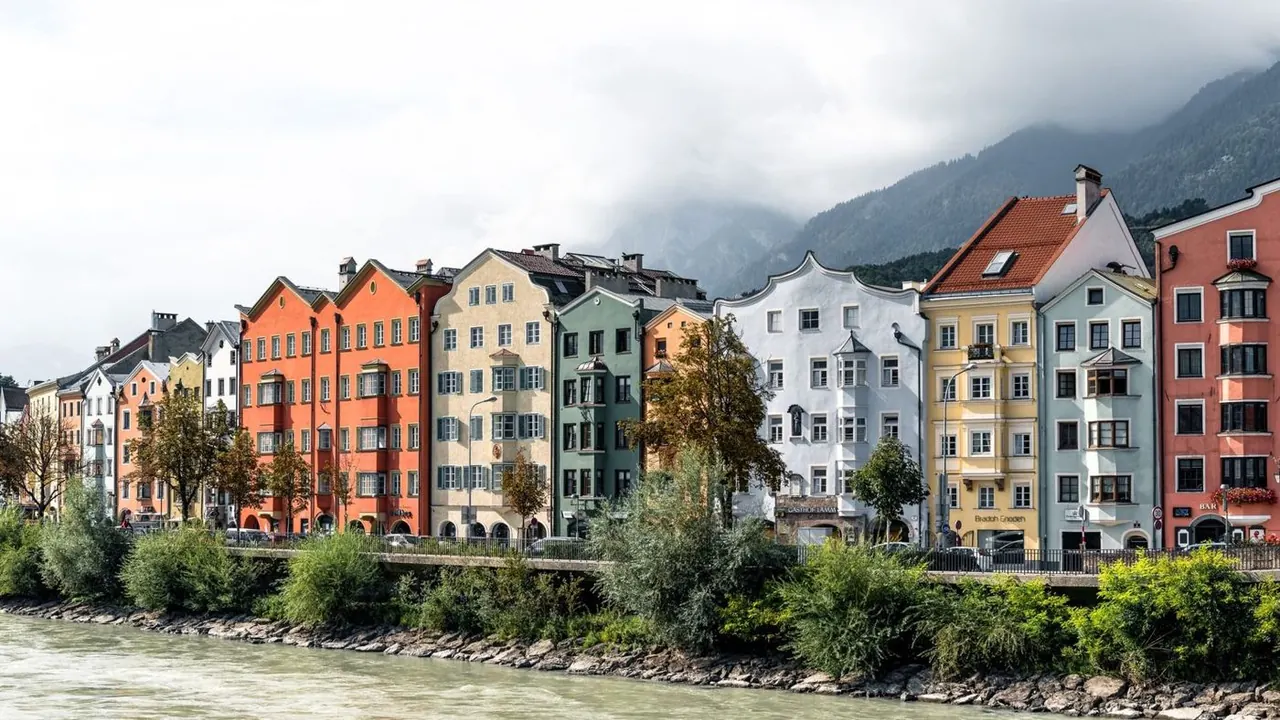
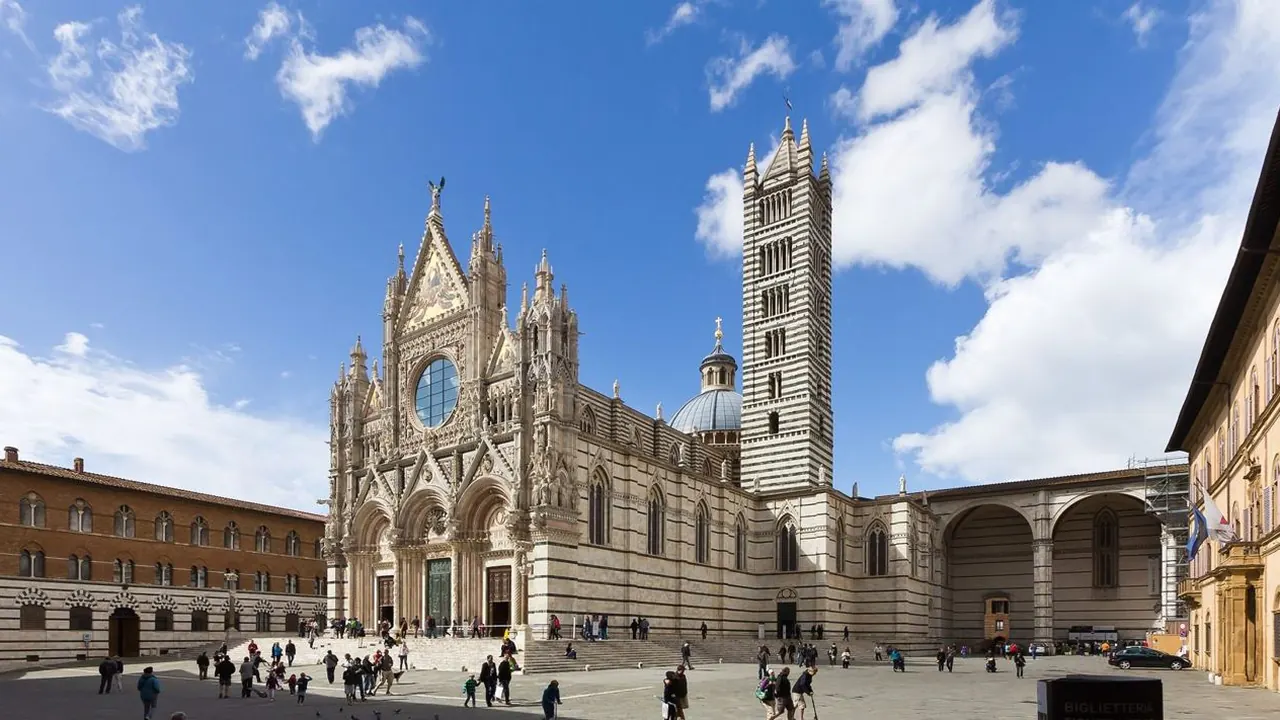
Photos: Innsbruck by Wolfgang Weiser, Pexels License; Siena by Raimond Spekking, CC BY-SA 4.0, cropped.
Innsbruck or Siena?
Our verdict in twelve categories, each scored against the same fixed benchmark cities, and the climate month by month, so you can choose for your trip.
Choose Innsbruck for
- nature and the outdoors
- families
- getting around
Innsbruck suits travellers who want the mountains as the main event, with a small city attached. The funicular from the edge of the old town takes you up to the Nordkette ridge in under half an hour, and skiing, hut-to-hut hiking and via ferratas are all close by. It is also the easier choice with children or without a car, thanks to its flat centre, its trams and the Alpenzoo on the way up the mountain.
Choose Siena for
- food and drink
- day trips
- culture and sights
Choose Siena for art, food and a countryside of hill towns. Its medieval centre, with the Campo, the Duomo and the Sienese painters, has more depth than Innsbruck's Habsburg old town, and the cooking and wine are a real reason to come. The country around it is also the better one for days out, from San Gimignano to the Val d'Orcia and the warm springs, although a hire car makes a big difference.
Scoreboard
Twelve categories on one fixed scale from 0 to 100. The shaded stretch is the gap between the two.
Your match
Pick a travel style or drag the sliders, and both match scores follow your weighting.
Too close to call, 2 points apart
Wins on nature and the outdoors and families with your weighting.
Wins on food and drink and day trips with your weighting.
What matters to you?
Category by category
What the scores mean for a trip.
Beaches & swimming
Neither city is a beach destination, but Innsbruck at least has swimming close by. The small Lanser See and Natterer See on the plateaus above the town warm to about 22°C in high summer, which makes an easy afternoon out.
Siena's nearest sea is the Maremma coast around Castiglione della Pescaia, well over an hour's drive away, so a swim takes a full day. In town, swimming means a hotel or agriturismo pool.
Food & drink
Siena eats noticeably better. It has hand-rolled pici, cinta senese pork, panforte and ricciarelli from bakeries that have been going for generations, and Chianti Classico and Brunello grown nearby, so it has a cuisine and a wine country of its own. The best of it is in the family osterie of the contrade.
Innsbruck's cooking is hearty Tyrolean food such as Gröstl, Kaspressknödel and Kaiserschmarrn, and it tastes best at a mountain hut after a walk. In town the choice is narrower, and most of the wine comes from elsewhere in Austria or from South Tyrol. Neither city offers much beyond its own tradition.
Culture & sights
Siena is the richer city for sights. Its whole walled centre is a UNESCO-listed medieval town. The frescoes in the Palazzo Pubblico, Duccio's Maestà and the Duomo with its Piccolomini Library are works of European importance, and the seventeen contrade give each neighbourhood its own character.
Innsbruck's Habsburg heritage is smaller but still rewarding. It includes the Golden Roof, the Hofburg, Maximilian's tomb ringed by bronze figures in the Hofkirche, and Ambras Castle with its cabinet of curiosities. Two or three days cover either city, but Siena's sights go deeper.
Nightlife
Innsbruck has the livelier evenings, though neither is a party town. Bars and small clubs fill the brick arches under the railway viaduct and stay open late at weekends, and in winter there is also après-ski in the surrounding resorts.
In Siena an evening means a long dinner, a glass of wine on the Campo and a walk through the lit streets, and there are almost no clubs. The exception is the nights around the Palio, when the contrade hold outdoor dinners that run until late.
Nature & outdoors
Innsbruck is one of the few cities where high Alpine terrain starts at the edge of town. The Nordkette ridge, at about 2,300m, is under half an hour from the old town, with the Karwendel behind it. The Stubai Glacier, the ski areas, the via ferratas and rafting fill both summer and winter.
Siena's countryside is gentler and beautiful in a different way. The clay hills of the Crete Senesi and the Val d'Orcia are crossed by white gravel roads that draw cyclists from far away. The area is good for cycling and for walking the pilgrim route, but there are no high mountains.
Day trips
Siena has more and better day trips. San Gimignano, Monteriggioni, the Chianti villages, Volterra, Pienza, Montalcino and abbeys such as Sant'Antimo and San Galgano are all close. Florence is about an hour and a quarter away, though many of the hill towns need a car.
Innsbruck's strength is the railway. Hall in Tirol, Rattenberg and Kitzbühel are easy to reach, and Munich, Salzburg and Bolzano across the Brenner give you days out in three countries without driving.
Good for families
Innsbruck is the easier place with children. The Alpenzoo, with its ibex and bears, is on the funicular route. Summer brings adventure trails and warm plateau lakes, winter brings ski schools on gentle slopes, and the Swarovski Crystal Worlds have a play tower.
Siena is safe and mostly free of cars, and older children enjoy climbing the Torre del Mangia. However, the steep lanes are hard with a pushchair and there are no attractions made for children. A farmhouse with a pool outside town usually works better for families.
Getting around
Innsbruck is simpler to get around. The centre is flat and compact, trams and buses run out to Igls and the Stubai valley, and a funicular from the old town links to the mountain cable cars. The main station is central, so trips by train are easy.
Siena is a walking town too, but it stands on three ridges, so expect steep climbs and stepped lanes, with escalators up from the station in the valley. Trains are slow and few, and the countryside really needs a hire car.
Shopping & style
Shopping is modest in both cities, and the difference is in what you take home. Innsbruck is good for loden jackets, dirndls, woodcarvings and above all outdoor and ski gear, with the chains along Maria-Theresien-Strasse. Siena has majolica ceramics, contrada scarves, leather goods, and panforte and pecorino to take home, as well as a large weekly market by the Fortezza Medicea.
Affordability
Neither city is cheap, and the costs fall in different places. In Innsbruck the Alpine premium shows in hotel rates during the ski season and the Christmas markets, and in cable car tickets. The guest and city cards bundle lifts and transport, and spring and autumn are cheaper.
In Siena, rooms inside the walls are scarce and cost much more around the Palio and through the summer. Osteria meals with house wine are good value, though, and an agriturismo outside town often costs less.
Live music & performing arts
Innsbruck has the broader programme on stage. The Tiroler Landestheater puts on opera, operetta and dance, the Tyrolean Symphony Orchestra plays regularly, and the summer Festival of Early Music uses historic rooms such as the Spanish Hall at Ambras Castle.
Siena's music is specialised rather than broad. The Accademia Chigiana gives concerts in palaces and churches, and Siena Jazz has concerts by its teachers and students. For opera or a major orchestra you have to go to Florence.
Wellness & relaxation
Siena has the stronger case for a restful trip because of the warm springs nearby. Rapolano Terme is about half an hour away. Bagno Vignoni, the free limestone pools of Bagni San Filippo and the sulphur river at Petriolo lie further south and go well with a farmhouse stay.
Innsbruck has no thermal water of its own. Its wellness is the Alpine kind: a hotel sauna in Igls or one of the plateau villages after a day outdoors. The large spa complexes of the Ötztal and Zillertal are about an hour away.
When should you go?
Pick your month. The climate figures are measured averages, not a forecast.
Innsbruck in July
Siena in July
Daytime high, °C
Rainfall in the month, mm
Where the figures come from
Siena's temperatures are measured 45 km from the centre, at Arezzo.
Siena has no rain gauge within 25 km of the centre, so its rainfall comes from a gridded climate dataset read at the city rather than from a gauge further away.
Temperature and rainfall are climate normals, averaged over the years shown. Innsbruck: 1991-2020 normals, Innsbruck-Flughafen (3.3 km from centre). Siena: 2006-2017 (rainfall 1991-2020) normals, Arezzo (45 km from centre).
Innsbruck is at its best from May to September, when the trails and cable cars are open and the days are mild for walking. July and August are the warmest months, with highs around 26°C. They are also the sunniest and the wettest, with about 144mm of rain in August, much of it in afternoon showers. Winter is cold, with highs near 4°C in December and January, and this is the time to come for snow rather than sightseeing.
Siena is warmer all year but gets uncomfortably hot in July and August, at around 31°C, which makes its steep lanes hard going at midday. April, May, late September and October are the best months for walking the town and driving the hill country. Rain is heaviest in late autumn, with about 127mm in November. Neither city has a sea, so summer swimming means lakes near Innsbruck and pools around Siena.
Which traveller are you?
For an outdoors trip, Innsbruck is the clear choice. Cable cars climb from the town to high ridges and the Karwendel park lies just behind them. Summer brings via ferratas, rafting and paragliding, and in winter several ski areas share one pass. Siena offers gentle cycling and walking.
On a culture and arts trip, Siena has more to see. Lorenzetti's frescoes, Duccio's Maestà, the inlaid floor of the Duomo and the Pinacoteca make up a deep collection of medieval art. San Gimignano, Pienza and the frescoed abbeys add more within easy reach.
On a family trip with young children, Innsbruck works better. The Alpenzoo, the adventure trails, the playgrounds by the huts and the warm plateau lakes keep children busy, and the flat centre suits a pushchair. Siena's steep lanes are hard work, and nothing there is built for children.
Before you go
| Measure | Innsbruck | Siena |
|---|---|---|
| Official language | German, Austrian Sign Language | Italian |
| Currency | Euro (EUR) | Euro (EUR) |
| Sockets | CF230 V, 50 Hz | CFL230 V, 50 Hz |
| Driving side | Right | Right |
| Time zone | UTC+1, UTC+2 in summer | UTC+1, UTC+2 in summer |
| Emergency number | 112 | 112 |
| Elevation | 574 m | 322 m |
| Main airport | Innsbruck Airport (INN)4 km from centre40 non-stop destinations | Florence Airport, Peretola (FLR)55 km from centre46 non-stop destinations |
| Public holidays this year | 16 days | 13 days |
By the numbers
| Measure | Innsbruck | Siena |
|---|---|---|
| City population | 132,499 | 52,812 |
| People per km² | 1,263 | 446 |
| Museums within 10 km | 28 | 30 |
| UNESCO World Heritage sites within 50 km | 1 | 5 |
Where else could you go?
Every comparison below shares a destination with this one, so you can follow Innsbruck or Siena somewhere new.