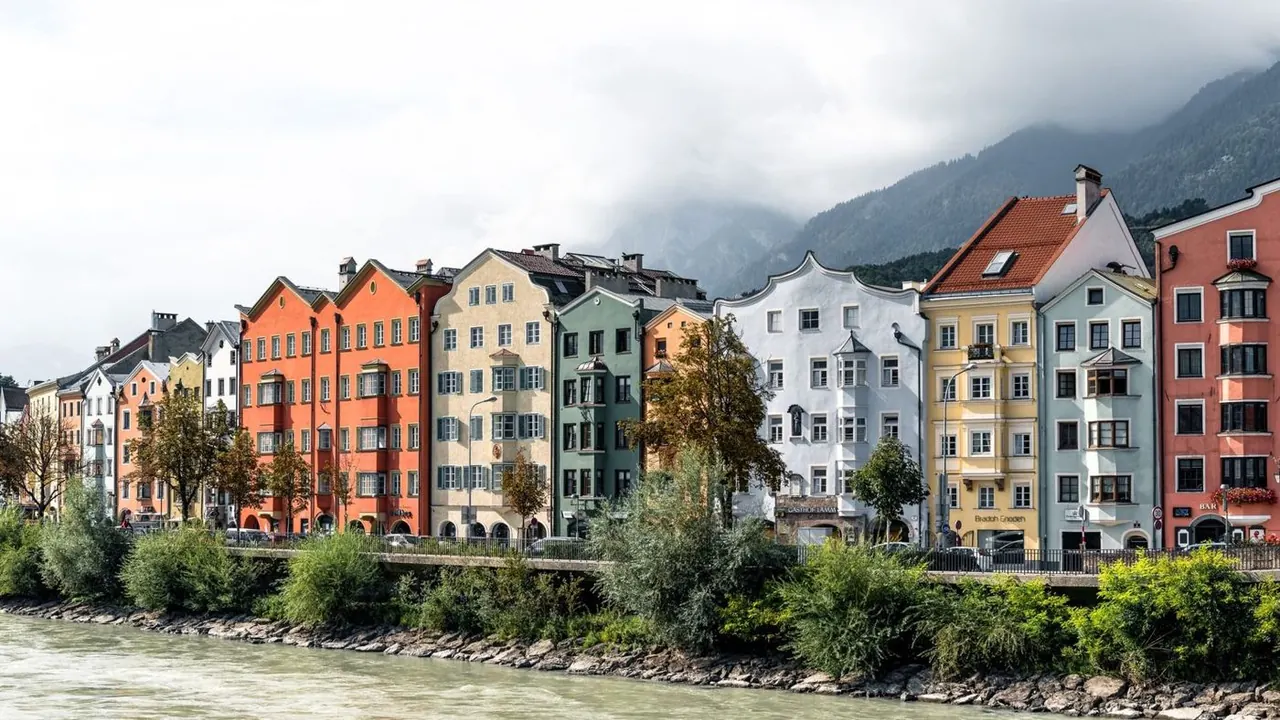
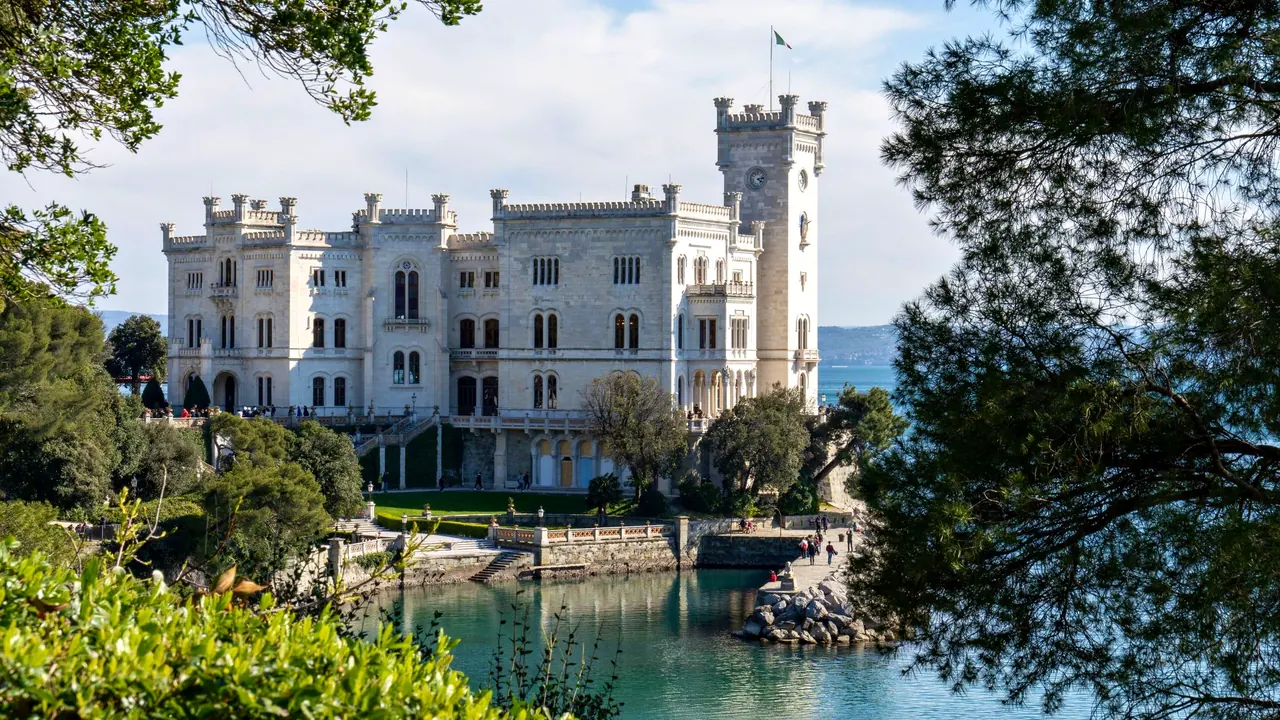
Photos: Innsbruck by Wolfgang Weiser, Pexels License; Trieste by Tibor Szabo, Pexels License.
Innsbruck or Trieste?
Our verdict in twelve categories, each scored against the same fixed benchmark cities, and the climate month by month, so you can choose for your trip.
Choose Innsbruck for
- nature and the outdoors
- getting around
- families
Innsbruck is the choice when the mountains are the reason for the trip. A funicular from the edge of the old town connects with the Nordkette cable cars and puts you on an Alpine ridge before your coffee has gone cold, and the Karwendel, the Stubai Glacier and several linked ski areas are all close by. It suits hikers, skiers and families with active children who want a small, easy town to come back to at night and don't mind Alpine prices.
Choose Trieste for
- beaches
- food and drink
- prices
For the sea, a long lunch and a city with more layers, pick Trieste. You get Habsburg squares facing the Adriatic, buffets carving boiled pork, grand coffee houses and summer swims off the Barcola promenade. It also has the richer opera season, a wider spread of day trips into Slovenia, Friuli and Istria, and gentler costs. The Karst behind it is good for walking, but its cliffs and gorges are modest next to Innsbruck's high peaks and glaciers.
Scoreboard
Twelve categories on one fixed scale from 0 to 100. The shaded stretch is the gap between the two.
Your match
Pick a travel style or drag the sliders, and both match scores follow your weighting.
Wins on nature and the outdoors and getting around with your weighting.
Wins on beaches and food and drink with your weighting.
What matters to you?
Category by category
What the scores mean for a trip.
Beaches & swimming
These two are far apart here. Innsbruck has no sea, so swimming means the small Lanser See and Natterer See on the plateaus, warm only in high summer. The Achensee is beautiful but too cold for most swimmers.
Trieste has a proper sea, even without sand. At Barcola you climb down ladders from concrete platforms into a clear, warm Adriatic. Old bathing establishments, the pebble coves at Sistiana and Duino, and Piran across the border add more variety. For anyone happy to swim off rocks, the sea is part of everyday life all summer.
Food & drink
Innsbruck feeds you well after a day outside, with Gröstl, Kaspressknödel and Kaiserschmarrn, often best eaten at a mountain hut. In town the choice narrows quickly beyond traditional inns and coffee houses.
Trieste has more character at the table. Its buffets serve boiled pork with horseradish, and jota and Adriatic sardoni appear on the same menus as strudel. It also has its own coffee language and the seasonal osmize on the Karst, where farmers pour Vitovska and Terrano. Neither city is strong on fine dining, but Trieste gives a food lover more to seek out.
Culture & sights
Both cities grew under the Habsburgs, and Trieste's heritage has a little more range. Innsbruck's is compact and courtly: the Golden Roof, the Hofburg, Maximilian's tomb with its bronze figures in the Hofkirche, and Ambras Castle's cabinet of curiosities. Two or three days cover it well.
Trieste adds more centuries and more communities. It has a Roman theatre and Byzantine-style mosaics in San Giusto cathedral, the grand seafront square of Piazza Unità and the Serbian Orthodox church on the Canal Grande. One of Europe's largest synagogues, the sobering Risiera di San Sabba and white Miramare Castle on the shore complete the picture.
Nightlife
Neither city is built for big nights, but they go quiet in different ways. Innsbruck's student crowd fills the bars and small clubs in the brick arches under the railway viaduct, which stay open late at weekends. In winter, much of the partying moves out to après-ski in the resorts.
Trieste is about the aperitivo rather than dancing. People drink spritz and local white wine around Piazza Unità and in Cavana, and on summer nights they move to kiosks along Barcola. If you want a late club, Innsbruck has slightly more. If you want a long evening by the water, choose Trieste.
Nature & outdoors
Innsbruck is in a different league. The Nordkette ridge at about 2,300m is less than half an hour from the old town, with the Karwendel behind it and the Stubai and Wipp valleys across the valley. Together they give skiing for much of the year, glaciers, via ferratas, paragliding and rafting.
Trieste's outdoors is about sea and limestone. It has the Strada Napoleonica above the gulf, the Rilke Path near Duino, climbing in Val Rosandra, and caves such as the Grotta Gigante and Škocjan. Sailing and snorkelling in the Miramare reserve are also possible. It is lovely, but the Alps are a longer day out from here.
Day trips
Both are well-placed bases near three countries, and Trieste has the richer choice. From Innsbruck the trains reach Hall in Tirol and Rattenberg, Munich and Salzburg, and Bolzano with Ötzi over the Brenner. Neuschwanstein is within reach by car.
Trieste offers more variety within a short radius. Aquileia's mosaic floor, star-shaped Palmanova and Cividale are all about an hour away, along with the Collio wine villages and Piran on its peninsula. Ljubljana and Postojna are a little further, and Venice by train makes a long but realistic day.
Good for families
Both are safe and calm, but Innsbruck gives children more to do. The funicular stops at the Alpenzoo, where ibex, bears and wolves live. In summer the mountains have adventure trails and hut playgrounds, and in winter there are ski schools.
Trieste works better for older children who will be impressed by the Grotta Gigante, Miramare's gardens and boats across the bay. Toddlers fare less well with the rocky swimming, the stepped streets and the winter wind.
Getting around
Innsbruck is the easier of the two. Its flat centre takes minutes to cross on foot, trams reach Igls and the Stubai valley, and the mountain lifts start at the edge of the old town. Ski buses and valley trains handle the rest.
Trieste's waterfront and Borgo Teresiano are flat and easy too, but the climb to San Giusto involves long flights of steps. There is no metro, though dense buses and passenger boats to Muggia fill the gap. A car only matters for the Karst villages and border trips.
Shopping & style
Neither city is a shopping destination, and each fills an afternoon at most. What differs is what you take home. In Innsbruck it is loden jackets, woodcarvings, Speck and kit from excellent outdoor and ski shops along Maria-Theresien-Strasse and the old-town arcades. In Trieste it is roasted coffee, Karst wine and presnitz, with antique shops in the old-town lanes for browsing.
Affordability
Trieste is the gentler place on the wallet. A standing coffee and a buffet plate cost little, buses are cheap, and Barcola, the cathedral hill and the Karst are free. Seafood dinners and smart hotels still charge normal Italian city prices.
Innsbruck adds an Alpine resort premium, which is steepest in ski season and at Christmas. Cable car tickets mount up on an active trip, though guest cards and a spring or autumn visit soften the cost.
Live music & performing arts
Trieste has the stronger stage. The waterfront Teatro Verdi runs a full opera and ballet season, and the city keeps an operetta tradition that is unusual in Italy. The Politeama Rossetti and the Slovenian-language theatre add drama, and there are summer concerts in the castle courtyard.
Innsbruck's Landestheater and symphony orchestra make a solid provincial programme. Its standout is the summer Festival of Early Music in settings such as Ambras Castle's Spanish Hall. It is worth timing a trip around if you love Baroque music.
Wellness & relaxation
Neither city has thermal baths, and each relaxes you in its own way. Innsbruck's wellness is Alpine: hotel spas in Igls with mountain views, a sauna after a long hike, and large thermal complexes in the Ötztal and Zillertal about an hour away. Trieste's is slower and more urban, built on long sittings in coffee houses and sunset walks along the Molo Audace, with only modest hotel spas.
When should you go?
Pick your month. The climate figures are measured averages, not a forecast.
Innsbruck in July
Trieste in July
Daytime high, °C
Rainfall in the month, mm
Temperature and rainfall are climate normals, averaged over the years shown. Innsbruck: 1991-2020 normals, Innsbruck-Flughafen (3.3 km from centre). Trieste: 1991-2020 normals, Trieste (1.6 km from centre).
Innsbruck has two good seasons. Winter, with daytime highs around 4°C, is for skiing and the Christmas markets. Summer is for the mountains, with highs in the mid-twenties from June to August. That is also the wettest part of the year, with about 144mm in August, so expect afternoon storms on the high trails. May, September and early October are milder and drier, and often the most pleasant months for walking around town and along the valley. From November to February it is cold and grey unless you are skiing.
Trieste is warmer all year, and summer is clearly its peak. July and August are very sunny, with daytime highs near 29°C, and the sea is warm enough for swimming from June to September, reaching about 25°C at its warmest. High summer can feel hot on the steep streets. The rain sets in from September, and the wet stretch runs through to November, which is the dampest month with about 125mm. Winters are milder than Innsbruck's but can turn raw when the Bora blows. April, May and early June are the best months for exploring on foot.
Which traveller are you?
On a beach and sun trip, Trieste is the clear pick. Its summers are long and sunny, and from June to September the Adriatic is warm enough to swim off the rocks every day. Innsbruck's plateau lakes are worth an afternoon in high summer, and little more.
For an outdoors trip, go to Innsbruck. Lifts from the centre reach high ridges, glaciers and the Karwendel, with skiing in winter and hut-to-hut hiking, via ferratas and rafting in summer. Trieste's cliff paths and sailing are lovely, but much gentler.
On a trip on a tight budget, Trieste goes further, because many of its best moments come from just being in the city, by the sea and in the old squares. In Innsbruck the finest days usually mean paying to get up the mountain, and rooms are expensive.
Before you go
| Measure | Innsbruck | Trieste |
|---|---|---|
| Official language | German, Austrian Sign Language | Italian |
| Currency | Euro (EUR) | Euro (EUR) |
| Sockets | CF230 V, 50 Hz | CFL230 V, 50 Hz |
| Driving side | Right | Right |
| Time zone | UTC+1, UTC+2 in summer | UTC+1, UTC+2 in summer |
| Emergency number | 112 | 112 |
| Elevation | 574 m | 2 m |
| Main airport | Innsbruck Airport (INN)4 km from centre40 non-stop destinations | Trieste Airport (TRS)31 km from centre32 non-stop destinations |
| Public holidays this year | 16 days | 13 days |
By the numbers
| Measure | Innsbruck | Trieste |
|---|---|---|
| City population | 132,499 | 198,417 |
| People per km² | 1,263 | 2,332 |
| Museums within 10 km | 28 | 33 |
| UNESCO World Heritage sites within 50 km | 1 | 5 |
| Swim season, months above 21 °C | - | 4 months |
Where else could you go?
Every comparison below shares a destination with this one, so you can follow Innsbruck or Trieste somewhere new.
- Rovinjvs Trieste
- Ljubljanavs Trieste
- Bledvs Trieste
- Munichvs Innsbruck
- Cortina d'Ampezzovs Innsbruck
- Venicevs Trieste