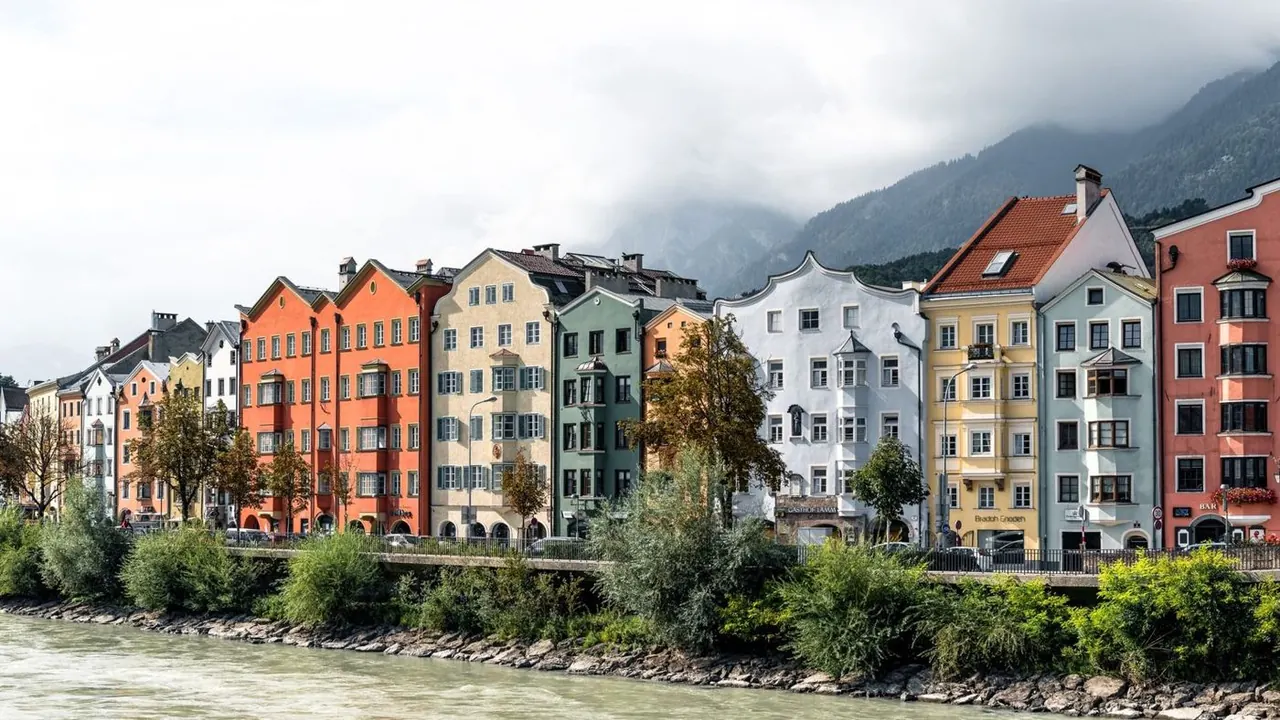
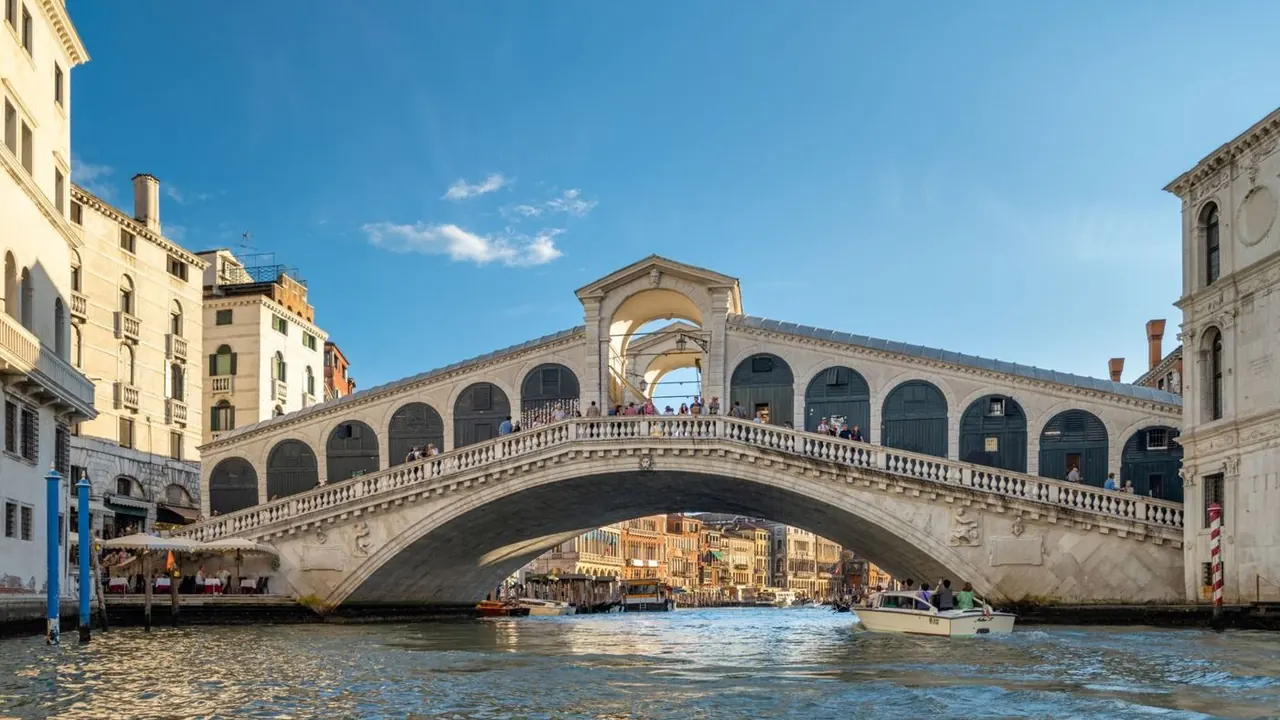
Photos: Innsbruck by Wolfgang Weiser, Pexels License; Venice by David Vives, Pexels License.
Innsbruck or Venice?
Our verdict in twelve categories, each scored against the same fixed benchmark cities, and the climate month by month, so you can choose for your trip.
Choose Innsbruck for
- nature and the outdoors
- prices
- families
Choose Innsbruck if the mountains are the reason for going. Cable cars take you from the old town to Alpine ridges in less than half an hour, and the same base works for skiing in winter and for hiking, climbing and biking in summer. The town is compact and easy with children, a little less expensive than Venice and livelier at night, though its sights take only a couple of days.
Choose Venice for
- beaches
- culture and sights
- food and drink
Venice is for travellers who come to look, listen and eat slowly. It has one of Europe's greatest concentrations of art and architecture, standing on water, along with La Fenice, cicchetti at the bacari and fast trains to Padua and Verona. In return you get high prices, crowded main routes and very little open landscape.
Scoreboard
Twelve categories on one fixed scale from 0 to 100. The shaded stretch is the gap between the two.
Your match
Pick a travel style or drag the sliders, and both match scores follow your weighting.
Too close to call, 2 points apart
Wins on nature and the outdoors and prices with your weighting.
Wins on beaches and culture and sights with your weighting.
What matters to you?
Category by category
What the scores mean for a trip.
Beaches & swimming
Venice has an actual beach: the Lido's long stretch of fine Adriatic sand is a short vaporetto ride away, and the water is shallow and warm in high summer. It is greenish rather than clear, and most visitors give it one afternoon at most.
Innsbruck has no sea at all. On hot days people swim in the small plateau lakes such as the Lanser See, while the Achensee is beautiful but too cold for most swimmers.
Food & drink
Innsbruck eats in the Tyrolean way: Gröstl, Kaspressknödel in broth, Speck and Kaiserschmarrn, best of all at a mountain hut at the end of a walk, with Viennese-style coffee houses in the old town for cake and strudel. Beyond that the range is narrow, and there is no market or street food culture.
Venice offers the more interesting eating, as long as you steer clear of the picture-menu places around San Marco. Cicchetti with a small glass of wine in the bacari of Cannaregio and Castello, the Rialto fish market and lagoon dishes such as cuttlefish ink risotto and bigoli in salsa give it a cuisine of its own.
Culture & sights
Venice is one of the great art cities of Europe. You have the Basilica and the Doge's Palace, Grand Canal palazzi, Tintoretto at San Rocco and masterpieces in small parish churches, all in a cityscape with nothing modern in view.
Innsbruck's Habsburg heritage is real but compact. The Golden Roof, the Hofburg, Maximilian's tomb with its bronze figures and Ambras Castle make for two or three rewarding days rather than a week.
Nightlife
Neither city is built for big nights out, but Innsbruck stays up later. Its university crowd fills the bars and small clubs in the brick arches under the railway viaduct at weekends, and in winter there is après-ski in the resorts.
Venice's best moment is the aperitivo, with a spritz on the Fondamenta della Misericordia. After that, only Campo Santa Margherita keeps going, and the canals go quiet around midnight.
Nature & outdoors
This is where the two cities differ most. From Innsbruck, a funicular and cable cars lift you to a ridge at about 2,300m, with the Karwendel nature park behind it and glaciers, via ferratas, rafting and ski slopes all within easy reach.
Venice's outdoors is the flat, quiet lagoon. You can watch herons and flamingos in the marshes around Torcello, take a rowing lesson or cycle the sea walls of Pellestrina. Real hills mean a drive, and the Dolomites are more than two hours away.
Day trips
Both make good bases, but Venice has the richer choice nearby. Padua is half an hour away by train, and Vicenza and Verona are not much further. The islands of Murano, Burano and Torcello make a full day out without leaving the lagoon.
Innsbruck's strength is reaching three countries. You can visit medieval Hall in Tirol and Rattenberg, take the train to Munich or Salzburg, or cross the Brenner to Bolzano and the museum of Ötzi the Iceman.
Good for families
Innsbruck is the easier place to bring children, because it gives them room to run and plenty to do besides look. In summer there are adventure trails on the mountains and warm plateau lakes for a family swim. In winter there are ski schools on gentle slopes near town, and the play tower at the Swarovski Crystal Worlds in Wattens works in any season.
Its weak spot is a wet day, when the town itself has little to keep young children busy.\n\nVenice wins children over at first: no cars, a boat ride for every journey, and alleys to get lost in. Once that wears off, though, there is less to hold them. Murano's glass furnaces, the dinosaurs at the natural history museum and a sandy afternoon at the Lido fill two or three days, while the humid midsummer heat, near 30°C, soon tires small legs. It works best as a short trip with children old enough to enjoy the walking and the art.
Getting around
Innsbruck is the smoother city to move around. The flat centre takes minutes to cross on foot, trams run out to Igls and the Stubai valley, and the mountains begin at a funicular beside the old town.
Venice is a city you walk, with the vaporetto along the Grand Canal and out to the islands. Its alleys are confusing, the main boat lines are slow and crowded, and every stepped bridge is a hurdle with luggage or a pushchair.
Shopping & style
Venice gives shoppers more to look for, mostly crafts with centuries behind them: Murano glass, Burano lace, papier-mâché masks, marbled paper and furlane slippers. There are also designer names along Calle Larga XXII Marzo. The catch is telling real workshop pieces from imported copies.
In Innsbruck, the shopping fills an afternoon. Look for loden, dirndls, Speck and schnapps, and its outdoor and ski shops are excellent.
Affordability
Neither city is cheap, but Venice costs more. Rooms in the historic centre are among the most expensive in Italy, and boats and church entry fees add up. Staying in Mestre or eating cicchetti at the counter helps.
Innsbruck charges Alpine resort prices, especially in ski season. Even so, spring and autumn are noticeably cheaper, and the city cards that bundle transport, lifts and sights make an active stay easier on the budget.
Live music & performing arts
Venice has the bigger stage. La Fenice, where Verdi and Rossini held premieres, runs a full season of opera and ballet, the Biennale adds contemporary festivals, and Vivaldi plays nightly in churches, though the quality of those concerts varies.
Innsbruck offers a solid provincial programme at the Tiroler Landestheater. Its high point is the summer Festival of Early Music, held in settings such as the Spanish Hall at Ambras Castle.
Wellness & relaxation
The two are broadly level, and neither has thermal baths in town. They differ in the kind of calm on offer. In Innsbruck it is mountain air, a sauna after a day outdoors and hotel spas with views in Igls, with the big Ötztal spas about an hour away.
Venice's calm lies in its car-free quiet at dawn and in the residential lanes of Castello and Giudecca. For real thermal pools, Abano Terme is about an hour away.
When should you go?
Pick your month. The climate figures are measured averages, not a forecast.
Innsbruck in July
Venice in July
Daytime high, °C
Rainfall in the month, mm
Where the figures come from
Venice has no rain gauge within 25 km of the centre, so its rainfall comes from a gridded climate dataset read at the city rather than from a gauge further away.
Venice's sunshine is measured 26 km from the centre, at Treviso / S. Angelo.
Temperature and rainfall are climate normals, averaged over the years shown. Innsbruck: 1991-2020 normals, Innsbruck-Flughafen (3.3 km from centre). Venice: 1991-2020 normals, Venezia / Tessera (6.7 km from centre).
Innsbruck's summer is mild rather than hot, with highs around 26°C in July. That suits walking and hiking well, but summer is also the wettest part of the year, with frequent mountain showers and about 144mm of rain in August. Late spring and September are drier and still warm enough for trails and town. From December to February the town stays cold, which is what the ski season needs.
Venice runs hotter, with highs near 29°C in July and August. The sea at the Lido reaches about 25°C, warm enough for swimming from June to September, but the alleys can feel close and humid at midday. May, June and late September are the best months for walking the city. Autumn brings Venice's heaviest rain, while winter is cool and grey but rarely harsh.
Which traveller are you?
On an outdoors trip, Innsbruck is the obvious choice. The Nordkette, the Karwendel and the Stubai Glacier are all reached by funicular, tram or bus. Venice offers kayaking on the lagoon and flat cycling on the Lido, which is gentle by comparison.
For a culture and arts trip, Venice is in a different league. It has Titian, Tintoretto and the Accademia, the Biennale, and opera at La Fenice, and a week barely covers it. Innsbruck's Hofkirche and Ambras Castle are fine sights, but they fill two or three days.
On a family trip with young children, Innsbruck is easier. The centre is flat and good for pushchairs, the Alpenzoo is on the funicular line, and the mountain huts have playgrounds. In Venice, children love the boats but the stepped bridges, summer crowds and lack of parks soon wear parents down.
Before you go
| Measure | Innsbruck | Venice |
|---|---|---|
| Official language | German, Austrian Sign Language | Italian |
| Currency | Euro (EUR) | Euro (EUR) |
| Sockets | CF230 V, 50 Hz | CFL230 V, 50 Hz |
| Driving side | Right | Right |
| Time zone | UTC+1, UTC+2 in summer | UTC+1, UTC+2 in summer |
| Emergency number | 112 | 112 |
| Elevation | 574 m | 2 m |
| Main airport | Innsbruck Airport (INN)4 km from centre40 non-stop destinations | Venice Marco Polo Airport (VCE)7 km from centre103 non-stop destinations |
| Public holidays this year | 16 days | 13 days |
By the numbers
| Measure | Innsbruck | Venice |
|---|---|---|
| City population | 132,499 | 250,369 |
| People per km² | 1,263 | 602 |
| Museums within 10 km | 28 | 52 |
| UNESCO World Heritage sites within 50 km | 1 | 5 |
| Swim season, months above 21 °C | - | 4 months |
Where else could you go?
Every comparison below shares a destination with this one, so you can follow Innsbruck or Venice somewhere new.