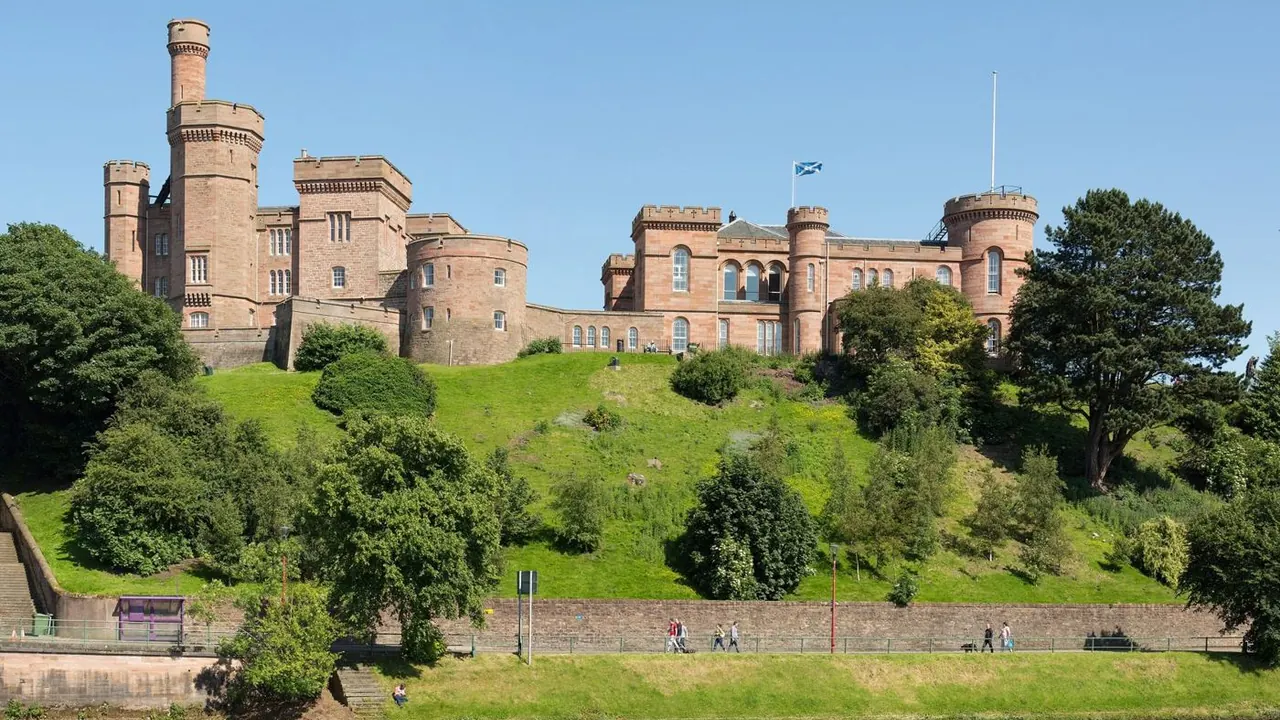
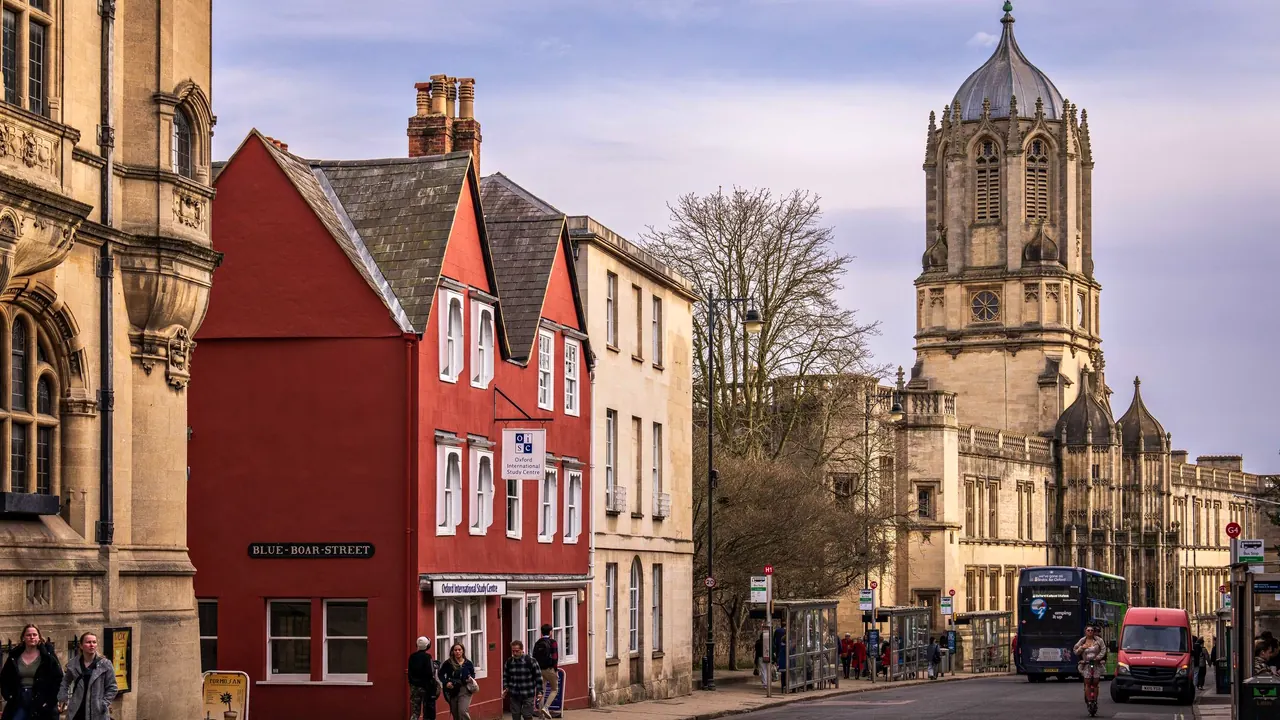
Photos: Inverness by Diliff, CC BY-SA 3.0, cropped; Oxford by Mark Stebnicki, Pexels License.
Inverness or Oxford?
Our verdict in twelve categories, each scored against the same fixed benchmark cities, and the climate month by month, so you can choose for your trip.
Choose Inverness for
- nature and the outdoors
- beaches
- prices
Inverness is a base for the Highlands rather than a destination in itself. Choose it if the trip is about Loch Ness, Glen Affric, the Cairngorms and dolphins off Chanonry Point, and you are happy to drive or join tours, then end the day with a slow malt in a wood-panelled pub. The long, light summer evenings make it a good fit for walkers who want plenty of hours outdoors.
Choose Oxford for
- culture and sights
- day trips
- getting around
Oxford suits travellers who want the city itself to be the attraction. College quadrangles, the Ashmolean and Evensong are all a short walk apart, and Blenheim, the Cotswolds, Bath and London are easy outings. It works well without a car and for anyone who would rather spend the day among old buildings and museums than in the mountains.
Scoreboard
Twelve categories on one fixed scale from 0 to 100. The shaded stretch is the gap between the two.
Your match
Pick a travel style or drag the sliders, and both match scores follow your weighting.
Wins on nature and the outdoors and beaches with your weighting.
Wins on culture and sights and day trips with your weighting.
What matters to you?
Category by category
What the scores mean for a trip.
Beaches & swimming
Neither city is a beach destination, but Inverness at least has sand nearby. Nairn's long beach is just to the east, and Rosemarkie and Chanonry Point on the Black Isle are prettier still. They are good for a breezy walk and for watching dolphins, though the firth stays too cold for most swimmers.
Oxford is a long way inland, so swimming means a dip in the Thames at Port Meadow, in the Cherwell or in the open-air pool at Hinksey on a warm afternoon.
Food & drink
Both cities feed you well for a few days without being places to travel for food. The difference is in what is on the plate. Inverness cooks from the Highland larder, with langoustines, venison, smoked salmon and Cullen skink, and its real drinking culture is single malt whisky.
Oxford has no cuisine of its own but more variety: ale and a Sunday roast in riverside pubs, the counters of the Covered Market, and cheap Middle Eastern, South Asian and Caribbean food along Cowley Road.
Culture & sights
Here Oxford is in a different league, because its centre is the sight. College quadrangles, the Radcliffe Camera, the Bodleian and Christ Church are all within minutes of each other. The Ashmolean, the Pitt Rivers and the Natural History Museum add two or three days of first-rate museums.
In Inverness, the castle on its bluff, the cathedral and the compact museum fill a morning. Its most powerful site, Culloden battlefield, is outside town, so history lovers spend much of their time on the road.
Nightlife
Both are pub towns that are quiet by midnight, but Oxford has more going on. Its historic taverns fill with students in term time, the riverside pubs come into their own on summer evenings, and Cowley Road adds late bars and a couple of small clubs, although everything slows down over the long summer break.
In Inverness, the pubs around Church Street and the river are for a slow malt, and there are a couple of late bars for weekends. Most visitors turn in early before a day in the glens.
Nature & outdoors
This is the strength of Inverness. Loch Ness begins twenty minutes away, Glen Affric's pine forest and the Cairngorms are about an hour off, and Torridon and the road to Skye are within two hours. That means mountain hiking, cycling and skiing in winter.
Oxford's countryside is gentle and close at hand: Port Meadow, the Thames Path and punting on the Cherwell. Further out, the Cotswolds, the Chilterns and the Ridgeway offer long, mild walks rather than anything rugged.
Day trips
Oxford is much the stronger base for outings. Blenheim Palace is twenty minutes away and the Cotswold villages are within an hour. London, Stratford, Warwick, Windsor and Bath all make a manageable day, and several of them are on the railway.
From Inverness, day trips go to single sites: Urquhart and Cawdor castles, Fort George, the Clava Cairns and the Speyside distilleries. They are rewarding, but there is no other city within reach and buses are thin, so most of them need a car or a tour.
Good for families
Both are small, safe and easy with children, so the choice comes down to the kind of day you want. Inverness leans outdoors, with boat trips on Loch Ness, dolphins at Chanonry Point, the Ness Islands paths, the Aquadome for wet days and the Highland Wildlife Park within an hour.
Oxford is more about museums and walking: dinosaur skeletons at the Natural History Museum, the curiosities of the Pitt Rivers, an afternoon punting and the Harry Potter settings at Christ Church. Blenheim's maze is a short trip out.
Getting around
You can walk across either centre in about twenty minutes, but Oxford is far easier once you go further. Buses are frequent, bicycles are everywhere and the station is a short walk from the centre, so a car is more burden than help, and London is an hour away by train.
Inverness has a central station with scenic lines north, south and west, and buses along Loch Ness. The glens and distilleries, though, lie down single-track roads, so most visitors hire a car or book tours.
Shopping & style
Inverness fills an hour or two of browsing, while Oxford can fill an afternoon. In Inverness that means the Victorian Market arcade, the high street and a second-hand bookshop in a former church. The things worth taking home are Highland ones: tweed, tartan, Celtic silver and a bottle of malt from a specialist shop.
Oxford has the same everyday chains, but more character in the detail. There are the small traders of the Covered Market, the independent shops of Jericho and Little Clarendon Street, sellers of antique maps and prints, and the historic bookselling on Broad Street. For designer labels, the outlet village near Bicester is twenty minutes away.
Affordability
Room prices in Inverness swing with the seasons. In July and August the gateway to Loch Ness fills up and prices climb steeply, but in the shoulder months and in winter they come down considerably. The glens and lochs you came for cost nothing to walk in, so if you avoid high summer it is the easier of the two to do on a modest budget. Car hire, tours and distillery visits are the costs to watch.
In Oxford, demand barely lets up. Term, conferences and graduations keep its few central rooms expensive for much of the year, which is why many visitors stay out by the ring road or come for the day from London. Once you are there, free museums, pub meals and Cowley Road cafés keep spending down, but college entry fees add up.
Live music & performing arts
Oxford has more live performance, and better. The choirs of Christ Church, Magdalen and New College sing Evensong on most evenings in term, and hearing them is a memorable experience. The Sheldonian and the Holywell Music Room add orchestral concerts, chamber music and jazz.
Inverness relies on Eden Court for touring theatre, dance and concerts. What sets it apart is traditional music, with fiddle and accordion sessions in pubs most nights and Gaelic song at the summer festivals and Highland Games.
Wellness & relaxation
Neither city has a spa culture, so relaxing here is about pace rather than treatments. Inverness has spas at country-house hotels around Loch Ness, the sauna at the Aquadome and quiet evenings on the Ness Islands, ending with a dram by the fire.
In Oxford, the calm is in the gardens: the Botanic Garden, the walled college gardens, Addison's Walk past Magdalen's deer park early in the morning, or a slow afternoon on a punt.
When should you go?
Pick your month. The climate figures are measured averages, not a forecast.
Inverness in July
Oxford in July
Daytime high, °C
Rainfall in the month, mm
Where the figures come from
Inverness has no rain gauge within 25 km of the centre, so its rainfall comes from a gridded climate dataset read at the city rather than from a gauge further away.
Inverness's sunshine is measured 43 km from the centre, at Kinloss.
Oxford's temperatures are measured 37 km from the centre, at Fairford Royal Air Force Base.
Oxford has no rain gauge within 25 km of the centre, so its rainfall comes from a gridded climate dataset read at the city rather than from a gauge further away.
Oxford's sunshine is measured 57 km from the centre, at Lyneham.
Temperature and rainfall are climate normals, averaged over the years shown. Inverness: 2005-2020 (sunshine 1991-2020, rainfall 1991-2020) normals, Inverness / Dalcross (11.9 km from centre). Oxford: 1961-1990 (sunshine 1991-2020, rainfall 1991-2020) normals, Fairford Royal Air Force Base (37 km from centre).
Neither city gets truly hot, and both are at their best from late May to September. Oxford is the warmer, sunnier and drier of the two. July reaches about 22°C against 19°C in Inverness, and rainfall stays moderate all year, so it is pleasant for walking the streets and punting from late spring well into September.
Inverness has long days from May to August, and May is often its sunniest month. Rain builds through autumn, reaching about 100mm a month from October to January, and the short winter days limit time in the hills. The Moray Firth peaks at about 14°C, so even in August its beaches are for walking rather than swimming. Winters in both cities are cold and grey.
Which traveller are you?
For an outdoors trip, Inverness is the clear choice. Loch Ness, Glen Affric and the Cairngorms are all within about an hour, with proper hiking, cycling and dolphin-watching. Oxford's riverside meadows and Cotswold paths are pleasant, but nothing about them is wild.
On a culture and arts trip, Oxford wins comfortably. The college quadrangles, the Bodleian, the Ashmolean and Evensong in candlelit chapels are all a short walk apart. Inverness has a castle view and a compact museum in town, and Culloden is out on the moor.
For a short city break, Oxford is the easier choice. The centre is compact and some streets are closed to traffic, the station is a short walk away and the sights fill two full days. The best of Inverness lies down single-track roads that need a car.
Before you go
| Measure | Inverness | Oxford |
|---|---|---|
| Official language | English | English |
| Currency | Pound Sterling (GBP) | Pound Sterling (GBP) |
| Sockets | G230 V, 50 Hz | G230 V, 50 Hz |
| Driving side | Left | Left |
| Time zone | UTC, UTC+1 in summer | UTC, UTC+1 in summer |
| Emergency number | 112 or 999 | 112 or 999 |
| Elevation | 7 m | 73 m |
| Main airport | Inverness Airport (INV)12 km from centre15 non-stop destinations | London Heathrow Airport (LHR)63 km from centre224 non-stop destinations |
| Public holidays this year | 10 days | 8 days |
By the numbers
| Measure | Inverness | Oxford |
|---|---|---|
| City population | 47,380 | 147,500 |
| People per km² | 2,289 | 3,235 |
| Museums within 10 km | 3 | 11 |
| UNESCO World Heritage sites within 50 km | 0 | 1 |
| Swim season, months above 21 °C | None | - |
Where else could you go?
Every comparison below shares a destination with this one, so you can follow Inverness or Oxford somewhere new.