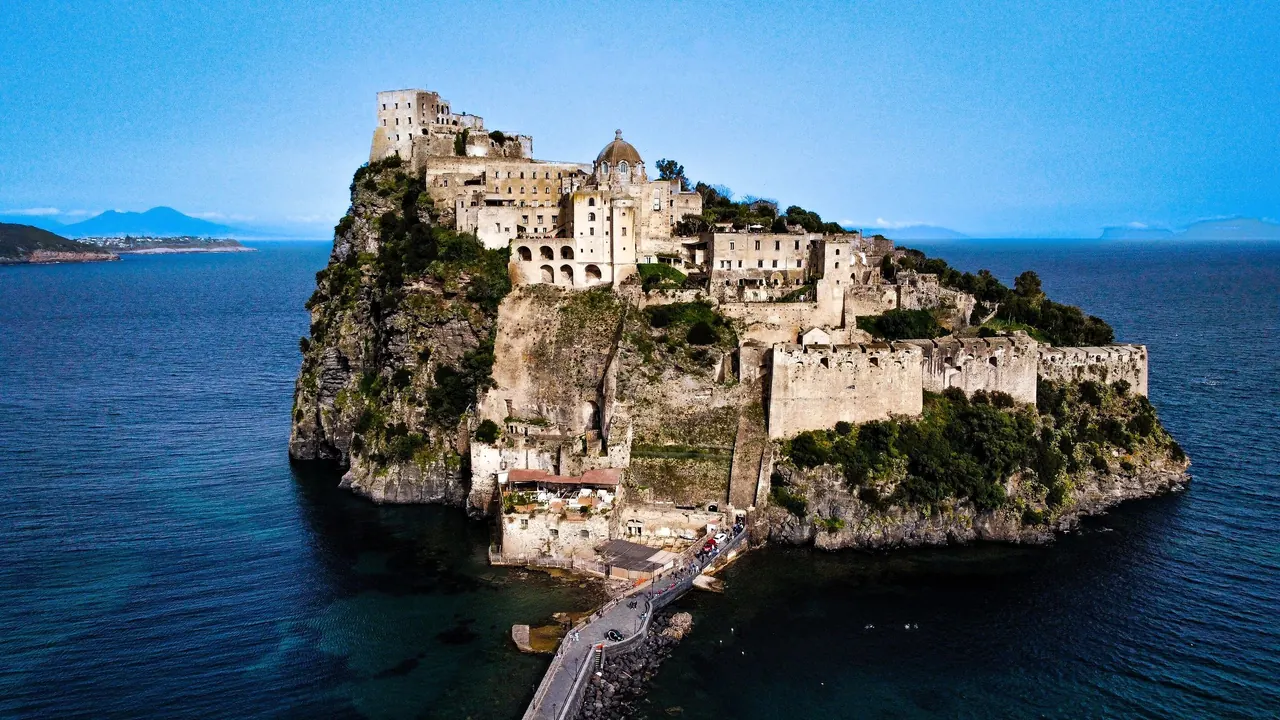
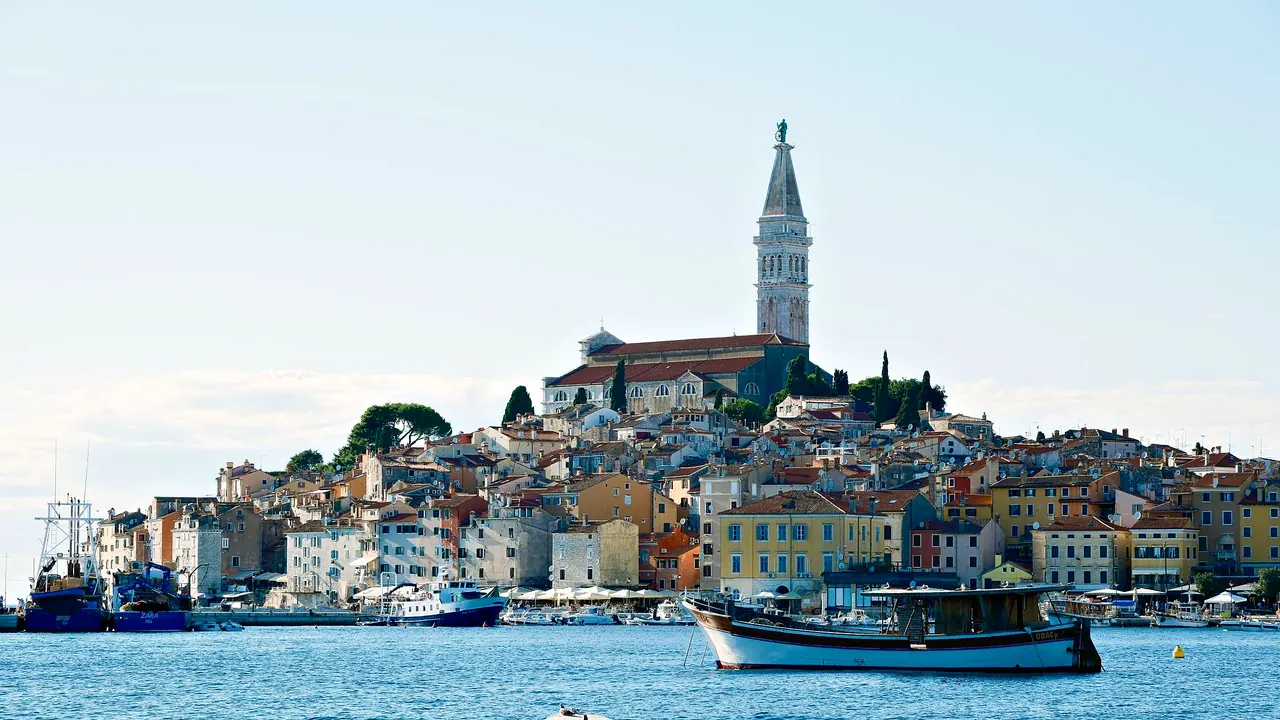
Photos: Ischia by Pipito93, CC BY-SA 4.0, cropped; Istria by Ramon Karolan, Pexels License.
Ischia or Istria?
Our verdict in twelve categories, each scored against the same fixed benchmark cities, and the climate month by month, so you can choose for your trip.
Choose Ischia for
- wellness
- beaches
- prices
Ischia is the better choice for a slow, restorative stay built around warm water. Its hot springs, thermal parks and the wild bathing at Sorgeto are the reason to come. It also has more sand than its rival, so a week of soaking, swimming and long dinners in a fishing harbour is easy to arrange from a single base, with ferries to Procida, Naples and the Phlegraean Fields for variety.
Choose Istria for
- culture and sights
- food and drink
- getting around
Travellers who want more to do should look at Istria. It has the richer food and wine, with truffles, olive oil and cellar tastings in the hill country, and its Roman, Byzantine and Venetian towns give more to explore. Cycling and hiking are better too, and evenings have a little more going on. It works best with a car and a plan to move between the coast and the interior, and you give up sandy beaches and real thermal bathing to get it.
Scoreboard
Twelve categories on one fixed scale from 0 to 100. The shaded stretch is the gap between the two.
Your match
Pick a travel style or drag the sliders, and both match scores follow your weighting.
Wins on wellness and beaches with your weighting.
Wins on culture and sights and food and drink with your weighting.
What matters to you?
Category by category
What the scores mean for a trip.
Beaches & swimming
Ischia has the edge for swimmers who want to lie on sand. Maronti is a long stretch of dark volcanic sand with hot springs at its western end, Citara faces the sunset, and San Montano is a calm, shallow bay. Most of the rest of the coast is rocky coves that are easiest to reach by water taxi.
Istria's coast is almost all pebble, rock ledges and concrete platforms, so water shoes are worth packing. The compensation is very clear water and dozens of wild coves around the Kamenjak cape. The sea itself is the same in both, warm from June and about 25°C in August.
Food & drink
Istria is the place to travel for food. Its inland valleys produce black and white truffles, its western hills make outstanding olive oil, and Lim Bay supplies oysters. Rovinj and Novigrad have fish restaurants up to fine dining, and wineries pouring Malvazija and Teran are found all over the hills.
Ischia has real character in its rabbit braised in terracotta and its Biancolella whites from the slopes of Epomeo, but the range is narrower. Many visitors eat on half-board in their hotel, and the better meals take some searching for in the hill villages.
Culture & sights
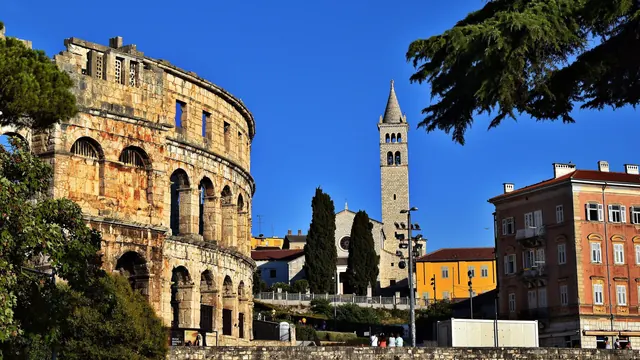
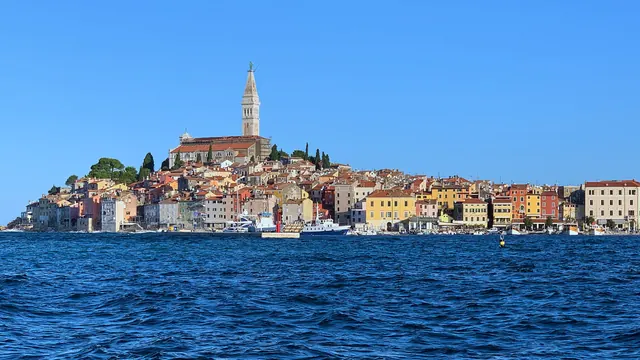
Istria has far more history to walk through. Pula's Arena still stands to its full height, and Poreč's Euphrasian Basilica has sixth-century mosaics. Add Rovinj's old town and hill towns such as Motovun and Hum, and Roman, Byzantine and Venetian layers sit side by side.
Ischia has one great sight in the Aragonese Castle and one fine museum at Villa Arbusta, where Nestor's Cup is kept. After that it is gentle fishing quarters and gardens, and visitors who want more cross to Naples.
Nightlife
Neither is a party destination, but Istria has a bit more after dark. Pula has student bars that stay open all year, and in summer Poreč and Medulin add beach bars and seasonal clubs. On Ischia, evenings centre on dinner and the waterfront at Ischia Porto, with a couple of discos open in high summer. Its spa crowd is usually in bed early.
Nature & outdoors
Istria has more room to be active. Učka gives proper ridge hiking above the Kvarner Gulf, and signposted cycle routes link the hill towns, the best of them following the old Parenzana railway line. Kamenjak adds kayaking and windsurfing.
Ischia's landscape is more dramatic in a small space. Monte Epomeo rises through chestnut woods, steam vents mark the south coast, and the marine reserve around the island is good for snorkelling and diving. A week covers it all, however.
Day trips
Both make excellent bases for outings, but the outings work differently. From Ischia every trip starts on a ferry: Procida, Naples, the Phlegraean Fields and, in summer, Capri and Sorrento, with Pompeii a long day away.
Istria's trips are by road. Its own hill towns and coastal towns are all close together, and beyond the region lie Piran, Trieste, the Postojna and Škocjan caves and even Ljubljana, all easy with a car.
Good for families
Istria is better set up for children. It has campsites and resort villages with playgrounds, water parks near Poreč and Novigrad, a dinosaur park, Pula's aquarium in an old fort and a safari park on Brijuni. Its weak point is the rocky shore, so families with small children head for the shallow bays near Medulin.
Ischia suits a quieter beach-and-pool week. Its sandy beaches and thermal parks are easy days out, but nothing is designed for children, the lanes are steep and full of steps, and older children may get restless.
Getting around
Istria is easier to get around as long as you drive. A good motorway links the main towns in about an hour or less, while buses only cover the coast. Summer brings slow resort roads and full car parks.
Ischia is the opposite: a car is more trouble than it is worth. One loop road carries crowded summer buses, microtaxis and water taxis fill the gaps, and you need a ferry from Naples or Pozzuoli just to arrive.
Shopping & style
Neither is a place to shop, and what each sells reflects its main strength. Ischia's one long shopping street between Porto and Ponte has resort linen and sandals, along with ceramics and cosmetics made with its thermal waters. In Istria, the things to take home are food and drink, such as truffles from Motovun, estate olive oil and wine bought at the cellar door, with a few galleries in Grožnjan and Rovinj.
Affordability
The two cost about the same, and both are noticeably cheaper outside July and August. Ischia's family-run spa hotels sell half-board with thermal pools included, but sunbeds, thermal park entry and boat trips add up over a week. Istria's savings come from campsites, private apartments and inland farm stays, while seafood and truffle dishes in Rovinj cost as much as in any popular Mediterranean resort.
Live music & performing arts
There is little to plan around in either, but Istria offers more. Concerts in Pula's Roman Arena and the Pula Film Festival make a striking open-air setting, and Grožnjan fills with young musicians in summer. Ischia has chamber music in the Mortella gardens and a film festival at the Aragonese Castle. For opera or a concert hall, you need to cross to Naples.
Wellness & relaxation
This is Ischia's great advantage. Spring water is piped into hotel pools across the island, and the terraced thermal parks at Citara, Lacco Ameno and Casamicciola can fill a whole day. Sorgeto's hot sea pools are warm enough even on winter evenings, the steam caves of Cavascura are cut into the cliff, and mud treatments are a local tradition.
Istria relaxes you mainly through its pace: farmhouse stays, long lunches and walks along the cliffs. Its only historic spa is the sulphur springs of Istarske Toplice, and the rest is resort hotel spas.
When should you go?
Pick your month. The climate figures are measured averages, not a forecast.
Ischia in July
Istria in July
Daytime high, °C
Rainfall in the month, mm
Where the figures come from
Ischia's temperatures are measured 36 km from the centre, at Grazzanise.
Ischia has no rain gauge within 25 km of the centre, so its rainfall comes from a gridded climate dataset read at the destination rather than from a gauge further away.
Istria's temperatures are measured 57 km from the centre, at Trieste.
Istria has no rain gauge within 25 km of the centre, so its rainfall comes from a gridded climate dataset read at the destination rather than from a gauge further away.
Temperature and rainfall are climate normals, averaged over the years shown. Ischia: 1991-2020 normals, Grazzanise (36 km from centre). Istria: 1991-2020 normals, Trieste (56.5 km from centre).
Ischia is the warmer and drier of the two in summer. Highs on its coast reach about 31°C in July and August, almost no rain falls from June to August, and those months are also the sunniest. The sea is good for swimming from June to early October. Midsummer is hot for walking the stepped village lanes, so May, June and September are the comfortable months. From October the rain arrives in earnest and peaks in November at around 148mm. Winter is mild but grey, although the hot springs keep it usable.
Istria is a few degrees cooler all year. Summers top out at about 29°C on the coast and winters are noticeably colder, with January highs near 9°C. Its rain is spread more evenly, so even July and August bring the odd wet day, and the heaviest months are September to November. The sea warms to swimming temperature over the same June to September window as Ischia's. Spring and early autumn are the best time for the hill towns, cycling and walking inland.
Which traveller are you?
For a relaxing and wellness trip, choose Ischia. Most hotels have their own thermal pools, and there are terraced spa gardens stepping down to the sea, hot rock pools at Sorgeto and steam caves at Cavascura. Istria offers a calm pace and one historic spa.
On a culture and arts trip, Istria gives far more. Pula's Arena, the gold mosaics of Poreč, the walled hill towns and frescoed chapels can fill a week. Ischia's sights, chiefly the Aragonese Castle and the Pithekoussai finds, take a couple of days.
For a food and nightlife trip, Istria is the stronger pick. Truffle pasta, Lim Bay oysters and cellar tastings of Malvazija and Teran beat Ischia's narrower, half-board-dominated dining, and Pula, Rovinj and Poreč stay livelier after dinner than Ischia Porto.
Before you go
| Measure | Ischia | Istria |
|---|---|---|
| Official language | Italian | Croatian |
| Currency | Euro (EUR) | Euro (EUR) |
| Sockets | CFL230 V, 50 Hz | CF230 V, 50 Hz |
| Driving side | Right | Right |
| Time zone | UTC+1, UTC+2 in summer | UTC+1, UTC+2 in summer |
| Emergency number | 112 | 112 |
| Main airport | Naples International Airport (NAP)131 non-stop destinations | Pula Airport (PUY)34 non-stop destinations |
| Public holidays this year | 13 days | 14 days |
By the numbers
| Measure | Ischia | Istria |
|---|---|---|
| Population | 62,027 | - |
| People per km² | 1,340 | - |
| Swim season, months above 21 °C | 5 months | 4 months |
Where else could you go?
Every comparison below shares a destination with this one, so you can follow Ischia or Istria somewhere new.
- Procidavs Ischia
- Caprivs Ischia
- Amalfi Coastvs Ischia
- Plitvice Lakesvs Istria
- Dolomitesvs Istria
- Krkavs Istria