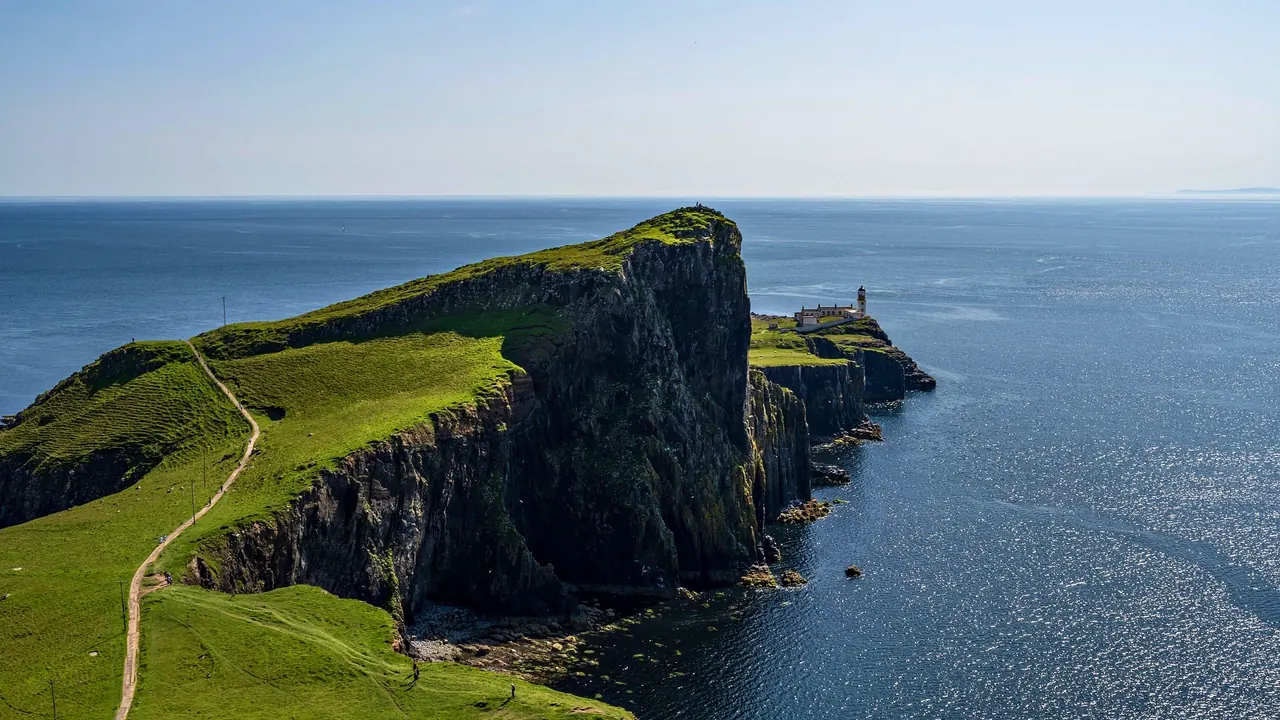
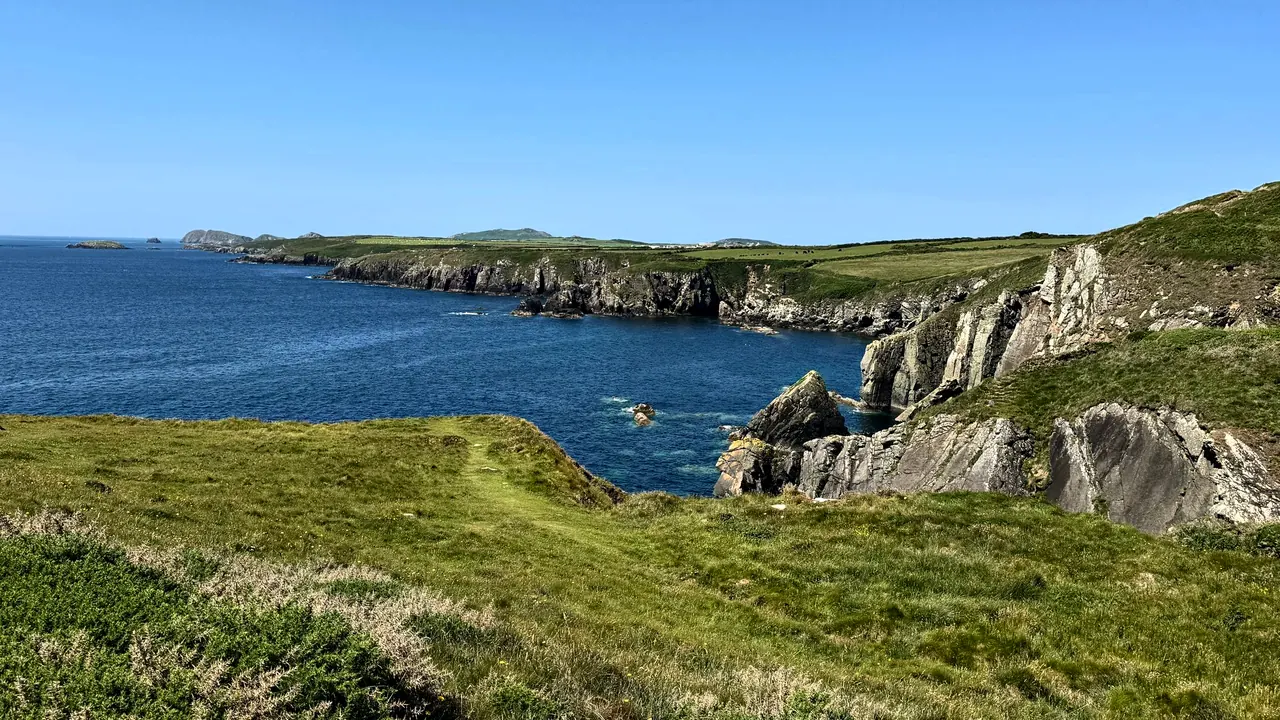
Photos: Isle of Skye by Evelin Magnus, Pexels License; Pembrokeshire by Petra Nesti, Pexels License.
Isle of Skye or Pembrokeshire?
Our verdict in twelve categories, each scored against the same fixed benchmark cities, and the climate month by month, so you can choose for your trip.
Choose Isle of Skye for
- nature and the outdoors
Choose Skye if the landscape is the whole point of the trip. The Black Cuillin, the Trotternish pinnacles of the Storr and the Quiraing, and the cliffs at Neist Point are wilder and on a bigger scale than anything on the Welsh coast. Boats out of Elgol add otters, sea eagles and summer whales. It suits hillwalkers, climbers, photographers and couples who are happy to drive single-track roads in any weather. In return you give up beaches, easy travel and most of the sights and evenings out.
Choose Pembrokeshire for
- beaches
- families
- culture and sights
Pembrokeshire is the gentler and broader vacation. Its sandy bays at Barafundle, Whitesands and Tenby make a real beach trip possible in a British summer. St Davids and the ring of Norman castles fill the rainy days, and the coast path still gives some of the finest walking in Britain. Families, mixed groups and anyone watching costs will find it easier, with shorter drives, lifeguarded beaches and a few train and bus links to take the strain off the car.
Scoreboard
Twelve categories on one fixed scale from 0 to 100. The shaded stretch is the gap between the two.
Your match
Pick a travel style or drag the sliders, and both match scores follow your weighting.
Wins on nature and the outdoors with your weighting.
Wins on beaches and families with your weighting.
What matters to you?
Category by category
What the scores mean for a trip.
Beaches & swimming
Pembrokeshire is a beach destination and Skye is not. Skye's shores are scenic stops rather than places to spend the day: the white coral sand at Claigan near Dunvegan, the black sand of Talisker and Staffin, and the icy Fairy Pools for wild swimmers. The sea stays bitterly cold all year.
Pembrokeshire has dozens of genuine sandy beaches. They range from the town sands of Tenby and the walk-in cove at Barafundle to the long, surf-washed beaches of Newgale and Whitesands, and many have lifeguards in summer. The water is still brisk and wetsuits are common, but it is a few degrees warmer than Skye's, and a family can happily spend whole days on the sand.
Food & drink
The two eat from much the same larder of seafood and hill or marsh lamb, but Skye has more to drive to and Pembrokeshire more to cook at home. Skye's draw is shellfish from the sea lochs, oysters from Loch Harport and a few acclaimed country restaurants out around Dunvegan and Sleat, with whisky from Carbost to go with them. Away from Portree, though, the choice is thin and many places close for the winter.
Pembrokeshire is less about destination dining and more about produce: crab and lobster from the small harbours, salt-marsh lamb, early potatoes, farm cheeses and dairy ice cream. Farmers' markets and farm shops make self-catering easy, and Fishguard, St Davids and Narberth have the better restaurants.
Culture & sights
Pembrokeshire has far more to see. St Davids, with its cathedral and the ruined Bishop's Palace, has drawn pilgrims for centuries, and Pembroke Castle is where Henry VII was born. Carew, Manorbier, Cilgerran and Tenby's town walls add a chain of medieval sights, and Pentre Ifan and the Preseli bluestones go back further still.
Skye's history is the story of clans and crofting. You find it at Dunvegan Castle, at Armadale with the Museum of the Isles, and in the thatched cottages at Kilmuir. It is worth seeing, but two days covers it, and there is no historic town to wander.
Nightlife
Neither is a place for a big night out, but Pembrokeshire has a little more going on. On a summer weekend Tenby's harbour pubs fill up and a few bars stay open late, which is more than you will find anywhere on Skye. A Skye evening is a dram at Sligachan, Carbost or a Portree bar, quiet well before midnight and quieter still in winter.
Nature & outdoors
Both are superb outdoors, but Skye is wilder and on a bigger scale. The Black Cuillin form Britain's hardest mountain ridge, the Trotternish pinnacles of the Storr and the Quiraing are some of the strangest ground in Europe, and the sea lochs bring otters, sea eagles and summer minke whales. The price is rougher weather and fierce midges in summer.
Pembrokeshire's outdoors is coast rather than mountain: some 300km of national park path over cliffs and sea arches, puffins on Skomer, seals on Ramsey and the gannets of Grassholm. It is better for coasteering, surfing and easy day loops, and less demanding throughout.
Day trips
Pembrokeshire has more variety within a short drive. The boat from Tenby goes to the monks' island of Caldey, Cardigan, Aberaeron and New Quay lie up the coast, Laugharne has Dylan Thomas's boathouse, and the Gower is about two hours away.
Skye's outings depend on the bridge and the ferries. Eilean Donan and Plockton are about an hour away and Raasay is a short crossing, while Harris and the Glenfinnan viaduct make long days that rest on the weather.
Good for families
Pembrokeshire is one of Britain's classic family coasts, and Skye is a harder sell. Children get lifeguarded sand, rock pools, crabbing off harbour walls and boat trips to see puffins and seals. A farm park, a wildlife park and soft-play centres cover the rainy days, and in Tenby or Saundersfoot the beach is a short walk from where you stay.
Skye works for families who love the outdoors, with dinosaur footprints at Staffin and An Corran, the Fairy Pools and seal-spotting boats from Elgol. But almost nothing there is built for children, many walks are steep or run along cliff edges, and the drives between sights are long.
Getting around
You need a car in both, but Skye asks more of the driver. Its single-track roads with passing places run over long distances, buses barely reach the trailheads, and summer queues build on the Trotternish loop and the Fairy Pools road.
Pembrokeshire takes about an hour to cross. Branch lines reach Tenby, Pembroke, Haverfordwest and Fishguard, and seasonal coastal buses let you walk the path one way and ride back. Its lanes are narrow too, but the distances are shorter.
Shopping & style
Neither has fashion or department stores, and both are mainly about crafts. Pembrokeshire comes out ahead thanks to Narberth, a small market town of independent shops, delis and antiques, and to the woollen mills that still weave Welsh blankets. Skye's version is a scatter of potters', silversmiths' and weavers' studios around Waternish, Dunvegan and Sleat, with tweed and whisky to take home, but Portree has no real high street.
Affordability
Pembrokeshire is the easier of the two on a budget. Its peak-summer rates are high, but pub meals and cafés are moderately priced, and farm shops keep self-catering costs down.
Skye is dear for a rural island. Rooms are scarce and booked far ahead, there are few cheap places to eat outside Portree, and the hire car and fuel add up quickly. On both, spring and autumn are noticeably cheaper, and the landscape costs nothing.
Live music & performing arts
There is little live performance on either, and the difference is in the tradition. Skye's is Gaelic: ceilidhs in village halls, fiddle and pipe sessions in Portree pubs, concerts and summer courses at Sabhal Mòr Ostaig in Sleat, and piping at the Portree Highland Games in August.
Pembrokeshire leans towards classical music and Welsh voices. There is an early-summer festival under the roof of St Davids Cathedral, music festivals in Fishguard and small theatres there and in Milford Haven, along with folk sessions and the odd choir.
Wellness & relaxation
Skye's quiet is remote and moody, Pembrokeshire's softer and closer to hand, and in both it does the work that treatments would do elsewhere, with only a few hotel spas between them. On Skye that means a cottage on a sea loch in Waternish or Sleat, watching the weather cross the hills. In Pembrokeshire it means coastal walks, small towns and a few yoga and retreat stays in farmhouses.
When should you go?
Pick your month. The climate figures are measured averages, not a forecast.
Isle of Skye in July
Pembrokeshire in July
Daytime high, °C
Rainfall in the month, mm
Where the figures come from
Isle of Skye's temperatures are measured 90 km from the centre, at Stornoway.
Isle of Skye has no rain gauge within 25 km of the centre, so its rainfall comes from a gridded climate dataset read at the destination rather than from a gauge further away.
Pembrokeshire's temperatures are measured 46 km from the centre, at Aberporth.
Pembrokeshire has no rain gauge within 25 km of the centre, so its rainfall comes from a gridded climate dataset read at the destination rather than from a gauge further away.
Temperature and rainfall are climate normals, averaged over the years shown. Isle of Skye: 1991-2020 normals, Stornoway (89.7 km from centre). Pembrokeshire: 1991-2020 normals, Aberporth (46.2 km from centre).
Both are at their best from late spring to early autumn, and neither is ever hot. On Skye, May is the month to aim for: the sunniest of the year and one of the driest, though highs sit only in the low teens. July and August are the warmest months, at about 16°C, but the rain builds again from August, and from October to January more than 200mm falls each month, with short, dim days. The sea is cold all year and tops out at 13°C.
Pembrokeshire is a couple of degrees milder through the summer and drier than Skye in every month. In winter it gets roughly half Skye's rain, so the walking weather lasts longer at both ends of the year. May and June bring the most sunshine, and July and August the warmest days, at about 18°C. The sea lags behind the air and is warmest in August and September, at 16°C to 17°C, which is as close as either place comes to swimming weather. Rain rises here too from October, but the winter stays far drier than on Skye.
Which traveller are you?
For an outdoors trip, Skye has the edge. The Black Cuillin ridge is serious mountaineering, the Quiraing and the Storr look like nowhere else in Britain, and boat trips bring sea eagles and otters. Pembrokeshire's coast path is superb, but it is gentler.
On a family trip with young children, Pembrokeshire is far easier. Tenby and Saundersfoot have beaches right in town, lifeguards watch the sand in summer, and farm parks and soft play fill the wet days. On Skye the best walks are steep and the drives are long.
For a beach and sun trip, only Pembrokeshire really works. Barafundle, Whitesands and Newgale are proper sandy beaches, the sea is brisk but swimmable in late summer, and there is more sunshine. Skye's coral-sand and black-sand bays are for a walk rather than a day on the beach.
Before you go
| Measure | Isle of Skye | Pembrokeshire |
|---|---|---|
| Official language | English | English |
| Currency | Pound Sterling (GBP) | Pound Sterling (GBP) |
| Sockets | G230 V, 50 Hz | G230 V, 50 Hz |
| Driving side | Left | Left |
| Time zone | UTC, UTC+1 in summer | UTC, UTC+1 in summer |
| Emergency number | 112 or 999 | 112 or 999 |
| Main airport | Inverness Airport (INV)15 non-stop destinations | Cardiff International Airport (CWL)32 non-stop destinations |
| Public holidays this year | 10 days | 8 days |
By the numbers
| Measure | Isle of Skye | Pembrokeshire |
|---|---|---|
| Population | 10,008 | 125,818 |
| People per km² | 6 | 78 |
| Swim season, months above 21 °C | None | None |
Where else could you go?
Every comparison below shares a destination with this one, so you can follow Isle of Skye or Pembrokeshire somewhere new.
- Cornwallvs Pembrokeshire
- Snowdoniavs Pembrokeshire
- Devonvs Pembrokeshire
- Jurassic Coastvs Pembrokeshire
- Cotswoldsvs Pembrokeshire
- Isles of Scillyvs Pembrokeshire