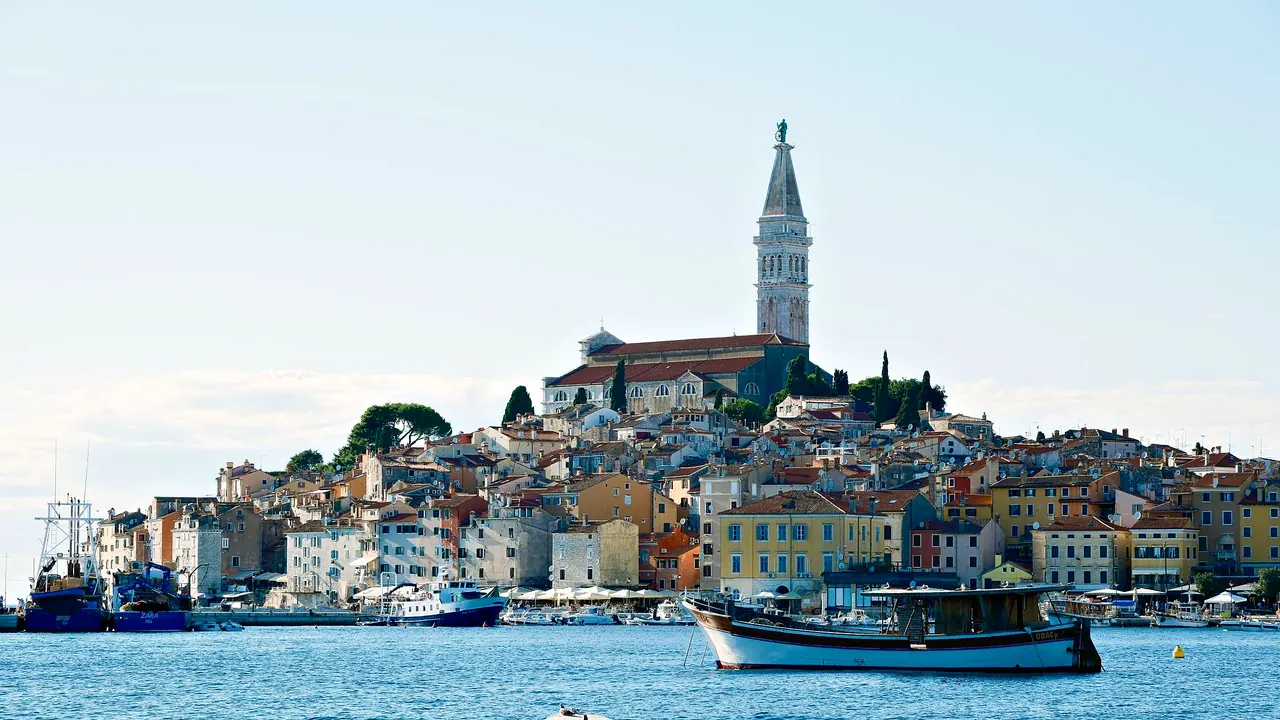
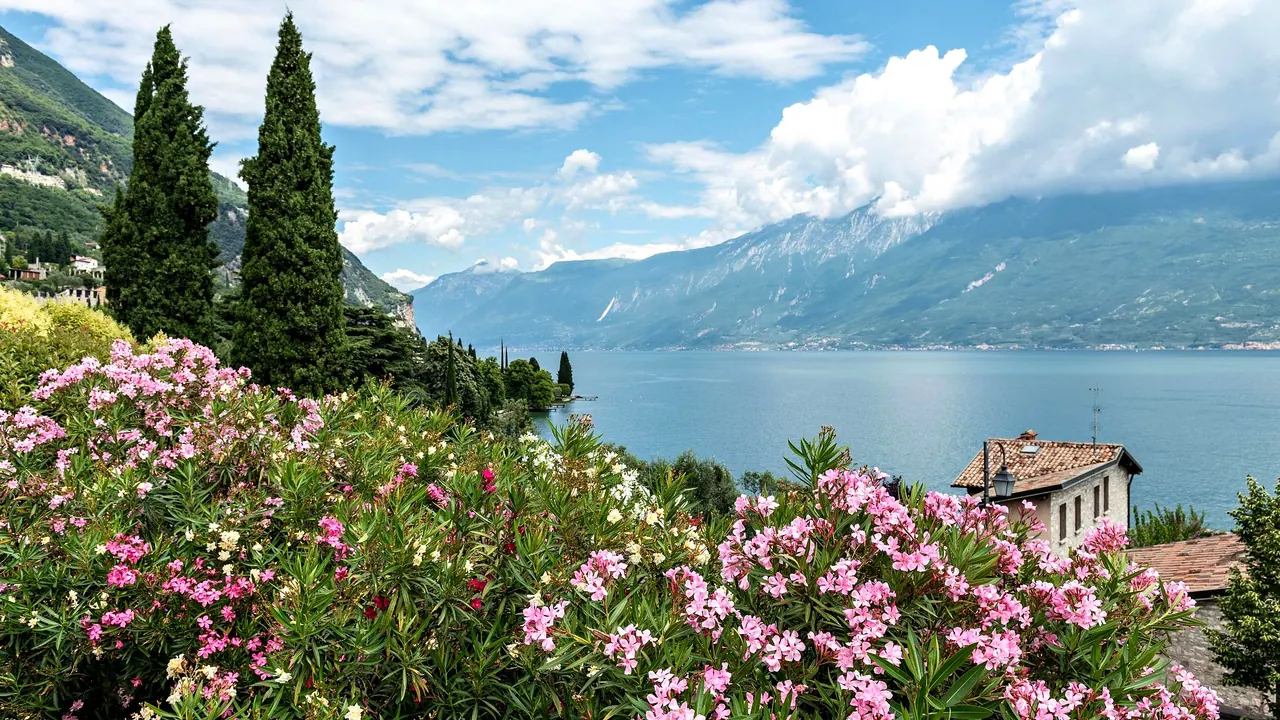
Photos: Istria by Ramon Karolan, Pexels License; Lake Garda by Wolfgang Weiser, Pexels License.
Istria or Lake Garda?
Our verdict in twelve categories, each scored against the same fixed benchmark cities, and the climate month by month, so you can choose for your trip.
Choose Istria for
- culture and sights
- food and drink
- getting around
Istria suits travellers who come for the table and the old stones as much as the water. You get truffle pasta in the hill towns, Malvazija poured in small cellars, Pula's Roman Arena and the gold mosaics of Poreč, with clear Adriatic coves at Kamenjak to swim in afterwards. It works best for a couple or small group with a car, happy to roam a compact peninsula and eat well.
Choose Lake Garda for
- wellness
- nature and the outdoors
- families
Lake Garda is the stronger pick for families and active travellers. Gardaland and the parks on the south-east shore keep children busy, while Monte Baldo, Arco's crags and the wind at Torbole make the north one of Europe's great outdoor bases. Add the thermal springs at Sirmione and trains from the southern shore to Verona and Venice, and the lake gives you more to do on a stay of a week or longer.
Scoreboard
Twelve categories on one fixed scale from 0 to 100. The shaded stretch is the gap between the two.
Your match
Pick a travel style or drag the sliders, and both match scores follow your weighting.
Too close to call, 1 point apart
Wins on culture and sights and food and drink with your weighting.
Wins on wellness and nature and the outdoors with your weighting.
What matters to you?
Category by category
What the scores mean for a trip.
Beaches & swimming
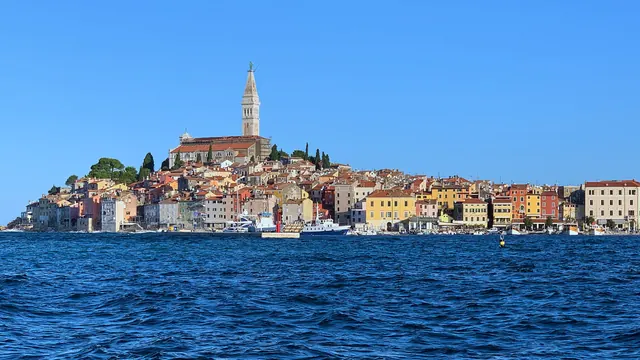
Istria has the better swimming, because it has the sea. The water is very clear, and the wild coves of Kamenjak and Premantura face open Adriatic, with wooded rocky shores close to Rovinj's old town. You bathe from rocks, pebbles or concrete platforms, and sand is rare.
Garda is lake bathing, with grassy lidos, jetties and loungers along the south and east shores at Sirmione, Lazise and Desenzano. Neither place has much sand. The difference is open salt water and rocky coves in Istria against lawns and calm fresh water at Garda, where the north is noticeably cooler and windier.
Food & drink
Istria is the more rewarding place to eat. Black and white truffles from the Mirna valley forests are grated over fuži, boškarin beef is slow-cooked in family taverns, and oysters come from the Lim Bay. Teran and Malvazija are poured at the cellar door.
Garda's real strength is its wine, with Lugana, Bardolino and Chiaretto on the shore and Amarone in the hills beyond, plus lake fish with risotto. The catch is that the busiest harbour fronts fall back on pizza and set menus, so the good meals are up in the agriturismi.
Culture & sights
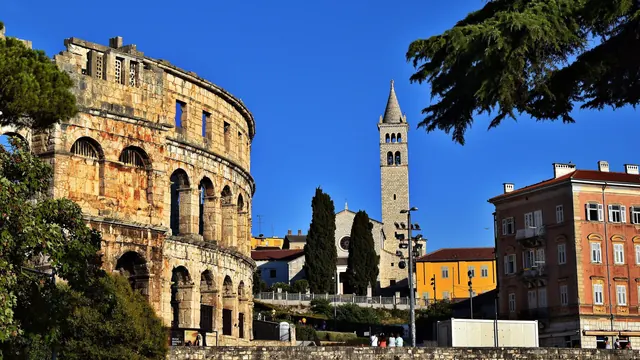
Istria has two sights of real weight. Pula's Arena stands to its full height, and the sixth-century mosaics of the Euphrasian Basilica are among the finest of their age. Around them are Roman Pula, Venetian Rovinj and the frescoed chapels and hill towns of the interior.
Garda offers a pleasant round of half-days instead. There is the moated Scaliger castle and Roman villa ruins at Sirmione, d'Annunzio's eccentric Vittoriale with its warship set into the hillside, and castles at Malcesine and Riva. These are good outings, but they are not the reason to come.
Nightlife
Neither is a party destination, and evenings in both mostly mean dinner and a drink by the water. Istria has a little more going on. Pula's student bars keep going all year, Rovinj and Poreč fill their terraces on summer nights, and the Medulin coast adds beach bars and seasonal clubs.
At Garda, Desenzano is the one real exception, with its lakefront bars and a few big clubs nearby on summer weekends. Most other towns are asleep early.
Nature & outdoors
Garda wins clearly for anyone who wants mountains. The cable car from Malcesine climbs Monte Baldo to about 1,760m, Arco is a climbing centre all year, via ferrate scale the cliffs, and Torbole's steady afternoon wind draws windsurfers and sailors.
Istria's landscape is gentler: red-earth vineyards, oak valleys and the ridge of Učka above the east coast. Its strength is cycling, especially along the old Parenzana railway line, with kayaking off Kamenjak and the parkland of the Brijuni islands as extras.
Day trips
Garda has the greater cities on its doorstep, and the train makes them easy. From Peschiera or Desenzano, Verona is well under an hour and Venice about an hour and a half, with Vicenza and Padua on the same line and Mantua and Bergamo within reach.
Istria's outings are smaller in scale but well spread. It has its own hill towns and coast, Piran and Trieste across the borders, the caves of Postojna and Škocjan, and Ljubljana at about two hours. Nearly all of them need a car.
Good for families
Garda is the stronger family choice. Gardaland, Italy's largest theme park, sits by the lake with an aquarium next door, and Parco Natura Viva is in the hills above. The shores are shallow and pebbly with shady lawns, and the north suits older children who want to bike or windsurf.
Istria has a long family tradition of its own, with big campsites around Poreč and Umag, water parks, a dinosaur park and Pula's aquarium in an old fort. Its rocky beaches are harder going with toddlers, though, outside the shallow bays near Medulin.
Getting around
Istria is the easier of the two to cover, as long as you drive. A good motorway runs down the west side, and no two main towns are much more than an hour apart, although the hill towns and wineries are hard to reach by bus.
Garda's ferries are lovely but slow from one end to the other, the railway only touches the south, and the narrow shore roads with their tunnels clog in summer. Staying in one town and using the boats works better there than touring by car.
Shopping & style
Both are weak for shopping, and the best buys in both are edible. In Istria that means truffle products from Motovun and Buzet, estate olive oil and wine straight from the cellar, with craft studios in Grožnjan and on Rovinj's Grisia street.
Garda adds big weekly lakefront markets at Desenzano and Lazise, lemon products from Limone and outdoor gear in Riva and Arco. For serious fashion, Verona and Milan are close.
Affordability
The two cost much the same, and both are dear on the waterfront in July and August, in Rovinj and the best Istrian coves as much as in the lakefront hotels of Sirmione, Malcesine and Limone. In Istria the savings come from campsites, private apartments and inland farm stays, from simple tavern meals and from wine bought straight from the producer.
At Garda you do best by staying back from the water, in the camping villages, the agriturismi in the hills or the villages of the Valtenesi. Families there should allow more for outings, because Gardaland is on a far bigger scale than Istria's water parks and dinosaur park, and ferry hops round the lake add up over a week.
Live music & performing arts
Both are summer-only for live performance, and Garda edges ahead mainly because Verona's opera festival in its Roman arena is an easy evening out from the southern shore. The Vittoriale's open-air amphitheatre adds its own concerts.
Istria has a Roman arena of its own in Pula, which hosts summer concerts and the long-running film festival. Grožnjan fills its squares with young musicians in summer.
Wellness & relaxation
Garda has the real spa culture. Sirmione's warm sulphurous springs rise from the lake bed and feed thermal pools looking over the water, and there are open-air thermal pools in a villa park near Lazise, as well as hotel spas at Gardone and Salò.
In Istria, relaxation is more about pace than treatments: a stone farmhouse among the olives and long lunches in the hill towns. Its one historic thermal spa, Istarske Toplice in the Mirna valley, is the exception.
When should you go?
Pick your month. The climate figures are measured averages, not a forecast.
Istria in July
Lake Garda in July
Daytime high, °C
Rainfall in the month, mm
Where the figures come from
Istria's temperatures are measured 57 km from the centre, at Trieste.
Istria has no rain gauge within 25 km of the centre, so its rainfall comes from a gridded climate dataset read at the destination rather than from a gauge further away.
Lake Garda's sunshine is measured 28 km from the centre, at Verona / Villafranca.
Temperature and rainfall are climate normals, averaged over the years shown. Istria: 1991-2020 normals, Trieste (56.5 km from centre). Lake Garda: 2005-2025 (sunshine 1991-2020, rainfall 1991-2020) normals, Verona / Rivoltella (1.6 km from centre).
The summers are almost identical. Both reach about 29°C in July, and from June to September it is warm enough for swimming in either. Istria has the sea in its favour: the Adriatic warms to around 26°C in August and stays pleasant well into September. Both are hot for walking old streets at midsummer, so late May, June and September are the most comfortable months for sightseeing.
The rain falls at different times. On the Istrian coast the wet season starts in autumn and peaks in November at around 102mm, so October is a gamble there. At Lake Garda the spring is wetter, with May bringing about 91mm, and November is the wettest month at both. Winters are cool and grey in both places, with short days and little reason to go.
Which traveller are you?
On a culture and arts trip, Istria gives you more to see on the spot. Pula's Arena, the Euphrasian Basilica's mosaics, the frescoes at Beram and walled hill towns like Motovun add up to far more than Garda's castles and lakeside villas.
On a family trip with children, Lake Garda is the easier choice. Gardaland, the water parks and the safari park sit close together on the south-east shore, the pebble shallows are gentle, and ferry rides between towns are an outing in themselves.
For an outdoors trip, head for Garda's northern end. You can take the cable car up Monte Baldo, climb on Arco's limestone, ride the valley trails or windsurf at Torbole. Istria's cycling routes and the ridge of Učka are pleasant but much milder.
Before you go
| Measure | Istria | Lake Garda |
|---|---|---|
| Official language | Croatian | Italian |
| Currency | Euro (EUR) | Euro (EUR) |
| Sockets | CF230 V, 50 Hz | CFL230 V, 50 Hz |
| Driving side | Right | Right |
| Time zone | UTC+1, UTC+2 in summer | UTC+1, UTC+2 in summer |
| Emergency number | 112 | 112 |
| Main airport | Pula Airport (PUY)34 non-stop destinations | Verona Villafranca Valerio Catullo Airport (VRN)96 non-stop destinations |
| Public holidays this year | 14 days | 13 days |
By the numbers
| Measure | Istria | Lake Garda |
|---|---|---|
| Swim season, months above 21 °C | 4 months | - |
Where else could you go?
Every comparison below shares a destination with this one, so you can follow Istria or Lake Garda somewhere new.
- Lake Comovs Lake Garda
- Plitvice Lakesvs Istria
- Lake Maggiorevs Lake Garda
- Cinque Terrevs Lake Garda
- Dolomitesvs Lake Garda
- Dolomitesvs Istria