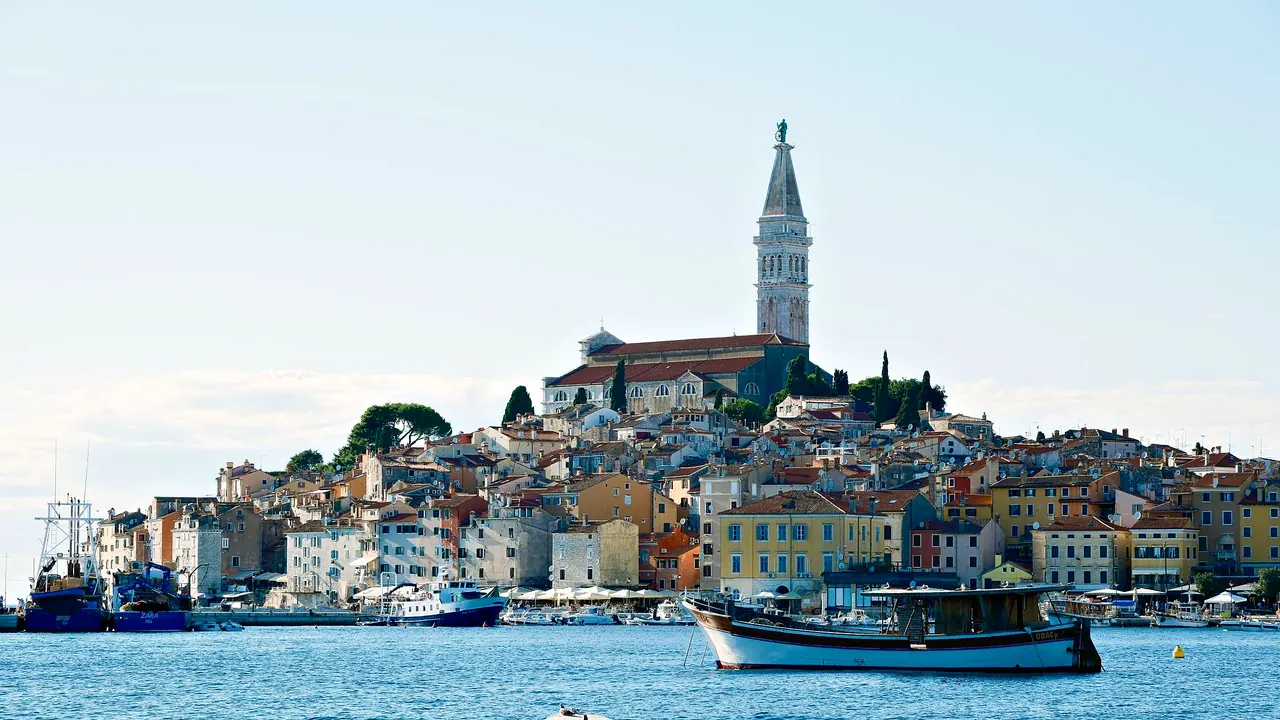
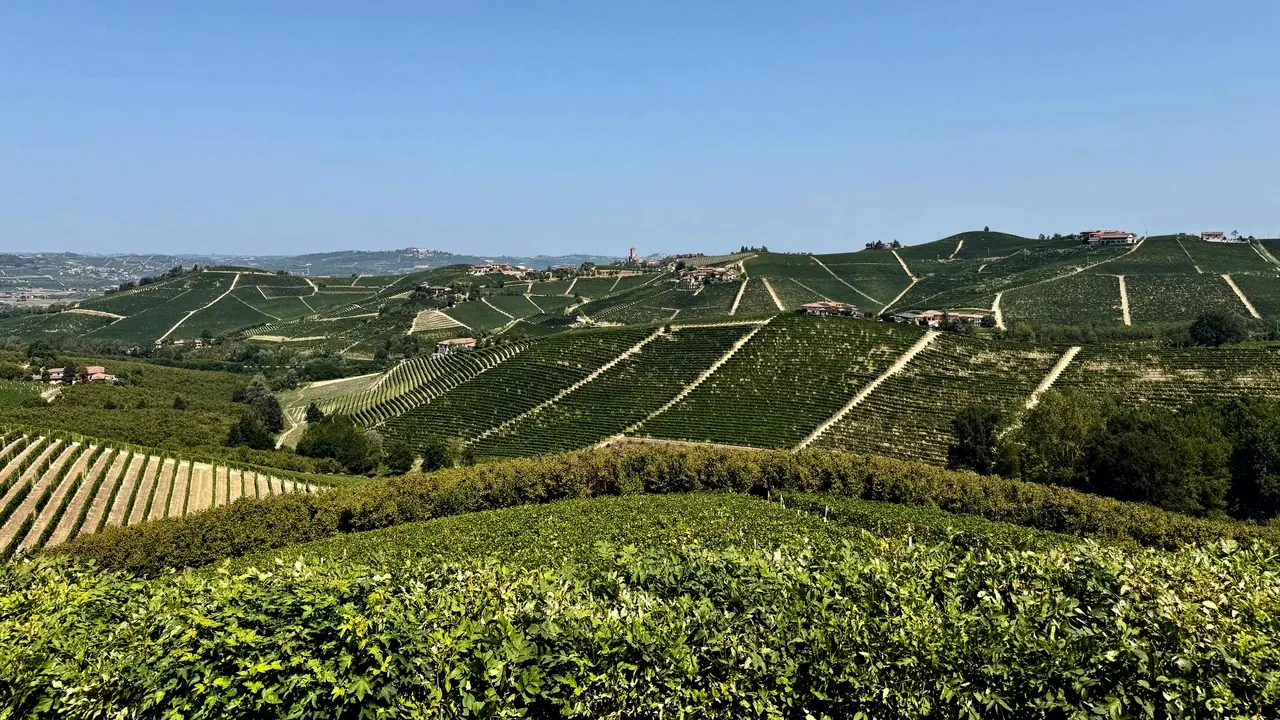
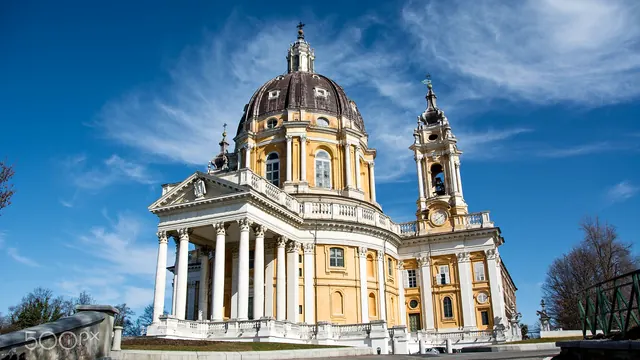
Photos: Istria by Ramon Karolan, Pexels License; Piedmont by Martina Amaro, Pexels License.
Istria or Piedmont?
Our verdict in twelve categories, each scored against the same fixed benchmark cities, and the climate month by month, so you can choose for your trip.
Choose Istria for
- beaches
- families
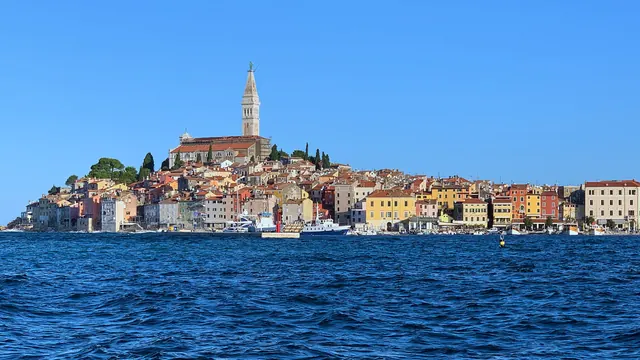
Istria is the choice for a summer by the sea. Its clear Adriatic coves, resort campsites and short drives between Rovinj, Poreč and the hill towns make an easy, warm-weather trip, especially with children. The food is serious too, with truffles, olive oil and Malvazija, but the coast sets the shape of the days.
Choose Piedmont for
- live music and the arts
- shopping
- nature and the outdoors
Piedmont rewards travellers who come for the table, the mountains and a real city. Barolo country and the Alba truffle season, Turin's museums, opera and arcades, and Alpine valleys for hiking or skiing give it more depth across the year. Choose it if you don't need the sea and would rather have a lake as a bonus.
Scoreboard
Twelve categories on one fixed scale from 0 to 100. The shaded stretch is the gap between the two.
Your match
Pick a travel style or drag the sliders, and both match scores follow your weighting.
Wins on beaches and families with your weighting.
Wins on live music and the arts and shopping with your weighting.
What matters to you?
Category by category
What the scores mean for a trip.
Beaches & swimming
Istria is a real sea destination, with very clear Adriatic water, pine-shaded headlands and dozens of wild coves at the southern tip around Premantura. Bathing is mostly from rocks, pebbles or concrete platforms, so bring water shoes, and families who want gentle shelving water should head for Medulin.
Piedmont has no coast. Its swimming is on the lido platforms and small pebble beaches of Lake Maggiore's western shore or at grassy spots on Lake Orta, in water a little cooler than the Adriatic and for a shorter season. It is a nice extra on a lake stay but not a reason to come.
Food & drink
Both are truffle country, but Piedmont is the bigger food destination. The Langhe and Roero around Alba produce Barolo and Barbaresco, and the cooking is rich and distinctive, from vitello tonnato to agnolotti del plin. On top of that comes Turin's café and aperitivo culture, and Bra, where Slow Food began.
Istria is a smaller, Venetian-leaning version. You eat fuži with truffle in Motovun taverns, Lim Bay oysters and excellent olive oil, with Malvazija poured in hill cellars. Its seafood gives it something Piedmont cannot match.
Culture & sights
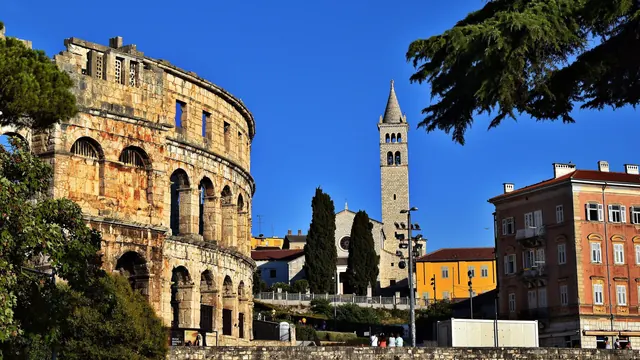
Istria's heritage is best seen on foot. Pula's Arena stands to its full height, the Euphrasian Basilica in Poreč has gold sixth-century mosaics, and there are the hill towns of Motovun and Hum, but the museums are modest.
Piedmont has more to see. In Turin there is the Egyptian Museum, the royal palaces and the Cinema Museum inside the Mole Antonelliana. Beyond the city are Venaria Reale, the Sacra di San Michele on its crag and the Baroque palaces of the Borromean Islands.
Nightlife
Neither is a party destination, and in both the evening centres on dinner. Istria's nights are summer terraces on the Rovinj and Poreč waterfronts and seasonal beach clubs around Medulin, with Pula keeping some life through the year. Piedmont has slightly more going on because of Turin, where aperitivo leads on to the student bar streets of San Salvario and Vanchiglia, and that city scene does not depend on the season.
Nature & outdoors
Istria's landscape is gentle: vineyards on red earth, oak valleys and the Učka ridge rising to about 1,400m. Its strength is cycling, especially along the old Parenzana railway route, with kayaking and windsurfing at Kamenjak.
Piedmont is in a different league outdoors. Monte Rosa, Gran Paradiso and the wild Val Grande give proper Alpine hiking and climbing, the Via Lattea offers Olympic-grade skiing, and Lake Maggiore is good for sailing. Below the mountains, the Langhe hills are classic road-cycling country.
Day trips
Both make good bases for excursions, though they work differently. Istria is compact, so the hill towns, the wine roads and the Brijuni boat are close from anywhere, and the Slovenian coast at Piran, the Karst caves and Trieste are short drives over the border.
Piedmont has a slight edge because it has rail links. Milan is about an hour by fast train from Turin and the Ligurian coast is under two hours away, and boats from Lake Maggiore cross to the Swiss shore.
Good for families
Istria was built for family seaside vacations. There are big campsites and resort villages with pools around Poreč, Umag and Medulin, calm water, water parks, a dinosaur park and Pula's aquarium in a fort. Rocky beaches and summer heat are the main drawbacks.
Piedmont takes more planning. The mummies in Turin's Egyptian Museum and the boats and peacock gardens of Lake Maggiore go down well, and the ski schools of the Via Lattea are good in winter, but there is no theme park and the wine hills tend to bore children.
Getting around
In both regions a car opens up most of what is worth seeing, and the roads are good. The difference is that Piedmont has a proper city to fall back on. Turin's grid, trams, metro and arcades, plus regional trains to Alba, Asti and Stresa, make a car-free trip workable there. In Istria, coastal buses link the main towns, but the hill towns, wineries and most beaches really need your own wheels, and the resort roads are slow in high summer.
Shopping & style
Istria's shopping is almost entirely edible. You can buy truffle products in Motovun, estate olive oil, and wine straight from the cellar, and Rovinj's Grisia street and Grožnjan add small galleries.
Piedmont has the same food-led appeal, with Turin's chocolate makers, vermouth and Barolo at the cellar door. It adds a real city high street in Via Roma and Via Garibaldi, the huge Porta Palazzo market, the Balon flea market, and cashmere mill outlets around Biella.
Affordability
Piedmont is usually the cheaper of the two. Turin hotels are reasonable, aperitivo snacks are generous and country trattorias serve long meals at fair prices, though the Langhe gets expensive in truffle season and the ski resorts carry Alpine prices.
Istria's summer coast is priced like other popular Mediterranean resorts, with Rovinj especially dear in July and August. Campsites, private apartments, inland farm stays and the shoulder months bring the cost down.
Live music & performing arts
Istria's stage is essentially seasonal. There are open-air concerts and the Pula Film Festival in the Roman Arena, and Grožnjan fills with young musicians in summer, but there is little the rest of the year.
Piedmont has a year-round programme centred on Turin. The Teatro Regio stages opera and ballet, the RAI National Symphony Orchestra has its own auditorium, and the historic Teatro Carignano puts on drama. The Stresa festival brings classical concerts to the lake in summer.
Wellness & relaxation
Piedmont has more real spa culture. Acqui Terme is built around a spring that rises at about 75°C in the town centre, and there are mountain thermal baths at Valdieri and Vinadio. Wine resorts in the Langhe and Monferrato, many with their own spas, are designed for slow days.
Istria's calm comes mostly from its pace: stone farmhouses among olive groves and long lunches in the hill towns. It has only one historic thermal spa, Istarske Toplice in the Mirna valley, and beyond that the hotel spas of the coastal resorts.
When should you go?
Pick your month. The climate figures are measured averages, not a forecast.
Istria in July
Piedmont in July
Daytime high, °C
Rainfall in the month, mm
Where the figures come from
Istria's temperatures are measured 57 km from the centre, at Trieste.
Istria has no rain gauge within 25 km of the centre, so its rainfall comes from a gridded climate dataset read at the destination rather than from a gauge further away.
Piedmont has no weather station within reach, so its figures come from a gridded climate model rather than a measured record, and read a broad area rather than one spot.
Temperature and rainfall are climate normals, averaged over the years shown. Istria: 1991-2020 normals, Trieste (56.5 km from centre). Piedmont: 1991-2020 normals, TerraClimate 4 km grid at the town, no weather station within 90 km.
The two share almost the same temperatures, so the real difference lies in what the warmth is for. On Istria's coast the sea is pleasant from June to September and peaks around 26°C in August, with long sunny days in July. September is still warm, but rain builds through the autumn, and October and November are the wettest months. Spring and early autumn are best for walking and cycling inland, as midsummer heat around 29°C makes the interior hard going.
In Piedmont's lowlands, high summer is just as hot, so Turin and the wine hills are more comfortable in May, June and especially September and October, when the vineyards are harvested and the truffle season begins. Autumn brings Piedmont's heaviest rain, peaking at 89mm in November, but its winters are drier than Istria's. Winter is also when the Alpine resorts come into their own, and July and August suit the high trails and the lakes.
Which traveller are you?
On a beach and sun trip, Istria is the clear pick. It has a long coastline of clear, warm water, wild coves at Kamenjak and resort shores at Poreč and Umag, while Piedmont can only offer lake lidos on Maggiore and Orta for a short summer season.
On a family trip with children, Istria is easier. Campsites and resort villages with pools, calm shallow bays near Medulin, water parks and a dinosaur park keep children busy. Piedmont needs more planning, and its wine hills don't do much for younger visitors.
For a culture and arts trip, Piedmont goes further. Turin has the Egyptian Museum, the Savoy palaces, Venaria Reale and a full opera and concert season at the Teatro Regio. Istria's Roman Arena and Byzantine mosaics are superb, but its museums and stages are small.
Before you go
| Measure | Istria | Piedmont |
|---|---|---|
| Official language | Croatian | Italian |
| Currency | Euro (EUR) | Euro (EUR) |
| Sockets | CF230 V, 50 Hz | CFL230 V, 50 Hz |
| Driving side | Right | Right |
| Time zone | UTC+1, UTC+2 in summer | UTC+1, UTC+2 in summer |
| Emergency number | 112 | 112 |
| Main airport | Pula Airport (PUY)34 non-stop destinations | Turin Airport (TRN)65 non-stop destinations |
| Public holidays this year | 14 days | 13 days |
By the numbers
| Measure | Istria | Piedmont |
|---|---|---|
| Population | - | 4,341,375 |
| Swim season, months above 21 °C | 4 months | 4 months |
Where else could you go?
Every comparison below shares a destination with this one, so you can follow Istria or Piedmont somewhere new.
- Lake Maggiorevs Piedmont
- Cinque Terrevs Piedmont
- French Rivieravs Piedmont
- Plitvice Lakesvs Istria
- French Alpsvs Piedmont
- Lake Comovs Piedmont